
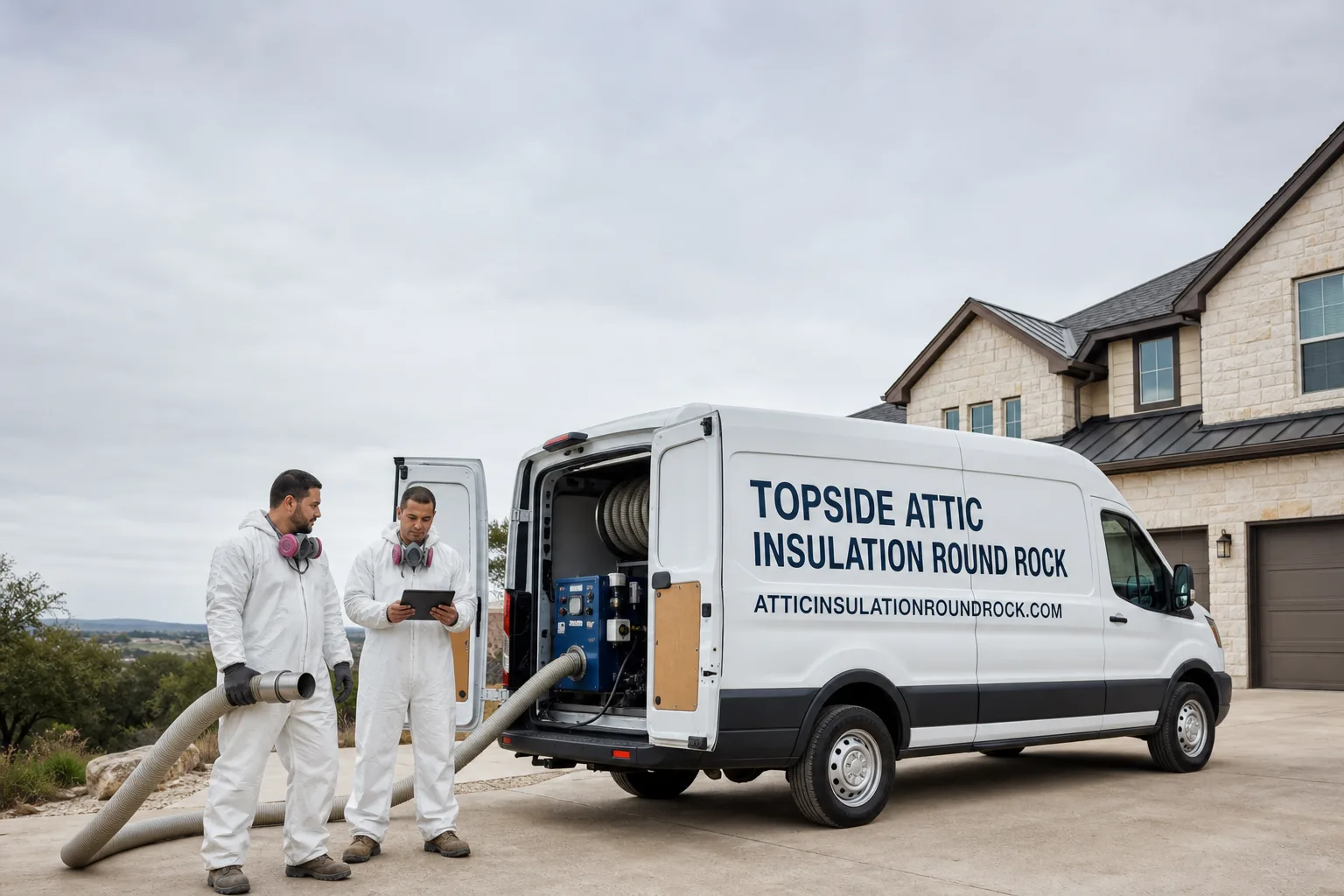
How Much Does Attic Air Sealing Cost in Round Rock?
Attic Air Sealing services in Round Rock, TX typically cost between $850 and $2,400 for a standard single-story home, with most jobs landing around $1,200 to $1,600 when the attic floor is accessible and the home is under 2,500 square feet. The price reflects labor, materials (spray foam, caulk, and rigid foam board where needed), and the blower-door test – a pressurization reading that shows, in one number, how much conditioned air your building envelope was losing before and after the work.
If your Round Rock home was built before 2005 and still has its original penetrations unsealed, a blower-door reading above 4,000 CFM50 is common. After proper air sealing at the attic floor – top plates, can lights, plumbing chases, and HVAC boots – that number routinely drops by 30 to 50 percent. That gap is what translates into lower utility bills during a Central Texas summer.
Attic Air Sealing Cost Breakdown (2026)
These ranges reflect current labor and material costs in the Round Rock market, based on jobs completed in Travis and Williamson County through 2025 and into 2026. Prices assume a straightforward attic with standard access – no spray foam removal, no rodent damage, no HVAC ductwork obstructions blocking the attic floor.
| Scope of Work | Typical Price Range | Notes |
|---|---|---|
| Air sealing only, home under 1,500 sq ft | $850 – $1,100 | Top plates, can lights, plumbing penetrations |
| Air sealing only, 1,500 – 2,500 sq ft | $1,100 – $1,600 | Most common range for Round Rock homes |
| Air sealing only, 2,500 – 3,500 sq ft | $1,600 – $2,100 | Two-story homes or homes with complex roof lines |
| Air sealing only, above 3,500 sq ft | $2,100 – $2,800+ | Large footprints in Teravista, Forest Creek, or similar master-planned areas |
| Air sealing + blown-in insulation (standard depth) | $2,200 – $4,500 | Air sealing completed first before insulation goes in – always |
| Blower-door test (standalone, before/after documentation) | $250 – $450 | Included in applicable jobs; may be separate for audits |
| Attic hatch / access door sealing | $75 – $200 | Often done alongside full air sealing scope |
| Pull-down stair insulation box with air seal | $150 – $325 | Common add-on in Round Rock homes with garage attic access |
What Pushes the Price Up
The biggest cost driver is attic accessibility. Round Rock has a mix of construction eras: older neighborhoods like Brushy Creek and Round Rock Estates often have shallow pitch attics with knee walls and low clearance that slow down a crew significantly. Expect to pay toward the upper end of the range in those cases.
The number of can lights (recessed fixtures that punch holes directly through the ceiling plane) is the second biggest factor. Homes built in the 1990s and early 2000s – a large portion of the housing stock in areas like Walsh Ranch, Paloma Lake, and Wood Glen – frequently have 30 to 60 recessed lights that each need to be air sealed with a code-compliant enclosure or spray foam before insulation goes over them. At $15 to $35 per penetration in labor and materials, a ceiling full of cans adds up quickly.
Existing deep insulation that has to be partially removed to access the attic floor is another price factor, as is any prior pest damage to existing blocking or framing. When we arrive at a job in Round Rock, we document what we find with photos before touching anything – so you see exactly what drove the final number.
What Keeps the Price Down
A straightforward, accessible attic with limited penetrations and no existing insulation to work around is the lowest-cost scenario. Bundling air sealing with an insulation replacement or top-up is almost always more cost-effective than scheduling them separately, because the mobilization cost – crew travel, equipment setup, blower-door testing – is shared across the scope. And unlike most contractors in the Round Rock area, we’ll give you a flat written price before any work starts, so there are no line items added after the fact.
What Affects Attic Air Sealing Pricing in Round Rock
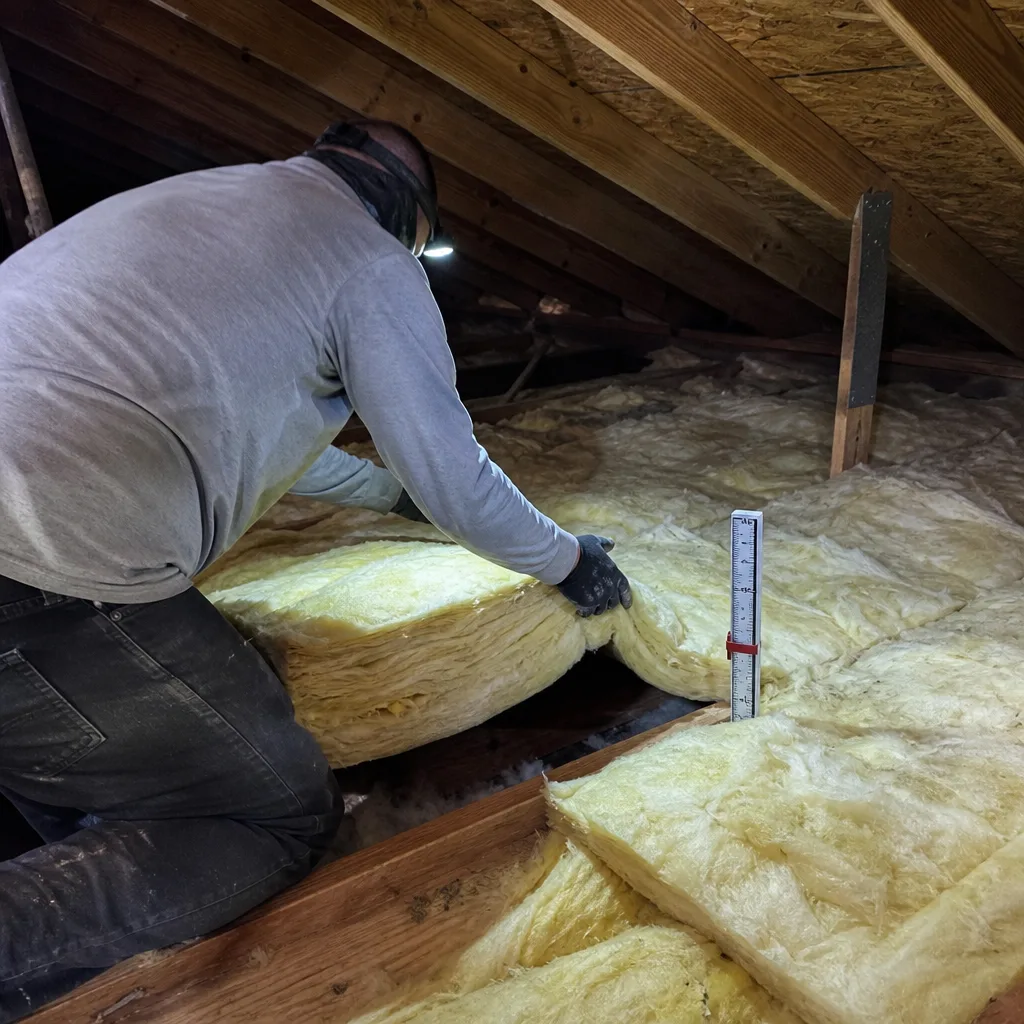
- Home size and ceiling square footage. Air sealing is priced by the linear feet of top plates and the count of penetrations, not strictly by square footage – but larger homes have more of both. A 3,000 sq ft home in Stone Canyon will typically have 40 to 60 percent more sealing points than a 1,600 sq ft home in Greenfield Village.
- Construction era and framing type. Homes built before 1995 in Round Rock were often framed with open-top stud bays – meaning conditioned air from living spaces can pour directly into the attic cavity through the tops of every interior wall. Sealing those open top plates is time-intensive but has a measurable impact on blower-door readings. Homes built after 2010 tend to have better factory sealing but more complex penetration patterns from upgraded lighting and AV systems.
- Number and type of recessed light fixtures. IC-rated (insulation contact) and non-IC-rated can lights require different sealing approaches. Non-IC fixtures need a standoff enclosure before foam or caulk goes near them – a fire code requirement that adds time and material per fixture.
- Attic clearance and working conditions. Central Texas heat is a real factor. Summer attic temperatures in Round Rock regularly exceed 140 degrees Fahrenheit during peak afternoon hours. Jobs that require more time in the attic – due to low pitch or complex framing – may be scheduled in morning windows, which affects scheduling lead time rather than price, but it’s worth knowing when you’re planning.
- HVAC ductwork and equipment in the attic. Ductwork that runs across the attic floor creates obstacles. When ducts are improperly sealed or disconnected (something we document photographically when we find it), addressing that alongside air sealing adds cost but produces a much larger efficiency gain. Homes in older Round Rock subdivisions on the southeast side of the city often have original flex duct runs that haven’t been touched since the 1990s.
- Existing insulation depth and type. If there’s deep blown-in insulation already in place, accessing the attic floor to seal top plates requires temporarily displacing it. That adds labor. If the existing insulation is old fiberglass batt that’s been compressed, matted, or contaminated, the economical move is often removal and air sealing together – which is a larger scope but avoids paying for air sealing twice when replacement becomes necessary in two or three years anyway.
Round Rock Homes: What We See Most Often
Round Rock’s housing stock is concentrated in three rough eras, each with its own air sealing profile.
Pre-1995 Homes (Brushy Creek, Round Rock Estates, Old Town Area)
These homes were built before energy codes required much attention to the building envelope. Open top plates, no can light enclosures, and minimal factory sealing around plumbing and electrical penetrations are standard. Blower-door readings on these homes regularly come in above 5,000 CFM50, sometimes above 7,000 on two-story configurations. After comprehensive attic air sealing, readings in the 2,800 to 3,500 range are typical. That improvement is measurable and documented – not estimated.
1995 to 2010 Homes (Walsh Ranch, Forest Creek, Stone Canyon, Greenfield Village)
This is the most common housing segment in Round Rock by volume. Builders in this era added can lights heavily – great for resale aesthetics, rough on the building envelope. Many of these homes have 40 to 80 recessed fixtures. Code-compliant sealing of each one, combined with top plate work, is where the bulk of the labor hours go. Blower-door readings typically start in the 3,500 to 5,500 range and finish in the 1,800 to 2,800 range after a proper seal.
Post-2010 Homes (Teravista, Paloma Lake, Cat Hollow, Highlands at Mayfield Ranch)
Newer construction in Round Rock meets a higher baseline code standard, but “to code” and “air tight” are not the same thing. Common issues include unsealed attic hatch surrounds, penetrations around structured wiring bundles and smart-home conduit runs, and HVAC supply boots that were foamed around but not properly sealed to the drywall. Blower-door readings on these homes often start in the 2,200 to 3,500 range. Post-sealing, it’s not unusual to reach 1,400 to 1,900 – a meaningful reduction that shows up in cooling costs starting the first full summer after the work.
How to Save on Attic Air Sealing in Round Rock
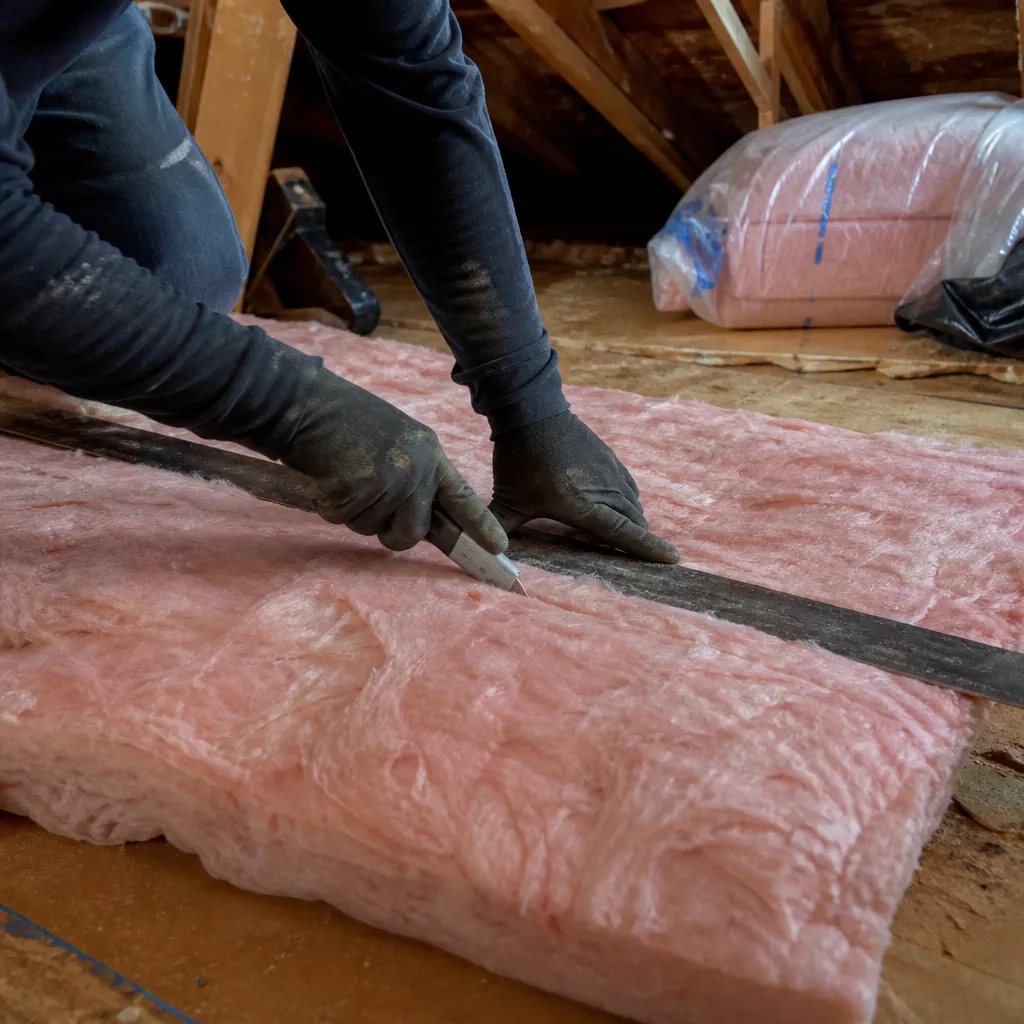
Bundle Air Sealing With Insulation Work
If your attic insulation is below current recommended depth – R-38 is the minimum for Central Texas, R-49 to R-60 is better given Round Rock’s climate zone – scheduling air sealing at the same time as an insulation top-up or full replacement saves the mobilization cost of a second visit. The crew is already in the attic. The blower-door is already set up. The additional cost to add sealing to an insulation job, or vice versa, is almost always lower than two separate jobs.
Under the Haven Standard, Envelope Insulation Co. will never blow insulation over an unsealed attic floor. Air sealing comes first, every time. So if you’re planning to add insulation anyway, the air sealing has to happen first – bundling is the efficient path.
Get a Written Price Before Comparing
One of the more reliable ways to waste money on attic air sealing is to accept a verbal estimate and discover line items after the job is done. Wes Okafor built the pricing model at Envelope around a flat written price delivered before work starts – Haven Standard Clause 1. When you’re comparing quotes, compare written ones. A quote that reads “air seal attic, approx. $1,200” with no scope detail is not comparable to an itemized written price that lists penetration count, foam type, and blower-door documentation.
We also offer a free second opinion on any written estimate you’ve received. Bring us a competing quote and we’ll go through it line by line – not to disparage the competitor, but so you understand what you’re actually buying.
Check for Utility Rebates
Oncor and Pedernales Electric Cooperative (which serves parts of Williamson County including some Round Rock addresses) both offer rebate programs for air sealing and insulation improvements as of 2026. Eligibility depends on your specific utility provider and the scope of work completed. Ask us to document the before-and-after blower-door numbers in a format the utility program requires – that documentation is included on applicable jobs anyway, but it’s worth specifying the program’s requirements upfront so the paperwork lines up.
Address Air Sealing Before a Hot Summer, Not During One
This isn’t urgency theatre – it’s scheduling reality. Attic air sealing in a Round Rock summer means working in extreme heat. Late winter and early spring (February through April) are the most comfortable scheduling windows and historically when contractor lead times in this market are shortest. Scheduling during those months also means you capture the efficiency gains before the worst of Central Texas cooling season, not after.
To get a flat written price before any work starts, call (737) 259-7528. Estimates are free and the price you receive is the price you pay – no scope changes after the fact without your written approval.
What the Job Actually Looks Like
It helps to know what you’re agreeing to before a crew shows up. Here’s how a standard attic air sealing job unfolds on a Round Rock home.
Before Work Starts
A written price and scope are delivered to you before anyone lifts a tool. The scope will specify the penetration types being addressed, the foam and caulk materials being used, and what the blower-door documentation will include. Under Haven Standard: Arrive on schedule, you’ll get a named technician and a text when they’re on the way. No arrival windows measured in half-days.
Blower-Door Test (Pre-Work)
A calibrated fan is mounted in your front door, the house is depressurized to a standard 50 Pascals of pressure, and the CFM50 reading – cubic feet per minute of air moving through the envelope at that pressure – is recorded. This is your baseline. On most Round Rock homes we test before sealing, the reading tells us more about where the leaks are than any visual inspection alone.
Attic Air Sealing
The crew works from the attic floor down. Top plates – the framing members at the top of every interior wall – are sealed first, because that’s where the largest volume leaks are in most homes. Then recessed light enclosures, plumbing and electrical penetrations, HVAC boots, and any attic hatch or pull-down stair surround are addressed. We use two-pound closed-cell spray foam for penetrations and gaps where a durable seal is needed, and fire-rated caulk or foam board where code requires it. Materials come from established manufacturers – no proprietary product system that locks you into a single supplier for future work.
A safety note on the work itself: spray foam application in confined, hot spaces involves chemicals under pressure. Our technicians are trained in proper application and ventilation procedures. This is not a DIY scope – improper foam application in an unsealed attic can create fire hazards and void roof warranties. If you’re evaluating contractors who suggest homeowners can do this themselves, that’s worth weighing carefully.
Blower-Door Test (Post-Work)
Once the attic floor is sealed and the foam is cured, we run the blower-door again. You get both numbers – before and after – in writing. A result like “4,100 CFM50 before, 2,200 CFM50 after” is a concrete record of what changed. That document is yours. It also serves as the baseline if you ever want to verify the envelope performance again in the future, or if a utility rebate program requires documented improvement.
Documented Photo Record
Every visit closes with a photo record: attic access point, representative penetrations before and after sealing, any notable findings (pest evidence, disconnected ductwork, prior incomplete sealing). These photos are included on every job, not available on request. You receive them when the crew leaves.
Air Sealing vs. Just Adding Insulation: Why the Order Matters
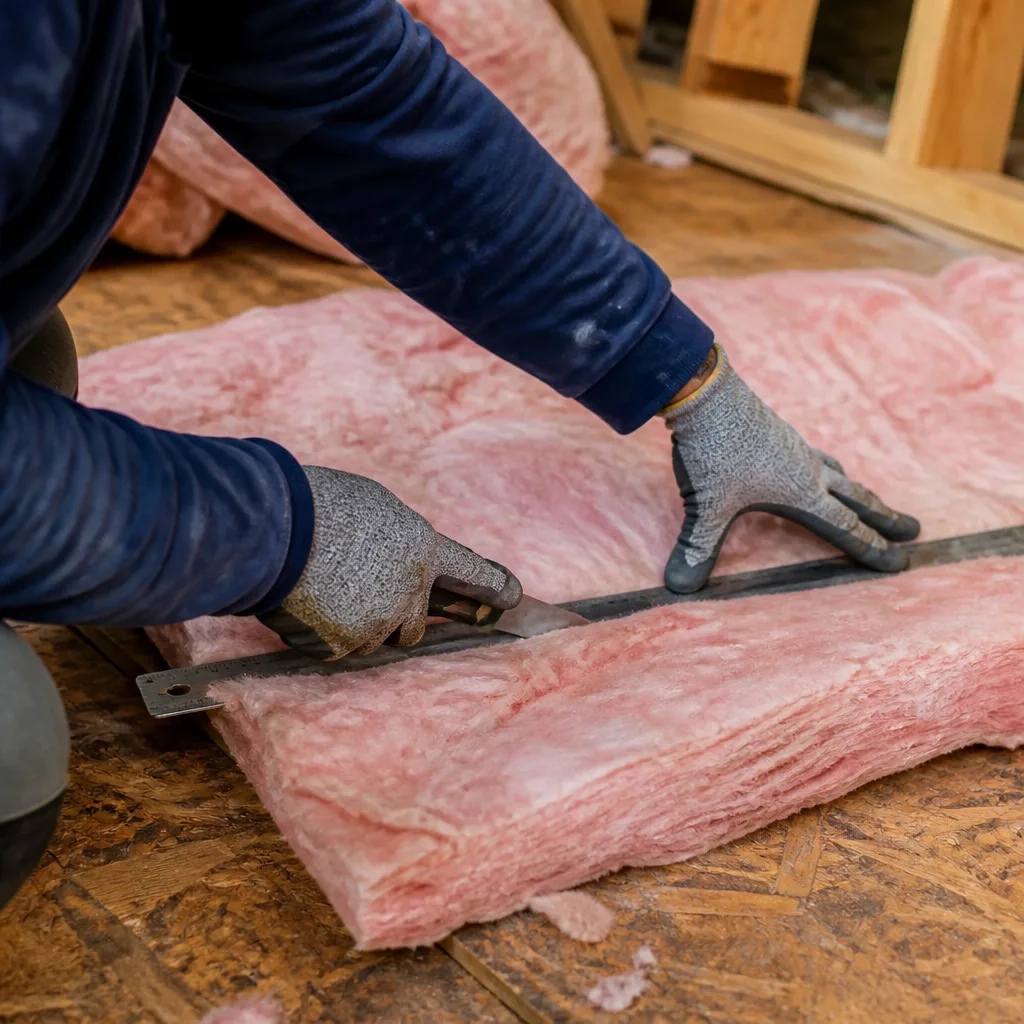
A question that comes up regularly in Round Rock is whether homeowners can skip air sealing and just add more blown-in insulation on top of what’s there. The short answer is: adding insulation over unsealed penetrations reduces but does not eliminate air movement. Insulation slows the transfer of heat through a material – it doesn’t stop air from moving through gaps. Air sealing stops air movement. Both matter, but sealing first and then insulating is the sequence that produces the measurable result.
This is why Envelope’s written scope always shows air sealing as a line item that precedes insulation, not an optional add-on. A blower-door test before and after proves that the sequence produced a real result – not a marketing claim. You can read more about the full service on our Attic Air Sealing in Round Rock page, which covers the technical scope in more detail.
If you’re researching the full picture – including what to expect from a complete building envelope assessment – our home page outlines the full service line we operate in Williamson and Travis County.
How Attic Air Sealing Pays for Itself in Round Rock
Central Texas is a cooling-dominant climate. Round Rock homeowners run air conditioning for six to eight months per year, and a significant portion of that conditioned air escapes through the attic floor before it ever reaches the living space. The math on payback varies by home, but a general benchmark for this market: a home spending $250 to $350 per month on electricity during summer months will often see a 15 to 25 percent reduction in cooling load after comprehensive attic air sealing. On a $300 monthly bill, that’s $45 to $75 per month during the cooling season – roughly $270 to $450 per year in savings from cooling alone.
On a $1,400 air sealing job, that puts simple payback at 3 to 5 years, before accounting for any utility rebates. Blower-door documentation lets you verify the performance change is real, rather than estimating savings from a rule of thumb.
FAQs: Attic Air Sealing Cost in Round Rock
How much does attic air sealing cost in Round Rock, TX?
Most attic air sealing jobs in Round Rock run between $1,100 and $1,800 for a 1,500 to 2,500 square foot home – which covers the majority of the housing stock in neighborhoods like Forest Creek, Stone Canyon, and Paloma Lake. Smaller homes under 1,500 sq ft can come in at $850 to $1,100. Larger homes above 3,000 sq ft, or homes with high recessed light counts, can reach $2,100 to $2,800. Every job at Envelope comes with a flat written price before work starts, so the number you agree to is the number on the invoice. Call (737) 259-7528 for a free estimate with a written price delivered before any work begins.
Is attic air sealing worth it in a Texas climate?
Yes – and the blower-door numbers confirm it. In Round Rock’s climate, where cooling accounts for the majority of annual energy use, reducing the CFM50 reading by 30 to 50 percent directly reduces the conditioning load on your HVAC system. Homes with pre-sealing readings above 4,000 CFM50 typically see measurable utility bill reductions starting the first full cooling season after the work. The payback period in this market is commonly 3 to 5 years, depending on current utility rates and the severity of the leakage before sealing.
Can I get attic air sealing and insulation done at the same time?
Yes, and bundling the two is almost always more cost-effective than scheduling them separately. The mobilization cost – crew, equipment, blower-door testing – is shared across both scopes. The important detail is the sequence: air sealing must be completed before insulation goes in. Blowing insulation over unsealed penetrations reduces heat transfer but doesn’t stop air movement. Envelope won’t skip that sequence regardless of how the job is structured. Call (737) 259-7528 to discuss a bundled scope and get a written price for both.
How long does attic air sealing take in a typical Round Rock home?
A standard attic air sealing job on a 2,000 to 2,500 square foot home in Round Rock typically takes 4 to 8 hours, including the pre- and post-work blower-door tests. Homes with high recessed light counts (50 or more fixtures) or complex framing can push that to a full day. You’ll know the estimated duration in your written scope before anyone starts.
Does attic air sealing require a permit in Round Rock?
Attic air sealing alone – foam and caulk applied to the attic floor, top plates, and penetrations – does not typically require a building permit in Round Rock under current Williamson County and City of Round Rock codes. However, if the scope includes modifications to HVAC equipment, electrical fixtures, or structural elements, those components may trigger separate permit requirements. We document what we find and what we do, so there’s a clear record of the scope completed.
What’s included in a blower-door test, and is it included in the price?
A blower-door test involves mounting a calibrated fan in an exterior door, depressurizing the home to 50 Pascals, and measuring the CFM50 – the volume of air per minute moving through every gap in the building envelope at that pressure. On applicable jobs (any job that includes attic air sealing), Envelope runs both a pre-work and post-work test and gives you both numbers in writing. That documentation is included in the job price, not billed separately. If you want a standalone blower-door test for a home energy audit or pre-purchase evaluation, the cost runs $250 to $450 depending on home size.
Key Takeaways
- Attic air sealing in Round Rock costs $850 to $2,800 depending on home size, construction era, and penetration count – with most standard jobs in the $1,100 to $1,800 range.
- Blower-door tests – before and after – are the only way to verify a real result. Ask any contractor you consider whether they provide both numbers in writing.
- Round Rock homes built between 1995 and 2010 (the largest segment of the local housing stock) typically have the highest recessed light counts and the most to gain from proper attic floor air sealing.
- Air sealing always comes before insulation – not after. Any contractor who sequences it the other way is skipping the step that produces the measurable result.
- Utility rebates from Oncor and Pedernales Electric may offset part of the cost. Before-and-after blower-door documentation supports rebate applications.
- A flat written price before work starts is non-negotiable. If a contractor won’t put the scope and price in writing before touching anything, that’s a meaningful data point.
- Envelope Insulation Co. has documented results on more than 9,000 homes since 2016, every one with a written price before work started and a photo record when the crew left.
Ready for a Written Price?
If you want to know what attic air sealing will cost for your specific home in Round Rock – not a range from a webpage, but a flat written price for your actual attic – call (737) 259-7528. Wes Okafor and the Envelope team will schedule a visit, document what we find, and deliver a written scope and price before any work starts. That’s Haven Standard Clause 1, and it applies to every job, every time.
Estimates are free. The blower-door documentation is included. And if the work isn’t done right, the 365-Day Done Right Promise is in writing before we start.
Written by Wes Okafor, Owner at Topside Attic Insulation Round Rock, serving Round Rock, TX since 2016.
Pricing reflects the Round Rock market as of 2026. Topside Attic Insulation Round Rock offers free estimates – call (737) 259-7528.
What Our Customers Say
"The winter gas bill dropped by about a third. They had estimated a quarter, so they under-promised."
- Genevieve R."Crawl space encapsulation done properly. Photographs of the vapour barrier at every seam, and the damp smell in the hallway is gone."
- Ainsley P."They air-sealed the attic floor before insulating and showed me the blower-door number before and after. The upstairs is finally the same temperature as downstairs."
- Marisol D.