
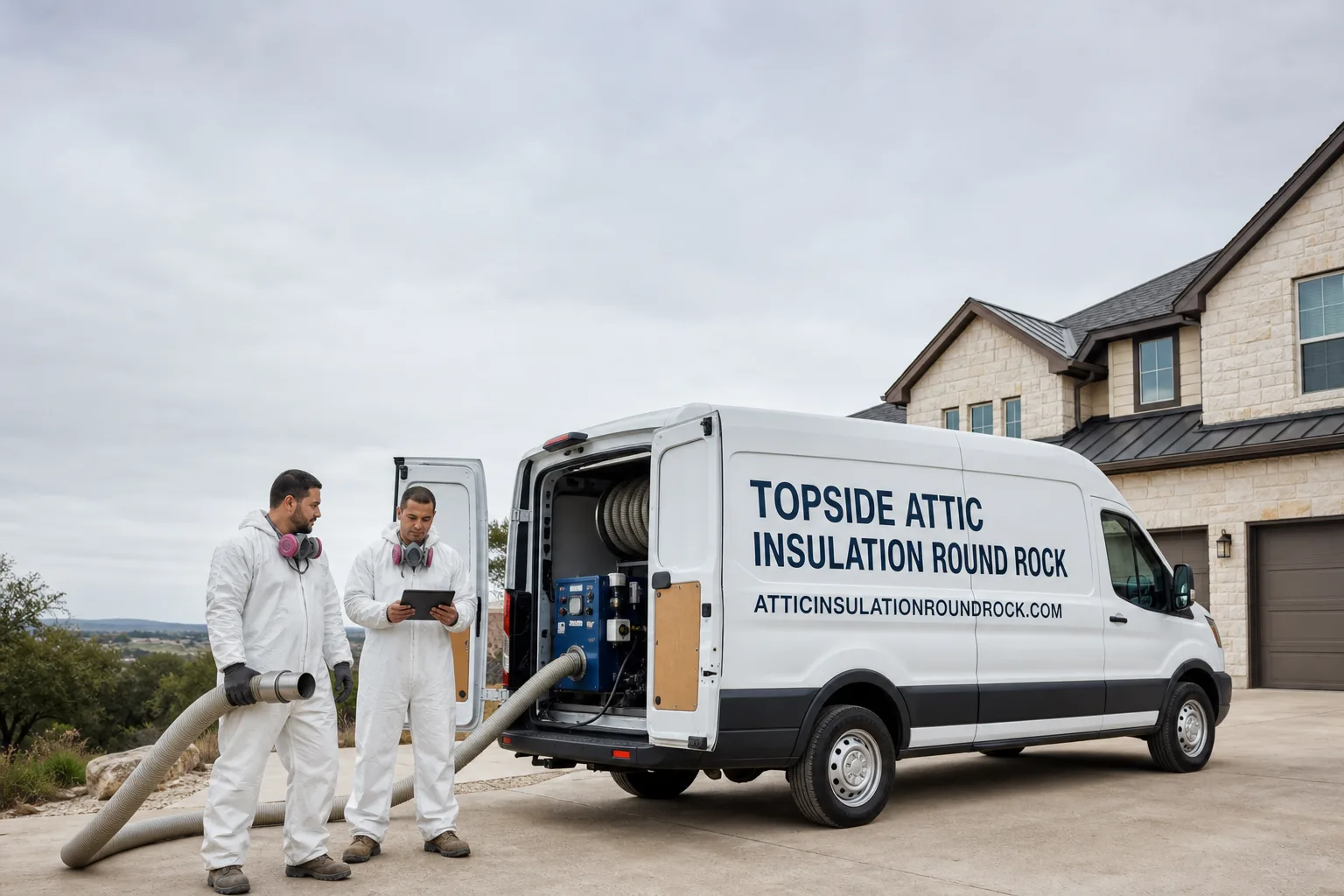
How Much Does a Home Energy Audit Cost in Round Rock?
A home energy audit in Round Rock, TX typically costs between $250 and $650 for a standard blower-door-based diagnostic on a single-family home. Most homeowners in Round Rock pay around $350-$450 for a full audit that includes a blower-door test, thermal imaging, duct leakage testing, and a written report. If your home qualifies for a utility rebate through Bluebonnet Electric Cooperative or Austin Energy (depending on which side of Round Rock’s service boundary you’re on), you may recover $100-$200 of that cost directly.
Home Energy Audit Cost Breakdown (2026)
A home energy audit in Round Rock is not a single service – it’s a stack of diagnostic tools, and what you pay depends on which of those tools your auditor actually uses. Here’s how the line items break out in the Round Rock market:
| Audit Component | Typical Cost Range (Round Rock, 2026) | Notes |
|---|---|---|
| Basic walkthrough audit (visual only, no equipment) | $0 – $150 | Often offered free by utilities; limited diagnostic value |
| Blower-door test (pressurization measurement) | $150 – $300 | The core diagnostic; measures total envelope air leakage in CFM50 |
| Duct leakage test (duct blaster) | $100 – $200 | Finds leaks in supply and return ductwork; important in slab-on-grade homes |
| Thermal (infrared) imaging | $75 – $175 | Shows missing insulation and air leaks as temperature anomalies; most useful when run alongside a blower-door test |
| Written report with prioritized recommendations | Included – $100 | Should include before measurements, recommended improvements, and projected savings |
| Full diagnostic audit (all components bundled) | $300 – $650 | Standard range for a complete audit on a 1,500-2,800 sq ft Round Rock home |
| Large or complex home audit (3,000+ sq ft, multi-story) | $550 – $900 | Homes in Stone Canyon, Walsh Ranch, or Sendero Springs with complex rooflines add time |
The biggest variable in Round Rock audit pricing is whether the auditor actually runs equipment or just walks through with a clipboard. A visual-only audit might find obvious problems like a missing attic hatch cover or a disconnected bath fan duct, but it cannot tell you how much air your home is losing. That requires a blower-door test – a calibrated fan mounted in a doorframe that depressurizes the house to a standard 50 Pascals so technicians can measure total air leakage in CFM50 (cubic feet per minute at 50 Pascals of pressure). Without that number, you’re guessing.
Round Rock homes built between 1995 and 2010 – a large share of the Teravista, Forest Creek, and Cat Hollow neighborhoods – were constructed under code requirements that permitted significantly more air leakage than current IECC 2021 standards allow. We regularly find blower-door readings of 5,000 to 8,000 CFM50 on those homes, which translates to the equivalent of leaving a standard window wide open year-round. Knowing that number before any insulation or air sealing work begins is the only way to verify that the work actually changed anything.
That’s the doctrine at Envelope Insulation Co.: air sealing is a prerequisite, not an upsell, and we publish the before-and-after blower-door numbers on every applicable job. If someone offers to blow insulation over your unsealed attic floor without measuring first, the audit has already failed its core purpose.
What Affects Home Energy Audit Pricing in Round Rock
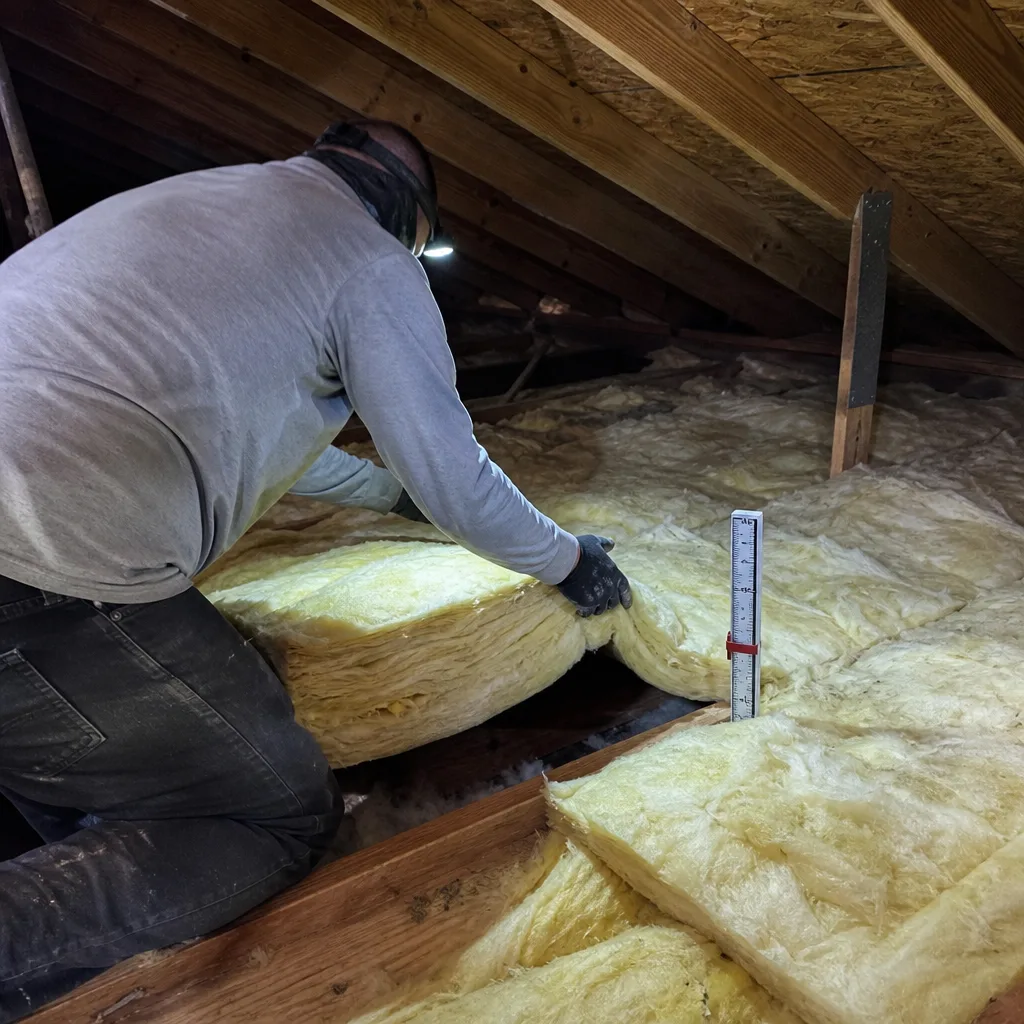
- Home size and layout: Auditors charge based on time, and larger homes take longer to test and document. A 1,600 sq ft ranch in Brushy Creek typically runs 2-2.5 hours; a 3,200 sq ft two-story in Stone Canyon or La Conterra can take twice that. Expect pricing to increase roughly $50-$75 for every additional 500 sq ft above 2,000.
- Construction era: Homes built before 2000 in Round Rock – particularly those in older sections of Round Rock Estates, Forest Creek, and the neighborhoods around McNeil Road – tend to have more air leakage pathways: non-airtight can lights, open-web floor trusses with no blocking, and penetrations where plumbers and electricians punched through top plates and never sealed them. These homes take longer to audit thoroughly because there’s more to find.
- Accessibility of attic and crawl space: Round Rock is predominantly slab-on-grade, which removes crawl space access from the equation for most homes. But attic access varies considerably. A pull-down stair with 36 inches of clearance is easy. A 22-inch scuttle opening in a closet, with a dropped-ceiling section blocking lateral movement, adds time and affects what the auditor can physically reach with a camera.
- Utility service territory and rebate eligibility: Homes in Round Rock served by Bluebonnet Electric Cooperative may qualify for rebates on diagnostic audits when combined with qualifying upgrades. Austin Energy serves a portion of the Round Rock metro area and has its own rebate structure. Which utility serves your address – and whether you’ve had an audit in the last five years – affects net cost meaningfully. This is worth confirming before you schedule, because a $400 audit that qualifies for a $150 rebate is effectively a $250 audit.
- Duct system configuration: Homes in Round Rock with attic-mounted air handlers and ductwork running through unconditioned attic space are strong candidates for a duct leakage test in addition to a blower-door test. Duct leakage to the outside – where supply air escapes into the attic rather than into living space – is one of the biggest energy losses in Central Texas homes and is invisible without pressurized testing. Adding a duct blaster test typically adds $100-$175 to the audit cost.
- Report format and follow-through: Some auditors hand you a two-page checklist. Others deliver a multi-page report with thermal images, CFM50 readings, duct leakage percentages, and prioritized improvement recommendations tied to estimated savings ranges. The latter costs more but is the only format that gives you something to act on – and something to verify work against after the fact.
Round Rock-Specific Factors That Drive Energy Loss (and Audit Findings)
Round Rock’s climate sits in IECC Climate Zone 2A – hot-humid – which means the building envelope is fighting heat and moisture pressure for seven or eight months of the year. The attic is the front line. On a July afternoon, attic temperatures in Round Rock routinely reach 140-150°F. If air sealing between the conditioned living space and the attic is incomplete, that heat migrates downward through convection, not just conduction. Insulation R-value only slows conductive heat transfer. It does nothing for air movement. A well-insulated but unsealed attic floor still loses significant conditioned air.
In the neighborhoods around the Domain corridor and in newer sections of Teravista, we see a consistent pattern: builders installed the required R-38 or R-49 insulation, but the top-plate penetrations from plumbing and electrical rough-ins were never air-sealed before the insulation went in. The insulation is doing its conductive job, but conditioned air is bypassing it entirely through those gaps. A blower-door test catches this; a visual inspection does not.
Round Rock also sits in a limestone-bedrock corridor that produces naturally dry soil conditions interrupted by heavy rain events – which means foundations move more than they do in clay-heavy Houston. Foundation movement, even slight settling, can open gaps at sill plates and around HVAC penetrations. Homes in Brushy Creek Ranch and Forest Creek, particularly those on the older lots near the creek drainages, are worth auditing for this reason even if they were well-built originally.
For a more detailed look at what the audit process involves and what Envelope Insulation Co. includes in a Home Energy Audit in Round Rock, that page walks through the full scope from the initial measurement to the written report we leave with you.
What You Should Receive After a Home Energy Audit in Round Rock
This matters because it’s the difference between a useful diagnostic and an expensive guess. When Envelope Insulation Co. completes an energy audit under the Haven Standard, the homeowner receives:
- A written blower-door result in CFM50 – the actual measurement, not a qualitative description
- Thermal images showing temperature anomalies that indicate air leakage or missing insulation zones, with location notes so you know exactly where the problems are
- Duct leakage readings if a duct blaster test was performed, expressed as a percentage of system airflow
- A prioritized list of improvements with the reasoning behind each priority – not just “add insulation” but “seal top-plate penetrations above master bathroom before adding insulation to attic floor, because the existing R-30 is bridged by three open-top chases”
- A written price for any recommended work before any work starts – Haven Standard Clause 1, every time
- A Documented Photo Record of conditions found during the audit
If an auditor cannot tell you the CFM50 reading before and after any remediation work, the audit hasn’t produced verifiable data. Documentation isn’t a courtesy add-on; it’s the only way you know the money was well spent.
How to Save on a Home Energy Audit in Round Rock
The most straightforward way to reduce out-of-pocket cost is to check utility rebate programs before you schedule. Bluebonnet Electric Cooperative and Austin Energy both run incentive programs that can offset audit costs when the audit is paired with qualifying insulation or air sealing work. Rebate amounts and eligibility windows change, so confirming with your utility directly is worth the ten-minute phone call.
Bundling the audit with planned work also changes the math. If you already know your attic insulation is inadequate – you can see the floor joists through the blown-in, or your HVAC runs constantly through a Round Rock July – some contractors, including Envelope Insulation Co., will fold the diagnostic cost into the overall project scope when the audit leads directly to work. The audit is never a sales tool designed to generate an upsell; it’s the measurement that confirms what needs to happen and sets the baseline for verifying results. But if the diagnosis and the remedy come from the same contractor operating under a written price before work starts, the administrative overhead is lower for everyone.
Timing helps modestly. Scheduling in late winter (February-March) or early fall (October-November) tends to produce faster scheduling windows than mid-summer, when HVAC contractors and insulation crews in the Round Rock area are running at capacity. A blower-door test is also more informative when outdoor and indoor temperatures differ by at least 15-20 degrees, which makes the Texas shoulder seasons ideal diagnostically as well as logistically.
Don’t optimize for the cheapest audit at the expense of getting useful data. A $100 visual walkthrough that misses the open-top plates above the master closet and doesn’t measure duct leakage is not a discount – it’s a gap in your information. The $300-$450 full diagnostic produces numbers you can act on and verify. That’s the cost that pays for itself.
For an exact written price on a home energy audit for your Round Rock address, call (737) 259-7528. We’ll tell you the number before anyone schedules anything.
How Home Energy Audit Cost Compares to What It Finds
Round Rock homeowners who complete a full diagnostic audit and then act on the top one or two findings typically see measurable changes in blower-door readings. At Envelope Insulation Co., across 9,000+ homes sealed and insulated since 2016 – every one with a written price before work started and a documented record when the crew left – the most consistent finding in Central Texas homes is that attic air sealing alone reduces blower-door readings by 20-35%. On a home reading 6,000 CFM50, that’s 1,200 to 2,100 cubic feet per minute of conditioned air stopped from escaping. That reduction shows up in the HVAC runtime, and the HVAC runtime shows up in the electric bill.
The audit cost ($350-$450 in most Round Rock cases) is the measurement that confirms whether a $1,500 air sealing project actually worked. Without before-and-after blower-door numbers, there’s no way to verify the outcome – you’re trusting the contractor’s word. With published numbers, the result is on paper. That’s the Haven Standard: documented evidence, not assurances.
Frequently Asked Questions: Home Energy Audit Cost in Round Rock
How much does a home energy audit cost in Round Rock, TX in 2026?
A full home energy audit in Round Rock costs between $300 and $650 for most single-family homes, with the most common range landing at $350-$450. That price covers a blower-door test, thermal imaging, duct leakage testing, and a written report with prioritized recommendations. Larger homes above 3,000 sq ft – common in Stone Canyon and Walsh Ranch – may run $600-$900. Basic visual-only audits cost less but produce significantly less actionable data. For a written price specific to your address, call (737) 259-7528 – estimates are free.
Is a home energy audit worth it in Round Rock’s climate?
Yes, and particularly so in Round Rock. IECC Climate Zone 2A means your HVAC system is cooling against 140°F+ attic temperatures for the better part of seven months. A blower-door test that reveals a 6,000 CFM50 reading – equivalent to a large open window – gives you a specific problem to fix rather than a general sense that the house “runs hot.” Homes in Forest Creek, Teravista, and Brushy Creek that were built between 1998 and 2012 consistently show air leakage well above current code targets. The audit tells you where the losses are; the work closes them; the post-work blower-door reading confirms they’re closed. That three-step sequence is the only way to know what you actually bought.
Does Bluebonnet Electric or Austin Energy offer rebates for home energy audits in Round Rock?
Both Bluebonnet Electric Cooperative and Austin Energy run rebate programs that can apply to diagnostic audits and qualifying improvements, but the amounts and eligibility rules change year to year. In recent years, rebates of $100-$200 on audits paired with weatherization improvements have been available. Which utility serves your address in Round Rock depends on your specific location – the service boundary runs through the middle of the metro area. Confirm with your utility before scheduling, because rebate eligibility can meaningfully reduce net audit cost.
Can I get a free home energy audit in Round Rock?
Free visual walkthroughs are available from some utilities and contractors, but they don’t include blower-door testing, thermal imaging, or duct leakage measurement. Those free audits can flag obvious problems – a disconnected bath fan duct, a missing attic hatch cover – but they cannot measure how much air the envelope is losing or where duct leakage is occurring. If the goal is a documented baseline you can verify improvement against, the $300-$450 full diagnostic is what produces that. Envelope Insulation Co. provides free estimates on any recommended work that follows an audit – call (737) 259-7528 and we’ll give you a written number before anything starts.
How long does a home energy audit take in Round Rock?
A full diagnostic audit on a typical Round Rock home (1,500-2,500 sq ft, slab-on-grade, single-story) takes 2 to 3 hours on-site. Two-story homes or those with complex attic geometry – common in Stone Canyon and some sections of Sendero Springs – run 3 to 4 hours. That time includes setting up and running the blower-door test, scanning with thermal imaging while the house is depressurized, testing duct leakage if included, and documenting findings with photographs. The written report with recommendations typically follows within 24-48 hours. Under the Haven Standard, you receive a Documented Photo Record from the visit and a written price for any recommended work before any work begins.
What’s the difference between a home energy audit and an insulation estimate in Round Rock?
An insulation estimate tells you what it will cost to add insulation to a specific area. A home energy audit tells you where the energy losses are, how large they are, and in what order they should be addressed. In Round Rock, the most common finding is that attic air sealing – not insulation R-value – is the primary driver of energy loss. An insulation estimate alone won’t catch that. At Envelope Insulation Co., the audit is what determines whether air sealing needs to happen before insulation is added; we won’t blow insulation over an unsealed attic floor because insulation cannot stop air movement, only conductive heat transfer. The audit is the step that establishes which work to do and in what sequence.
Key Takeaways
- Most Round Rock homeowners pay $300-$650 for a complete home energy audit in 2026, with the $350-$450 range most common for homes under 2,500 sq ft.
- The core diagnostic tool is the blower-door test – it produces a CFM50 reading that tells you, in a single number, how much air your building envelope is losing.
- Utility rebates from Bluebonnet Electric or Austin Energy can offset $100-$200 of audit cost when paired with qualifying improvements – confirm eligibility before scheduling.
- Round Rock homes built 1995-2010 in Teravista, Forest Creek, and Cat Hollow consistently show air leakage well above current code targets; a blower-door test is the only way to quantify it.
- A useful audit produces documented measurements, thermal images, and a prioritized written report – not just a list of recommendations.
- Under the Haven Standard, any work recommended after an audit comes with a written price before anyone starts and a 365-Day Done Right Promise if the work is completed.
- Before-and-after blower-door numbers are published on every applicable job at Envelope Insulation Co. – so you can see what changed, not just take our word for it.
Why Wes Okafor and Envelope Insulation Co. Approach Energy Audits Differently
Wes Okafor built Envelope Insulation Co. around one observation: most insulation contractors skip the measurement step because measurement creates accountability. If you publish a before blower-door reading of 7,200 CFM50 and an after reading of 3,800 CFM50, the homeowner has a document that says exactly what changed. If you don’t publish those numbers, no one can check the work.
That’s not a philosophy statement – it’s an operating procedure. Under the Haven Standard, every applicable job at Envelope Insulation Co. includes a before-and-after blower-door test, a written price before any work starts, and a Documented Photo Record when the crew leaves. Since 2016, that procedure has applied to every one of the 9,000+ homes Envelope Insulation Co. has sealed and insulated.
For Round Rock homeowners considering an energy audit, that means the audit is the beginning of a documented chain – not a sales call dressed up as a diagnostic. The measurement tells you what’s happening; the written scope tells you what we’ll do about it; the post-work blower-door reading tells you whether it worked. You’re welcome to visit the home page to see the full scope of what Envelope Insulation Co. does and how the Haven Standard applies across every service line.
If you have a competing written estimate for insulation or air sealing work, bring it. We’ll read it with you – that’s the Free Second Opinion, and it applies to any written quote you’ve received.
Ready to Schedule a Home Energy Audit in Round Rock?
A written price before any work starts is the foundation of how we operate – not a policy we offer as an option. Call (737) 259-7528 and we’ll give you a flat written price for a home energy audit at your Round Rock address. A live person answers, no voicemail. The audit produces a blower-door reading, thermal images, a duct leakage measurement if applicable, and a written report with prioritized recommendations. If any work follows, it starts with a written scope and ends with before-and-after numbers you can keep.
Written by Wes Okafor, Owner at Topside Attic Insulation Round Rock, serving Round Rock, TX since 2016.
Pricing reflects the Round Rock market as of 2026. Topside Attic Insulation Round Rock offers free estimates – call (737) 259-7528.
What Our Customers Say
"The winter gas bill dropped by about a third. They had estimated a quarter, so they under-promised."
- Genevieve R."Crawl space encapsulation done properly. Photographs of the vapour barrier at every seam, and the damp smell in the hallway is gone."
- Ainsley P."They air-sealed the attic floor before insulating and showed me the blower-door number before and after. The upstairs is finally the same temperature as downstairs."
- Marisol D.