
Owens Corning Attic Insulation: The Round Rock Owner’s Guide
We stock and install Owens Corning blown-in fiberglass attic insulation in Round Rock, with most complete attic jobs running between $1,800 and $4,200 depending on square footage and whether the attic floor needs air sealing first. Same-day installation is available when the attic is accessible and prepped. Most Round Rock homeowners discover their Owens Corning insulation is underperforming when upstairs rooms won’t cool below 78°F in July despite the AC running nonstop, or when they find compressed, discolored batts in the attic that have settled below the joist tops.
Which Owens Corning Models This Applies To
Owens Corning attic insulation in Round Rock homes typically falls into three product families: ProCat (professional blown-in fiberglass), AttiCat (the blown-in system sold through retail channels but often found in DIY installations), and EcoTouch PINK Fiberglas batts (the rolled product in standard widths). The critical compatibility issue is matching the existing R-value and ensuring the new material layers correctly over old without trapping moisture.
ProCat uses a loose-fill blown at 0.5 to 2.5 pounds per square foot depending on target R-value, while AttiCat is a lower-density homeowner-grade product that settles faster in Texas heat cycles. We verify what you have by checking the paper label on any exposed batt (look for the black-and-pink Owens Corning logo and R-value stamp) or by measuring settled depth and back-calculating original density. For blown-in, we take a core sample from multiple attic locations to check for uniformity.
Topside Attic Insulation Round Rock is an independent service provider, not affiliated with Owens Corning. We source Owens Corning materials through authorized distribution, but we also install Johns Manville, Knauf, and Rockwool when those products better match the home’s envelope needs. For Owens Corning specifically, we do not recommend aftermarket equivalents for attic applications: the fiber diameter and binder chemistry affect settling rates, and mismatched blown-in densities create thermal bridges that show up on infrared cameras.
Signs Your Owens Corning Attic Insulation Is Failing
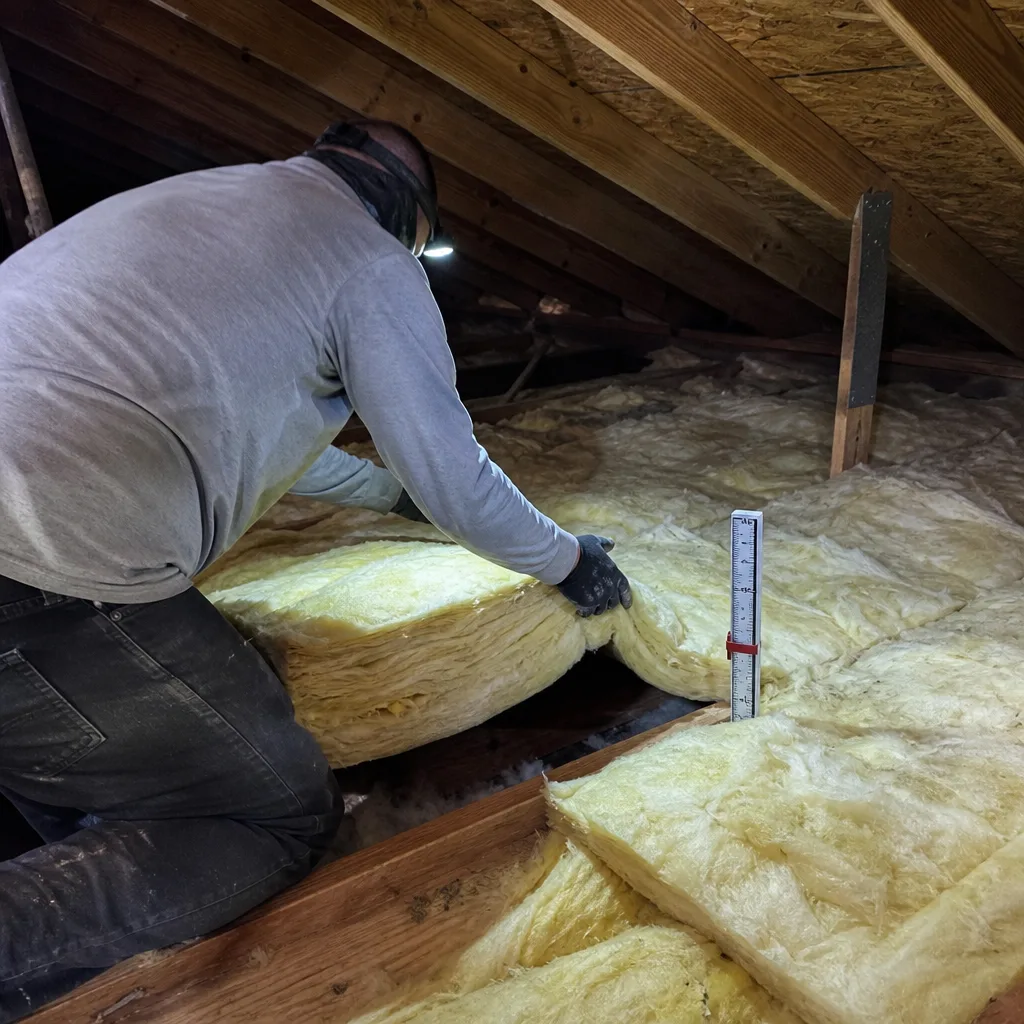
- Uneven temperature rooms. The upstairs bedroom runs five to ten degrees hotter than the downstairs thermostat setting. This usually means the Owens Corning blown-in has settled or shifted, creating thin spots over the ceiling plane where R-value drops below effective levels.
- Ice damming or excessive icicles in winter. Heat escapes through compromised attic insulation, melting roof snow that refreezes at the eaves. In Round Rock’s occasional hard freezes, this shows up as interior water stains near exterior walls where the melt-back runs under shingles.
- Discolored or compressed batts. Pink fiberglass turns gray or black where air leaks have deposited dust and attic particulate for years. Compression below the joist top means the original R-value has been mechanically destroyed, often by storage boxes or work crews walking the attic floor.
- AC running continuously on moderate days. When the outdoor temperature is 85°F and the system cannot cycle off, the thermal boundary is likely breached. We see this in Round Rock’s Fern Bluff and Behrens Ranch subdivisions where 2015-2019 builds received minimum-code insulation that has since settled 15 to 25 percent.
- High humidity or musty attic smell. Fiberglass itself does not support mold, but when Owens Corning batts are installed over unsealed can lights or top-plate gaps, moist conditioned air condenses against the roof deck. The insulation becomes a moisture sponge by proxy, and the real problem is the air leak, not the material.
Replacement Cost & What’s Included
Most Owens Corning attic insulation replacements in Round Rock run $1,800 to $4,200 for a standard 1,500 to 2,500 square foot home. The lower end applies when we’re adding blown-in fiberglass over existing stable material to reach current IECC code (R-38 to R-49 in this climate zone). The upper end includes complete removal of contaminated or compressed insulation, full attic air sealing of top plates and penetrations, then new Owens Corning ProCat blown to specified depth.
What drives the range: attic square footage, accessibility (scuttle vs. pull-down stairs vs. no access), whether rodent contamination requires removal, and the extent of air sealing needed before new material goes in. We do not price by the bag. We price by the completed, documented job: written scope, written warranty, before-and-after blower-door numbers on every air-sealing component, and a Documented Photo Record you receive before we leave.
Under Haven Standard Clause 1, you get a flat written price before anyone lifts a tool. The 365-Day Done Right Promise applies to all completed work.
DIY or Call Us?
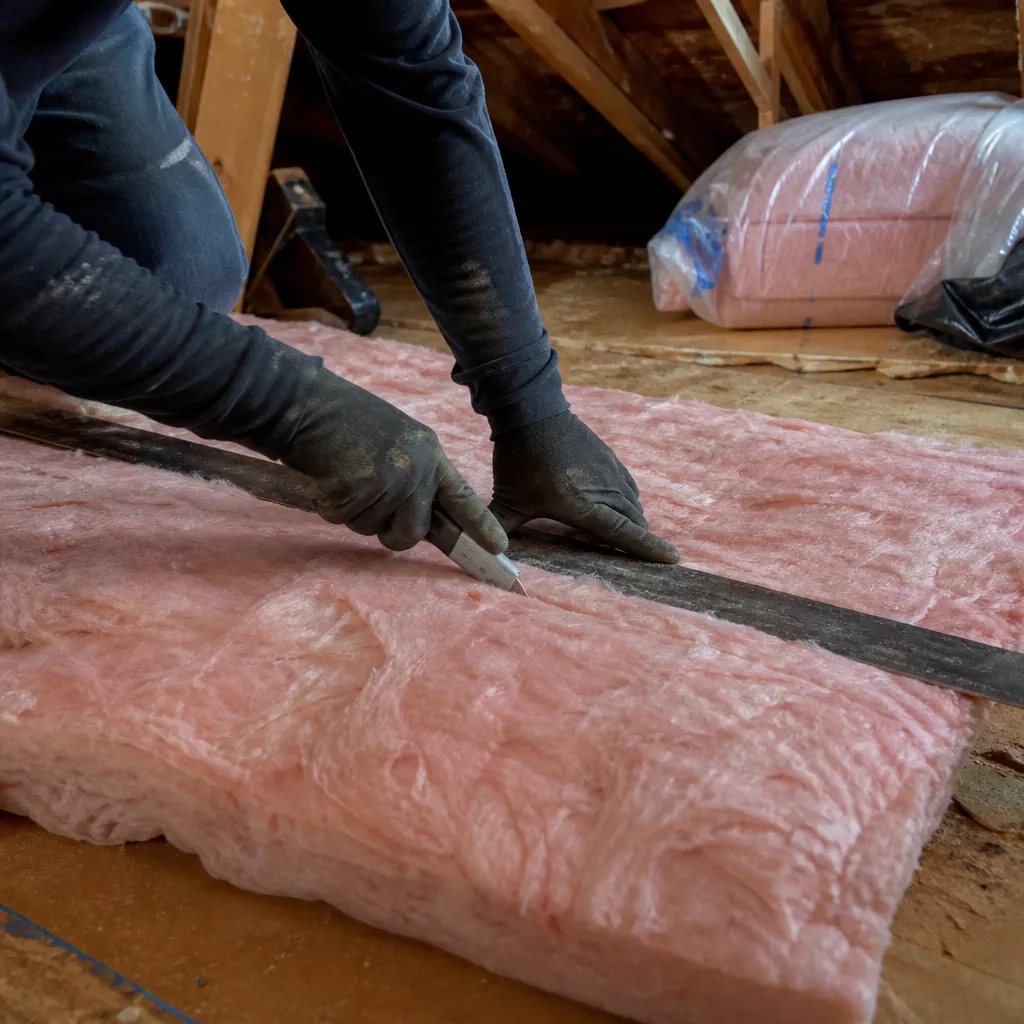
What you can safely check: measure your current attic insulation depth with a ruler at five scattered points, photograph any labels you find, and note which rooms stay uncomfortable. Do not enter the attic if you have recessed can lights without IC-rating markings, active wasp nests, or vermiculite insulation (gray-pebbled, pre-1990 material that may contain asbestos).
Where DIY goes wrong with Owens Corning attic insulation: blown-in fiberglass requires a calibrated blowing machine and proper density control to achieve labeled R-value. Too loose, and convection loops form within the material. Too dense, and you compress the fibers, reducing trapped air and effective insulation. Most importantly, blowing new insulation over unsealed air leaks simply buries the problem. The conditioned air still escapes; you just paid to hide it.
Seal the leaks first. The insulation has nowhere to go until you do.
For a free estimate with written pricing, call (737) 259-7528. We also provide a Free Second Opinion on any written estimate you’ve already received.
FAQs
Fiberglass itself does not degrade chemically, but settling and contamination reduce performance over 15 to 25 years in Central Texas attics. The critical factor is whether the attic was air-sealed first; unsealed attics with active bypasses can show functional failure in 8 to 12 years as dust accumulation and moisture cycling compress the material. Call (737) 259-7528 for a free assessment of your current depth and condition.
Spot repair is possible when the existing material is clean, dry, and uniformly distributed, but this is the exception in Round Rock. More commonly, we find settled areas, rodent contamination, or compression from storage that requires removal and fresh installation to meet code R-value. We evaluate this during our initial attic inspection and document the condition with photos you receive.
A standard blown-in addition over existing stable insulation takes four to six hours for a two-person crew. Full removal, air sealing, and replacement runs one to two days depending on attic size and contamination level. We schedule to complete in a single day when possible, and you receive a text when the crew is en route under Haven Standard protocol.
We stock Owens Corning ProCat and EcoTouch batts on our Round Rock warehouse trucks, along with Johns Manville, Knauf, and Rockwool alternatives. For same-day installation, we need to verify attic accessibility and that air sealing is either already complete or scheduled as part of the job. Call (737) 259-7528 to confirm truck availability and book a written-estimate visit.
Written by Wes Okafor, Owner, Topside Attic Insulation Round Rock at Topside Attic Insulation Round Rock, serving Round Rock and nearby areas.