
Knauf Vapor Barrier Installation: The Round Rock Owner’s Guide
We stock and install Knauf-compatible vapor barrier systems in Round Rock, with most residential jobs running $1,800-$3,400 depending on crawl space or attic configuration and whether the existing barrier is being removed. Same-day installation is available when we have your measurements and photos before arrival. Most Round Rock homeowners discover the problem after a humid spring in Williamson County leaves condensation pooling on the ground plastic, or they catch a musty smell that gets worse when the AC cycles on.
Which Knauf Models This Applies To
Knauf doesn’t sell vapor barrier as a standalone branded kit the way they package loose-fill or batt insulation. What we install is Knauf-compatible polyethylene sheeting, typically 6-mil or 10-mil reinforced, paired with Knauf’s own EcoSeal or Insulation Seam Tape when the job includes air-sealing the envelope. The critical match point is the tape-to-membrane bond, not a model number stamped on the plastic itself.
To identify what you need, look at what’s currently down: 6-mil clear or black poly is standard in Round Rock builds from 2015-2022; 10-mil woven reinforced shows up in custom homes and any crawl space with stone or sharp debris underneath. The compatibility gotcha in this market is tape residue from previous installs. Knauf’s acrylic-based seam tape won’t adhere to surfaces prepped with asphaltic mastic, a shortcut we see in older Round Rock subdivisions like Behrens Ranch where the original builder used the cheapest bid. We carry both tape chemistries on the truck, but matching them correctly determines whether the seam holds past the first summer.
OEM Knauf tape runs wider than generic hardware-store rolls, 3-inch versus 2-inch, which matters when you’re spanning foundation pier gaps in Williamson County’s clay-heavy crawl spaces. We stock the 3-inch Knauf spec and equivalent aftermarkets from Tape-It and 3M that test within 5% on peel adhesion. For the membrane itself, we source 10-mil reinforced from Johns Manville and CertainTeed as well, since Knauf doesn’t manufacture their own poly sheeting. The performance difference is negligible; the install sequence is what determines whether the barrier lasts.
Signs Your Knauf Vapor Barrier Installation Is Failing
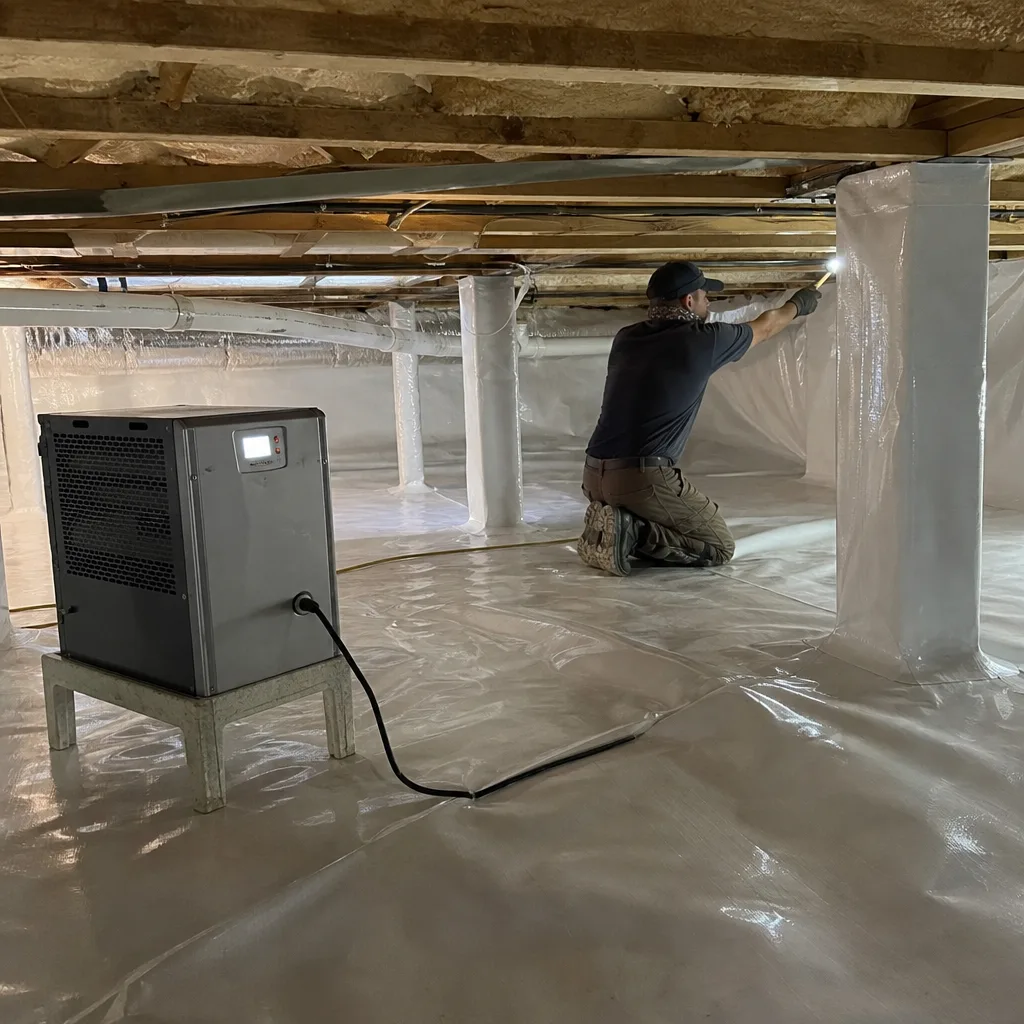
- Condensation beading on the underside of the poly. This means warm, humid exterior air is contacting the cool surface, usually because seams have separated or the barrier wasn’t sealed to the foundation walls. In Round Rock’s spring months, when outdoor dew points hit 65°F while your crawl space sits at 55°F, the gap doesn’t need to be large to saturate the ground.
- Musty odor that intensifies when the HVAC runs. Your ductwork likely runs through the crawl space, and even small leaks in the return side pull that damp air into your breathing space. We find this most often in Fern Bluff homes where flex duct was laid directly on old 4-mil poly that shredded within five years.
- Visible pooling or mud under the barrier. Water is getting in faster than it can evaporate. The cause is usually a perimeter gap where the poly meets the stem wall, or a puncture from a prior service technician who didn’t replace the barrier after plumbing or electrical work.
- White or gray mold spotting on floor joists. By the time you see this, the relative humidity in the crawl space has been above 70% for weeks. The barrier has failed as a capillary break, and the wood moisture content is climbing toward the 20% threshold where rot accelerates.
- Sagging or torn sections, especially near access doors. This is mechanical failure from foot traffic, rodent activity, or UV degradation if the access door lets in daylight. Round Rock’s intense summer sun through a vent or open access can embrittle 6-mil poly in under two years.
Replacement Cost & What’s Included
Most full vapor barrier replacements in Round Rock run $1,800-$3,400 installed. The low end covers a clean, rectangular crawl space under 1,200 square feet with straight-forward access and no existing barrier to remove. The high end reflects stone-covered ground that requires 10-mil reinforced, extensive seam taping around HVAC and plumbing penetrations, or removal of degraded old material that has fused to the soil.
What drives the range: square footage, mil thickness, access clearance (less than 18 inches adds labor), and whether we air-seal rim joists and penetrations before laying the new barrier. We don’t upsell the air sealing; we sequence it correctly. Seal the leaks first. The insulation has nowhere to go until you do. Every job gets a Written Price Before Any Work Starts under Haven Standard Clause 1, and the 365-Day Done Right Promise covers seam separation or installation defects.
On applicable jobs, we run a blower-door test before and after to document the air-sealing result. You keep the numbers. The photo record is included, not available on request.
DIY or Call Us?
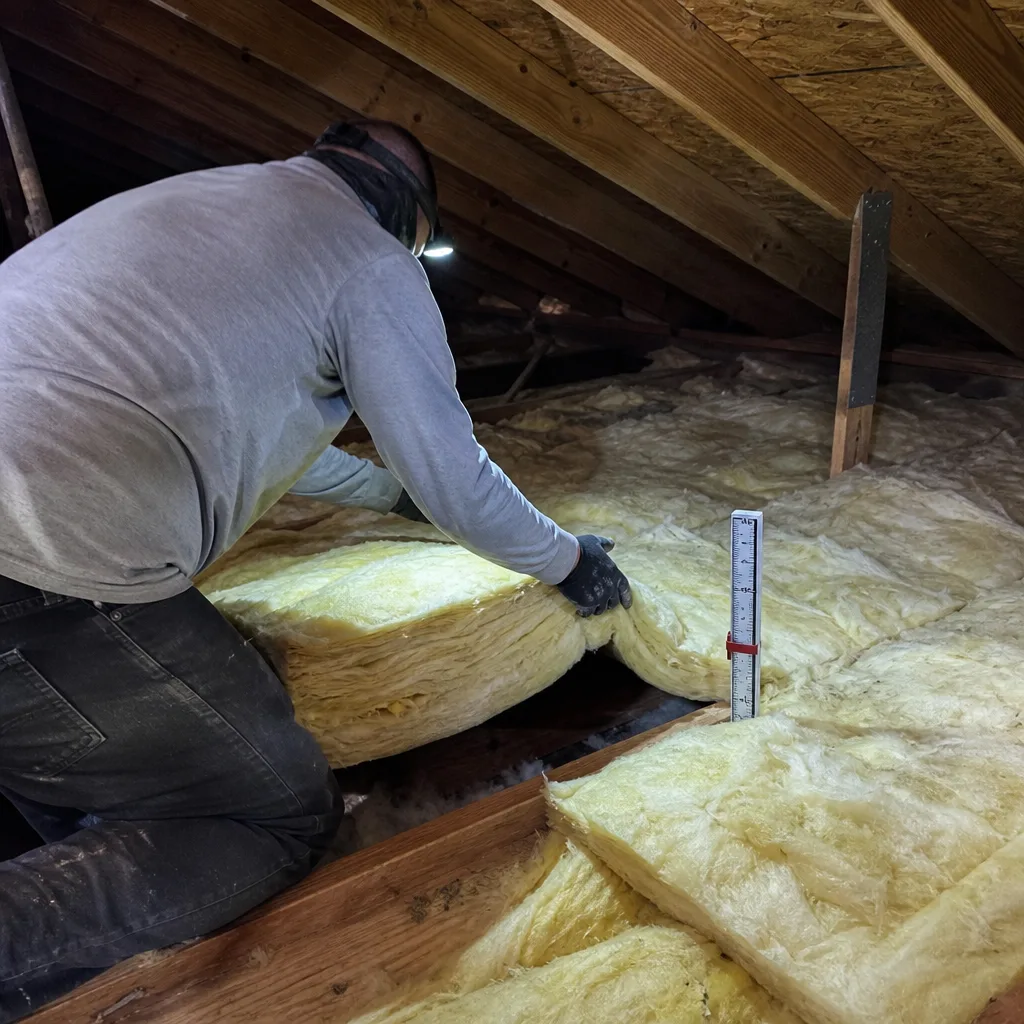
What you can safely check: measure your crawl space or attic floor, photograph the existing barrier and any labeling on tape remnants, and note whether the access opening accommodates a 6-foot worker. That’s useful information for us, and it costs you nothing.
Where DIY goes wrong: vapor barrier installation looks like unrolling plastic, but the failure points are invisible until months later. Seams that aren’t overlapped 12 inches and double-taped will separate when the ground shifts in Williamson County’s expansive clay soil. Poly that isn’t sealed to the foundation wall with termination bars or acoustic sealant creates a funnel for humid air. And working in a crawl space with limited egress, possible electrical hazards from exposed romex, and the occasional copperhead in summer is not a weekend project.
We’re not affiliated with Knauf; we’re an independent service provider who sources their materials among others. If you want a second opinion on a quote you’ve already received, bring it. We’ll read it with you. Call (737) 259-7528 for a written price before any work starts.
FAQs
Properly installed 10-mil reinforced poly with sealed seams lasts 15-20 years in Round Rock’s climate; 6-mil without reinforcement typically fails in 5-8 years, especially in south-facing crawl spaces that bake through August. The tape bond is usually the first point of failure, not the membrane itself. Call (737) 259-7528 for an exact quote on your space - estimates are free.
Small punctures under 6 inches can be patched with compatible tape if the surrounding material is still flexible and the seam network is intact. If you’re seeing multiple tears, delaminated tape, or condensation issues, patching is a short-term fix that doesn’t address the underlying air leakage. We document the condition with photos so you can decide based on evidence, not pressure.
Most residential jobs in Round Rock finish in one day: 4-6 hours for spaces under 1,500 square feet with good access, up to 8 hours for larger or obstructed areas. We arrive with the material on the truck, so there’s no delivery delay. You’ll get a text when the crew is en route and a photo record before we leave.
We carry 6-mil and 10-mil reinforced poly, Knauf-compatible 3-inch seam tape, termination bars, and acoustic sealant on every vehicle. For Knauf specifically, we stock the acrylic tape that bonds to their recommended substrates; if your existing install used asphaltic mastic, we carry the primer to prep for proper adhesion. Same-day installation is standard when we have your measurements and access photos in advance.
Written by Wes Okafor, Owner, Topside Attic Insulation Round Rock at Topside Attic Insulation Round Rock, serving Round Rock and nearby areas.