
Rockwool Attic Air Sealing: The Round Rock Owner’s Guide
Rockwool attic air sealing in Round Rock typically runs $340-$780 installed, depending on attic square footage and how many top plates, can lights, and penetrations need sealing. We stock Rockwool-compatible fire-stop sealants, mineral wool plugs, and intumescent caulk on every truck, and most jobs in Round Rock’s 78664, 78665, and 78681 ZIPs are completed same-day. Most homeowners discover the problem when their newer blown-in Rockwool settles unevenly, or when a summer utility bill spikes despite the thermostat never moving - both signs that conditioned air is escaping through gaps the insulation was never designed to block.
Which Rockwool Models This Applies To
Rockwool’s residential attic line in Round Rock homes is almost exclusively Comfortbatt, Roxul Safe’n’Sound, or AFB (Acoustical Fire Batt) - though the air-sealing components that fail are the perimeter details, not the batts themselves. We see the most calls from homes that used Comfortbatt R-30 or R-38 in 2×10 or 2×12 joist bays, especially in the master-planned neighborhoods north of Old Settlers Boulevard where builders spec’d Rockwool for its fire rating but skipped proper air sealing of top plates and electrical penetrations.
To identify what you’re working with: Rockwool batts have a brown-tan color and slight rigidity compared to fiberglass. The critical compatibility issue is cavity depth versus batt thickness. A 2×10 joist bay in a Round Rock home from the 2015-2020 build wave measures 9.25 inches actual; Comfortbatt R-30 is 7.25 inches, leaving a 2-inch gap at the top that becomes an air highway if the top plate isn’t sealed first. That’s the gotcha we correct most often.
We use OEM Rockwool AFB plugs for large penetrations and fire-rated mineral wool packing where code requires it, but for the sealant work itself - top plates, drywall-to-framing gaps, can light housings - we prefer Tremco Acoustical Sealant or 3M Fire Block Foam as aftermarket equivalents that perform identically at lower material cost. We do not use generic latex caulk in attics; it cracks in Central Texas heat cycles within 18 months.
Signs Your Rockwool Attic Air Sealing Is Failing
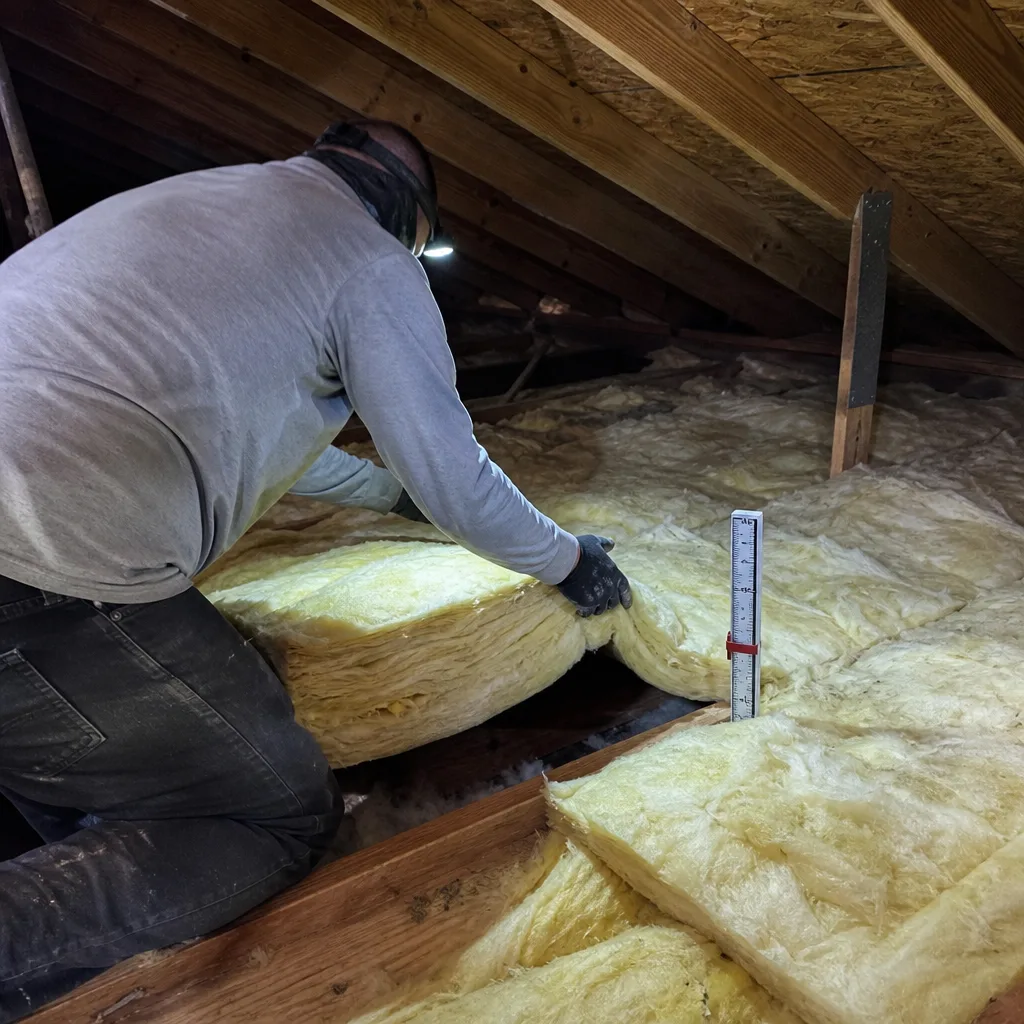
- Uneven settling or visible gaps along batt edges. Rockwool doesn’t settle like cellulose, but if you see daylight between the batt and the joist face, air is moving through that gap. In Round Rock’s older sections like Downtown and Mays Street corridors, we find this where balloon framing meets modern additions and the air barrier was never continuous.
- Hot spots on second-floor ceilings in August. When the attic hits 140°F and conditioned air leaks through bypasses around light fixtures, the drywall conducts that heat inward faster than the insulation can resist it. The Rockwool itself is fine; the air sealing failed upstream.
- Dust streaking around ceiling registers or can lights. This is filtered air escaping through gaps, carrying dust that deposits on the ceiling surface. We see this most in Fern Bluff and Walsh Ranch homes where the HVAC runs hard from March through October and even small leaks become visible within two seasons.
- Blower-door test showing little improvement after Rockwool installation. If a previous contractor blew or laid insulation without sealing first, the CFM50 number barely moves. We’ve tested homes in Behrens Ranch that read 3,800 CFM50 before any work, 3,400 after “insulation only,” and 2,100 after we pulled back the Rockwool, sealed properly, and reinstalled.
- Ice damming or moisture staining in winter. Rare in Round Rock but real during the hard freeze events of 2021 and 2023. Warm, moist interior air hits cold roof sheathing at the leak point, condenses, and stains the drywall. Rockwool is hydrophobic and won’t mold, but the framing around it will.
Replacement Cost & What’s Included
Most Rockwool attic air-sealing jobs in Round Rock fall between $340 and $780 installed. The low end covers a focused repair: sealing top plates and electrical penetrations in a 1,200-square-foot attic footprint. The high end addresses a full attic floor in a 2,500+ square-foot home with recessed can lights, duct chases, and plumbing stacks that all need fire-rated packing and sealant.
What drives the range: access difficulty (scissor truss vs. conventional framing), number of penetrations, and whether we need to temporarily move existing Rockwool to reach the leaks. We do not charge separately for the blower-door test; it’s included because we won’t quote air sealing without measuring the leak first. Every job closes with a written scope, before-and-after CFM50 readings, and a Documented Photo Record showing sealed penetrations. Work carries our 365-Day Done Right Promise under Haven Standard Clause 1: flat price, written scope, written warranty before anyone lifts a tool.
DIY or Call Us?
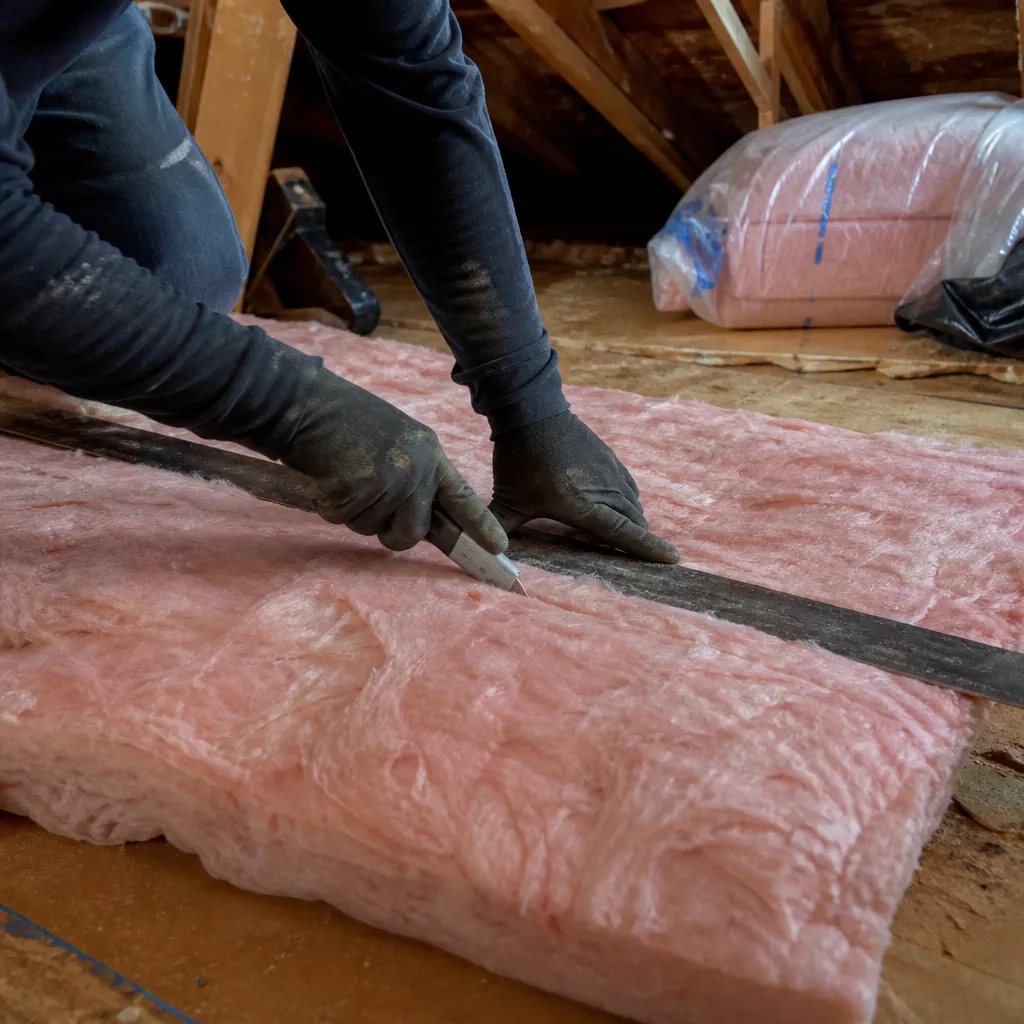
What you can safely check: look for visible gaps around ceiling fixtures from the attic side, and confirm whether your Rockwool batts are in full contact with the top plate. A flashlight and a dust mask are sufficient for inspection. Do not disturb vermiculite or suspect asbestos; Round Rock homes built 1940-1980 may have it, and we can test.
Where DIY goes wrong: attic air sealing requires working at height, on joists, in 130°F heat, with fire-rated materials that must meet IRC Section N1102.4.1. More critically, most homeowners seal the obvious gaps and miss the bypasses - the soffit-to-baffle channels, the partition top plates, the electrical boxes - which is why we lead with a blower-door test to find what you cannot see. Seal the leaks first. The insulation has nowhere to go until you do.
We’re not affiliated with Rockwool; we’re an independent service provider that stocks and installs compatible materials. For a free estimate with written pricing before any work starts, call (737) 259-7528.
FAQs
How long does Rockwool attic air sealing last?
In Round Rock’s climate, properly installed fire-stop sealant and mineral wool packing last 20-30 years, but the sealant bond to OSB or drywall can degrade faster if the attic exceeds 150°F regularly. We inspect sealant adhesion as part of any subsequent insulation service. Call (737) 259-7528 if you’re unsure of your install date - estimates are free.
Can air sealing be repaired, or does it all need replacement?
Spot repair is common and effective if the original sealant is still flexible. We cut away failed sections, re-clean the substrate, and bridge with compatible material. Full replacement is only needed when the original work used non-fire-rated products or when we’re pulling back insulation to access leaks. Call (737) 259-7528 and we’ll tell you which applies.
How long does the swap take?
A focused repair runs 3-4 hours; a full attic floor in a 2,000-square-foot home takes one full day. We schedule morning starts in Round Rock’s summer months to beat attic heat, and we never leave Rockwool exposed overnight - if we move it, we replace it same day. Call (737) 259-7528 to check this week’s availability.
Do you stock Rockwool-compatible air-sealing parts?
Yes - Tremco Acoustical Sealant, 3M Fire Block Foam, intumescent caulk, and mineral wool plugs are on every truck. For Rockwool AFB or Comfortbatt replacement batts, we source from our supplier in North Austin with next-day availability if your existing material was damaged during removal. Call (737) 259-7528 to confirm current stock for your specific cavity depth.
Written by Wes Okafor, Owner, Topside Attic Insulation Round Rock at Topside Attic Insulation Round Rock, serving Round Rock and nearby areas.