
Icynene Vapor Barrier Installation: The Round Rock Owner’s Guide
We stock and install Icynene-compatible vapor barrier systems in Round Rock, with most residential jobs running between $1,800 and $3,400 depending on crawl space or attic configuration and whether the existing barrier needs full removal. Same-day installation is available when we have your dimensions and access details by 10 a.m. Most Round Rock homeowners discover their vapor barrier has failed when they notice a sharp musty smell after spring rains, find fiberglass batts sagging with moisture in the crawl space, or see their energy bills spike during humid July weeks despite the AC running constantly.
Which Icynene Models This Applies To
Icynene’s vapor barrier line isn’t a single part number. The system you’re matching depends on whether your home was insulated with Icynene’s open-cell spray foam (LD-C-50, LD-R-50 series) or a hybrid assembly where Icynene foam meets a polyethylene or reinforced membrane at the crawl space floor. The critical compatibility point is permeance rating: Icynene open-cell foam is vapor-permeable by design, which means the vapor barrier doing the actual stopping is either the 6-mil poly sheeting below or a Class I vapor retarder on the warm side. Get this sequence wrong and you trap moisture against the rim joist.
To identify what you have, check the spray foam surface for a stamped date code and density mark. Icynene LD-series foam installed in Round Rock between 2012 and 2019 often paired with non-reinforced 6-mil poly that degrades faster in our alkaline clay soils. We carry both the reinforced 10-mil cross-laminated polyethylene that outlasts standard poly in Central Texas crawl spaces, and the vapor-retarder paint systems compatible with Icynene’s warranty terms when applied over existing foam. OEM-spec membranes are available, though in most Round Rock homes a quality aftermarket equivalent with matching permeance and ASTM E1745 Class A rating performs identically at lower cost. We do not stock proprietary Icynene-branded vapor barriers; we source equivalent or superior spec material and install to Icynene’s published compatibility guidelines. Topside Attic Insulation Round Rock is an independent service provider, not affiliated with Icynene.
Signs Your Icynene Vapor Barrier Installation Is Failing
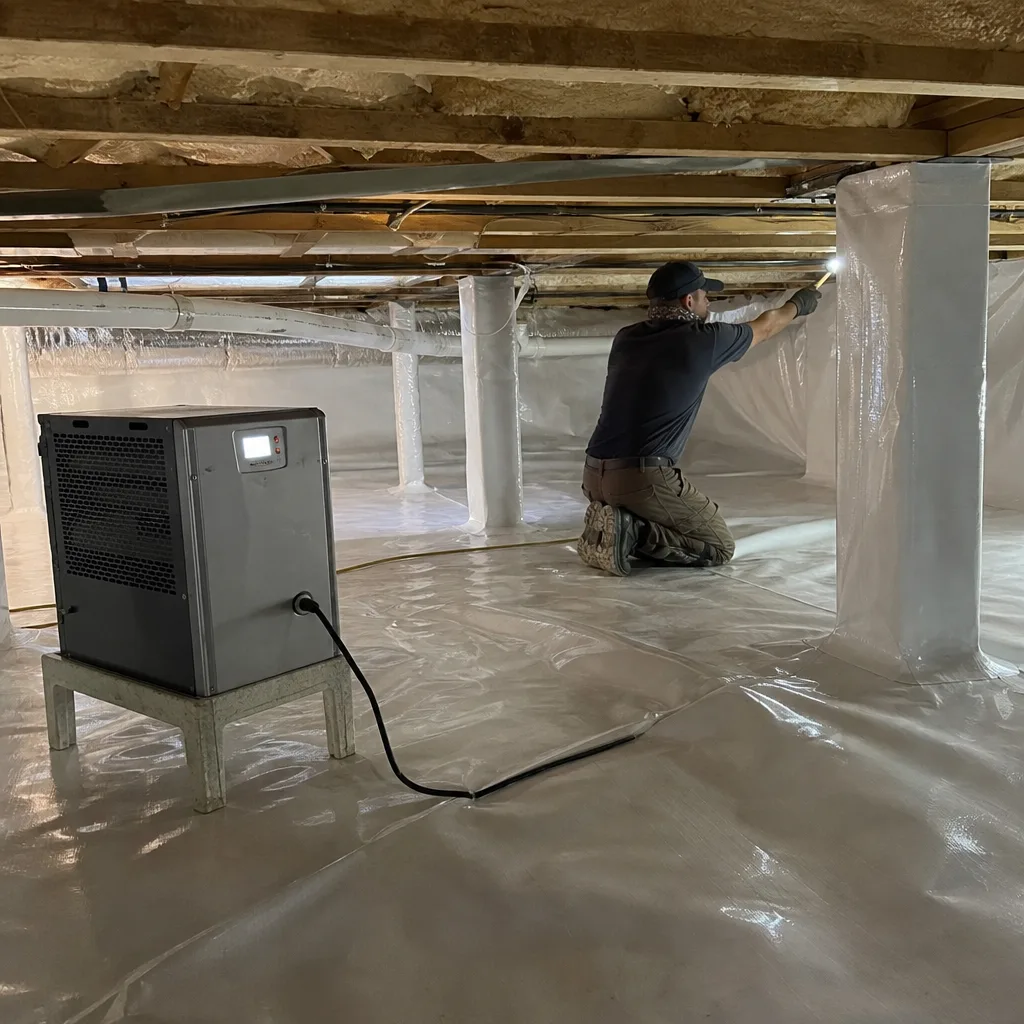
- Musty odor that worsens after rain. In Round Rock’s clay-heavy soils, groundwater wicks upward through compromised seams or punctures in the vapor barrier. The Icynene foam above stays structurally sound, but the trapped moisture breeds mold on organic surfaces nearby. You’ll smell it before you see it.
- Condensation on ductwork or plumbing in the crawl space. When the vapor barrier tears or pulls away from pier footings, humid exterior air meets the cooler surfaces of your conditioned-air ducts. This is especially common in Behrens Ranch and Paloma Lake homes where seasonal expansion and contraction of clay soil stress the barrier at pier interfaces.
- Sagging or discolored fiberglass batts. If your Icynene system was part of a hybrid install with batt insulation in the floor joists, a failed vapor barrier lets moisture load the batts. They compress, lose R-value, and eventually drop. The batts are the symptom; the barrier is the disease.
- Increased energy bills with no thermostat change. Wet insulation conducts heat faster than dry. A compromised vapor barrier silently erodes the effective R-value of your entire floor assembly, forcing your HVAC to run longer cycles. We’ve measured 15-25% runtime increases in Fern Bluff homes with this exact failure pattern.
- Visible tears, pooling, or white mineral deposits on the poly surface. The white film is efflorescence, minerals left behind as moisture evaporates through gaps. It maps exactly where your barrier has lost integrity. Pooling water means the barrier is acting as a collection tray rather than a seal.
Replacement Cost & What’s Included
Most Icynene vapor barrier replacements in Round Rock fall between $1,800 and $3,400 for a standard 1,200-2,400 square foot crawl space. The low end assumes accessible conditions, intact existing barriers that need only spot repair and seam reinforcement with compatible tape. The high end covers full removal of degraded poly, treatment of any mold-affected joist surfaces, installation of 10-mil cross-laminated reinforced membrane, sealing to pier footings with butyl tape, and perimeter mechanical fastening.
What drives the range: soil conditions (our Williamson County clay complicates leveling), joist height (less than 18 inches of working space adds labor), and whether the existing barrier was glued to Icynene foam overspray that must be carefully separated. Every job gets a Written Price Before Any Work Starts under Haven Standard Clause 1. The price includes materials, labor, disposal of old barrier, and a Documented Photo Record. Our 365-Day Done Right Promise covers workmanship and material defects. We also stock Reflectix radiant barrier products for homeowners combining vapor barrier replacement with attic thermal upgrades.
DIY or Call Us?
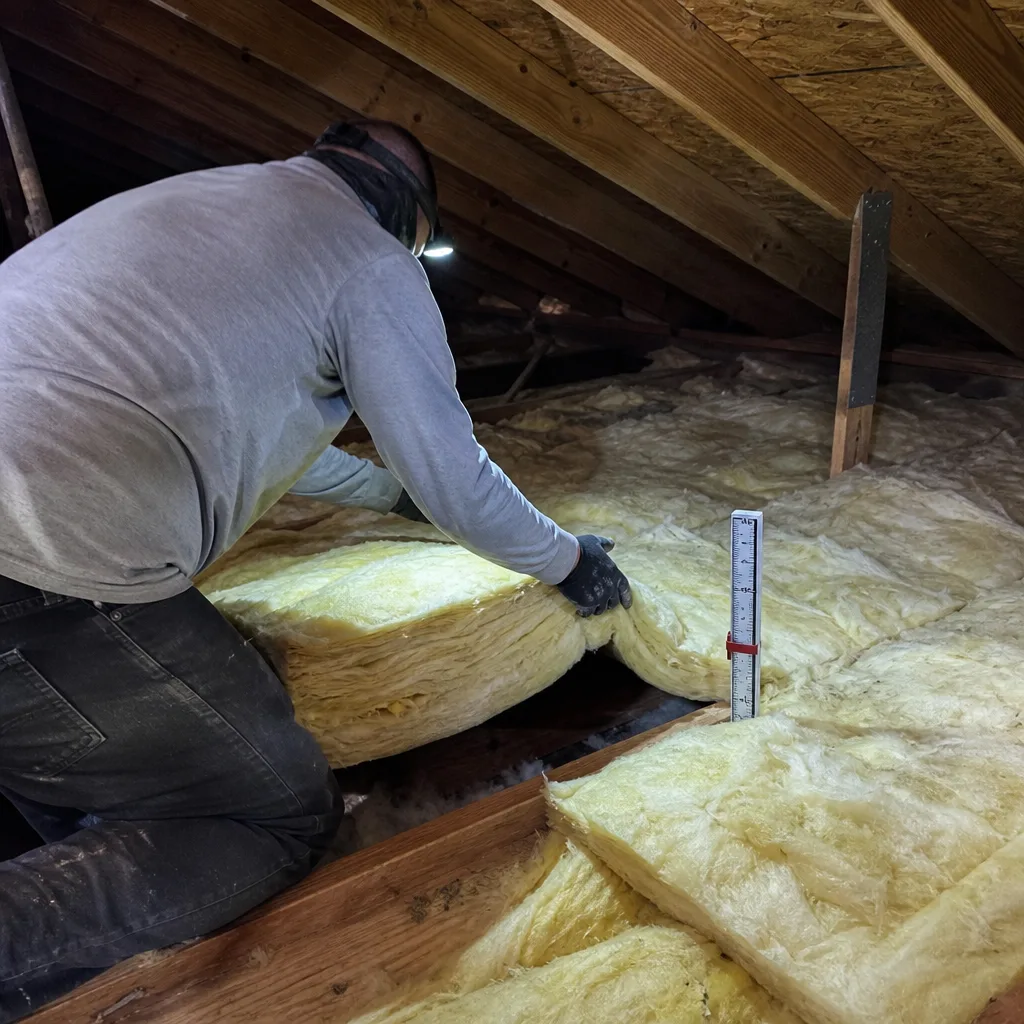
There’s honest work a homeowner can do and work that wastes material. You can safely inspect: measure your crawl space square footage, photograph the existing barrier’s condition at seams and piers, and check for standing water that might indicate a drainage problem upstream of any vapor barrier solution. What goes wrong in DIY is sequence and specification. Installing a vapor barrier over wet soil traps moisture forever. Using non-compatible tape on Icynene foam can off-gas or fail to bond. Cutting around piers without proper overlap and seal leaves a thermal bypass that defeats the whole job. The material itself is not dangerous to handle, but the consequence of getting it wrong is a sealed-in moisture problem that costs more to fix than the original install. We bring a moisture meter, a written scope, and the correct tape and membrane for your specific Icynene assembly. Seal the leaks first. The insulation has nowhere to go until you do.
FAQs
In Round Rock’s climate and soil conditions, standard 6-mil polyethylene lasts 8-12 years before seam failure or puncture degradation; reinforced 10-mil cross-laminated barriers typically reach 15-20 years. The difference is UV stabilizers, tear resistance, and how well the perimeter was sealed at installation. Call (737) 259-7528 and we’ll assess what you have now, no charge.
Spot repair works for isolated punctures or single seam failures if the surrounding poly is still supple and the tear is less than about 6 inches. Widespread embrittlement, multiple tears, or any area where the barrier has pulled from pier footings means full replacement is more reliable and often comparably priced. We give free second opinions on any written estimate you’ve received, including DIY material lists.
Most residential vapor barrier replacements take one crew one day, start to finish, including removal of old material and photo documentation. Tight crawl spaces or homes requiring mold pretreatment may extend to a second day. We text you when the technician is en route, and you receive the Documented Photo Record and written scope before we leave.
We stock reinforced 10-mil polyethylene membrane, compatible butyl and acrylic seam tapes, and mechanical fastening systems that match Icynene assembly specifications. For unusual crawl space configurations or hybrid foam-and-membrane systems, we may need one business day to pull specific widths or vapor-retarder paint. Same-day installation is standard when we have your crawl space dimensions and access details by 10 a.m.; call (737) 259-7528 to confirm stock for your specific job.
Ready to stop the moisture and see your blower-door numbers improve? Call (737) 259-7528 for a free estimate. We’ll bring a written price, a moisture meter, and the right membrane for your Icynene system. No work starts until you have both scope and price in hand.
Written by Wes Okafor, Owner, Topside Attic Insulation Round Rock at Topside Attic Insulation Round Rock, serving Round Rock and nearby areas.