
Demilec Attic Insulation: The Round Rock Owner’s Guide
We stock and install Demilec-compatible open-cell and closed-cell spray foam insulation in Round Rock, with most attic retrofits running between $2,800 and $5,400 depending on conditioned square footage and whether we’re removing degraded material first. Same-day installation is available for most jobs booked before noon. Homeowners usually discover their Demilec insulation has failed when utility bills spike 20-40% year-over-year, or when they notice hot ceiling patches during July afternoons in Round Rock’s 105-degree heat - signs that the foam has pulled away from roof decking or developed shrinkage gaps common after 8-12 years in Central Texas’s thermal cycling.
Which Demilec Models This Applies To
Demilec’s product line for residential attic application breaks into two families: Heatlok HFO Pro (closed-cell, 2.0 lb density, R-6 per inch) and Sealection 500 (open-cell, 0.5 lb density, R-3.6 per inch). The label is stamped on the substrate side of any exposed foam; look for a 10-digit batch code starting with “TX-” for material mixed at Demilec’s Texas distribution points. If your attic was insulated between 2012 and 2019, you likely have Sealection 500 - it was the dominant spec in Round Rock’s Behrens Ranch and Forest Creek builds during that window.
OEM Demilec replacement is the only route if you’re patching an existing closed-cell job; mixing densities creates thermal bridges and voids warranty coverage. For open-cell, we source equivalent-density material from Icynene and Johns Manville that matches Demilec’s spec sheets - same R-value, same vapor permeance, same adhesion profile - at a lower per-board-foot cost. We do not use generic “spray foam” without a manufacturer data sheet; Haven Standard Clause 1 requires we document exactly what goes in your attic.
Signs Your Demilec Attic Insulation Is Failing
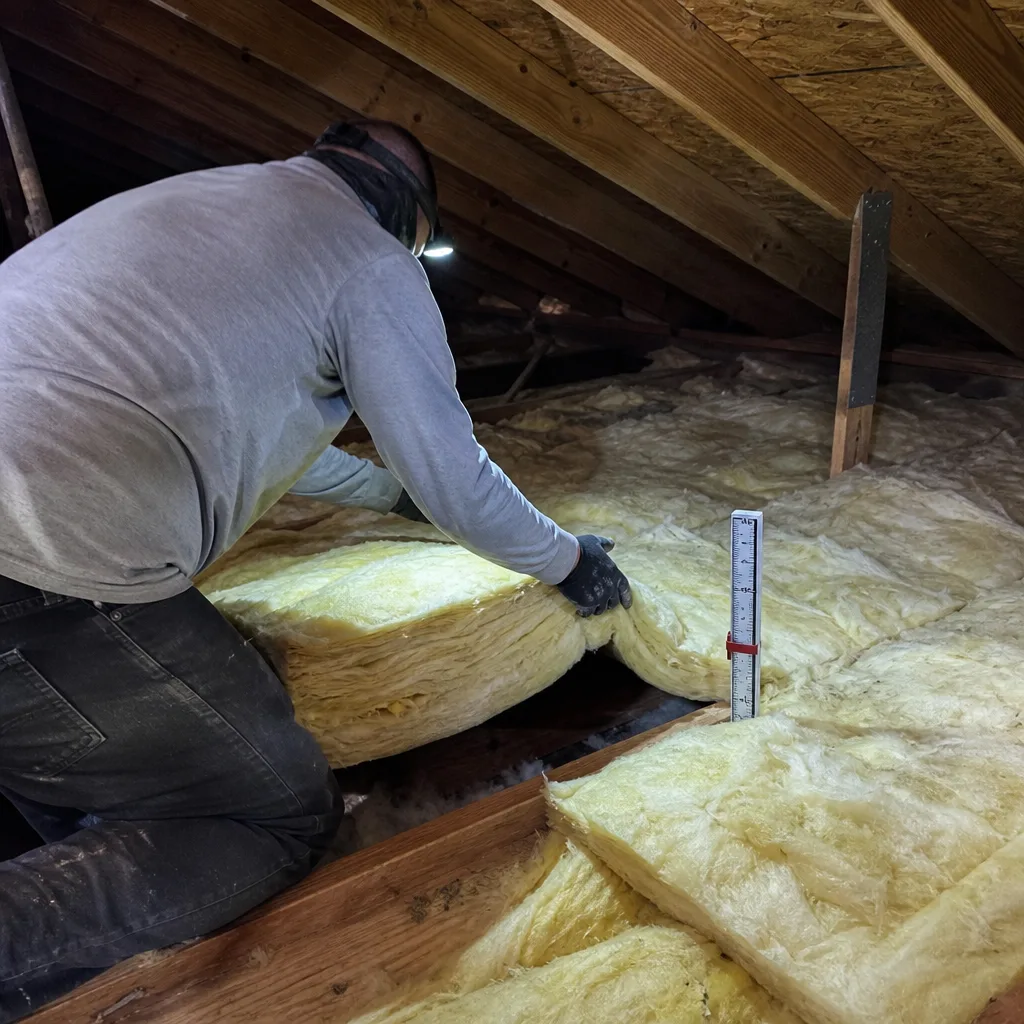
- Hot ceiling patches in afternoon sun. This indicates closed-cell shrinkage or delamination from the roof deck, common in Round Rock attics where summer roof deck temperatures exceed 160°F. The foam separates from the substrate, creating a convection channel that bypasses the insulation entirely.
- Utility bills climbing 20% or more with no rate change. Open-cell Sealection 500 can settle 10-15% over its lifespan in high-temperature attics, reducing effective R-value. We measure this with thermal imaging; a 15°F delta between insulated and exposed framing confirms degradation.
- Musty odors or visible mold on attic-side drywall. Closed-cell Heatlok that has cracked allows humid outdoor air to reach cold ductwork in shoulder seasons. Round Rock’s spring humidity - 75% RH is typical in April - hits the dew point on supply plenums fast when the envelope fails.
- Pest activity concentrated in specific attic zones. Rodents exploit shrinkage gaps at perimeter walls; we’ve found this repeatedly in Fern Bluff homes where Sealection 500 was applied directly to roof decking without proper air-sealing prep. The gaps are highways, not just entry points.
- Ice damming or heavy frost on nails in winter. Even in Central Texas, hard freezes occur. Warm attic air reaching the sheathing melts frost, which refreezes at the eaves. This signals air leakage through failed foam at the top plate, not just inadequate R-value.
Replacement Cost & What’s Included
| Scope | Price Range in Round Rock |
|---|---|
| Spot repair, open-cell (up to 200 sq ft) | $1,400 - $2,200 |
| Full attic removal + replacement, open-cell | $2,800 - $4,200 |
| Full attic removal + replacement, closed-cell | $4,000 - $5,400 |
| Air sealing + blower-door verification (add to any) | $680 - $1,100 |
What drives the range: accessibility (cathedral ceilings add 30-40% labor), existing material condition (removal of degraded foam adds $0.85-$1.20 per board-foot for disposal), and whether we find unsealed top plates or can lights that should have been addressed originally. Every job includes a Written Price Before Any Work Starts, a Documented Photo Record, and on applicable jobs, before-and-after blower-door numbers. The 365-Day Done Right Promise covers adhesion failure, shrinkage beyond manufacturer spec, and any air-leakage regression we measure.
DIY or Call Us?
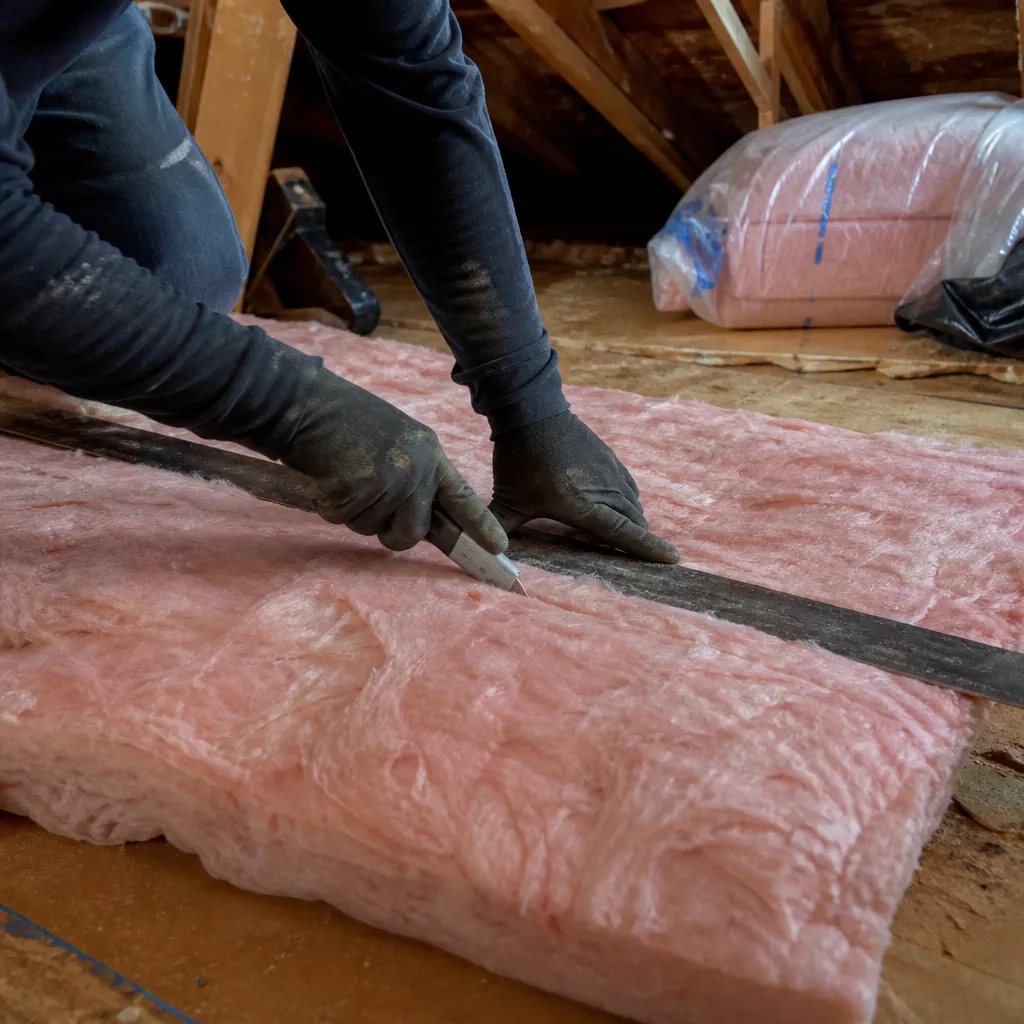
There’s no safe DIY path for spray foam insulation. The two-component chemistry requires respirator-grade PPE, controlled temperature and humidity during application, and precise mixing ratios that vary by substrate. Off-ratio foam cures brittle or fails to adhere; we’ve torn out homeowner-applied jobs from Round Rock hardware store kits that shrank 40% in six months.
What you can check safely: verify your attic ventilation isn’t blocked (soffit baffles visible, ridge vent clear), confirm bathroom fans exhaust outside not into the attic, and photograph any visible foam gaps for our review. But seal the leaks first. The insulation has nowhere to go until you do. For the removal, disposal, and proper reapplication, call (737) 259-7528. We also stock Reflectix radiant barrier material for hybrid systems if your roof configuration benefits from combined treatment.
Topside Attic Insulation Round Rock is an independent service provider, not affiliated with Demilec.
FAQs
Open-cell Sealection 500 typically performs 10-15 years in Central Texas attics before measurable shrinkage; closed-cell Heatlok HFO Pro often reaches 20+ years if applied to a properly sealed substrate. Round Rock’s 60-70 annual freeze-thaw cycles and sustained summer roof deck temperatures above 150°F accelerate thermal stress compared to milder climates. Call (737) 259-7528 for a thermal scan that shows where your specific installation stands - estimates are free.
Spot repair works for localized delamination or shrinkage under 10% of total attic area, provided the surrounding foam is well-adhered and the substrate is dry. Widespread degradation, moisture intrusion, or multiple density layers require full removal; patching over failed material traps moisture and voids any warranty. We document the scope with photos before quoting - Haven Standard Clause 1 - so you see what we found, not just what we propose.
Most residential attic jobs in Round Rock finish in one day for open-cell and one to two days for closed-cell, including removal, HEPA cleanup, air sealing, and application. Weather matters: we won’t spray when attic ambient temperature drops below 50°F or exceeds 110°F, which in Round Rock typically limits December-January scheduling. We stock Demilec-compatible material on our trucks, so once conditions are right, we don’t wait on delivery.
We stock Demilec-equivalent open-cell and closed-cell sets, plus Reflectix radiant barrier, on every truck serving Round Rock. Same-day installation is available for most jobs confirmed before noon, though full removal-and-replacement requires scheduling around crew availability and weather windows. Call (737) 259-7528 to confirm today’s slot - a live person answers 24/7.
Written by Wes Okafor, Owner, Topside Attic Insulation Round Rock at Topside Attic Insulation Round Rock, serving Round Rock and nearby areas.