
GreenFiber Attic Air Sealing: The Round Rock Owner’s Guide
GreenFiber attic air sealing in Round Rock typically runs $340-$780 for a complete top-plate and penetration seal on an average 1,800-2,400 square foot home, and we stock GreenFiber-compatible sealant materials and accessories on every truck for same-day starts. Most Round Rock homeowners discover the problem when their GreenFiber cellulose insulation was installed without proper air sealing first, leaving gaps around top plates, recessed can lights, and wire penetrations that let conditioned air bypass the insulation entirely. We see this most often in homes built between 1995 and 2010 across Round Rock’s older neighborhoods, where the original contractor blew cellulose straight over leaky attic floors.
Seal the leaks first. The insulation has nowhere to go until you do.
Which GreenFiber Models This Applies To
GreenFiber manufactures loose-fill cellulose insulation, not a dedicated air-sealing system, so “GreenFiber attic air sealing” refers to the critical prep work that should precede any GreenFiber cellulose installation. The compatibility question centers on which GreenFiber cellulose products were used in your attic and what sealing method was (or wasn’t) paired with them.
GreenFiber’s two primary residential lines are Low Dust and All Borate, both blown to R-38 to R-60 in Round Rock attics per IECC climate zone 2 requirements. The Low Dust line uses a mineral oil additive; the All Borate line relies entirely on borate fire retardants. Neither includes an air barrier component. If your attic has GreenFiber cellulose sitting directly on drywall with no visible caulk, foam, or gasket sealing at the top plates, you have an unsealed system.
We match GreenFiber installations with fire-rated acrylic latex caulk for rigid gaps, one-component polyurethane foam for irregular penetrations, and preformed gasket covers for non-IC-rated recessed cans. The OEM approach would use GreenFiber’s recommended accessories, but we source equivalent or superior materials from Owens Corning, Johns Manville, Knauf, and GreenFiber directly - no proprietary lock-in. The key gotcha: GreenFiber cellulose settles 15-20% over the first two years, which can expose previously hidden gaps if the original seal was incomplete. We account for this in our scope.
To identify what you have, check for a GreenFiber bag label stapled to a rafter or the blown-in material itself. GreenFiber cellulose is gray-fiber with visible newsprint flecks; if it’s uniformly tan or white, you may have a different product entirely.
Signs Your GreenFiber Attic Air Sealing Is Failing
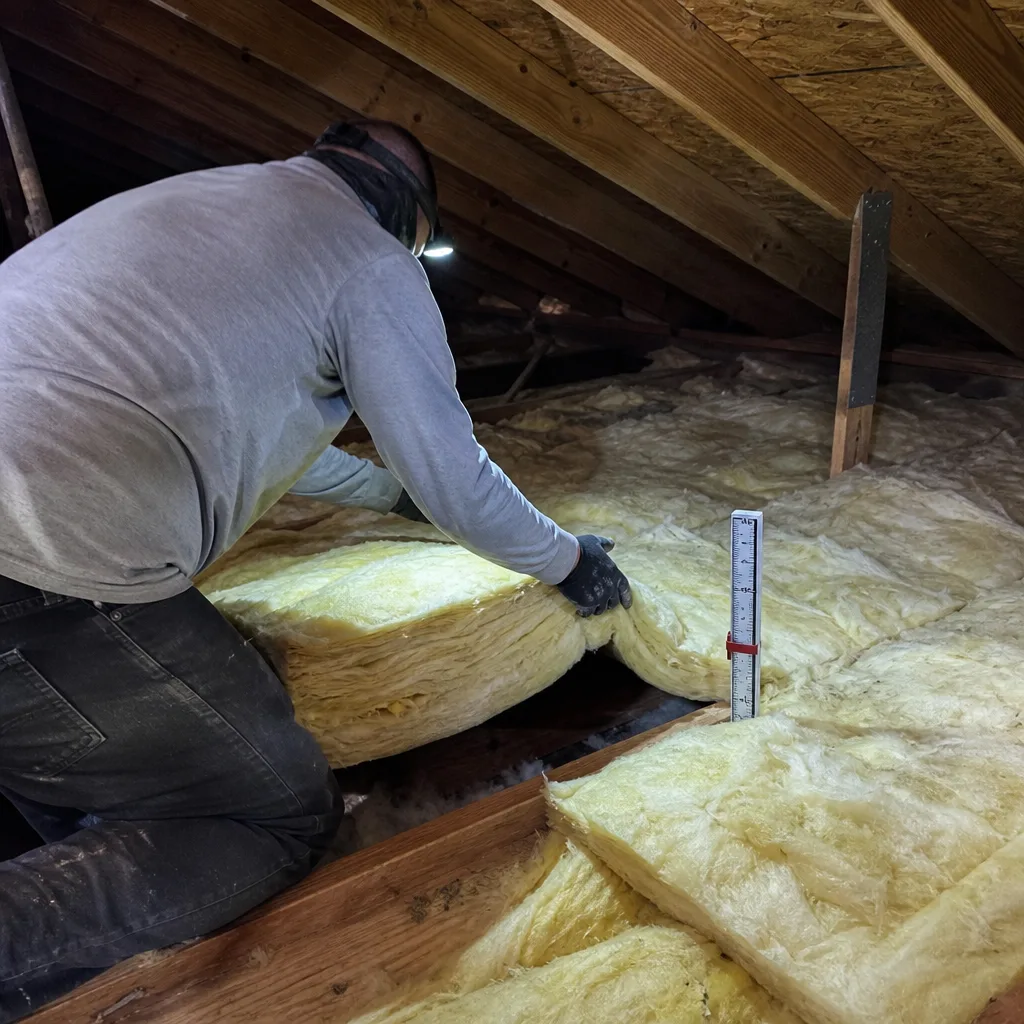
- Hot second-floor rooms in July despite “adequate” insulation. Conditioned air is escaping through bypasses at the top plates and being replaced by attic air above 130°F. Your GreenFiber layer is doing nothing because the air moves around it, not through it.
- Dust streaks on ceiling drywall near can lights or registers. These dark lines are filtration marks - attic air being pulled through gaps by the pressure differential between your conditioned space and the attic. We see this pattern constantly in Round Rock homes near Old Town and Brushy Creek.
- Ice damming or heavy frost on roof sheathing in winter. Warm, moist indoor air hits cold OSB and condenses. In Round Rock’s occasional hard freezes, this shows up as frost that melts and stains ceilings below. The GreenFiber isn’t wet; the air leaking past it is.
- Energy bills that climbed after the insulation was “upgraded.” A well-meaning contractor added GreenFiber over existing leaks, trapping moisture and reducing the effective R-value. The blower-door number often worsens because the new material partially blocks natural ventilation paths without sealing them.
- Musty attic smell or visible mold on rafters. Air leaks carry humidity into the attic. GreenFiber cellulose is mold-resistant when dry, but it won’t stop vapor from condensing on cold surfaces. The fix is sealing the pathway, not treating the symptom.
Replacement Cost & What’s Included
Complete GreenFiber-compatible attic air sealing in Round Rock runs $340-$780 for most homes, with the range driven by attic square footage, accessibility, and the number of penetrations to seal. A compact 1,500 sq ft ranch with a single HVAC trunk and standard can lights sits at the low end. A 3,200 sq ft two-story with multiple bath fans, a fireplace chase, and a complex wire run through Fern Bluff’s steeper pitches runs higher.
| Component | Price Range |
|---|---|
| Top-plate sealing (per linear foot) | $2.50-$4.00 |
| Recessed can light covers/gaskets (each) | $18-$35 |
| Penetration foam (bath fans, wires, plumbing stacks) | $45-$120 |
| Blower-door test (before and after) | $180-$250 |
| Complete package, typical 2,000 sq ft home | $480-$650 |
Every job includes the pre-seal blower-door test, the sealing work, and a post-test with documented CFM50 reduction. You get the written scope beforehand, the photo record after, and our 365-Day Done Right Promise in writing. We don’t start until you have the flat price in hand - that’s Haven Standard Clause 1.
DIY or Call Us?
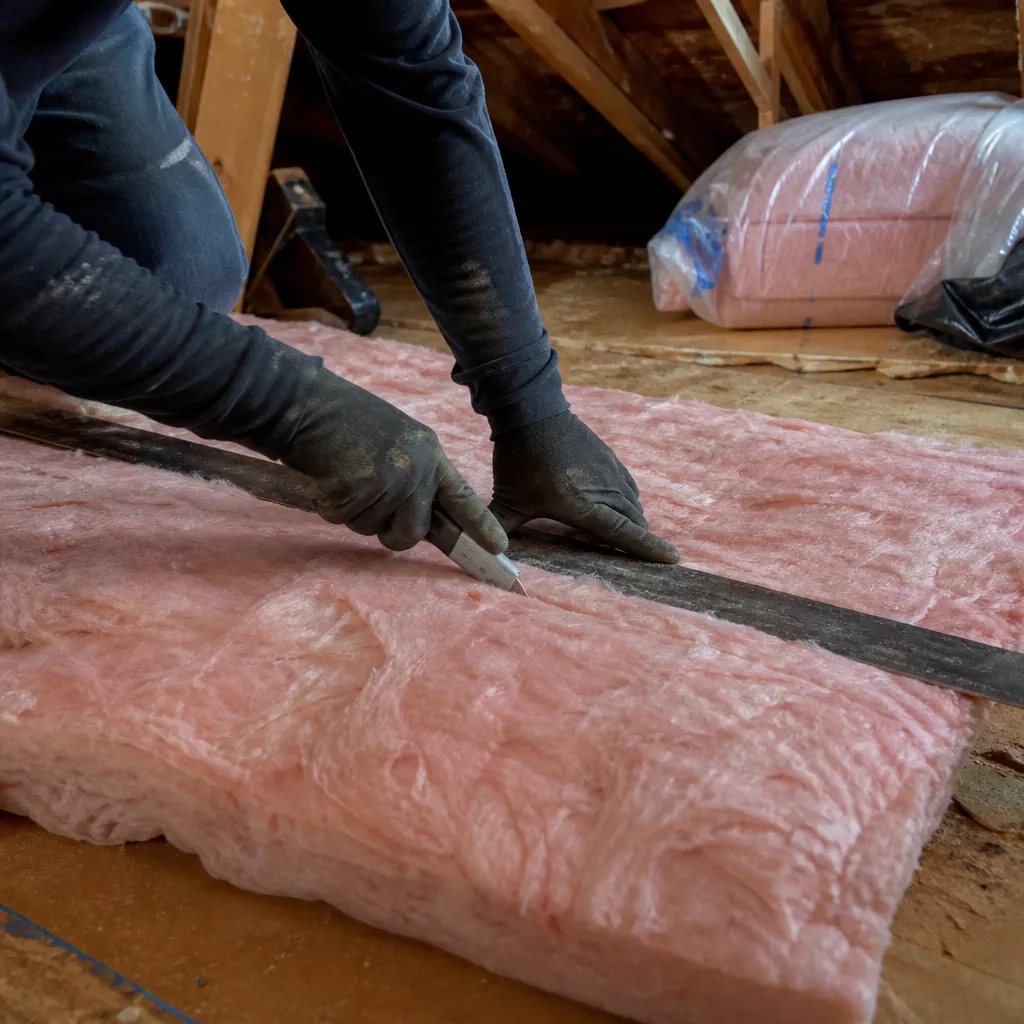
There’s a short, honest list of what a homeowner can safely check. Verify that your recessed cans are IC-rated (look for a label inside the housing). Peek at the attic hatch perimeter for visible gaps. Note any dust streaks or hot rooms to point us toward the worst leaks.
Everything else belongs to a crew with proper PPE, lighting, and fall protection. Walking joists in a Round Rock attic in August is genuinely dangerous - the sheathing temperature hits 140°F and the footing is narrow. More critically, sealing top plates requires working around live electrical and identifying which penetrations are supply ducts versus exhaust vents. Foam the wrong opening and you route carbon monoxide into a bedroom. We carry liability and workers’ comp for this reason; your homeowner’s policy likely won’t cover a DIY attic fall or a misidentified penetration.
Call (737) 259-7528 for a free estimate. We’ll read your existing GreenFiber installation with you and show you exactly where the air is escaping.
FAQs
Properly installed air sealing lasts the life of the home - 20 to 30 years or more - because the materials we use (fire-rated caulk, polyurethane foam, metal gasket covers) don’t degrade under normal attic conditions. In Round Rock’s heat, the primary failure mode is initial installation error: gaps missed, foam skimped, or top plates only partially sealed. We document our work with photos so you can verify coverage. Call (737) 259-7528 for an exact quote - estimates are free.
Partial repairs are possible if the original sealing was competently done and only specific areas have failed - a single new bath fan cut through, for instance. Most Round Rock homes we assess have no prior sealing to repair; the GreenFiber was blown over bare drywall. In those cases, there’s nothing to patch. We quote both approaches after inspection. Call (737) 259-7528 for an exact quote - estimates are free.
A typical GreenFiber-compatible attic air seal on a 2,000 square foot Round Rock home takes four to six hours with a two-person crew. We arrive, run the pre-blower-door test, seal systematically, then run the post-test. You’re present for the numbers if you want to be. Same-day completion is standard. Call (737) 259-7528 to schedule.
We stock GreenFiber-compatible sealants, foams, and penetration covers on every truck, along with materials from Owens Corning, Johns Manville, Knauf, Rockwool, CertainTeed, Icynene, and Demilec - no proprietary lock-in. We’re an independent service provider, not affiliated with GreenFiber. If your attic already has GreenFiber cellulose, we seal to complement it. If you’re starting fresh, we can source GreenFiber or recommend alternatives based on your budget and performance goals. Call (737) 259-7528 for an exact quote - estimates are free.
Topside Attic Insulation Round Rock is independently owned and operated under The Haven Standard since 2016. We also stock parts and materials for Reflectix and other major insulation brands.
Written by Wes Okafor, Owner, Topside Attic Insulation Round Rock at Topside Attic Insulation Round Rock, serving Round Rock and nearby areas.