
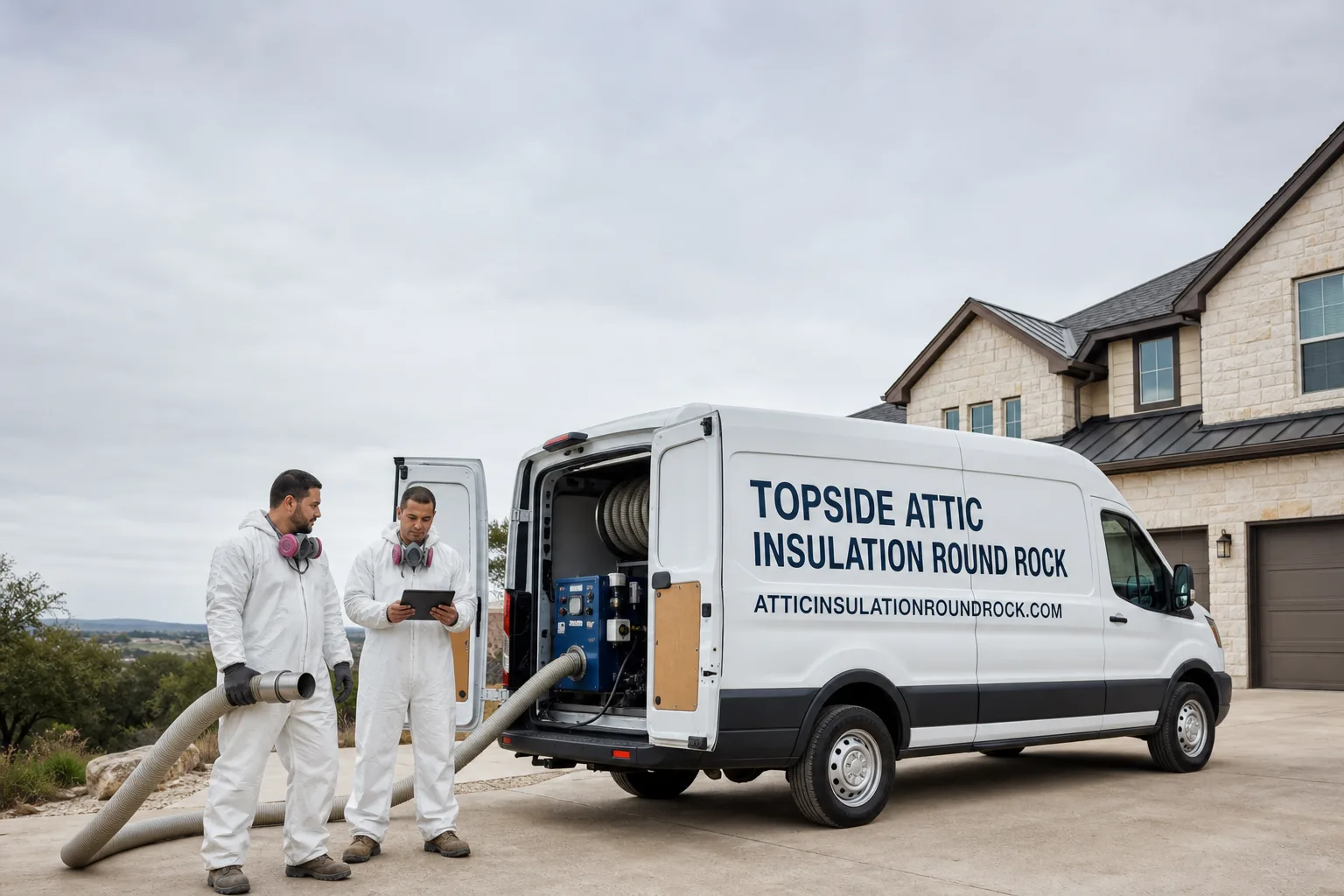
Fast, Reliable Attic Insulation Across Cedar Park
Most attic insulation jobs in Cedar Park run $1,800-$4,500 depending on whether we’re topping up existing material or stripping compacted cellulose and rebuilding to R-49. Our crews are typically on-site in Cedar Park within 24-48 hours of your call, and we finish most single-family homes in one day because we arrive with the full material load, the blower truck, and a written scope already agreed to. Call (737) 259-7528 for a free estimate with flat pricing before any work starts.
We know the Cedar Park market because we measure it. Our crews have pulled attic hatches in hundreds of homes along the 183A corridor, from Avery Ranch to The Fairways at Crystal Falls, and the pattern is consistent: 2000s-2010s builds with original blown-in cellulose that has settled well below its labeled R-value in attics that now exceed 150°F every summer. Dispatch and scheduling run from our Austin office, but the trucks that roll to Cedar Park carry local stock and technicians who’ve seen your exact roof profile before.
Why Topside Attic Insulation Round Rock Is Cedar Park’s Preferred Attic Insulation Company
We’ve sealed and insulated more than 9,000 homes since 2016, and a significant share of that work has been in Cedar Park’s 78641 and 78645 ZIP codes. Homeowners here find us the same way they find any contractor they trust: they read the three-star reviews as carefully as the five-star ones, and they call when they see documented blower-door numbers instead of vague promises about “comfort.” Our Cedar Park customers consistently mention the before-and-after photo record and the written warranty delivered before the crew starts.
Response time to Cedar Park averages same-day or next-day for standard bookings, with emergency calls answered by a live person 24/7. No voicemail loops. No callback windows measured in business days. When you call (737) 259-7528, you get a human who can see our Cedar Park route board and give you a real arrival window.
Our local knowledge is specific and measured. We know that west-facing homes off South US Highway 183 absorb more solar gain than north-facing lots in the same subdivision. We know which Crystal Falls phases used truss designs that complicate baffle installation. And we know that Cedar Park’s 2000s-2010s building boom left a specific insulation deficit that doesn’t match neighboring markets. That expertise means fewer surprises on your job, and fewer return trips.
Our Attic Insulation Services in Cedar Park
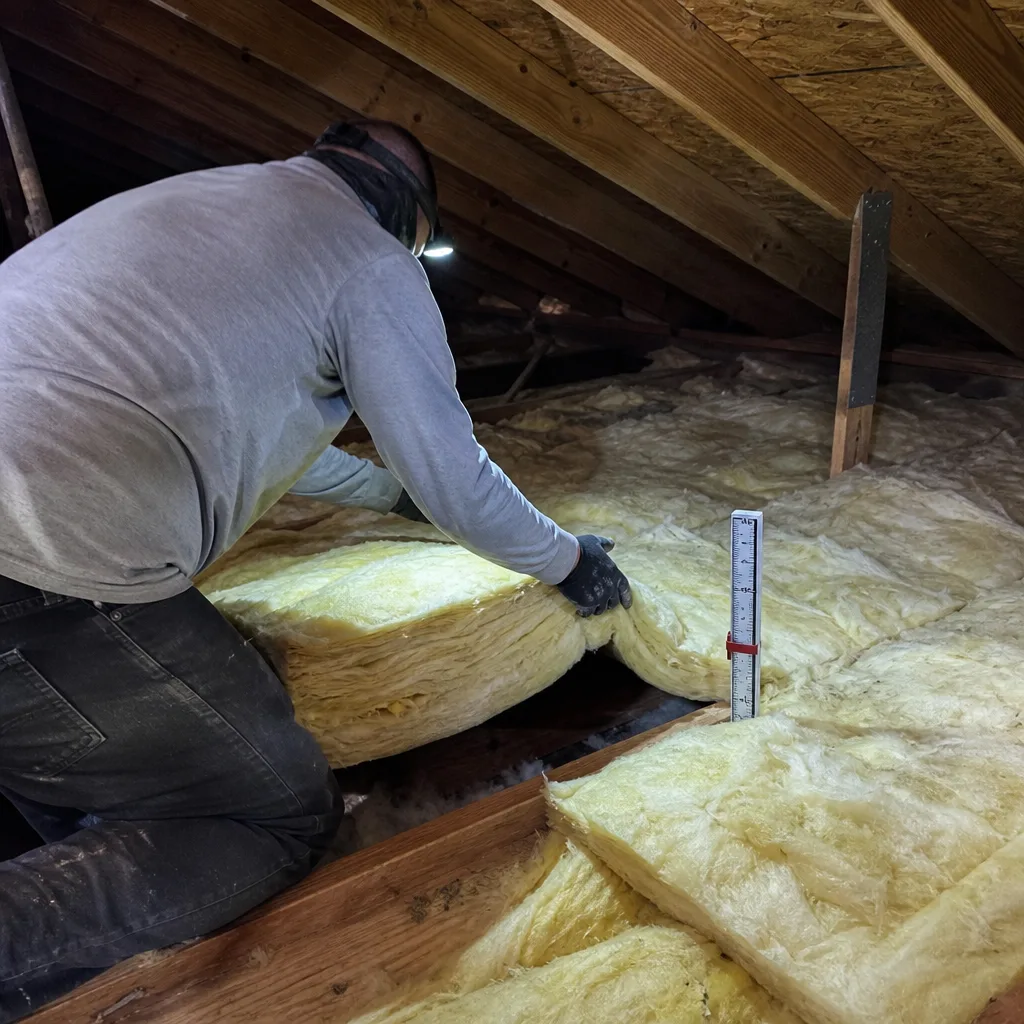
Blown-In Attic Insulation
We install blown-in fiberglass and cellulose from Knauf, Johns Manville, and GreenFiber, selected for your specific attic conditions rather than whatever’s on the truck. In Cedar Park, blown-in is the right choice for most flat-attic or low-slope situations where we can achieve uniform depth across the entire floor. We never blow new material over unsealed top plates, can lights, or duct penetrations - air sealing comes first, always, per our Haven Standard scope. On a typical 2,400-square-foot Cedar Park home, we’re running the hose for four to six hours after two to three hours of prep and sealing.
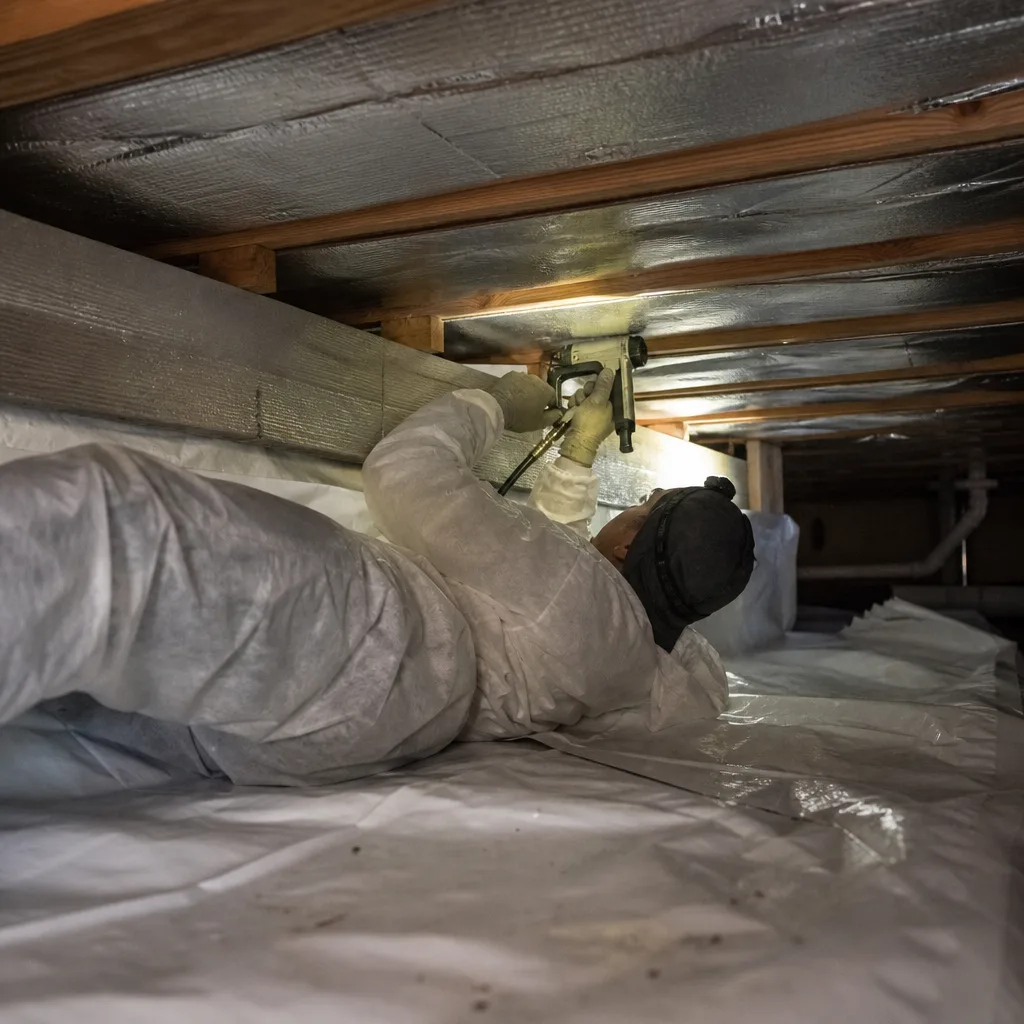
Attic Batt Insulation
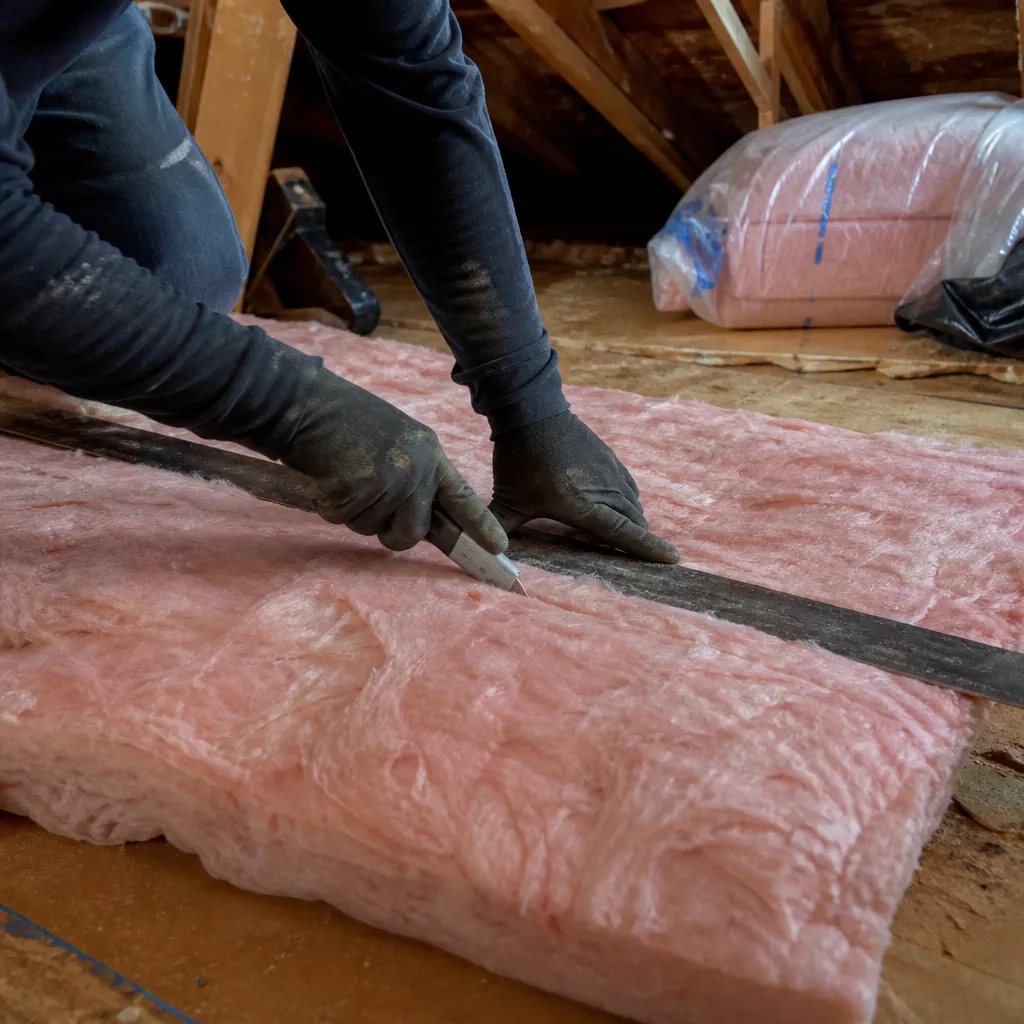
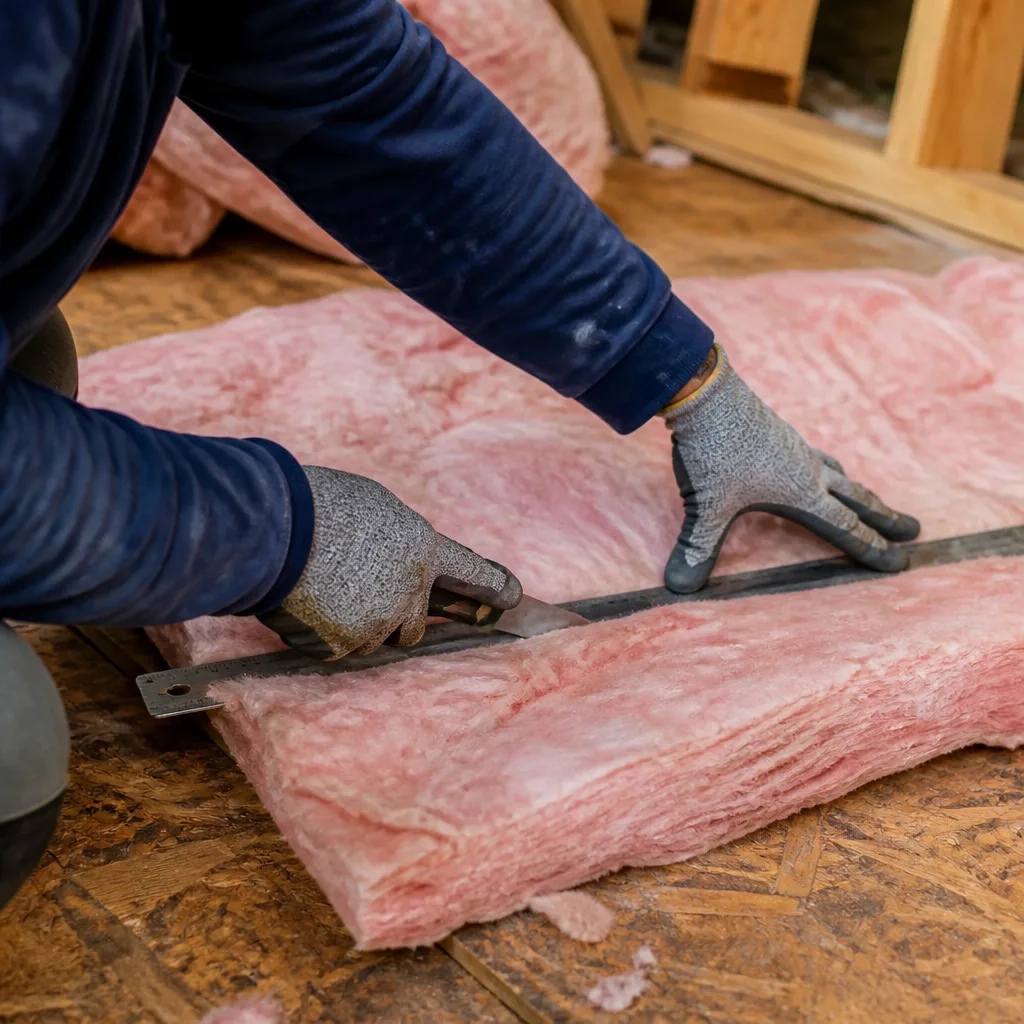
Batt insulation - pre-cut fiberglass or mineral wool panels - is our choice for Cedar Park’s vaulted-ceiling chases, knee walls, and any area where blown-in would slump or shift. The Fairways at Crystal Falls and Avery Ranch both have master-planned designs with complex ceiling transitions where batts are the only way to maintain full contact with the drywall. We source Rockwool and CertainTeed batts for these applications, and we document every bay with photos before we close it up.
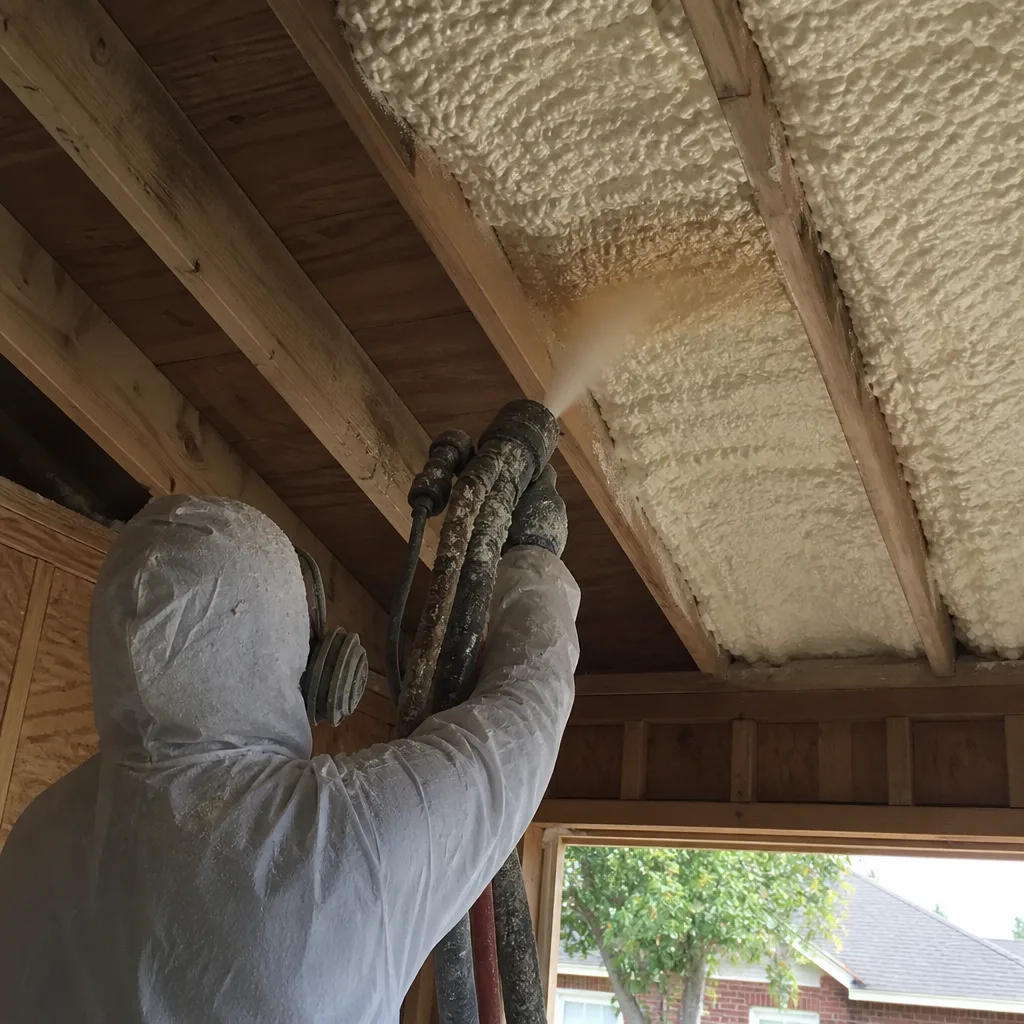
Attic Insulation Top-Up
This is our most common Cedar Park service, and for specific reasons. The 2000s-2010s boom homes in Avery Ranch and Crystal Falls were largely finished with blown-in cellulose engineered for light cooling loads. In attic zones that now breach 150°F in July and August, that same material settles and compacts. Our crews measuring ~20-year-old installs typically find 4-6 inches of material where the closing spec called for the code-minimum R-30 depth. That settlement gap doesn’t exist the same way in neighboring Round Rock or Leander’s older, mixed-era housing, where blown-in fiber depth and roof profiles vary widely from block to block. A Cedar Park top-up isn’t just adding inches; it’s restoring performance that was lost to heat-driven compaction, then building past it to R-49.
Attic Insulation Replacement
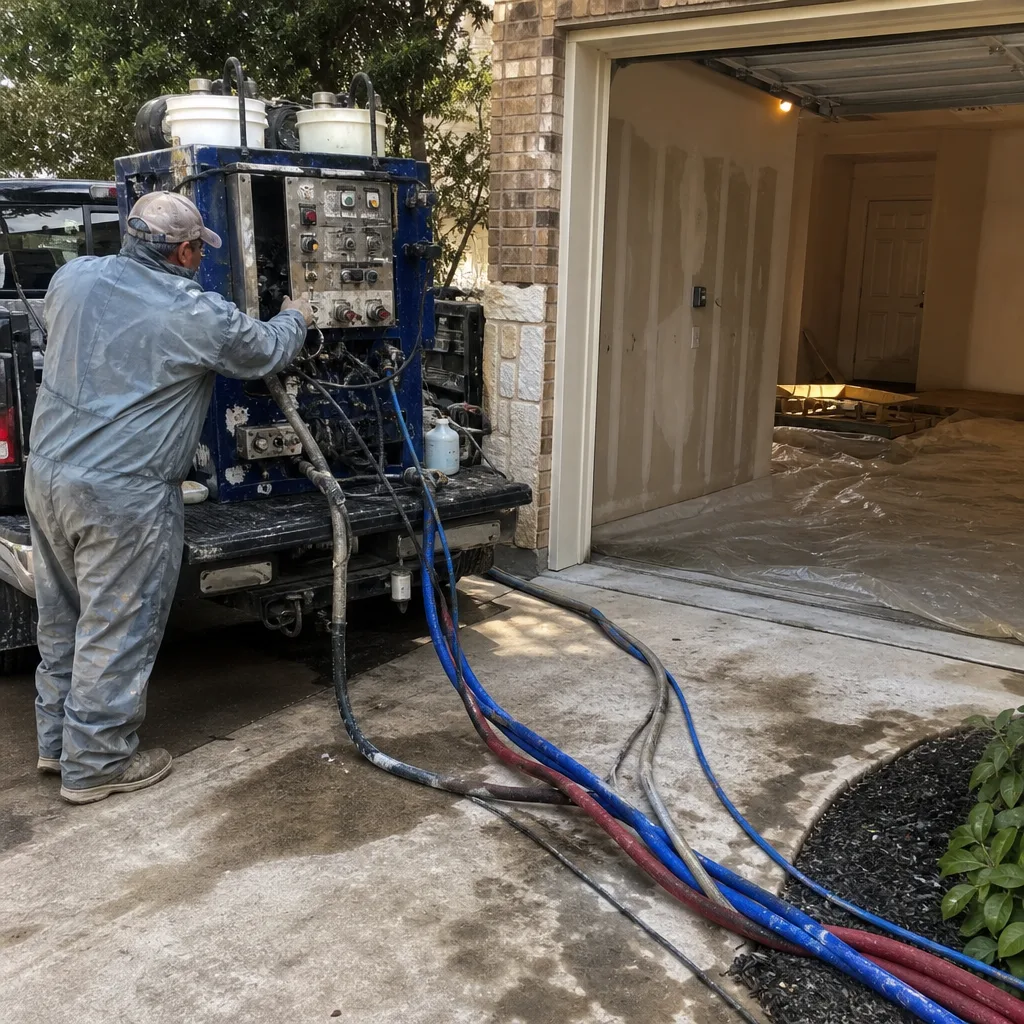
When the existing material is contaminated, water-damaged, or compacted beyond recovery, we strip and start fresh. This is more common in Cedar Park than you might expect - not from leaks, but from two decades of attic heat baking the original cellulose into a dense, uneven mat that no top-up can fix. We remove, dispose, air-seal the deck and penetrations, then install new blown-in or hybrid blown-in/batt assemblies to current code-plus standards. The replacement path costs more, but it’s the only way to hit R-49 when the original layer is performing at R-18 or R-20.
Attic Baffles & Ventilation Prep
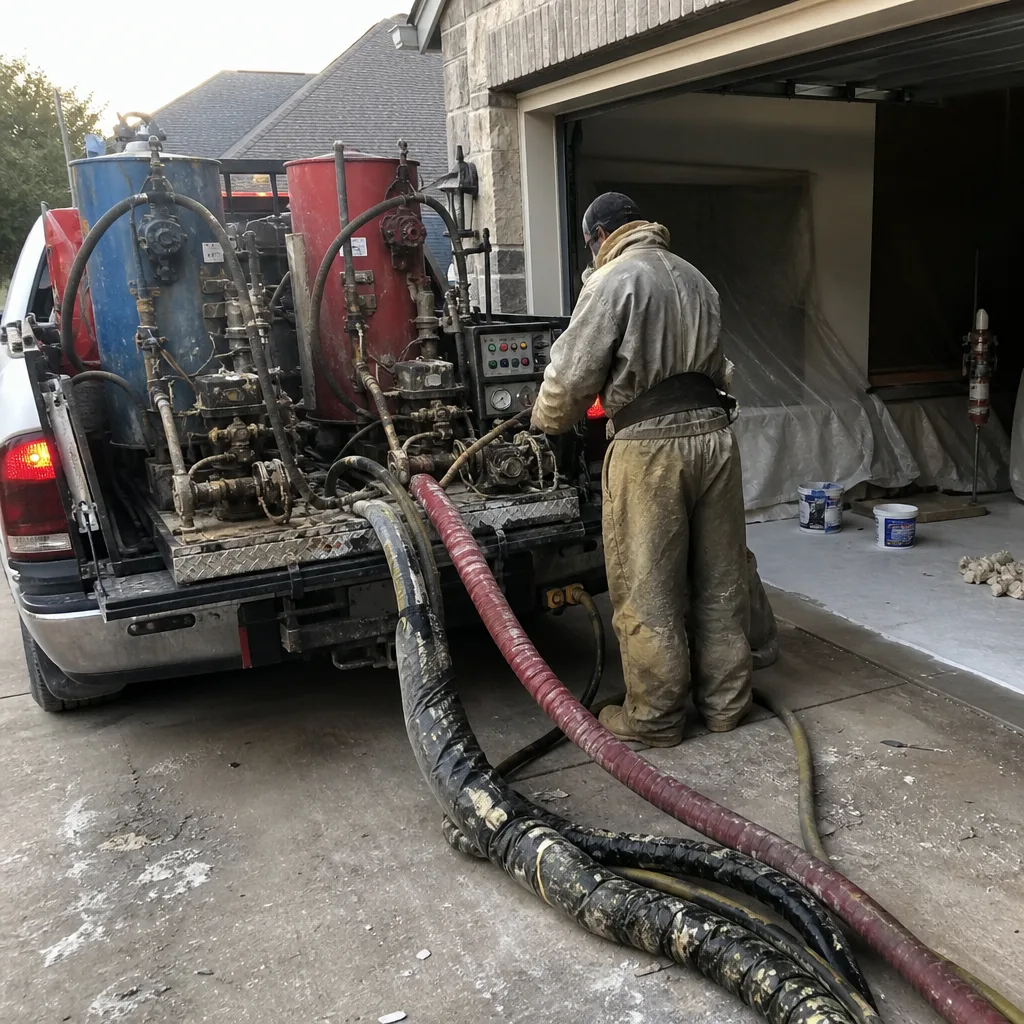
Every insulation job in Cedar Park needs baffle inspection before we add material. Baffles - the foam or cardboard channels that keep soffit vents open - are frequently crushed, missing, or improperly placed in 2000s builds, especially in hipped-roof designs where the eave geometry is tight. Without functional baffles, new insulation blocks intake airflow and creates moisture risk. We install or replace baffles as standard prep, not as an upsell, and we photograph every vent location for your record.
What happens when you call
- 1
A real person answersNo phone trees - you reach a local pro.
- 2
You get an upfront price rangeHonest numbers before anyone is dispatched.
- 3
A background-checked tech heads outLicensed & insured, dispatched right away.
- 4
You approve before work beginsNothing starts until you say go.
Trusted Brands We Service in Cedar Park
We stock Knauf EcoFill blown-in fiberglass, Rockwool ComfortBatt mineral wool, and CertainTeed fiberglass batts on our Cedar Park route trucks, with Johns Manville and GreenFiber cellulose available next-day if your scope calls for it. No proprietary product lock-in - we specify by performance, not by brand rebate. For Cedar Park homeowners, that means we match material to condition: GreenFiber blown-in for flat-attic top-ups where we need to blend with existing cellulose, Rockwool batts for thermal bridging at vaulted-ceiling chases, Knauf fiberglass where cost efficiency and coverage speed matter most. Every bag is documented by lot number in your job record.
Common Attic Insulation Problems We See in Cedar Park Homes
- Measured settlement well below original spec. On a 2006 Avery Ranch build off Avery Ranch Boulevard, we pulled the attic hatch and put a tape measure to the original blown-in cellulose: 4.5 inches where the closing docs implied R-30 coverage. Using GreenFiber blown-in and Owens Corning batt transitions around the vaulted-ceiling chases, we measured depth before and after, then bumped the assembly to R-49 over a prep of baffles and ventilation correction. The homeowner had already noticed the primary suite running hot in August and a second-story room going cold during the February 2021 freeze event - both symptoms traced to the same compacted layer in one trip.
- Thermal bridging at complex ceiling transitions. Cedar Park’s master-planned homes feature hipped roofs and open floor plans that create hard-to-insulate junctions where vaulted ceilings meet flat attic areas. Blown-in alone slumps at these transitions; batt transitions and proper baffle prep are required to maintain continuous thermal boundary.
- Extreme solar gain degrading loose-fill faster than designed. West- and south-facing roof planes over open Hill Country terrain with no topographic shading push attic temps past 150°F, degrading loose-fill faster than the original builder’s cooling-load assumption ever accounted for. The material was specified for a 120°F attic, not a 155°F attic.
- Dual-season vulnerability exposed by Winter Storm Uri. Cedar Park homes were engineered primarily around cooling loads. When Uri delivered sustained hard freeze conditions in February 2021, the same thin, compacted attic layer that couldn’t keep summer heat out also couldn’t keep conditioned air in. The failure was thermal, not mechanical - and it’s fixable with proper depth and air sealing.
Pricing for Attic Insulation in Cedar Park, TX
| Service | Typical Range in Cedar Park |
|---|---|
| Attic Insulation Top-Up (flat attic, R-30 to R-49) | $1,800 - $2,800 |
| Attic Insulation Replacement (strip and rebuild to R-49) | $3,200 - $4,500 |
| Attic Batt Insulation (vaulted chases, knee walls) | $900 - $1,600 per area |
| Baffles & Ventilation Prep (standard on most jobs) | $400 - $700 |
| Air Sealing Package (top plates, penetrations, can lights) | $600 - $1,100 |
These ranges reflect Cedar Park’s typical 2,000-2,800 square foot single-family homes with accessible attics. Complex hipped roofs, multiple vaulted areas, or limited hatch access can push toward the higher end. What doesn’t change: the written price you receive before any work starts, the documented photo record you get when we leave, and the 365-Day Done Right Promise on every completed job. Call (737) 259-7528 for your specific estimate - free, flat-priced, and delivered in writing.
We Also Serve Cities Near Cedar Park
Our crews run daily routes to Leander, Round Rock, Pflugerville, and Georgetown from the same dispatch board that handles Cedar Park. If you’re in one of these neighboring markets, the same flat-price guarantee, same live-answer phone line, and same documented job record apply. For homeowners comparing contractors across the metro, our Attic Insulation hub page lists service details that apply region-wide, with city-specific pages like this one for local conditions.
Serving Cedar Park, TX - Our Local Coverage Area
We’re based in the Cedar Park area and know this community well. Use the map below to see our service coverage - if you’re nearby, we can almost certainly help.
FAQs - Attic Insulation in Cedar Park
It is almost certainly not doing its job. In Cedar Park’s 2000s builds, we measure original blown-in cellulose at 4-6 inches deep where R-30 required 10+ inches; the material has compacted in 150°F attic heat over nearly 20 years. Your effective R-value is likely closer to R-18 or R-20, which explains why the primary suite runs hot in August and why rooms went cold during Winter Storm Uri. A top-up to R-49 restores what was lost and builds past it. Call (737) 259-7528 for a free assessment with measured depth readings.
Uri proved that Cedar Park homes, engineered for cooling loads with thin attic insulation, fail catastrophically in hard freezes. The same compacted R-18 layer that lets summer heat radiate downward also lets winter heat escape upward, straining HVAC systems to failure point. Since 2021, we’ve completed hundreds of Cedar Park upgrades where homeowners specifically cite freeze-event rooms as the trigger. The risk is real, recurring, and fixable. Call (737) 259-7528 to discuss dual-season protection for your home.
Cedar Park’s housing stock is remarkably uniform: 2000s-2010s tract homes with predictable attic layouts, consistent framing, and known material histories. Our crews have seen your roof profile dozens of times. We arrive with the full material load, the blower truck, and a scope already written - no return trip for parts, no discovery phase that delays work. The one-trip efficiency is a function of local experience, not rushed labor. Every job still closes with a Documented Photo Record and, on applicable work, before-and-after blower-door numbers.
Yes, but it requires a hybrid approach that pure blown-in contractors often skip. We use blown-in fiberglass for the flat attic floor, then transition to Rockwool or CertainTeed batts at the vaulted-ceiling chases and knee walls where blown-in would slump or create voids. Baffle prep is critical in these rooflines to maintain soffit airflow. We’ve completed this exact assembly in dozens of Crystal Falls homes. Call (737) 259-7528 and we’ll walk your specific layout before quoting.
Three measurable signs: rooms that are 8-15°F different from the thermostat reading, HVAC runtime exceeding 18-20 minutes per cycle in summer, and visible floor joists or ductwork through the attic insulation layer. In Cedar Park specifically, if your home was built 2000-2015 and the attic hasn’t been touched, the probability of measured settlement below R-20 exceeds 80% based on our field data. We offer free estimates with depth measurements and thermal imaging - call (737) 259-7528 to schedule.
Written by Wes Okafor, Owner at Topside Attic Insulation Round Rock, serving Cedar Park since 2016 under The Haven Standard.