
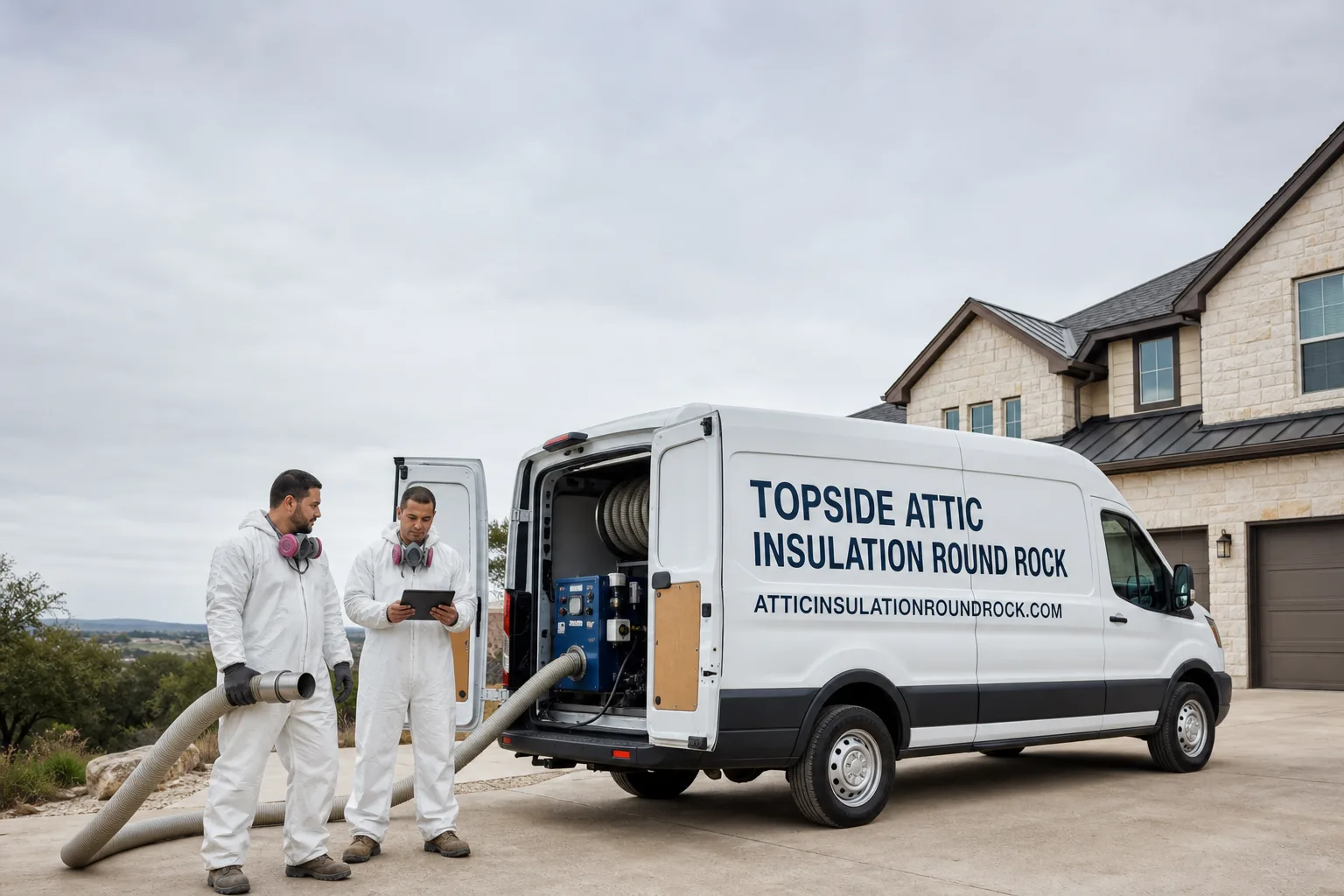
How Much Does Attic Insulation Cost in Round Rock?
Our Attic Insulation services in Round Rock, TX typically cost between $1,400 and $3,800 for a standard single-story home, with most homeowners landing around $2,100 to $2,600 when adding blown-in cellulose or fiberglass to an attic that already has some coverage. If the attic floor needs air sealing before insulation goes in – and in most Round Rock homes built before 2005, it does – budget an additional $400 to $900 for that step. Prices vary based on square footage, current insulation depth, material choice, and whether old insulation needs to come out first.
Attic Insulation Cost Breakdown (2026)
The table below reflects current Round Rock market pricing. These are installed costs – labor and materials together – not material-only figures from a big-box store.
| Service | Typical Price Range | Notes |
|---|---|---|
| Blown-in fiberglass (top-up to R-38) | $1,400 – $2,000 | Most common upgrade in homes built 1995-2010 |
| Blown-in fiberglass (top-up to R-49) | $1,700 – $2,500 | Code-recommended depth for Round Rock’s climate zone 2/3 boundary |
| Blown-in cellulose (full install to R-49) | $1,800 – $2,700 | GreenFiber or equivalent; dense-pack for better air resistance |
| Attic air sealing only | $400 – $900 | Top plates, can lights, plumbing/electrical penetrations |
| Air sealing + blown-in insulation (combined) | $2,100 – $3,400 | The correct sequencing – seal first, then insulate |
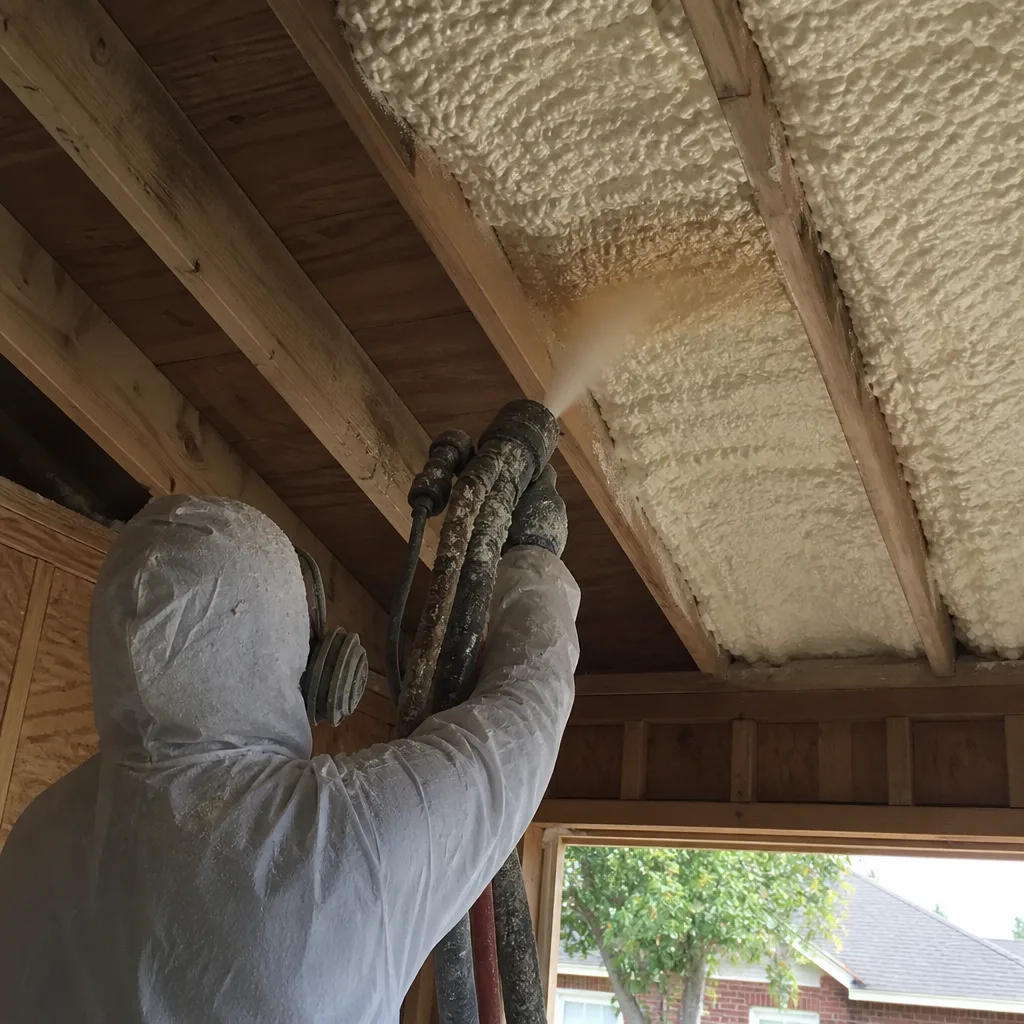
| Open-cell spray foam (attic deck or knee walls) | $2,800 – $5,200 | Icynene or Demilec; creates conditioned attic space |
| Closed-cell spray foam (targeted application) | $1,800 – $4,000 | Typically used at rim joists, HVAC platforms, or problem areas |
| Radiant barrier installation | $800 – $1,600 | Foil decking or attic-staple method; high ROI in Round Rock summers |
| Old insulation removal | $900 – $2,200 | Depends on depth, contamination, and accessibility |
| Full removal + air seal + reinstall | $3,200 – $5,800 | Older homes, rodent damage, or wet/moldy insulation |
| Batt insulation (new construction or exposed framing) | $1,200 – $2,200 | Owens Corning or Johns Manville; less common in attic retrofits |
What makes the final number go up or down?
The single biggest variable is what’s already up there. A home in Round Rock’s Teravista or Vista Oaks neighborhoods built around 2002 might have 4 to 6 inches of original fiberglass batts – enough to hit R-19 or so, which was code at the time but falls well short of today’s recommended R-38 to R-49. An Attic Insulation Top-Up is straightforward and stays toward the lower end of the range. A home in the older sections of Forest Creek or along the Avery Ranch corridor that was built in the 1980s might have compressed, moisture-damaged, or rodent-contaminated insulation sitting on an attic floor with zero air sealing. That’s a removal-and-start-over job, and it costs accordingly.
Attic accessibility matters more than most homeowners expect. Tight access hatches, cross-bracing that blocks a blower hose, or an attic height under 24 inches over part of the floor adds labor time. The pitch of your roof affects how much of the attic perimeter can actually hold full-depth insulation. And in Round Rock’s summer heat – sustained 100-degree days from June through September are not unusual – an attic that runs 145 to 155 degrees at peak is actively degrading HVAC performance in ways that a single insulation number doesn’t capture. That’s why air sealing before insulation isn’t an upsell here; it’s the step that makes the insulation worth paying for.
What Affects Attic Insulation Pricing in Round Rock
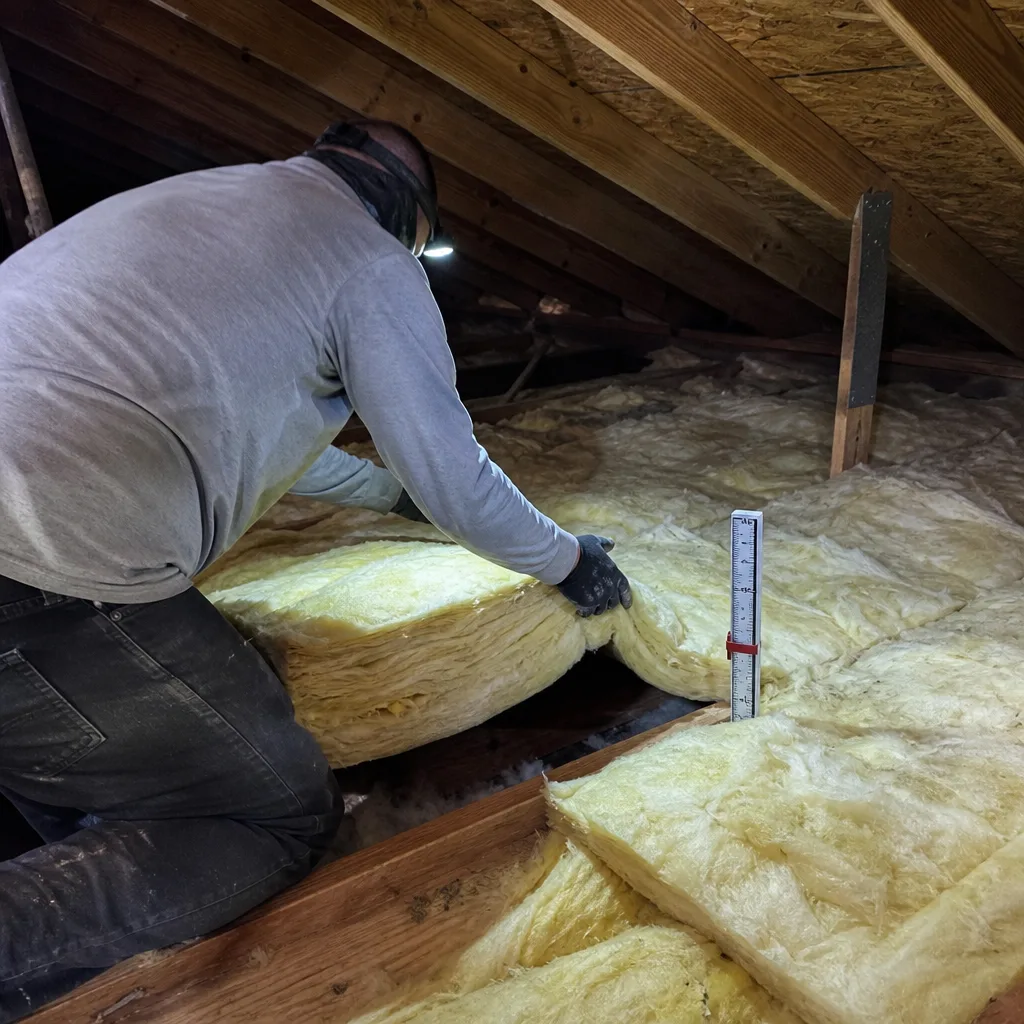
- Attic square footage. Most Round Rock homes run 1,200 to 2,400 square feet of attic floor. Pricing scales roughly linearly above 1,500 square feet, so a 2,400-square-foot attic in the Highlands at Mayfield Ranch will cost more than a 1,300-square-foot attic in a townhome near downtown Round Rock – straightforward math that you can verify against any written estimate.
- Existing insulation depth and condition. A top-up from 4 inches to 14 inches is a few hours of work. Removing wet, contaminated, or rodent-compacted insulation before anything goes in adds a full day of labor and disposal costs. In Round Rock neighborhoods that saw heavy construction in the 1990s – parts of Cat Hollow and Chandler Creek – original blown-in can be thin and poorly distributed by now.
- Air sealing scope. Texas homes built before 2010 frequently have recessed can lights punched through the drywall ceiling with no air barrier, top plates with open gaps at interior wall framing, and plumbing and electrical penetrations that run straight from conditioned space into the attic. Each of those is a direct conditioned-air leak. Sealing them takes time and material – spray foam, caulk, and sometimes sheet-metal blocking – and the count varies considerably from house to house. Under the Attic Insulation in Round Rock service we provide at Envelope Insulation Co., air sealing is completed before any insulation is added, because covering unsealed penetrations with blown-in material traps the leaks rather than fixing them.
- Material choice. Blown-in fiberglass from Knauf or Owens Corning and blown-in cellulose from GreenFiber are the most common choices for attic retrofits in this market and carry similar installed prices within about 10% of each other. Spray foam – open-cell from Icynene or Demilec, or closed-cell from CertainTeed – costs more per square foot but creates a sealed thermal boundary at the roof deck rather than the attic floor, which makes sense for homes with HVAC equipment or ductwork living in the attic space.
- Round Rock’s climate zone and code requirements. Round Rock sits at the boundary of IECC Climate Zones 2 and 3, which means the code-minimum ceiling insulation requirement is R-38, but the energy-modeling sweet spot for this market – accounting for long cooling seasons and gas heating in winter – is generally R-49. The difference in material cost between R-38 and R-49 is modest; the performance difference over a Texas summer is not.
- Access, pitch, and obstructions. Homes with a single 22×30-inch hatch, a 5/12 roof pitch, and HVAC equipment occupying half the attic floor are slower to work in. That extra time is reflected in labor. It’s also worth noting that some Round Rock homes have attic configurations where certain sections are accessible only from the exterior or through a secondary hatch – those areas are sometimes skipped by contractors who don’t flag it, which shows up as cold or hot spots that insulation reports alone don’t explain.
How to Save on Attic Insulation in Round Rock
Start with an accurate measurement, not a square footage estimate
Round Rock attic footprints often don’t match the home’s heated square footage. Hip roofs, bonus rooms below roofline, and garage-adjacent spaces all create configurations where the attic floor you’re actually insulating is smaller than the home’s listed square footage. A contractor who quotes by home size without walking the attic is probably quoting the wrong number – which creates surprises in both directions on the final invoice. Getting a physical measurement is step one.
Bundle air sealing and insulation in the same visit
Scheduling air sealing and blown-in insulation as separate jobs – two mobilizations, two setup times, two haul-in costs – adds money compared to doing them in sequence on the same crew visit. Since air sealing has to come first anyway, combining them is both the correct technical sequence and the more economical one. Most Round Rock homeowners who get separate quotes for each are paying a mobilization premium they don’t need to pay.
Check for utility rebates before the job starts
Oncor and Pedernales Electric Cooperative both offer rebates on qualifying insulation and air-sealing work in Williamson County. Rebate amounts and qualification criteria change – sometimes annually – so verifying the current program before scheduling is worth 20 minutes. Some rebates require a pre-inspection or a specific R-value outcome; knowing that in advance means the contractor can document accordingly. We flag current rebate eligibility as part of every written estimate.
Get a second opinion on any written estimate you already have
If you’ve already received a written quote from another contractor, bring it to us. We’ll read through it with you, line by line, at no charge. That’s not a sales tactic – it’s the only way to know whether the scope is complete, whether the R-value target matches your attic’s actual condition, and whether the air sealing step is included or missing. A lot of Round Rock homeowners discover that an estimate missing air sealing will need to be redone within a few years as the blown-in settles over unsealed gaps.
Don’t skip the blower-door baseline
A blower-door test – a pressurization reading that shows, in one number, how much air your building envelope is losing – gives you a before measurement you can compare against after the air sealing is done. Without it, you’re taking the contractor’s word that the sealing made a difference. With it, you have a documented ACH50 (air changes per hour at 50 pascals) figure that shows the actual change. Envelope Insulation Co. publishes before-and-after blower-door numbers on every applicable job. That number becomes part of your Documented Photo Record, which you receive when the crew leaves.
For a written price on your specific attic – no estimates over the phone, no range-without-seeing-it – call (737) 259-7528. Under Haven Standard Clause 1, you’ll have a flat price, a written scope, and a written warranty before anyone starts work.
Neighborhood-Level Pricing Notes for Round Rock
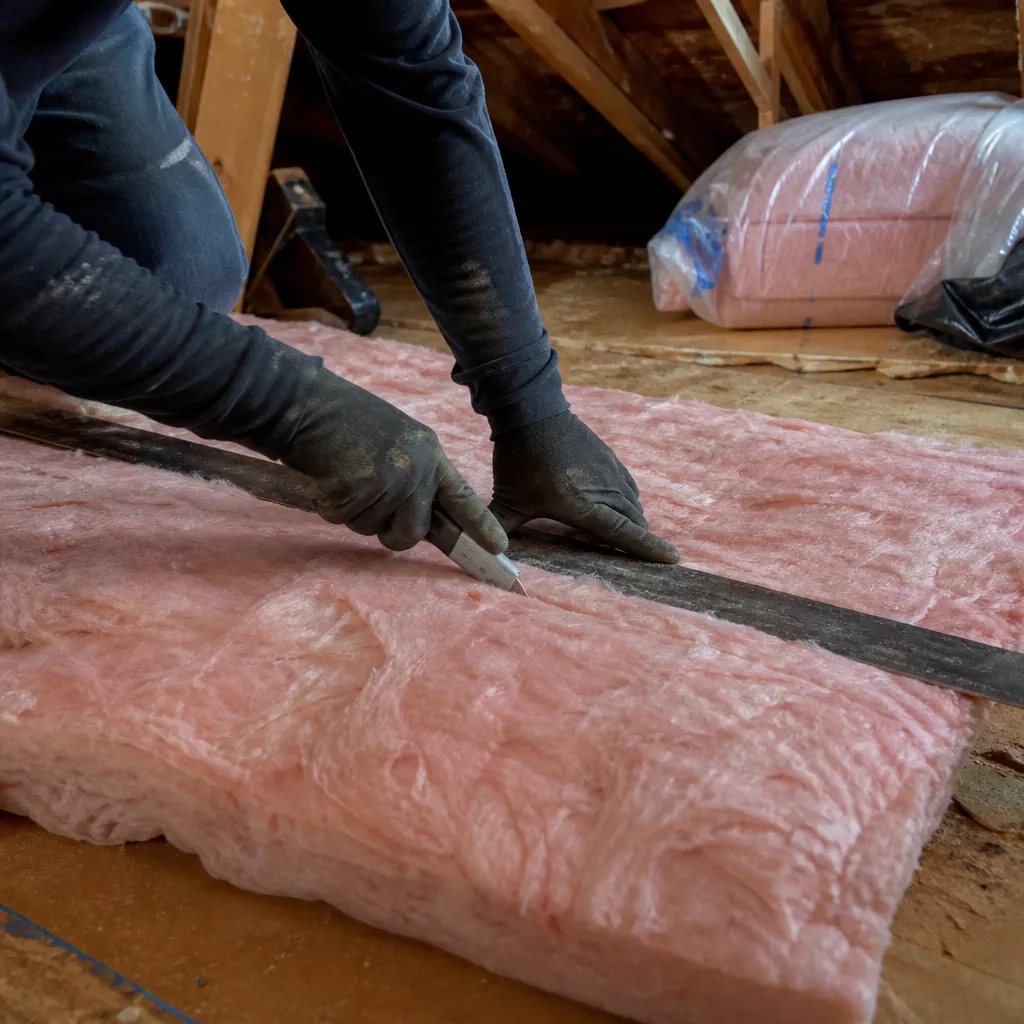
Round Rock isn’t one uniform housing market, and attic insulation pricing reflects that. Here’s what we see regularly across different parts of the city.
Older central Round Rock (built 1975-1995)
Homes in the older neighborhoods near downtown Round Rock – blocks around Mays Street, sections of McNeil, and some original Forest Creek-area construction – frequently have original fiberglass batts that are now 30 to 40 years old, compressed, and providing a fraction of their original R-value. These jobs almost always involve full removal before reinstall, which puts them in the $3,200 to $5,500 range. The attic floors in homes this age also tend to have more unsealed penetrations than newer construction.
Growth-era subdivisions (built 1996-2010)
Neighborhoods like Teravista, Chandler Creek, Stone Canyon, and Cat Hollow represent Round Rock’s major growth period. Homes here typically have builder-grade blown-in fiberglass at 4 to 6 inches – adequate at the time, undersized now. Top-up jobs here usually run $1,600 to $2,400 combined with air sealing, and because the insulation in place is generally still clean and undamaged, removal isn’t needed. These are the most straightforward Attic Insulation Near Me in Round Rock, TX jobs.
Newer construction (built 2010-present)
Subdivisions like Highlands at Mayfield Ranch, Vista Oaks, and portions of Fern Bluff built after 2012 often meet current code minimums at move-in. But “code minimum” in Round Rock’s climate means R-38 at the ceiling – the performance target most energy modelers recommend for this market is R-49. The gap between R-38 and R-49 is typically a 3 to 4 inch top-up, which runs $600 to $1,100 installed. On these newer homes, air sealing scope is usually smaller because builders in this era were more consistent about can-light gaskets and top-plate sealing.
Round Rock Energy Code: What You Actually Need
Round Rock follows the International Energy Conservation Code as adopted by Texas, which currently requires R-38 minimum for ceilings in Climate Zone 2/3. Texas adopted the 2021 IECC with amendments, and Williamson County inspections apply this to permitted new construction and permitted retrofits.
For existing homes doing voluntary upgrades – which is most attic insulation work – the code minimum isn’t a hard requirement, but it is a reasonable starting point for the conversation. The actual performance target for a Round Rock home that runs its air conditioner from April through October and pays Oncor rates is closer to R-49. The marginal cost difference between stopping at R-38 and continuing to R-49 is usually $200 to $400 on a standard attic. The energy savings difference over five years is almost always larger than that.
Wes Okafor walks through the R-value math on every estimate we provide in Round Rock – not to upsell, but because the written scope needs to reflect what the attic will actually perform at when we’re done.
Air Sealing vs. Insulation: Why the Sequence Matters in Round Rock’s Heat
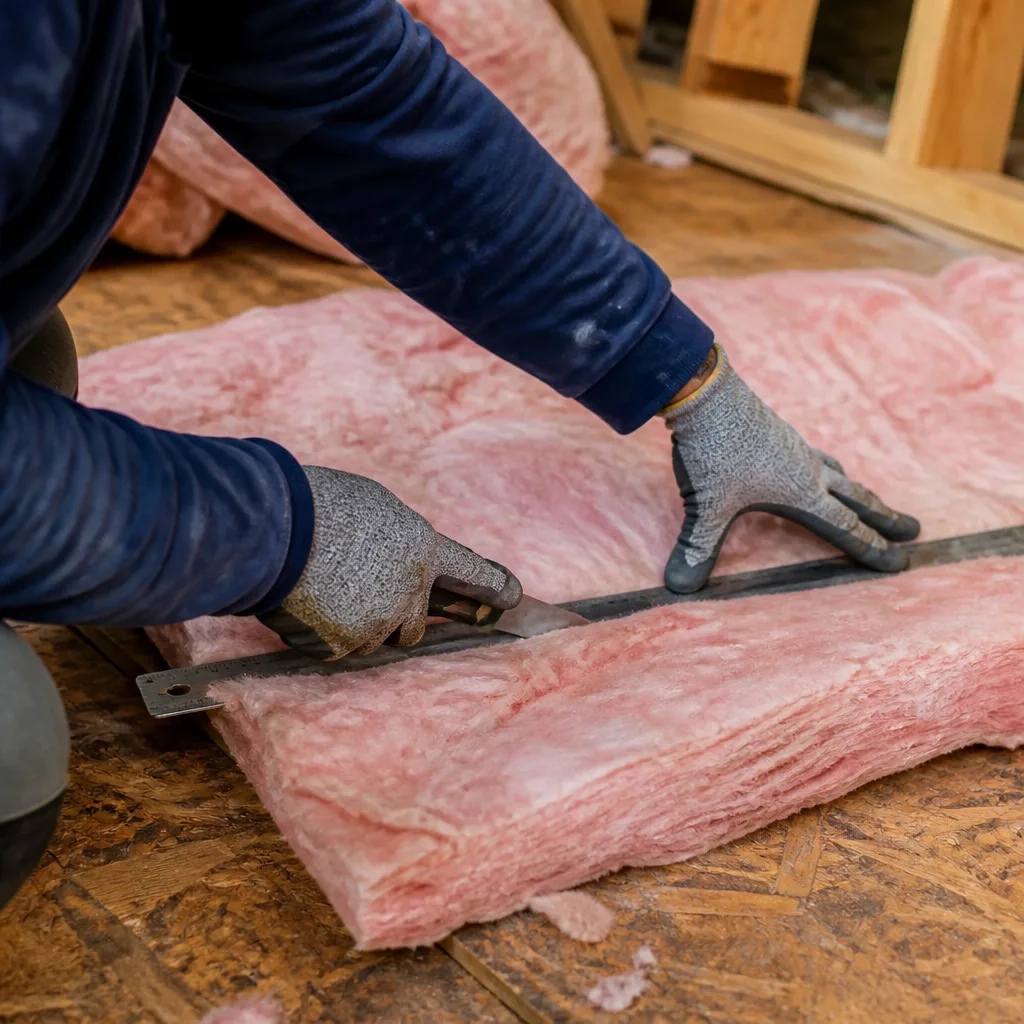
This deserves its own section because it’s the most common money-wasting mistake we see in Round Rock attics, and it’s worth understanding before you hire anyone.
Blown-in insulation – fiberglass or cellulose – slows conductive heat transfer. It does not stop air movement. A gap around a recessed can light or an open top plate is a direct path for hot attic air (145 degrees in July) to push into your conditioned ceiling cavity. Packing 14 inches of blown-in fiberglass over that gap insulates it slightly but doesn’t close it. The air still moves. Your HVAC still compensates. Your bill stays high.
The correct sequence is: seal every penetration and gap first, verify with a blower-door reading, then add insulation on top of a now-sealed floor. Envelope Insulation Co. will not blow insulation over an unsealed attic floor. That’s not a policy decision we revisit job by job – it’s how the work is structured, because the alternative produces a result we can’t stand behind with a 365-Day Done Right Promise.
In Round Rock’s climate specifically, this sequence matters more than in cooler markets. The stack effect – the pressure differential that drives hot attic air through ceiling gaps when your air conditioner depressurizes the living space – is more aggressive here because the temperature differential is larger. A home in Round Rock in July has a 70-degree difference between the attic and the thermostat setpoint. That differential drives air through every unsealed opening with measurable force, which is exactly what a blower-door test quantifies.
We’ve measured homes in Teravista and Stone Canyon where the blower-door reading before sealing was above 4,500 CFM50 (cubic feet per minute at 50 pascals of pressure) and dropped below 2,200 CFM50 after air sealing alone – before any new insulation was added. That’s a 50% reduction in air leakage from sealing, which no amount of additional blown-in material would have produced.
What You Receive When Envelope Insulation Finishes the Job
The work doesn’t end when the crew walks out. Here’s what the job leaves behind.
- Documented Photo Record: Before photos of the attic floor condition, insulation depth measurements, and penetrations sealed. After photos of the finished insulation surface. This is included on every job, not something you have to request.
- Written scope and written warranty: The same document you received before work started, now marked complete – including the R-value achieved, the air-sealing locations, and the materials installed by brand and specification.
- Before-and-after blower-door readings (on applicable jobs): A CFM50 figure from before sealing and another from after. You can take these numbers to any energy auditor, utility rebate program, or future home buyer and they tell a verifiable story about what changed.
- 365-Day Done Right Promise: If anything about the installation isn’t right within 365 days, we come back and make it right. Written, not verbal.
The complete picture of what we do and why it’s structured this way is on our home page, including the full Haven Standard framework that governs every job.
FAQs: Attic Insulation Cost in Round Rock, TX
How much does attic insulation cost in Round Rock, TX in 2026?
Most attic insulation jobs in Round Rock run between $1,400 and $3,800 installed, with the most common range – a top-up to R-49 plus air sealing in a 1,500 to 2,000 square-foot attic – landing between $2,100 and $3,200. Full removal and reinstall jobs cost more, typically $3,200 to $5,800 depending on attic size and condition. Call (737) 259-7528 for a written price on your specific attic – we don’t quote ranges without seeing the attic first.
Is it cheaper to add insulation on top of old insulation or remove and replace it?
Adding on top is cheaper when the existing insulation is clean, dry, and not contaminated. In that case, a top-up to R-49 typically costs $800 to $1,600 less than a full removal and reinstall. But if the existing insulation is wet, compressed, rodent-damaged, or harboring debris – which is common in Round Rock homes from the 1980s and early 1990s – leaving it in place means insulating over a problem that will continue to affect air quality and performance. The right answer depends on what’s actually in the attic, not on a rule of thumb.
Does attic insulation in Round Rock require a permit?
In most cases, adding blown-in insulation to an existing attic in Round Rock does not require a building permit for a straightforward residential retrofit. However, if the work involves spray foam at the roof deck (which changes the attic from vented to conditioned), or if it’s part of a larger renovation with structural changes, a permit may apply. We handle permit questions on a job-by-job basis and flag anything that needs city sign-off in the written scope before work starts.
How long does attic insulation installation take in Round Rock?
A standard top-up job – air sealing plus blown-in fiberglass or cellulose in a 1,500 to 2,000 square-foot attic – takes one day for a two-person crew, usually 4 to 7 hours on site. Full removal before reinstall adds half a day to a full day depending on depth and debris volume. Spray foam applications at the roof deck take 1 to 2 days with cure time built in. We give you a specific time estimate in the written scope so you know what “done” looks like before the crew arrives.
Will new attic insulation actually lower my electric bill in Round Rock?
Yes, measurably – but the amount depends on where you’re starting from. A Round Rock home going from R-11 to R-49 with proper air sealing typically sees a 20% to 35% reduction in cooling load, which translates to a meaningful monthly savings during the 6- to 7-month cooling season. The blower-door baseline we take before sealing lets you quantify how much of that savings comes from air sealing versus added insulation depth. Homes with very poor existing air sealing – ACH50 readings above 8 or 9, which we see regularly in Round Rock’s older neighborhoods – often see the sharpest bill reductions because the air sealing step alone eliminates a large conditioned-air loss that no amount of blown-in material would have addressed.
What insulation material is best for Round Rock attics?
For attic floor applications – the most common retrofit scenario in Round Rock – blown-in fiberglass from Owens Corning or Knauf and blown-in cellulose from GreenFiber both perform well at R-49 and within about 10% of each other on installed cost. Cellulose has slightly better air-resistance characteristics and is made from recycled material; fiberglass is less susceptible to moisture in the rare event of a roof leak. Neither is a wrong answer for this climate. Spray foam from Icynene or Demilec makes more sense when HVAC equipment lives in the attic and you want to bring that equipment inside the conditioned envelope, which eliminates duct losses in hot attic air entirely – that’s a larger scope and a larger investment, but the energy math is favorable for homes with attic-mounted air handlers.
Can you do attic insulation in summer in Round Rock?
Yes, and we do. Summer is actually when Round Rock homeowners feel the problem most acutely, so it’s a common time to schedule the work. Crew safety protocols for working in 140-degree attic spaces are standard practice for us – early morning starts, hydration, rotation. The materials aren’t affected by the heat. The blower-door test can be run any time of year. If you’re scheduling in June or July, expect slightly longer lead times because demand is higher; calling early in the season helps.
Key Takeaways
- Most Round Rock attic insulation jobs run $1,400 to $3,800 installed; combined air sealing and blown-in is usually $2,100 to $3,400.
- Air sealing must come before insulation – covering unsealed gaps with blown-in material traps the leaks rather than eliminating them.
- Round Rock’s IECC minimum is R-38; the practical performance target for this climate is R-49.
- Older central Round Rock homes (pre-1995) frequently need full removal before reinstall, which pushes cost toward the higher end of the range.
- Before-and-after blower-door readings are the only way to verify that air sealing worked – not a visual inspection, not a salesperson’s word.
- Oncor and Pedernales Electric offer rebates on qualifying work in Williamson County – verify current terms before scheduling.
- Under Haven Standard Clause 1: you receive a flat price, a written scope, and a written warranty before anyone starts work. No exceptions.
To get a written price on your Round Rock attic – measured, not estimated by home size – call Wes Okafor and the team at Envelope Insulation Co. at (737) 259-7528. We’ll walk the attic, document what’s there, and hand you a written number before any conversation about scheduling. Free second opinion on any written estimate you already have.
Written by Wes Okafor, Owner at Envelope Insulation Co. (operating as Topside Attic Insulation Round Rock), serving Round Rock, TX since 2016.
Pricing reflects the Round Rock market as of 2026. Topside Attic Insulation Round Rock offers free estimates – call (737) 259-7528.
What Our Customers Say
"The winter gas bill dropped by about a third. They had estimated a quarter, so they under-promised."
- Genevieve R."Crawl space encapsulation done properly. Photographs of the vapour barrier at every seam, and the damp smell in the hallway is gone."
- Ainsley P."They air-sealed the attic floor before insulating and showed me the blower-door number before and after. The upstairs is finally the same temperature as downstairs."
- Marisol D.