
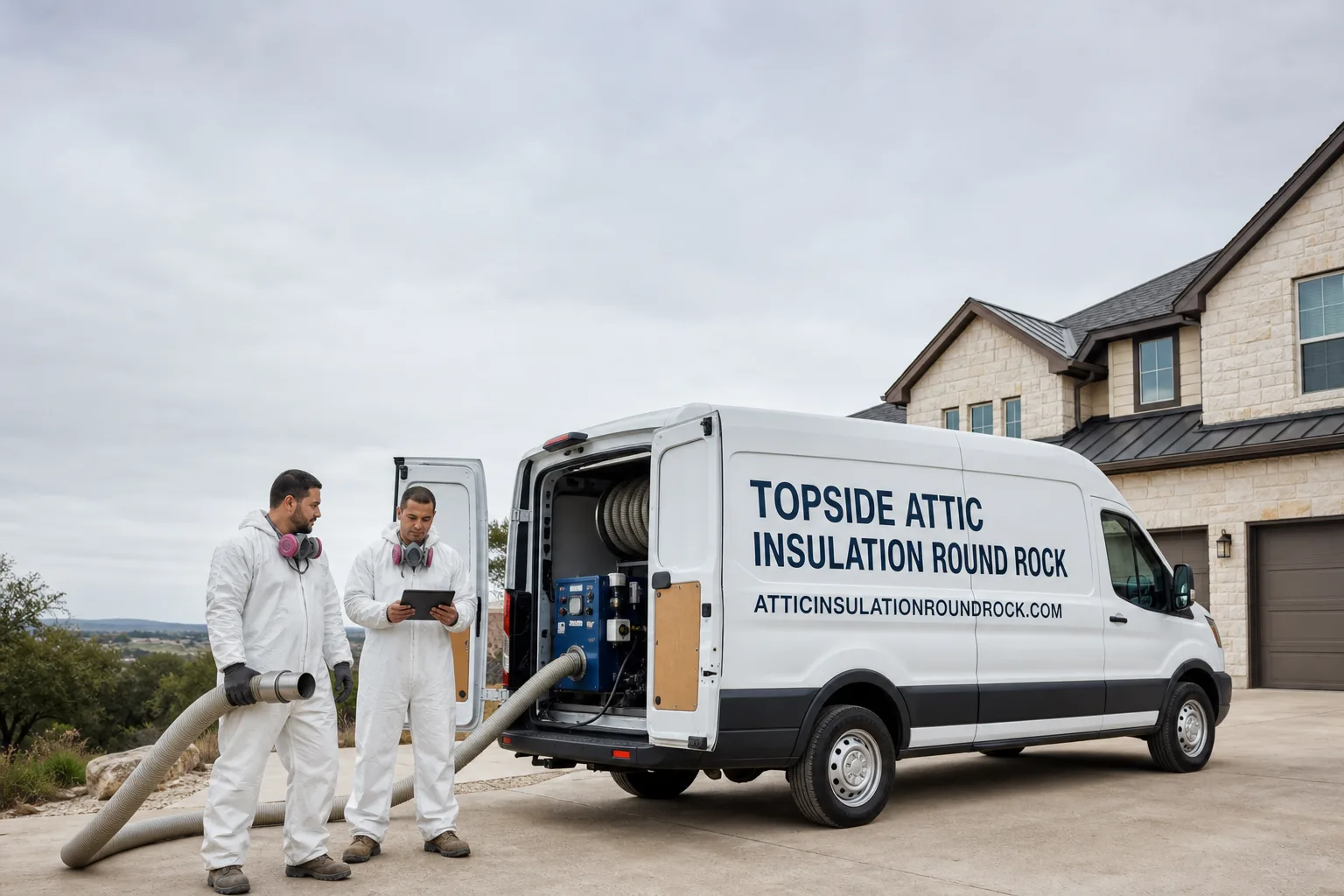
Fast, Reliable Blown-In Insulation Across Round Rock
Blown-in insulation in Round Rock, TX typically costs $1.80-$3.20 per square foot of attic floor, with most complete attic jobs running $2,400-$4,800 and top-up work on existing insulation landing between $1,200-$2,400. Our crews serve Round Rock from our Austin dispatch office, carrying extra blower capacity and extended hose sections for the detached workshops and acreage outbuildings that standard crews can’t reach in one trip. Call (737) 259-7528 for a written price before any work starts.
We’ve insulated attics in Round Rock since 2016 - from the compact two-story brick homes in Eagle Ridge and Chandler Crossing to the acreage properties off East Whitestone Boulevard and North Lamar Boulevard near the Old Broom Factory Building. Round Rock’s housing stock is unusual: a massive wave of Dell-era construction in the 1990s and 2000s built thousands of nearly identical tract homes with minimum-code blown fiberglass that has now compacted well below its original R-value. That uniformity means we can predict what we’ll find before we arrive. And the city’s east-side acreage lots mean we come prepared for detached structures that other crews schedule as second visits.
Why Topside Attic Insulation Round Rock Is Round Rock’s Preferred Blown-In Insulation Company
We’ve sealed and insulated more than 9,000 homes since 2016, and a significant share of those have been in Round Rock’s 78664, 78665, and 78681 ZIP codes. Our reviews from Round Rock customers consistently mention two things: the written price they received before anyone touched their attic, and the before-and-after blower-door numbers that showed them exactly what changed. One recent review from a Fern Bluff homeowner noted that our crew “texted when they were on the way, showed up in uniform, and left photos of every bay.”
Response time to Round Rock is typically same-day or next-day, depending on whether we’re running a full attic package or a top-up. Dispatch and scheduling are coordinated from our Austin office, but crews are already in Round Rock several days a week - on Palm Valley Boulevard, in the Lake Forest area, and out near Bustin Memorial Park. We know which subdivisions have the thin flex-duct runs through unconditioned attics, which ridge vent configurations trap moisture after spring thunderstorms, and where the original insulation scope skipped the workshop entirely.
Under Haven Standard Clause 1, every job begins with a flat written price, a written scope, and a written warranty before anyone lifts a tool. No exceptions. That includes our 365-Day Done Right Promise - if it’s not done right, we make it right - and our Documented Photo Record, delivered on every visit, not available on request.
Our Blown-In Insulation Services in Round Rock
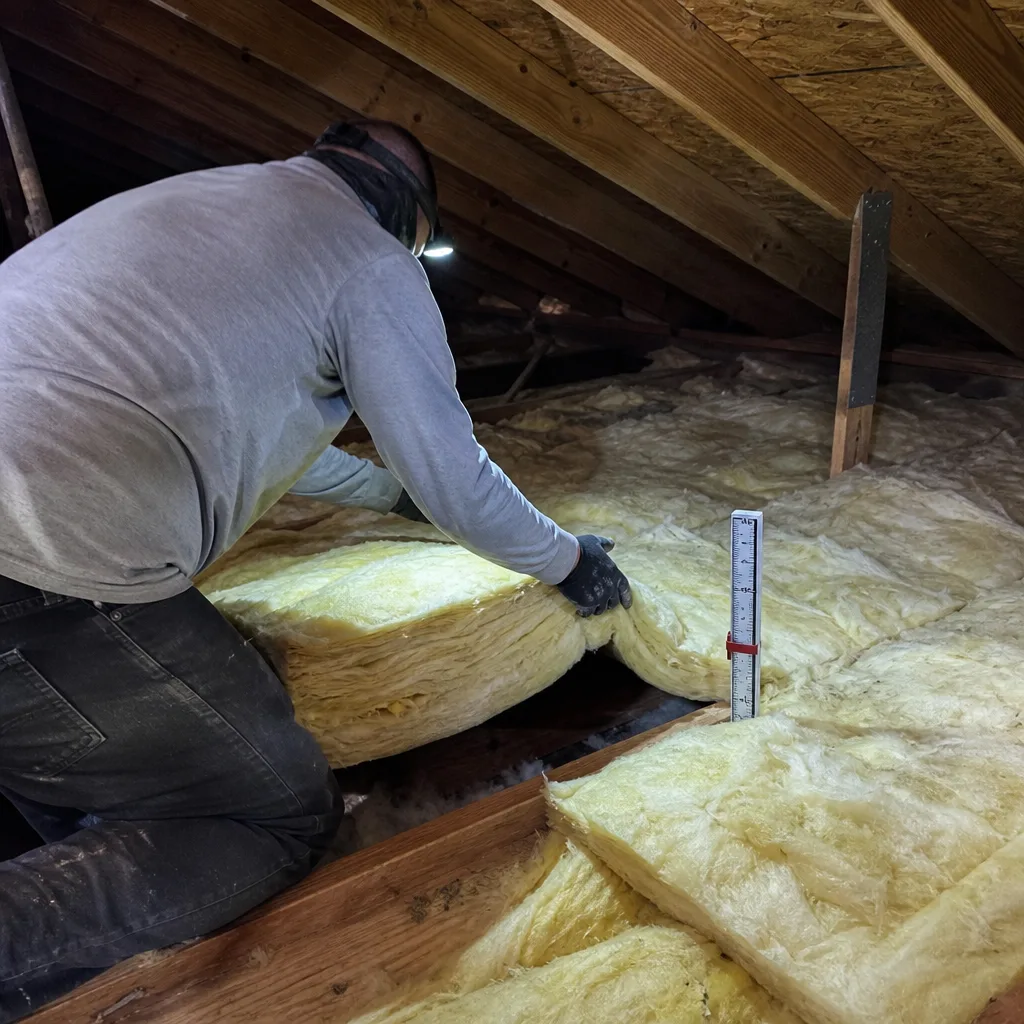
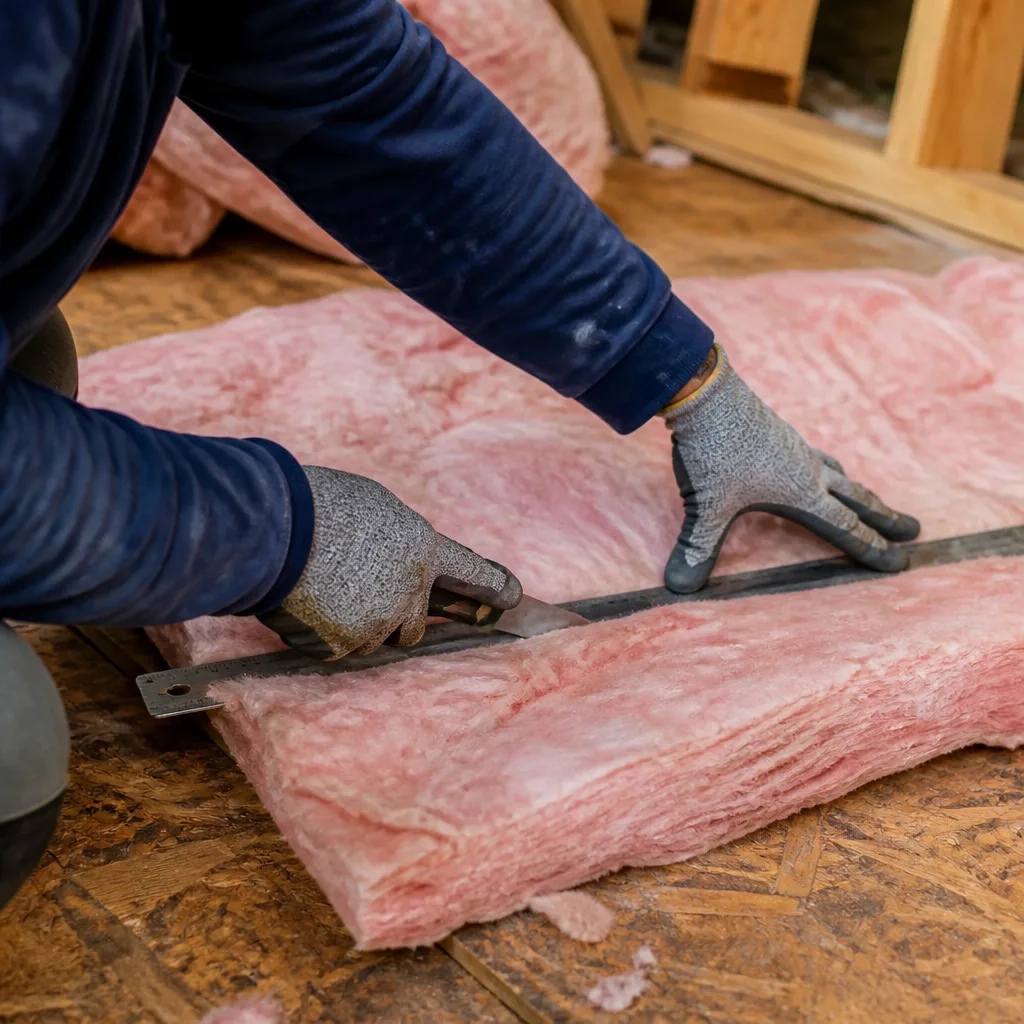
Blown-In Fiberglass
We blow Owens Corning and CertainTeed fiberglass to the density and depth that matches your attic’s target R-value, not just “to the top of the joists.” In Round Rock’s Climate Zone 2 conditions, where attic temperatures exceed 150°F for months, depth matters. Fiberglass doesn’t absorb moisture the way other materials can, which matters in neighborhoods like Fern Bluff and Lake Forest where spring thunderstorms drive water through ridge vents. We air-seal top plates, can lights, and penetrations first - always - then blow to R-38 or R-49 depending on the home’s construction and your energy goals.
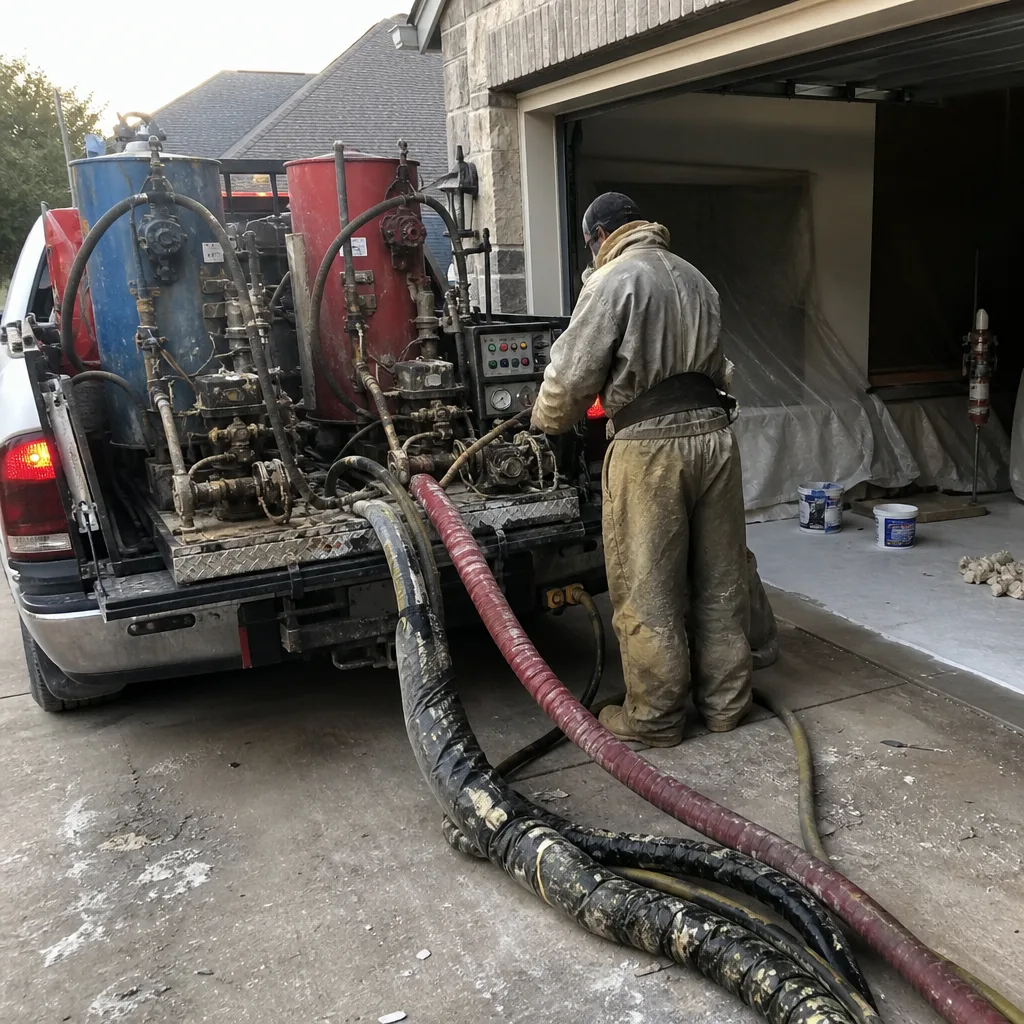
Blown-In Cellulose
Cellulose, treated with borate for fire and pest resistance, packs tighter into irregular cavities and delivers a slightly higher R-value per inch than standard fiberglass. For Round Rock homeowners in older pockets near The Double File Trail or the A. J. and Carolina Anderson House, where framing is less uniform, cellulose can fill gaps that fiberglass misses. We source from GreenFiber and other manufacturers - no proprietary lock-in - and we always verify that the attic floor is sealed before we blow, since cellulose can filter through gaps that fiberglass won’t.
Blown-In Top-Up
This is our most common call in Round Rock. In the Dell-era subdivisions - Eagle Ridge, Cimarron, Behrens Ranch, Chandler Crossing - original blown fiberglass installed at R-22 to R-30 has compacted to R-12 to R-18 over 20-30 years. A top-up brings the attic back to current code or better without removing the existing material, provided it’s dry and uncontaminated. We test first. If the old insulation is clumped from moisture or degraded by rodents, we remove and replace. If it’s simply settled, we blow new material on top, air-seal the penetrations, and give you a blower-door reading that proves the envelope tightened.
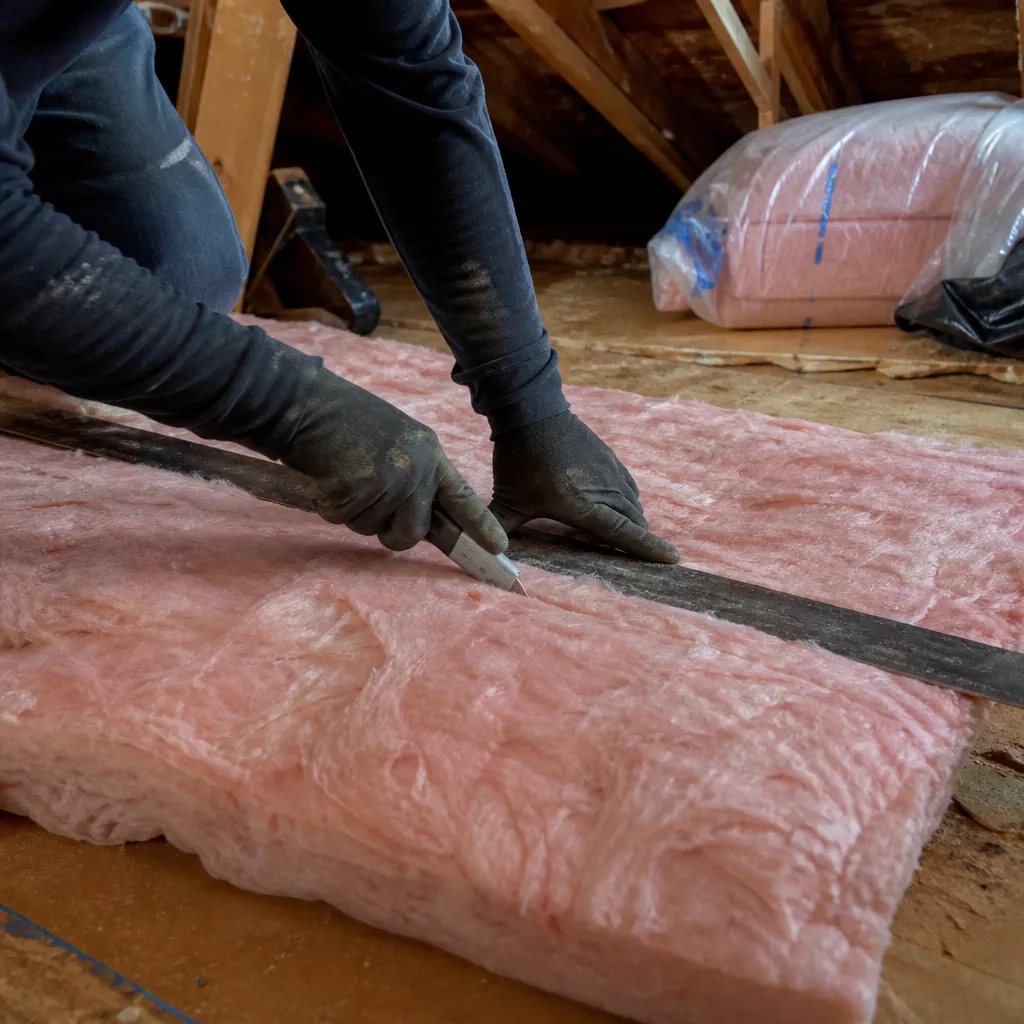
Dense-Pack Wall Insulation
For Round Rock homes with empty stud cavities - common in additions near North Mopac Expressway and in some 1990s builds where exterior wall insulation was skipped - we dense-pack cellulose or fiberglass at 3.5 pounds per cubic foot. This density creates an air barrier as well as a thermal one, reducing the convection loops that make exterior walls feel cold in winter and hot in summer. We drill access holes, pack the cavity, patch, and texture-match. The work is documented with before-and-after photos of each wall section.
Our Blown-In Insulation team carries the full range of materials and equipment for every configuration we’ve found in Round Rock - including the second blower and extra hose sections for detached workshops that standard crews can’t handle in one trip.
What happens when you call
- 1
A real person answersNo phone trees - you reach a local pro.
- 2
You get an upfront price rangeHonest numbers before anyone is dispatched.
- 3
A background-checked tech heads outLicensed & insured, dispatched right away.
- 4
You approve before work beginsNothing starts until you say go.
Trusted Brands We Service in Round Rock
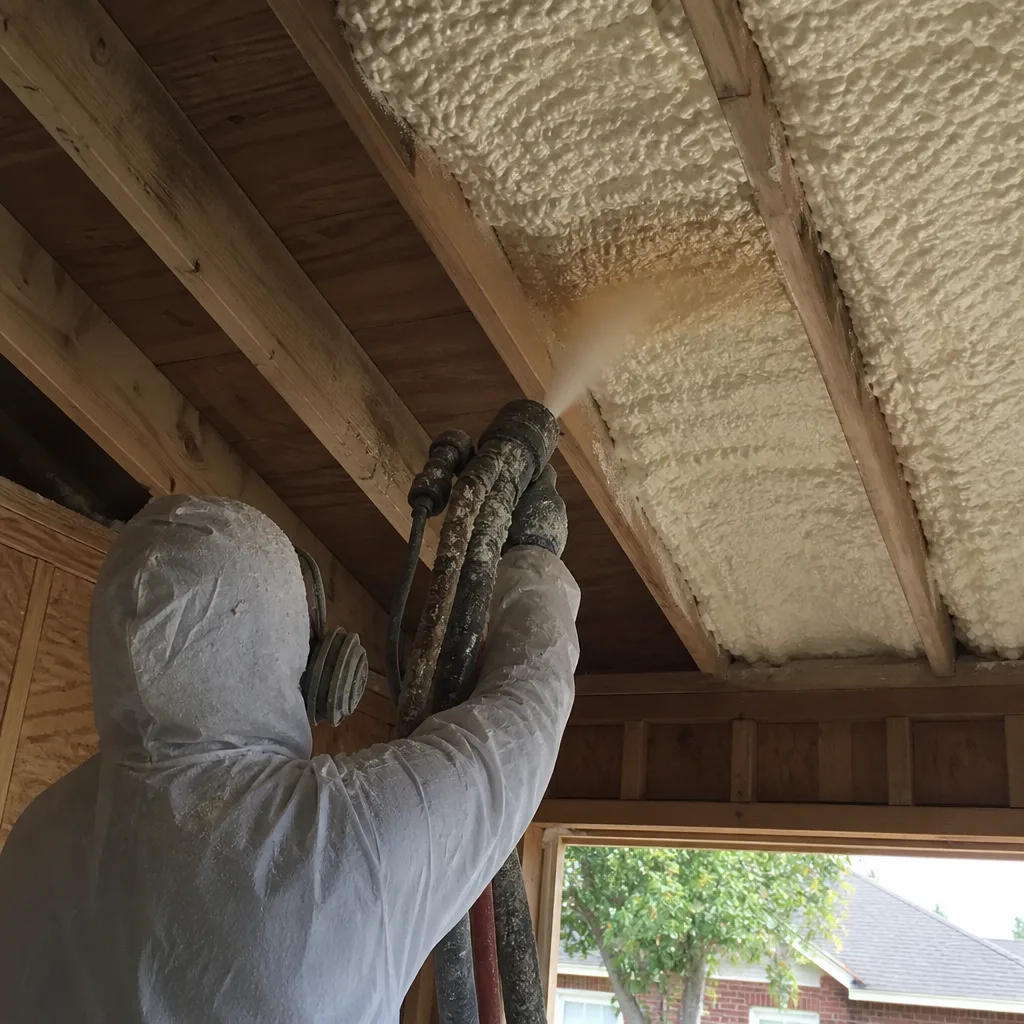
We stock Owens Corning, Johns Manville, Knauf, Rockwool, and CertainTeed fiberglass; GreenFiber cellulose; and Icynene and Demilec spray foam for hybrid jobs where blown-in isn’t the full answer. For Round Rock customers, this means no waiting on special orders and no proprietary product lock-in. We specify the material that fits the job, not the one that moves our inventory. On a recent Chandler Crossing attic upgrade, we used Owens Corning fiberglass for the main house and Rockwool for a detached workshop where the homeowner wanted higher fire resistance near a wood stove. Both materials were on the truck.
Common Blown-In Insulation Problems We See in Round Rock Homes
- Compacted fiberglass in Dell-era tract homes. In Eagle Ridge, Chandler Crossing, and Cimarron, original blown fiberglass has settled from R-22-R-30 to R-12-R-18, exposing attic knee-wall top plates and creating thermal bridges that spike summer cooling costs. We find this in nearly every home built 1995-2005.
- Moisture-clumped insulation after spring storms. Violent thunderstorms funnel water through ridge vents and soffit gaps in Lake Forest and Fern Bluff, causing aged fiberglass to clump and pull away from the attic floor. This opens air channels that bypass the insulation entirely, making the attic behave like it’s uninsulated even when material is present.
- Skipped outbuildings on acreage properties. On rural parcels off Palm Valley Boulevard and East Whitestone Boulevard near Bustin Memorial Park, detached workshops and oversized garage doors were routinely left out of the original insulation scope. The main house gets a top-up while the outbuilding stays at zero. We see this repeatedly and carry the equipment to fix it in one trip.
- Degraded flex ducts in unconditioned attics. In late-1990s Dell-era subdivisions like Eagle Ridge and Chandler Crossing, HVAC ducts were run through the attic with thin insulation that degrades faster than the surrounding attic material. Local technicians consistently find that duct re-wrapping and air-sealing is a necessary add-on to almost every attic insulation upgrade in these neighborhoods.
Pricing for Blown-In Insulation in Round Rock, TX
Most complete attic insulation jobs in Round Rock run $2,400-$4,800 for a typical 2,000-2,800 square foot home, depending on target R-value and whether removal of old material is required. Blown-in top-up work, which is more common in Round Rock’s 1990s-2000s subdivisions, typically runs $1,200-$2,400. Dense-pack wall insulation is priced per linear foot of wall, generally $3.50-$5.50 per square foot of wall area, with access and patchwork included.
| Service | Typical Range in Round Rock |
|---|---|
| Complete attic (fiberglass or cellulose to R-38) | $2,400 - $4,800 |
| Attic top-up (existing material in good condition) | $1,200 - $2,400 |
| Dense-pack wall insulation | $3.50 - $5.50 / sq ft of wall |
| Detached workshop or outbuilding | $800 - $1,800 (varies by size/access) |
| Duct re-wrapping (typical add-on in Dell-era homes) | $600 - $1,400 |
What moves the price: attic square footage, current insulation condition, whether air sealing is needed before blowing, access difficulty (steep roof pitch, limited hatch size), and whether detached structures require extra hose runs. We give you a flat written price before any work starts - Haven Standard Clause 1 - and we offer a Free Second Opinion on any written estimate from another contractor. Call (737) 259-7528 for your written price.
We Also Serve Cities Near Round Rock
Our crews work throughout the northern Austin metro, including Round Rock and the surrounding cities of Pflugerville, Hutto, Georgetown, and Cedar Park. Each area has its own housing stock patterns and insulation failure modes, and we adjust our approach accordingly - but the Haven Standard applies everywhere: written price first, documented record last, blower-door numbers when applicable.
Serving Round Rock, TX - Our Local Coverage Area
We’re based in the Round Rock area and know this community well. Use the map below to see our service coverage - if you’re nearby, we can almost certainly help.
FAQs - Blown-In Insulation in Round Rock
Yes, blown-in fiberglass is typically the right choice for Eagle Ridge homes from that era, provided the existing material is dry and uncontaminated. Original Owens Corning or Johns Manville fiberglass in these homes has compacted but usually hasn’t degraded chemically; a top-up to R-38, combined with air sealing of top plates and can lights, restores performance without the cost of full removal. We test moisture content and inspect for rodent activity before recommending top-up versus removal. Call (737) 259-7528 and we’ll give you a written price for either approach.
Yes, and this is one reason Round Rock acreage homeowners choose us over standard crews. We carry a second blower and up to 200 feet of hose specifically for detached structures on properties off East Whitestone Boulevard, North Lamar Boulevard, and Palm Valley Boulevard. Most crews schedule outbuildings as a second visit because their equipment can’t reach. We were called to a 2-acre property on East Whitestone Boulevard near the Old Broom Factory Building where the homeowner’s detached workshop attic had never been insulated - the original 1990s build only covered the main house. Our crew ran 150 feet of hose from the truck, blew in Owens Corning fiberglass to R-38 over the workshop, and topped up the main house attic from R-22 to R-38 in the same trip. The homeowner told us they picked us because we didn’t need to schedule a second visit for the outbuilding.
In late-1990s Dell-era subdivisions like Eagle Ridge and Chandler Crossing, HVAC ducts were routinely run through unconditioned attic space with thin flex-duct insulation that degrades faster than the surrounding attic material. By the time the attic insulation needs attention, the duct wrap is often torn, compressed, or heat-cracked. Local technicians consistently find that duct re-wrapping and air-sealing is a necessary add-on to almost every attic insulation upgrade in these neighborhoods. We inspect duct condition during our initial assessment and include re-wrapping in the written scope when needed. The pairing is less common in newer Round Rock builds near Kalahari and State Highway 45, where ducts are typically in conditioned space or better insulated from the start.
Not necessarily. Round Rock’s Climate Zone 2 conditions - attic temperatures exceeding 150°F for eight or more months - favor either material if installed correctly. Cellulose has a slight edge in air-sealing performance due to its density, but fiberglass resists moisture better when ridge vents leak during spring thunderstorms. The more important factor is what’s already in your attic: if you have fiberglass now and it’s in good condition, mixing cellulose on top can create settling issues at the interface. We assess your specific attic conditions, including ventilation configuration and moisture history, before recommending material. Both are available at flat written prices.
We air-seal first, then insulate - and we pay particular attention to the ridge vent and soffit ventilation balance. In the Lake Forest and Fern Bluff areas near Bustin Memorial Park, we’ve found that original ridge vents were often installed without proper baffles, allowing wind-driven rain to wet the insulation directly. Our crew installs vent baffles at the soffit, seals the ridge vent interior with proper flashing, and verifies that airflow paths remain open before blowing new material. We document the vent condition with photos and include any needed repairs in the written scope. After completion, we run a blower-door test to confirm that the attic ventilation still functions while the conditioned space below is tighter.
Ready for a written price on blown-in insulation in Round Rock? Call (737) 259-7528. A live person answers 24/7, and we’ll schedule a technician who knows Eagle Ridge from Fern Bluff, Chandler Crossing from the acreage lots off Palm Valley Boulevard. Your written scope, written price, and written warranty arrive before anyone starts the work.
Written by Wes Okafor, Owner at Topside Attic Insulation Round Rock, serving Round Rock since 2016.