
GreenFiber Vapor Barrier Installation: The Round Rock Owner’s Guide
GreenFiber vapor barrier installation in Round Rock typically runs $1,200-$2,800 for a standard crawl space or attic floor, and we stock GreenFiber-compatible 6-mil and 10-mil polyethylene sheeting on our trucks for same-day starts. Most Round Rock homeowners discover the problem when spring humidity spikes - April through June in Williamson County - and they notice musty odors, cupping hardwood floors, or insulation that feels damp to the touch. We see it most often in homes built between 2010 and 2019, where the original vapor barrier was cut to minimum code and has since torn at seams or pulled from perimeter walls.
Which GreenFiber Models This Applies To
GreenFiber doesn’t manufacture vapor barrier film directly - they specify compatible polyethylene sheeting for use beneath or alongside their cellulose blown-in insulation systems. The critical match is between the barrier’s permeability rating and the cellulose density above it. We install 6-mil Class A polyethylene for crawl space floors and 10-mil reinforced poly for attic applications where GreenFiber Sanctuary or GreenFiber All Borate cellulose is present.
To identify what you need, check the insulation bag labels left in your attic or crawl space - GreenFiber prints lot numbers and product lines in green ink. The vapor barrier itself, if original, may have a stamped mil rating in the corner fold. We also stock Reflectix radiant barrier as an alternative for attic knee walls where vapor drive is bidirectional, though that’s a different assembly entirely.
Topside Attic Insulation Round Rock is an independent service provider, not affiliated with GreenFiber. We source our polyethylene from the same industrial suppliers that stock GreenFiber-authorized distributors, and we match spec for spec rather than selling proprietary-branded rolls at markup.
Signs Your GreenFiber Vapor Barrier Installation Is Failing
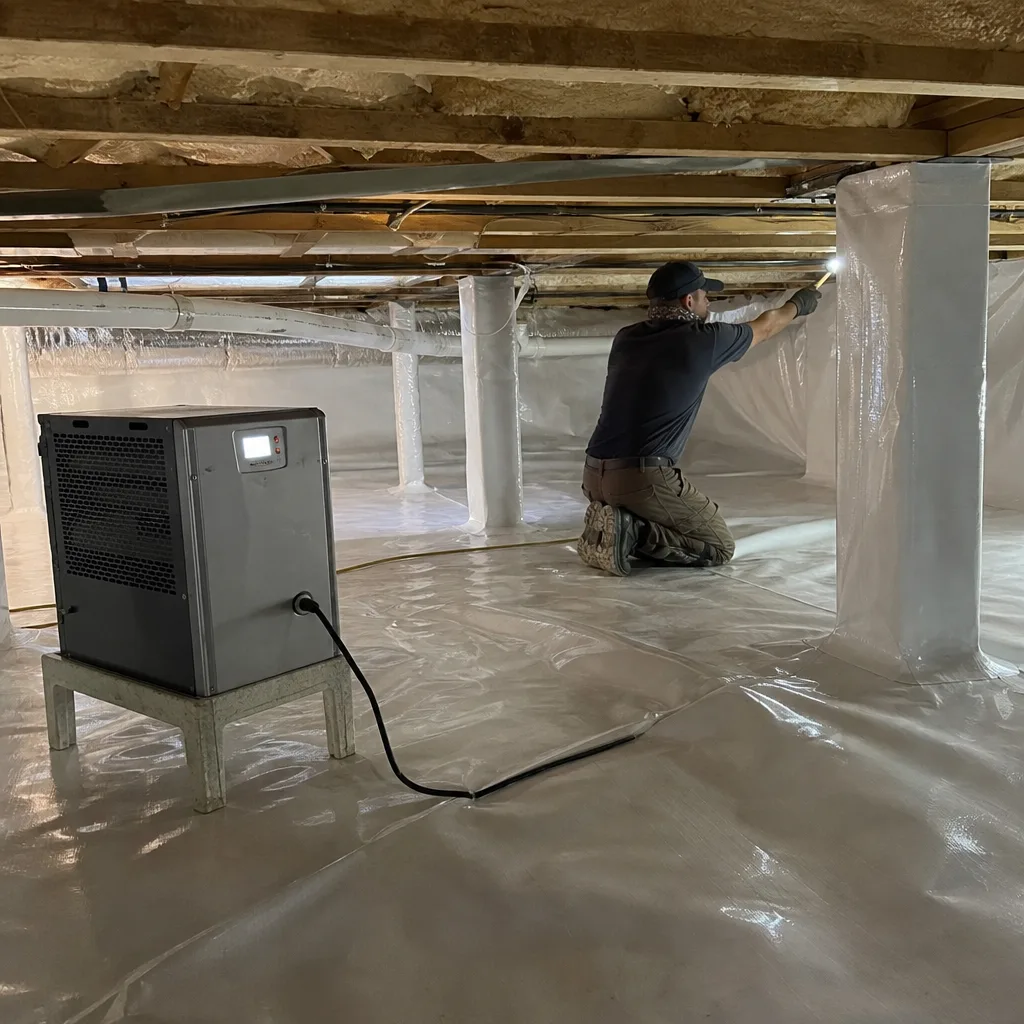
- Damp or darkened insulation batts above the barrier. When the poly tears at seams - common where Round Rock’s clay soil shifts seasonally - ground moisture rises through the crawl space and wicks into cellulose. The material darkens before it compacts, and by then you’ve lost R-value.
- Cupping or crowning of hardwood floors, especially in May and June. Williamson County’s spring humidity hits 80% RH regularly. A compromised vapor barrier lets that moisture migrate upward through the subfloor, and oak or hickory flooring reacts within 48 hours of sustained exposure.
- White or gray mold on floor joists or sill plates. This shows the barrier has been breached long enough for condensation to form on wood surfaces. In Round Rock’s Fern Bluff and Behrens Ranch subdivisions, we find this where original installers used single-tape seams instead of double-folded and taped joints.
- Insect activity concentrated along barrier edges. Termites and carpenter ants exploit the moisture gradient at a torn vapor barrier edge. The barrier isn’t pest control, but a properly sealed installation removes the damp conditions that draw them.
- Musty odor that intensifies after rain. Clay soils in this part of Central Texas hold water and release it slowly. A vapor barrier with even minor punctures becomes a wicking surface, and the smell is your first indicator before visible damage appears.
Replacement Cost & What’s Included
| Scope | Price Range in Round Rock |
|---|---|
| Crawl space floor, up to 1,200 sq ft (6-mil poly, seams taped, perimeter sealed to walls) | $1,200 - $1,800 |
| Crawl space floor, 1,200-2,500 sq ft (6-mil or 10-mil poly, full seam taping, piers wrapped) | $1,800 - $2,400 |
| Attic floor vapor barrier with GreenFiber cellulose removal and reinstallation | $2,200 - $2,800 |
| Spot repair (localized tear, under 200 sq ft, with seam patching) | $400 - $700 |
What drives the range: accessibility (crawl height and debris), whether existing GreenFiber insulation must be temporarily moved, and the condition of perimeter walls where the barrier terminates. Every job gets a Written Price Before Any Work Starts - Haven Standard Clause 1 - and includes our Documented Photo Record. The 365-Day Done Right Promise covers installation defects, and we publish before-and-after blower-door numbers on any job where air sealing accompanies the barrier work.
DIY or Call Us?
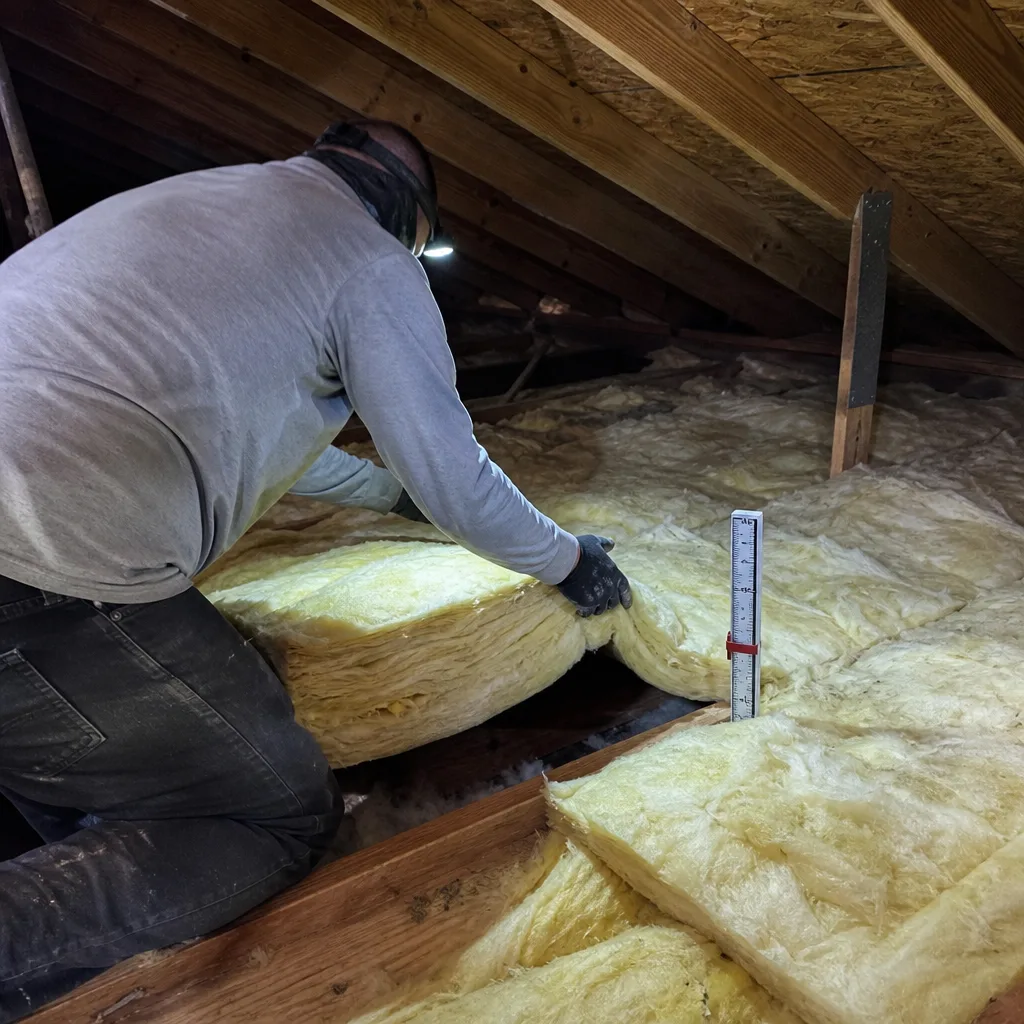
There’s no high-tension danger in vapor barrier work, but there’s a sequencing trap we see constantly. Homeowners buy a roll of 6-mil poly, cut it to fit, and tape the seams with duct tape. Six months later the tape has delaminated, the seams have opened, and the money’s gone. The actual skill is in surface prep - removing debris that punctures, sealing to foundation walls with compatible mastic, and overlapping seams 12 inches minimum with pressure-sensitive tape rated for polyethylene, not hardware-store general purpose.
What you can safely check: walk your crawl space with a headlamp and photograph any tears, pooling water, or pulled edges. Note the mil rating if visible. Then call us at (737) 259-7528 with those photos. We’ll tell you whether it’s a spot repair or full replacement, and we’ll give you the written price before anyone schedules a crew. Seal the leaks first. The insulation has nowhere to go until you do.
FAQs
In Central Texas conditions, properly installed 6-mil polyethylene lasts 15-20 years; 10-mil reinforced poly can reach 25. The failure point is almost always seam separation or perimeter pull-back, not film degradation. Clay soil movement in Williamson County stresses perimeter attachments more than UV or oxidation. Call (737) 259-7528 for an exact assessment of your installation - estimates are free.
Spot repairs work for tears under 18 inches in barriers less than 10 years old, provided the surrounding material is clean and the perimeter seal remains intact. We patch with matching mil-rated poly and double-tape seams. If the barrier is older, brittle, or has multiple failure points, replacement is more cost-effective than chasing individual tears. We’ll show you both options in the written scope.
A standard crawl space in Round Rock - 1,500 square feet, moderate accessibility - takes one crew day. Attic floor work with GreenFiber cellulose handling adds four to six hours for careful removal, barrier installation, and re-blowing to original density. We schedule starts with the material on the truck, not on order.
Yes. We carry 6-mil and 10-mil polyethylene rolls, pressure-sensitive seam tape, and perimeter mastic on every Round Rock vehicle. For GreenFiber-specific jobs, we verify the cellulose product line and existing density before selecting barrier permeability. Same-day starts are available for standard crawl spaces scheduled before noon.
Written by Wes Okafor, Owner, Topside Attic Insulation Round Rock at Topside Attic Insulation Round Rock, serving Round Rock and nearby areas.