
Johns Manville Attic Insulation: The Round Rock Owner’s Guide
We stock and install Johns Manville-compatible attic insulation systems in Round Rock, with most complete attic jobs running between $2,800 and $5,400 depending on square footage and whether the attic floor needs air sealing first. Same-day assessment and next-day installation are standard for most residential attics in the 78664, 78665, and 78681 ZIP codes. Homeowners usually discover their Johns Manville insulation is failing when upstairs rooms won’t hold temperature, energy bills spike 20-40% year-over-year, or a home inspector flags compressed or settled batts during a sale - the material looks fine from the hatch but has lost its designed R-value where it matters.
Which Johns Manville Models This Applies To
Johns Manville produces several attic insulation lines you’ll find in Round Rock homes built between 2005 and 2020: Climate Pro blown-in fiberglass (the loose-fill white or pink material in most attics here), Spider custom-fit fiberglass (a higher-density blown system common in production builds near Teravista and Forest Creek), and ComfortTherm batts (the Kraft-faced rolls used in bonus-room knee walls and attic floors with walkable decking).
Identification starts at the attic hatch. Climate Pro bags stamped with “R-30,” “R-38,” or “R-49” and a lot number beginning with “CP-” indicate the original install spec. Spider is denser, almost sand-like in texture, and its bags carry an “SP-” prefix. ComfortTherm batts have a printed facing that reads “JM ComfortTherm” every 24 inches. The critical compatibility gotcha in Williamson County: Climate Pro and Spider require different blowing-machine settings. A crew trained on generic fiberglass often over-densities Climate Pro, creating hard spots that trap moisture against drywall in our humid spring months, or under-densities Spider, which then settles 15-20% in the first two years and leaves the top plate exposed.
We don’t push OEM-only. Johns Manville’s formaldehyde-free fiberglass performs well, but for attics with active rodent history or prior moisture events, we sometimes spec Knauf EcoSeal or Owens Corning ProPink as equivalent alternatives. The decision depends on what the blower-door test and photo record show, not brand loyalty. Topside Attic Insulation Round Rock is an independent service provider with no affiliation to Johns Manville.
Signs Your Johns Manville Attic Insulation Is Failing
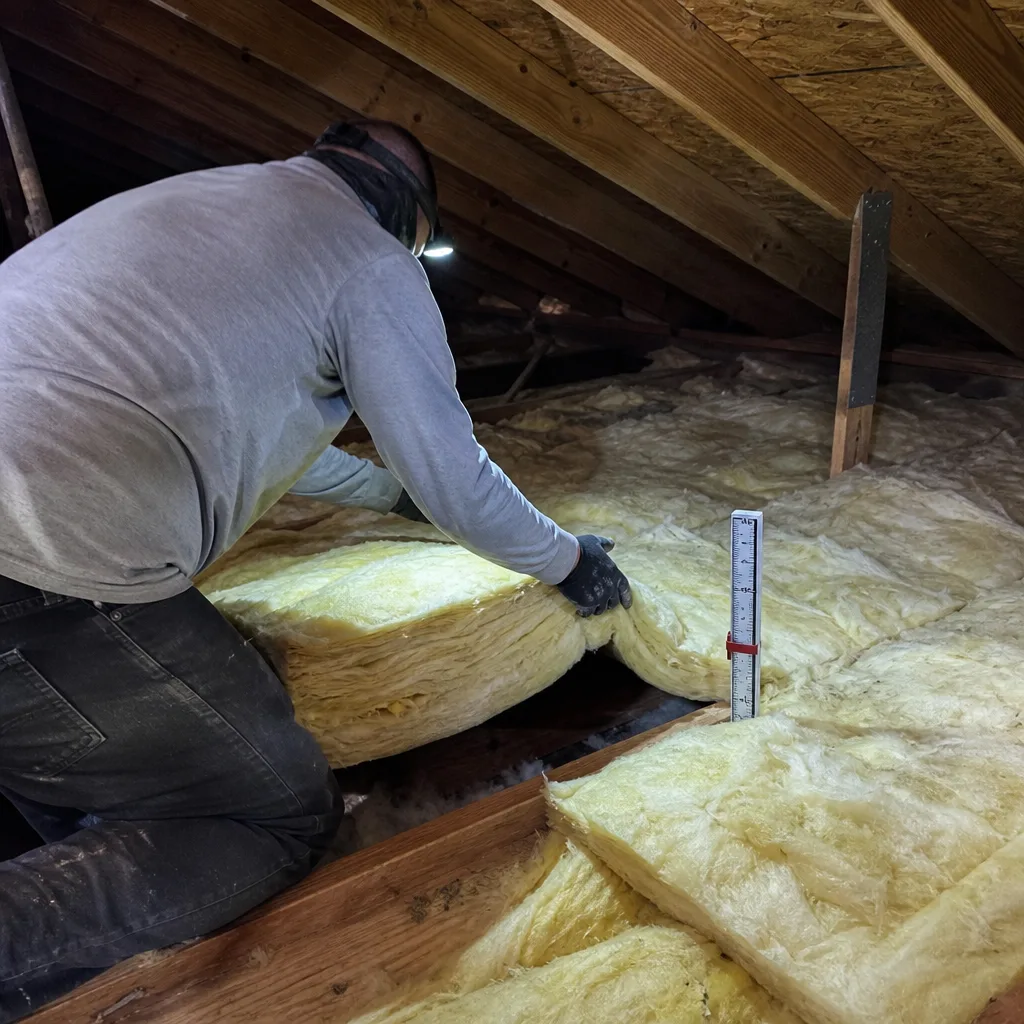
- Uneven temperature between rooms on the same HVAC zone. This usually means the insulation has settled or been disturbed, creating thermal bypasses. In Round Rock’s older sections like Old Town, we often find Climate Pro that was blown to 12 inches in 2010 now measuring 7-8 inches near the eaves where crews walked during installation.
- Ice damming or heavy frost on roof sheathing in winter. Warm, moist interior air is reaching the cold roof deck through gaps the insulation was supposed to cover. The Johns Manville material itself may be intact; the failure is almost always bypasses around chimneys, duct chases, or top plates that were never sealed first.
- Dust accumulation on ceiling registers or around can lights. This is attic air being pulled into the living space through pressure imbalances. Spider’s higher density resists this better than Climate Pro, but neither works if the ceiling plane leaks.
- Insulation compressed below joist height in storage areas. Walkable decking installed after the fact, or holiday decoration boxes left for years, crushes fiberglass and destroys its loft. R-38 compressed to 4 inches performs closer to R-13.
- Visible discoloration, dark streaking, or musty odor from the attic hatch. Fiberglass doesn’t mold, but it holds moisture against drywall when ventilation is inadequate. Round Rock’s spring humidity, combined with south-facing roofs that hit 140°F in July, accelerates this cycle in attics with insufficient exhaust venting.
Replacement Cost & What’s Included
Most complete Johns Manville attic insulation replacements in Round Rock run $2,800-$5,400 for homes between 1,800 and 3,200 square feet. The lower end applies to open attics with clear access, existing baffles in place, and no removal required. The upper end includes old material extraction, extensive air sealing of top plates and can lights, and blower-door verification.
What’s in that price: removal and responsible disposal of existing material; air sealing with caulk, foam, and fire-rated barriers where code requires; installation of new Johns Manville, Knauf, or equivalent to the spec we agree on in writing; baffle installation or correction at eaves; and a post-job blower-door test with documented photo record. Under Haven Standard Clause 1, you get the written price before anyone starts, the written scope, and the written warranty. The 365-Day Done Right Promise covers settling, density issues, or any gap in coverage we missed. We also stock Reflectix and other radiant barrier materials if your roof configuration benefits from hybrid insulation.
Homes in Behrens Ranch and Fern Bluff with complex rooflines, multiple dormers, or conditioned attic spaces typically land in the $4,200-$5,800 range due to access time and the additional sealing detail required.
DIY or Call Us?
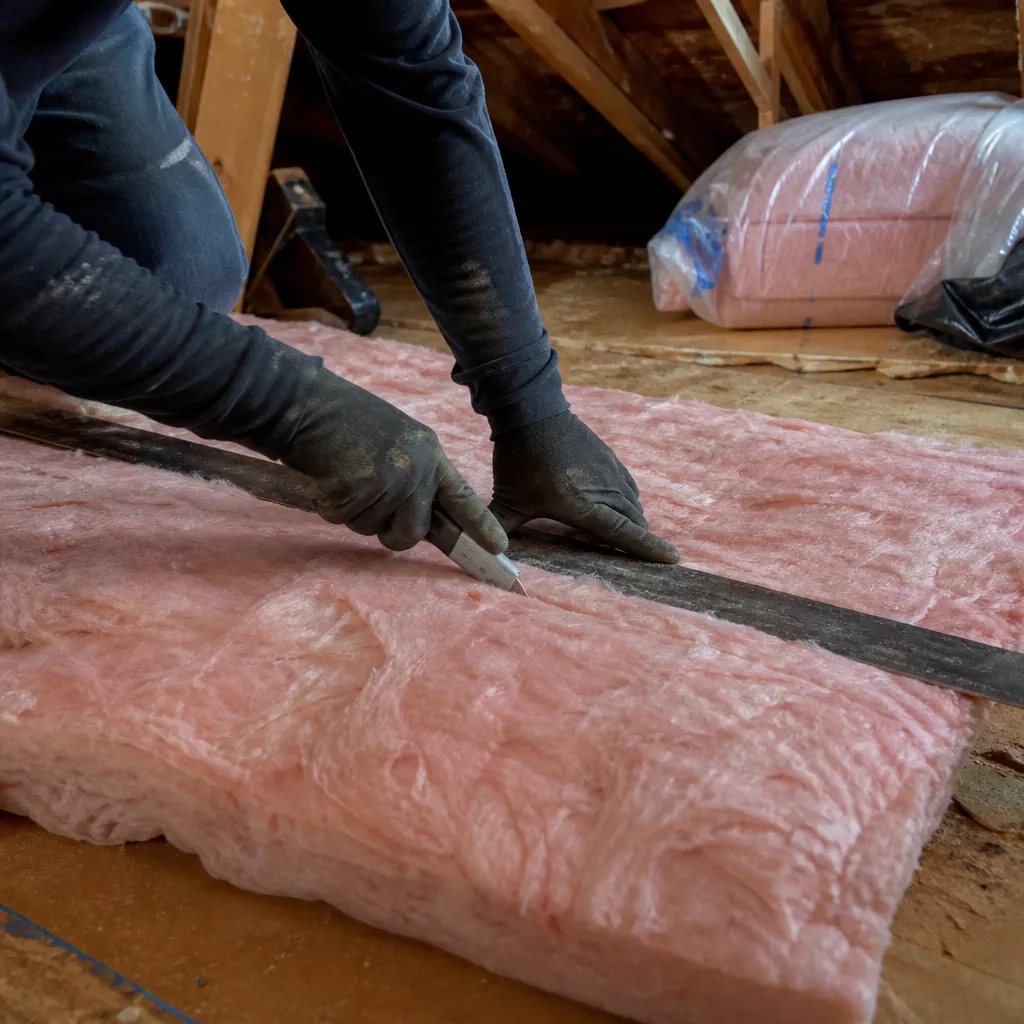
There’s safe homeowner reconnaissance and then there’s work that belongs to a crew with the right equipment. You can check your current insulation depth with a yardstick, photograph any labels you find, and verify your attic has working exhaust vents. What you shouldn’t do: walk through loose-fill without proper lighting and plank paths, disturb vermiculite or old material that might contain asbestos, or attempt to air seal around recessed can lights without knowing which housings are IC-rated for contact with insulation.
The bigger risk is sequencing. We’ve repaired dozens of Round Rock attics where a homeowner added new Johns Manville blown-in over an unsealed floor, trapping moisture and making the eventual proper fix more expensive. Seal the leaks first. The insulation has nowhere to go until you do. If your blower-door number is unknown, you don’t know whether you’re treating the symptom or the cause. Call (737) 259-7528 for a free assessment. We’ll measure, photograph, and give you a written price before any work starts.
FAQs
Formaldehyde-free fiberglass itself doesn’t degrade chemically, but its installed performance lasts 15-25 years only if it stays lofted, dry, and undisturbed. In practice, Round Rock’s thermal cycling, spring humidity, and the likelihood of future ceiling penetrations for electrical or HVAC work mean most attics need reassessment at 12-18 years. Call (737) 259-7528 for a free inspection if you’re in that window.
Spot repair works for localized settling or disturbance, but only after air sealing is verified. If the existing material is compressed, contaminated, or installed before 2010 without proper ventilation, full replacement with current-density product pays for itself faster. We offer free second opinions on any written estimate you’ve already received.
Most residential jobs in Round Rock finish in one day for installation, with removal adding a second day for homes over 2,500 square feet or those with multiple layers of old material. We schedule the blower-door test, air sealing, and insulation blow for consecutive days when possible so your HVAC isn’t exposed long.
We maintain Climate Pro and Spider on our warehouse floor, with same-week installation available for standard R-values. Specialty densities or hybrid systems with Reflectix radiant barrier may add 2-3 business days. A live person answers our line 24/7 to check current stock against your attic measurements.
Written by Wes Okafor, Owner, Topside Attic Insulation Round Rock at Topside Attic Insulation Round Rock, serving Round Rock and nearby areas.