
Owens Corning Vapor Barrier Installation: The Round Rock Owner’s Guide
Owens Corning vapor barrier installation in Round Rock typically runs $1,800-$3,400 for a full crawl space or attic application, depending on square footage and whether we’re sealing over bare earth or replacing a failed existing barrier. We stock Owens Corning 10-mil and 15-mil reinforced polyethylene on every truck, and most jobs in Round Rock’s 78664, 78665, and 78681 ZIPs can start same-day or next-day. Most homeowners discover the problem during our humid Central Texas summers, when they notice a sharp musty smell, cupping hardwood floors, or find condensation beading on ductwork in a crawl space that should stay dry year-round.
Which Owens Corning Models This Applies To
Owens Corning doesn’t sell vapor barrier as a named “model” the way they sell shingles or insulation batts. What we’re talking about is their engineered polyethylene sheeting, typically sold in 10-mil and 15-mil thicknesses with reinforced woven cores, sized in rolls of 12-by-100 or 20-by-100 feet. The critical match is the mil rating and the seam-tape system, not a model number.
Here’s how to identify what you’ve got now: look for the Owens Corning logo and mil rating printed along the edge of the existing sheeting. If your current barrier is 6-mil or thinner, it was likely a builder-grade shortcut. In Round Rock’s clay-heavy soils and seasonal humidity swings, 6-mil tears within three to five years where workers crawl or where the earth shifts. We see this constantly in neighborhoods like Behrens Ranch and Forest Creek, where homes built between 2015 and 2020 often got the minimum.
OEM Owens Corning barrier pairs with their own ProPink seam tape and butyl-backed termination strips. We also install quality aftermarket equivalents from Reflectix when the job calls for radiant-barrier hybrid applications, but we never mix tape systems across manufacturers. The adhesive chemistry differs, and failed seams are the number-one callback in this trade.
Signs Your Owens Corning Vapor Barrier Installation Is Failing
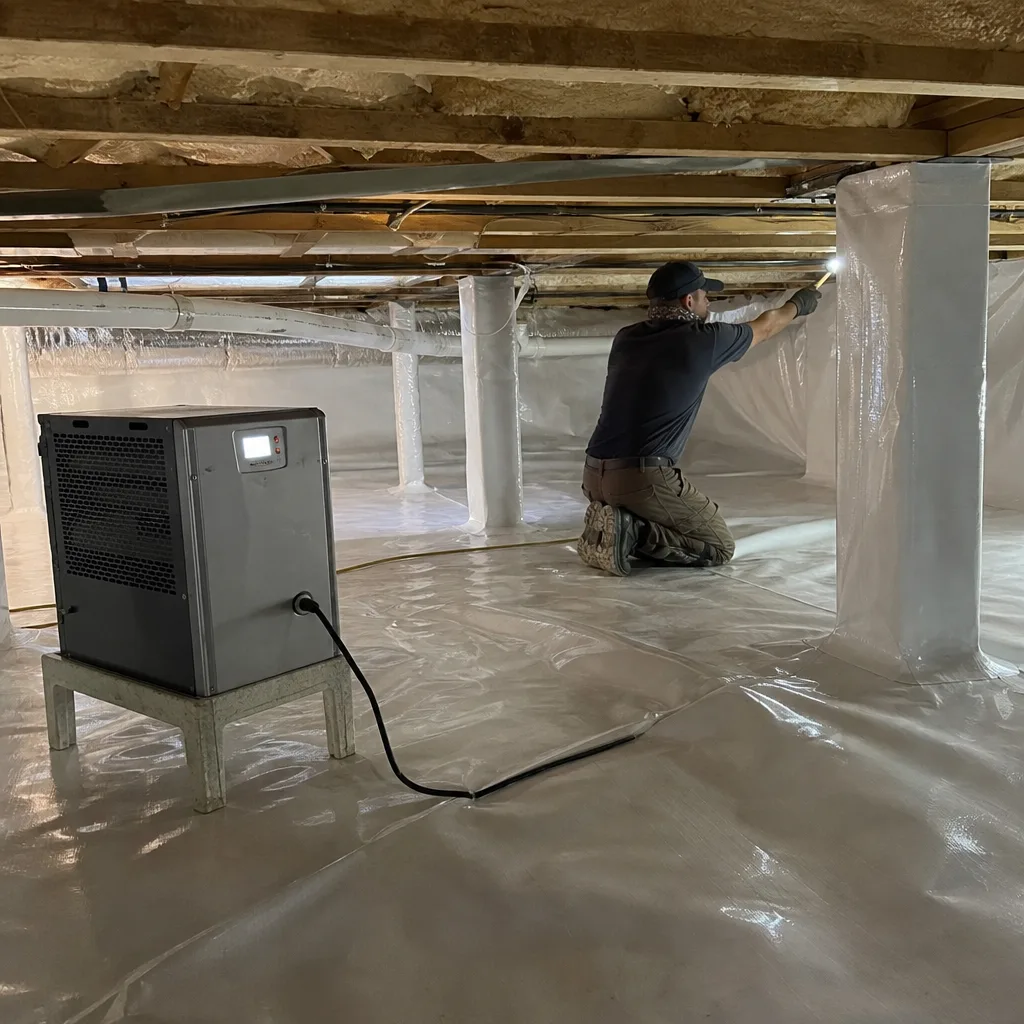
- Musty odors that worsen after rain. When the barrier tears or pulls away from foundation walls, groundwater vapor rises straight into the crawl space framing. In Round Rock, where spring storms can drop two inches in an hour, a compromised barrier lets that moisture load into floor joists within 48 hours.
- Cupping or buckling hardwood floors above the crawl space. Wood absorbs moisture from below faster than it releases it upward. We’ve measured 70% relative humidity in crawl spaces with failed barriers while the living space above read 55% - the floorboards know the difference even if the thermostat doesn’t.
- Condensation on ductwork or HVAC boots. Cold air moving through metal ducts drops the surface temperature below the dew point of the humid crawl space air. A intact vapor barrier keeps that air dry enough that condensation doesn’t form. When it does, you’re looking at rusted collars and eventually mold.
- White or gray mold on floor joists or sill plates. This is past the warning stage. Owens Corning’s 15-mil barrier is mold-resistant by formulation, but it can’t resist what it no longer covers. In Williamson County’s warm climate, mold colonizes in 24-72 hours once wood moisture content hits 20%.
- Pest activity increasing in the crawl space. Termites and rodents prefer damp environments. A torn barrier creates humid harborage and, once rodents chew through, provides nesting material. We document this with photos on every inspection - the correlation between barrier failure and pest pressure is nearly one-to-one in Round Rock’s older subdivisions.
Replacement Cost & What’s Included
For a typical Round Rock crawl space of 1,200-1,800 square feet, complete Owens Corning vapor barrier replacement runs $1,800-$2,800. Larger footprints or attic applications with complex penetrations run $2,800-$3,400. The driver is labor, not material: properly lapping seams 12 inches, sealing to foundation walls with butyl termination, and taping every penetration takes time.
Every quote breaks out parts and labor separately. The barrier itself, seam tape, termination strips, and mechanical fasteners are line-itemed. Labor includes removal and disposal of the failed barrier, surface prep, installation, and post-install documentation. Under Haven Standard Clause 1, you get that written price before anyone enters the crawl space. No exceptions.
Our 365-Day Done Right Promise covers the installation. If seams lift, tears develop at penetrations, or termination pulls away, we return and fix it. We also publish before-and-after moisture readings on every job - not blower-door numbers for vapor barrier work, but hygrometer readings and thermal images that show the actual change in crawl space conditions.
DIY or Call Us?
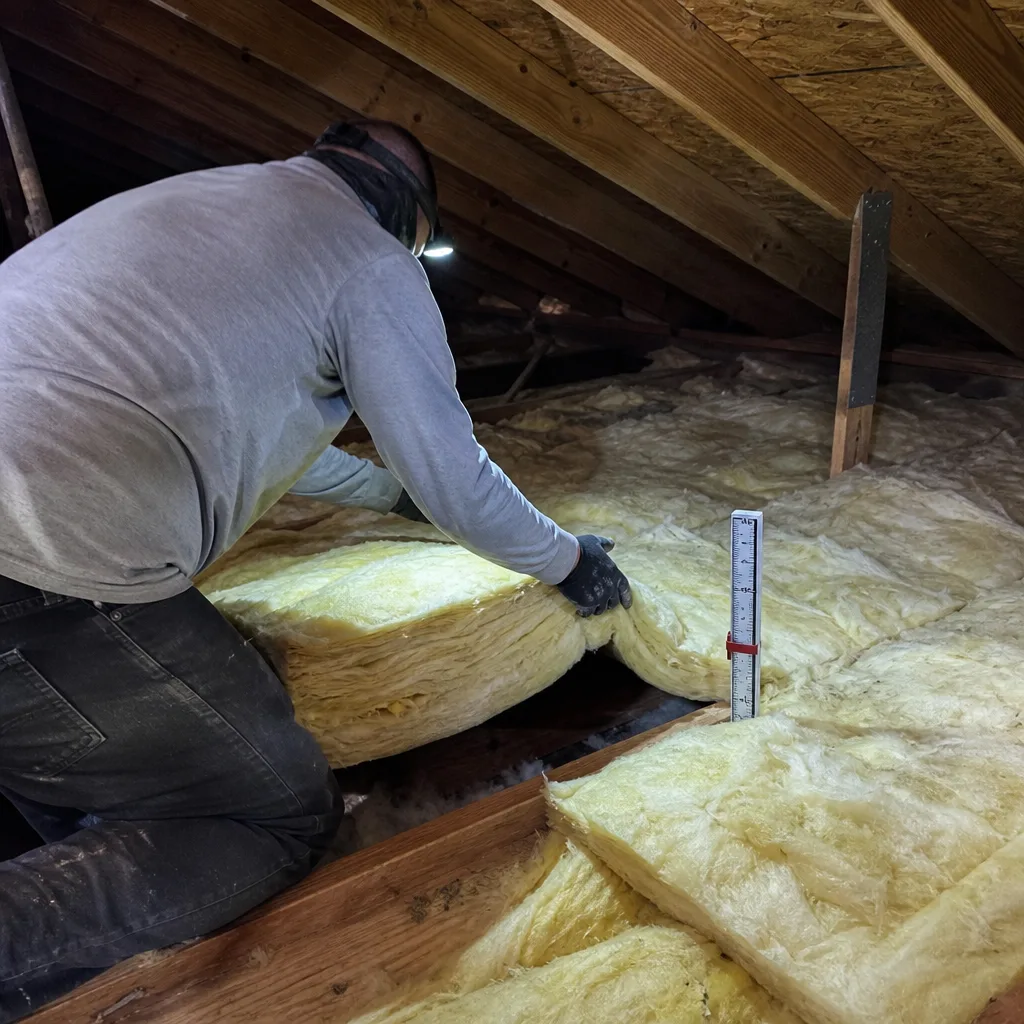
There’s no high-tension danger in vapor barrier work the way there is with garage door springs or gas lines. The risk is subtler: a homeowner can buy the right roll of Owens Corning 15-mil and still create a system that fails in 18 months because the seams weren’t taped under proper tension, or the termination at the foundation wall was done with the wrong adhesive for poured concrete.
What you can safely check: measure your crawl space footprint, photograph the existing barrier’s edge printing so you know the mil rating, and look for obvious tears or areas where the barrier has pulled away from walls. What goes wrong with DIY: inadequate overlap at seams (we use 12 inches, most guides say 6), wrong tape for the substrate, and missing penetrations - plumbing stub-ups, electrical conduit, HVAC lines - that become vapor highways.
We’re not affiliated with Owens Corning. We’re an independent service provider who sources their materials and installs them to the standards the product was engineered for. If you want a free second opinion on a quote you’ve already received, bring it in. We’ll read it with you.
Call (737) 259-7528 for a written price before any work starts.
FAQs
In Round Rock’s hot-humid summers and mild wet winters, a properly installed 15-mil Owens Corning reinforced barrier lasts 15-20 years. The 10-mil version, or any 6-mil builder-grade material, typically shows seam failure or tearing at penetrations within 5-8 years. Call (737) 259-7528 for an exact quote on replacement - estimates are free.
Patching works for isolated punctures smaller than a dinner plate if the surrounding material is still flexible and well-adhered. Multiple tears, widespread embrittlement, or any mold on the underside means full replacement. We’ve learned that patching over degraded substrate is cheaper today and more expensive next year. Call (737) 259-7528 and we’ll show you what the photo record looks like before you decide.
Most residential crawl spaces in Round Rock take one day, start to finish. Attic applications with complex ductwork or multiple penetrations may run into a second day. We arrive with the barrier, tape, and fasteners on the truck, so there’s no supplier delay. Call (737) 259-7528 to check same-week availability.
We stock 10-mil and 15-mil Owens Corning reinforced polyethylene, seam tape, and termination strips on every truck. For Round Rock addresses, we can usually inspect and start work same-day or next-day. Call (737) 259-7528 to confirm current truck stock.
Written by Wes Okafor, Owner, Topside Attic Insulation Round Rock at Topside Attic Insulation Round Rock, serving Round Rock and nearby areas.