
Rockwool Radiant Barrier Installation: The Round Rock Owner’s Guide
Rockwool radiant barrier installation in Round Rock typically runs $2,400-$4,200 for a standard 2,000-square-foot attic, and most jobs are completed in a single day. We stock Rockwool AFB (Acoustical Fire Batt) and Comfortboard 80 rigid board, both compatible with radiant barrier assemblies, and carry the full line of supporting fasteners and foil-faced insulation for same-day starts. Most Round Rock homeowners realize their radiant barrier is failing when summer attic temperatures spike past 140°F or their upstairs HVAC runs continuously from May through September without catching up.
Which Rockwool Models This Applies To
Rockwool does not manufacture a standalone radiant barrier product. What we install are Rockwool insulation products engineered to work within radiant barrier assemblies: the Comfortboard 80 rigid mineral wool board, AFB evo acoustical fire batts, and Toprock DD dense deck boards. The critical match is thickness and density, not a model series name. Comfortboard 80 at 1.5-inch thickness is the most common substrate we see in Round Rock attics, particularly in homes built 2015-2020 in neighborhoods like Behrens Ranch and Paloma Lake where builders spec’d mineral wool for fireblocking with a separate foil radiant barrier layer.
To identify what you have, check the ink stamp on any exposed board edge. Rockwool stamps include density (80 kg/m³ for Comfortboard), manufacturing date, and plant code. If the stamp is faded, measure thickness precisely: Comfortboard 80 for radiant barrier substrates is typically 1″, 1.5″, or 2″. The 1.5-inch board has a specific flexural strength rating that matters when we’re fastening it to roof deck assemblies with integrated radiant barrier foil. Using a generic mineral wool substitute here fails code in Williamson County because the density falls below the fire-resistance assembly listing.
We source OEM Rockwool through authorized distribution. We do not use off-brand mineral wool in radiant barrier assemblies because the thermal bridging characteristics change enough to void the assembly’s rated performance. Topside Attic Insulation Round Rock is an independent service provider, not affiliated with Rockwool.
Signs Your Rockwool Radiant Barrier Installation Is Failing
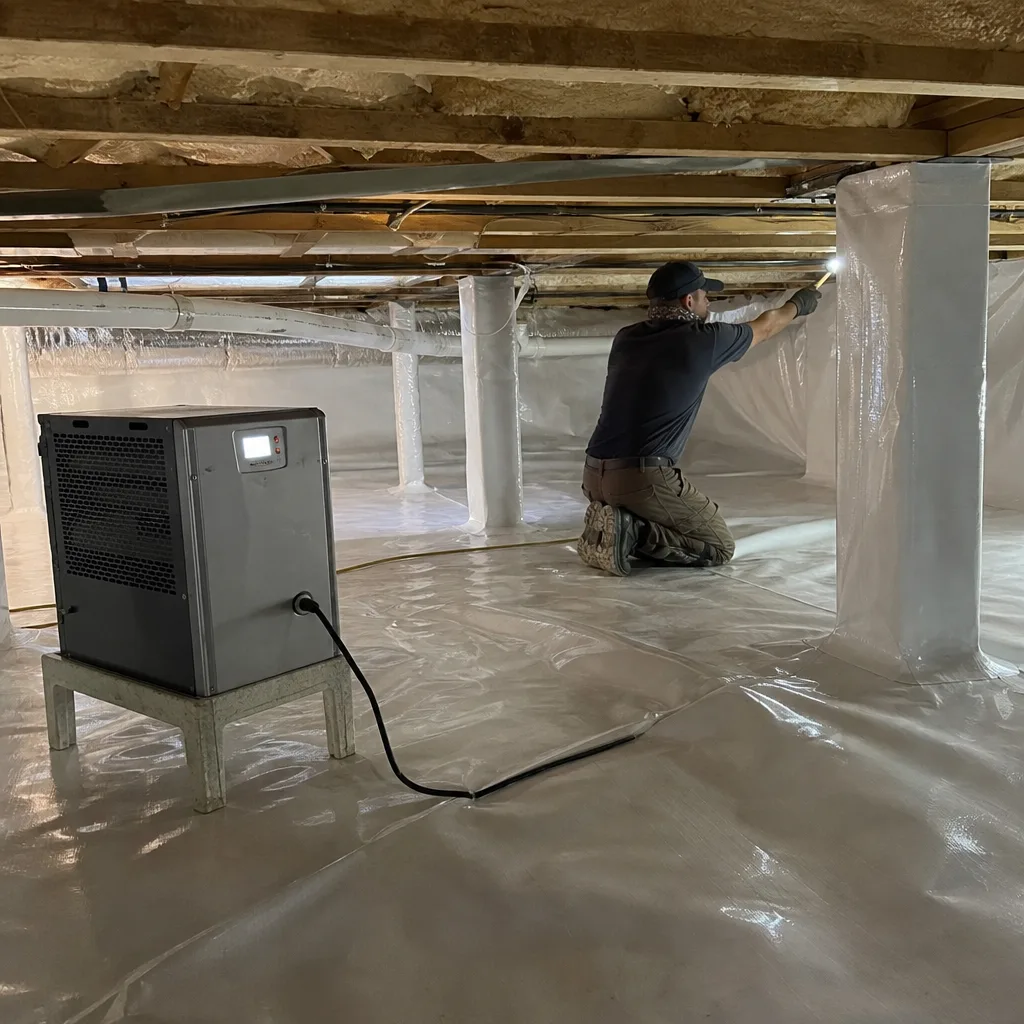
- Attic temperature swings of 40°F or more between identical outdoor conditions. This usually means the radiant barrier foil has delaminated from the Rockwool substrate or was installed with inadequate standoffs, eliminating the critical air gap that makes radiant barriers work. We see this in Round Rock homes where foil was stapled directly to Comfortboard without the required ¾-inch minimum clearance.
- Dust accumulation on the foil surface turning it matte gray. A clean radiant barrier reflects up to 97% of radiant heat. Once dust embeds in the porous surface of aged foil, emissivity rises and performance drops. Homes near RM 620 or I-35 with higher particulate exposure from construction traffic show this faster than interior Round Rock neighborhoods.
- Moisture staining on the Rockwool board edges. Mineral wool is hydrophobic, but the Kraft paper or foil facing can trap condensation if the assembly was installed before proper air sealing. This is the “sealed first” failure: insulation over unsealed top plates creates convective moisture transport that degrades the facing adhesive.
- Board sagging or detachment from fasteners. Comfortboard 80 at 1.5-inch thickness weighs roughly 2.3 pounds per square foot. In Round Rock’s heat-cycling climate, expansion and contraction of roof decking can work fasteners loose over 5-7 years if the wrong fastener type was used. We see this most on 4:12 pitch roofs where thermal movement is concentrated.
- Upstairs rooms that never reached temperature even after HVAC replacement. When the radiant barrier fails, the attic becomes a radiant oven and the ductwork above your ceiling turns into a heat sink. We’ve measured supply air temperature gains of 8-12°F in unconditioned attics with degraded barriers. The HVAC is fine; the envelope is the problem.
Replacement Cost & What’s Included
Most Rockwool radiant barrier replacement jobs in Round Rock fall between these ranges:
| Component | Price Range |
|---|---|
| Rockwool Comfortboard 80 (1.5″) - material only | $1.80-$2.40/sq ft |
| Radiant barrier foil - perforated, double-sided | $0.45-$0.75/sq ft |
| Standoff fasteners and track system | $0.60-$0.90/sq ft |
| Labor - removal, air sealing, reinstall | $1.20-$1.80/sq ft |
| Typical total installed (2,000 sq ft attic) | $2,400-$4,200 |
What drives the range: attic accessibility (scissor truss vs. conventional), whether existing material requires full removal or can be supplemented, and the extent of air sealing needed before new material goes in. Every job starts with a blower-door test - a pressurization reading that shows, in one number, how much air your building envelope is losing. We seal first. The insulation has nowhere to go until you do. Under Haven Standard Clause 1, you get a written price before any work starts, a written warranty, and a Documented Photo Record when the crew leaves. The 365-Day Done Right Promise applies to all completed work.
DIY or Call Us?
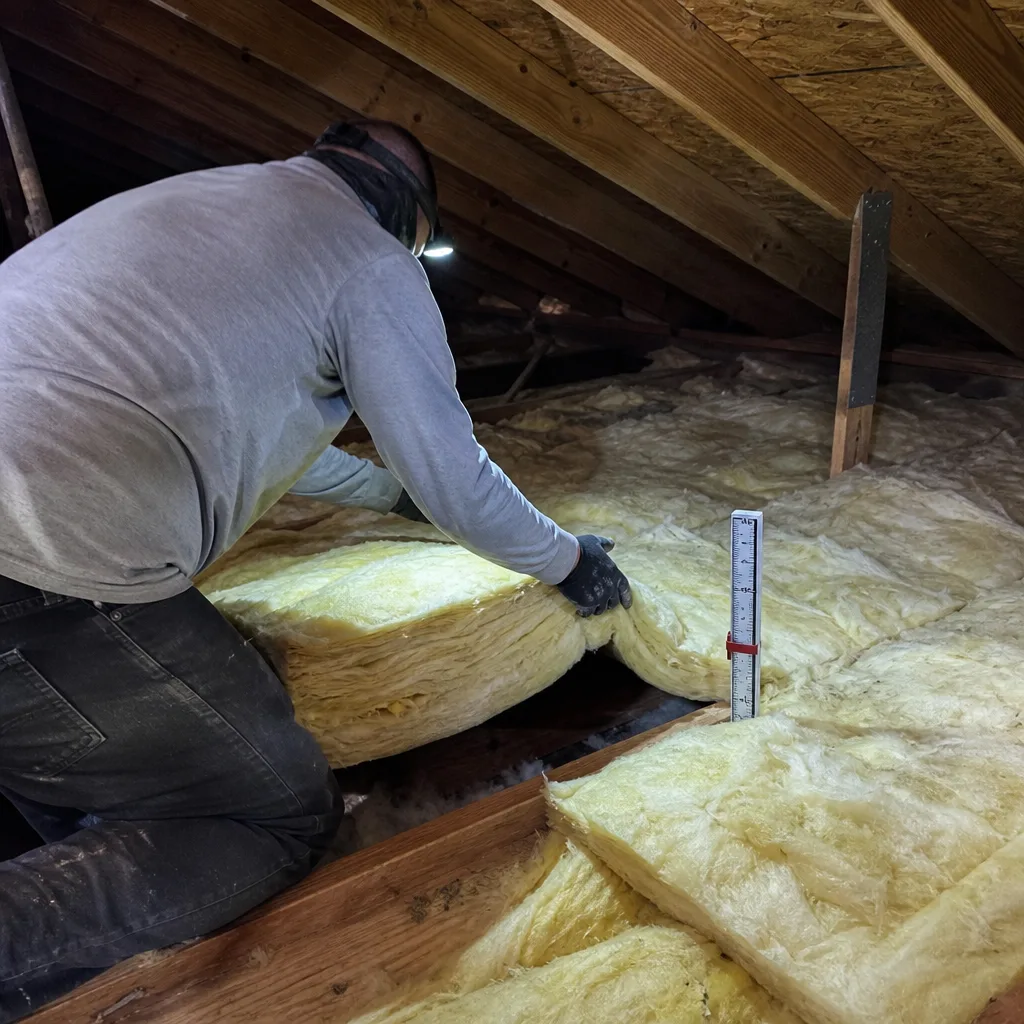
Here’s what you can safely check yourself: verify the Rockwool stamp on any exposed board, look for obvious fastener failure or sagging, and note any moisture staining with your phone’s camera and timestamp. What you should not attempt: removing and reinstalling radiant barrier assemblies involves working on attic framing near live electrical, handling mineral wool without proper respiratory protection (the fibers are non-respirable per OSHA but still irritate skin and eyes), and critically, diagnosing whether the failure is the barrier itself or the air sealing that should have preceded it. We’ve been called to Round Rock homes where a homeowner replaced the foil twice without addressing top plate bypasses; the new barrier failed the same way in three years. If your blower-door number was never measured, you’re guessing. Call (737) 259-7528 for a free estimate. We’ll read your existing setup with you, show you the documentation we’d deliver, and give you a written price before any work starts.
FAQs
Properly installed, 20-25 years. The mineral wool substrate does not degrade, but the foil facing and adhesive bond face stress from our 100°F+ attic summers and rapid temperature swings during shoulder seasons. Homes without proper air sealing see 30-40% shorter lifespan due to moisture cycling. Call (737) 259-7528 for an exact assessment - estimates are free.
Spot repair is possible if the Rockwool board is intact, the foil delamination is limited to less than 20% of surface area, and the original standoff system is still functional. Most Round Rock homes we assess have systemic issues - improper original air sealing, wrong fastener spacing, or dust-embedded foil - making partial repair a short-term fix. We publish before-and-after blower-door numbers on every job so you can see whether the repair actually changed your envelope performance. Call (737) 259-7528 for a free second opinion on any written estimate.
Most residential jobs are completed in one day. A typical 2,000-square-foot attic with full removal, air sealing of top plates and penetrations, and new Rockwool-plus-barrier install takes 6-8 hours with a two-person crew. Larger homes in Round Rock’s Forest Creek or Teravista areas, or those with complex truss configurations, may extend to a second day. We text you when the crew is on the way and deliver your Documented Photo Record within 24 hours of completion.
Yes. We maintain Comfortboard 80 in 1″, 1.5″, and 2″ thicknesses, AFB evo batts for wall and floor fireblocking integration, and perforated double-sided radiant barrier foil on every truck serving Round Rock. We also stock Reflectix as an alternative radiant barrier product for specific applications where flexibility or lower weight is required. Same-day starts are available for most assessments completed before noon. Call (737) 259-7528 to confirm current stock and schedule.
Written by Wes Okafor, Owner, Topside Attic Insulation Round Rock at Topside Attic Insulation Round Rock, serving Round Rock and nearby areas.