
Rockwool Vapor Barrier Installation: The Round Rock Owner’s Guide
Rockwool vapor barrier installation in Round Rock typically runs $1,800-$3,400 for a full attic floor application, depending on square footage and whether we’re working over existing insulation or bare decking. Most jobs we book are completed same-day once the air-sealing phase is done. Homeowners usually discover the problem after a summer where the upstairs never cooled below 78 degrees, or they spot dark spotting on the ceiling drywall during a routine HVAC filter change.
Which Rockwool Models This Applies To
Rockwool’s Comfortbatt, Comfortboard, and AFB (Acoustical Fire Batt) lines all require a separate vapor barrier strategy, since the stone wool itself is hydrophobic and doesn’t face-seal against air movement. The critical match is between the barrier material and the specific R-value assembly you’re building. Comfortbatt R-23 for 2×6 walls and Comfortbatt R-30 for attic floors are the two configurations we see most in Round Rock builds from 2015 forward, especially in neighborhoods like Behrens Ranch and Paloma Lake where code stepped up to IECC 2015.
To identify what you’ve got, check the kraft paper or foil facing, if present. Unfaced Rockwool always needs a supplemental barrier. The OEM-spec approach is a 6-mil polyethylene sheet lapped and sealed at seams with acoustical sealant, but we also install ProClima Intello Plus smart vapor retarders for assemblies that see both cooling-heavy summers and the occasional hard freeze. Aftermarket poly works if the perm rating matches, but we’ve pulled too many jobs where 4-mil hardware-store poly got brittle after three summers in a Round Rock attic. The 6-mil minimum is non-negotiable for Williamson County’s UV load and temperature swing.
Signs Your Rockwool Vapor Barrier Installation Is Failing
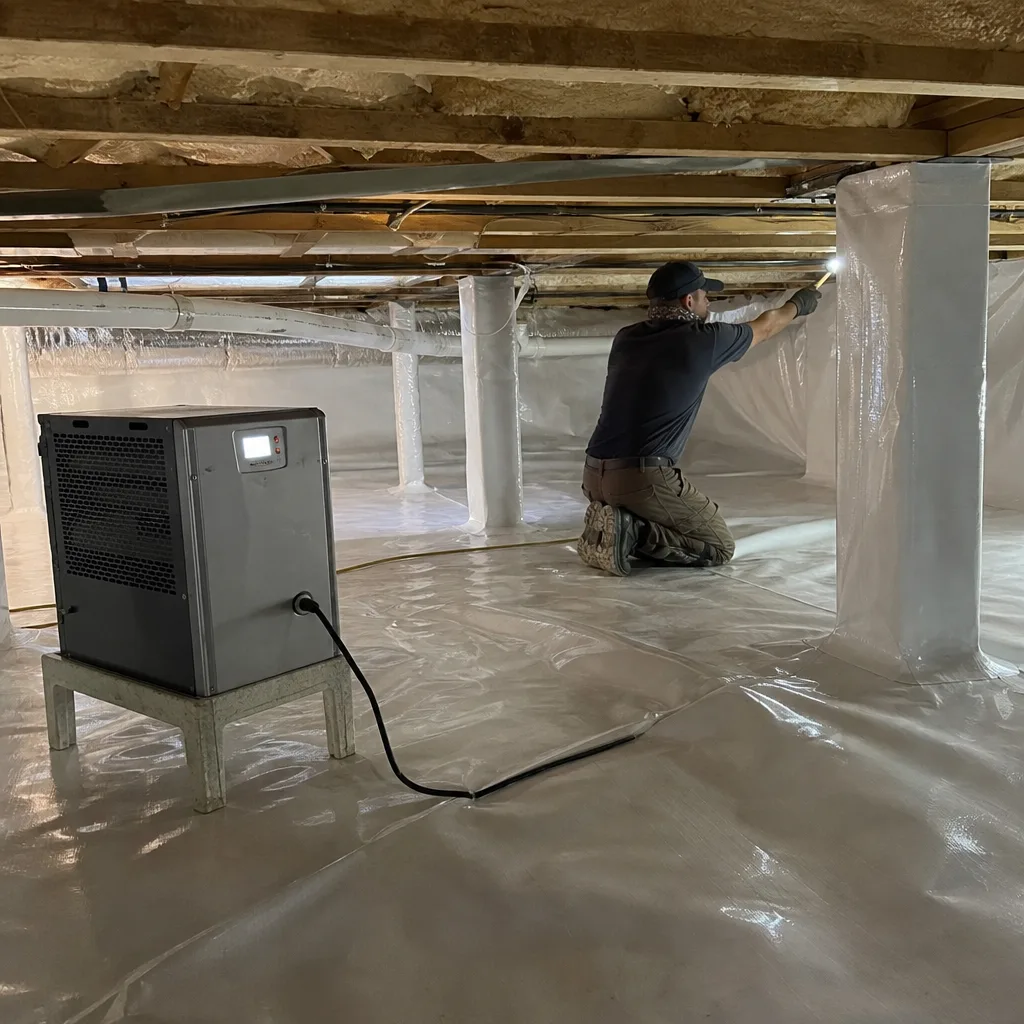
- Condensation on the underside of roof decking. When the vapor barrier is torn, displaced, or never sealed at penetrations, moist interior air hits the cold roof sheathing in winter and the AC-cooled decking in summer. We see this most in Round Rock homes with ridge vents and inadequate soffit flow, where the stack effect pulls conditioned air straight up through gaps in the barrier.
- Musty odor that intensifies after rain. Rockwool won’t mold, but the wood framing and drywall around it will if the barrier is passing vapor. The smell often starts in a closet or below a bathroom where the installer missed a plumbing penetration seal.
- Insulation that appears “stained” or darkened in patches. This is airborne dust and dirt acting as a filter, which means air is moving through the Rockwool, not just around it. A properly sealed vapor barrier stops this filtration; dark spots are a map of your leaks.
- Ice damming at the eaves in rare freeze events. Even in Round Rock, the January 2024 freeze proved that warm attic air escaping through a failed barrier melts roof snow from below, which refreezes at the cold overhang. The water backs up under shingles. We’ve repaired three of these in Fern Bluff alone since that storm.
- Energy bills that climb without rate increases. A blower-door test will show elevated CFM50 if the vapor barrier isn’t doing its air-sealing work. We recently tested a 2019 build in Forest Creek that read 3,800 CFM50; after repairing the barrier and sealing top plates, it dropped to 2,100.
Replacement Cost & What’s Included
For a typical 2,000-square-foot attic in Round Rock, Rockwool vapor barrier installation runs $1,800-$2,800 if we’re working over clean, existing insulation and the framing is accessible. That climbs to $2,600-$3,400 when we need to remove and re-install existing material, repair degraded poly, or address rodent damage first. The price includes 6-mil poly or smart retarder, acoustical sealant at all seams and penetrations, sealing of top plates and electrical boxes, and a post-install blower-door test so you see the number change.
What drives the range: attic height (steep pitches slow the crew), existing insulation condition, and how many recessed can lights or HVAC penetrations need boxing. We publish the written price before anyone lifts a tool, under Haven Standard Clause 1. The 365-Day Done Right Promise covers material and labor both. On applicable jobs, you’ll receive before-and-after blower-door readings and a Documented Photo Record of the sealed assembly.
DIY or Call Us?
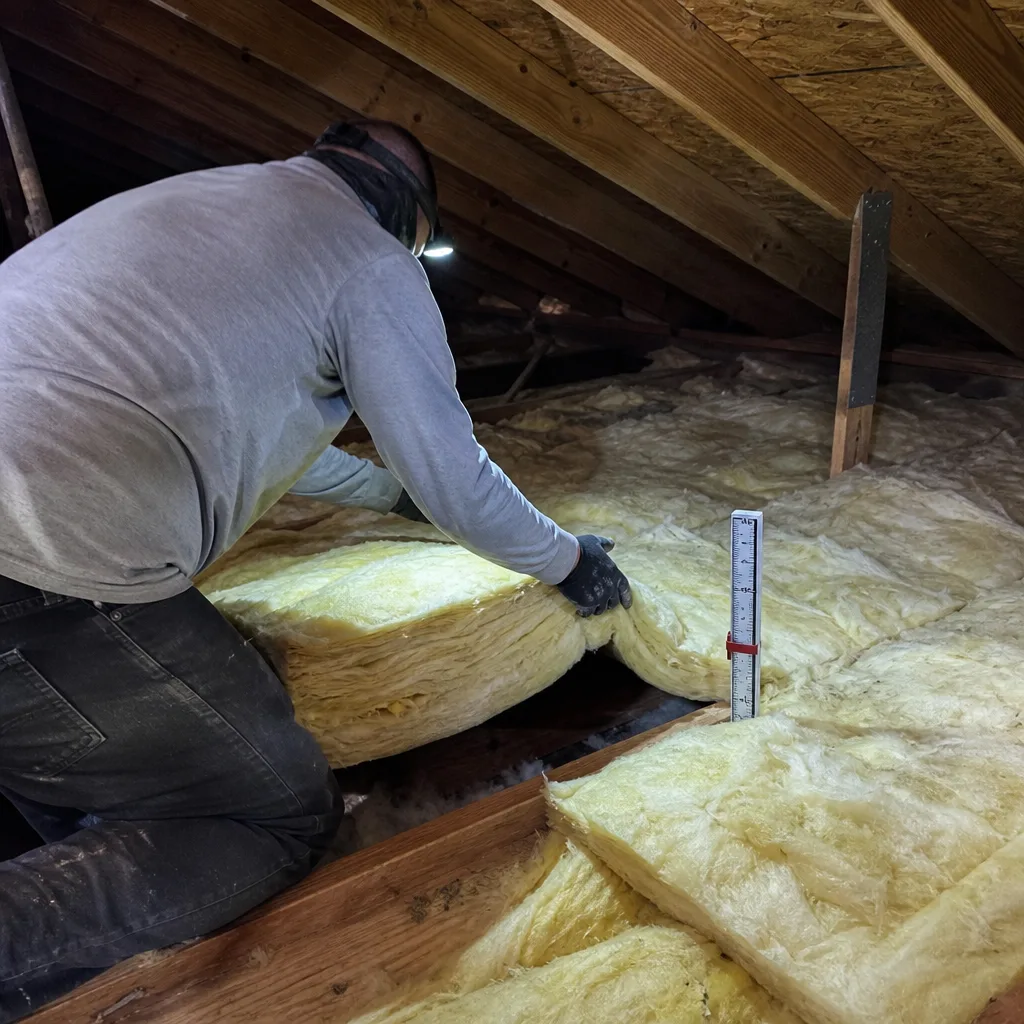
You can safely check whether your barrier is intact with a flashlight and a camera phone. Look for torn poly at can lights, gaps around plumbing stacks, and anywhere the insulation has been disturbed by prior HVAC or electrical work. What you should not do is crawl around a Round Rock attic in July trying to lay and seal new poly. Attic heat stress is real, and the sequencing matters: blower-door test first to find the leaks, air-sealing second, barrier third. Skip the first two and you’ve got a vapor barrier floating over a sieve.
We stock 6-mil poly, Intello Plus, and all sealants on every truck. Seal the leaks first. The insulation has nowhere to go until you do. Call (737) 259-7528 for a written price before any work starts.
FAQs
A properly installed 6-mil poly barrier should last 15-20 years, but we’ve replaced plenty at year 7 or 8 after rodent damage, trades walking on it, or the original installer using 4-mil stock. The 2024 freeze accelerated failures in homes where the barrier was already compromised. Call (737) 259-7528 for an exact quote, estimates are free.
Patching works for small, isolated tears if the surrounding poly is still supple and the seam gets full acoustical sealant coverage. If the material is brittle, widely torn, or failing at multiple penetrations, full replacement is the only fix that holds up. We assess this during our initial inspection and tell you which path makes sense. Call (737) 259-7528 for a free second opinion on any written estimate.
Most Rockwool vapor barrier installations in Round Rock are a single day, 4-6 hours for a standard attic up to about 2,500 square feet. Two days if we’re removing degraded material, air-sealing extensively, or working around a complex HVAC layout. We don’t start until you have a written price and a written scope in hand.
We stock 6-mil poly, smart vapor retarders, and all sealants on every truck, same-day availability for most Round Rock addresses. Rockwool batt itself comes from our regular supplier run, typically next-day if we don’t have your specific R-value in the warehouse. Topside Attic Insulation Round Rock is an independent service provider, not affiliated with Rockwool. We also stock Reflectix radiant barrier products for hybrid assemblies.
Written by Wes Okafor, Owner, Topside Attic Insulation Round Rock at Topside Attic Insulation Round Rock, serving Round Rock and nearby areas.