
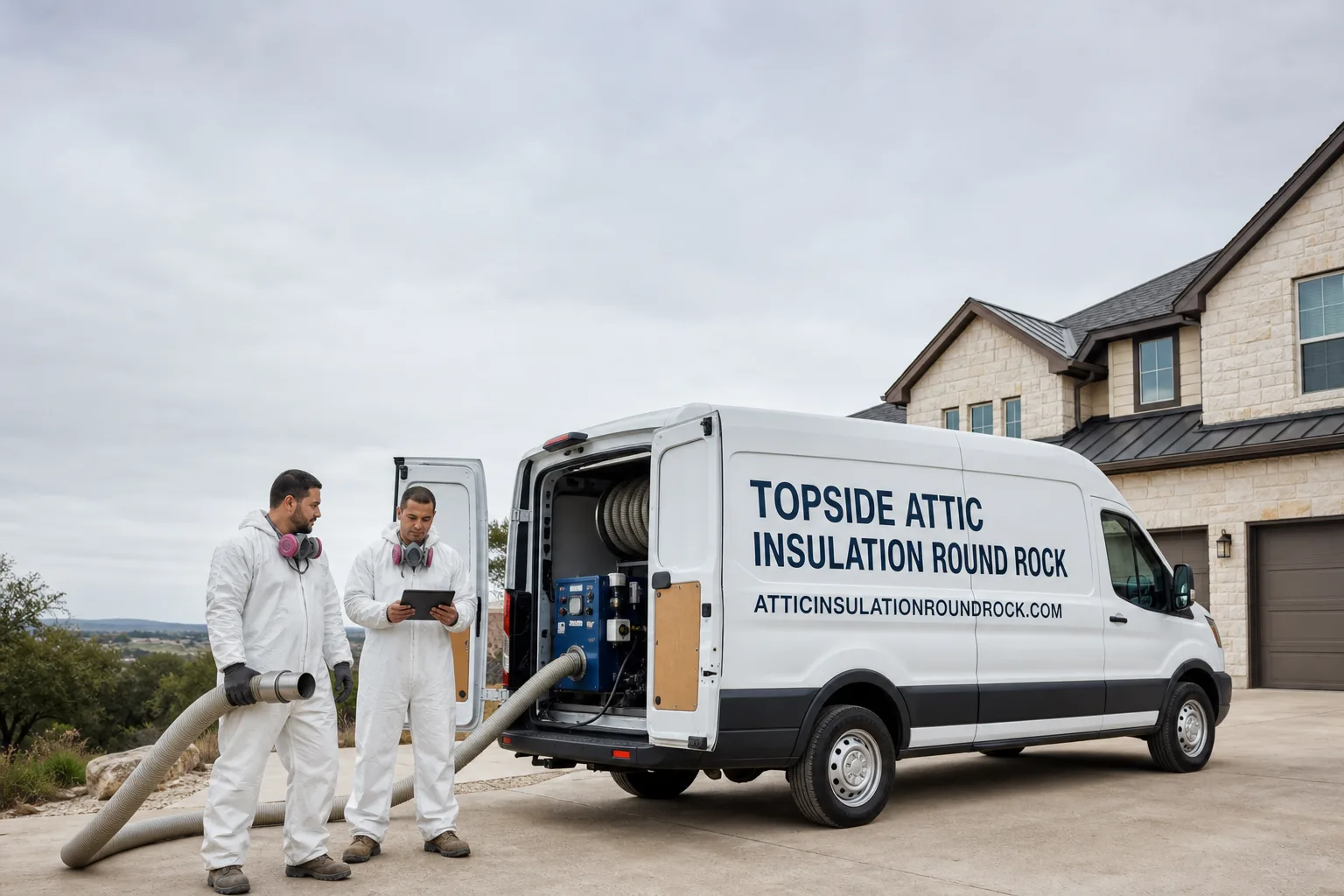
How Much Does Radiant Barrier Installation Cost in Round Rock?
Radiant Barrier Installation services in Round Rock, TX typically run between $1,400 and $2,800 for a standard single-story home with an attic footprint of 1,200 to 2,000 square feet. Most homeowners in the Round Rock area pay somewhere around $1,800 to $2,200 when the attic is accessible and the existing insulation doesn’t need to be moved. If your home is larger, has a complex roofline, or needs air sealing before installation – which it almost always does if it hasn’t been done before – budget toward the higher end.
Radiant Barrier Installation Cost Breakdown (2026)
Radiant barrier prices in Round Rock are driven by three things: square footage, material type, and labor complexity. Below are the line-item ranges we see most often in this market.
| Line Item | Typical Range (Round Rock, 2026) | Notes |
|---|---|---|
| Foil radiant barrier – staple-up method | $0.65 – $1.10 per sq ft installed | Most common in Round Rock attics; stapled to roof deck from below |
| Foil radiant barrier – lay-over method | $0.55 – $0.90 per sq ft installed | Laid over existing insulation; faster but collects dust over time |
| Radiant barrier paint / coating | $0.35 – $0.65 per sq ft | Lower upfront cost; significantly lower performance than foil |
| Attic air sealing (if needed first) | $350 – $900 depending on penetration count | Top plates, can lights, HVAC boots – should be done before any insulation work |
| Insulation removal (if required) | $1.00 – $1.75 per sq ft | Needed if old insulation is wet, rodent-damaged, or blocking access |
| Whole-home job (1,200 sq ft attic, foil staple-up) | $1,400 – $2,000 | Most common finished price in Teravista, Forest Creek, and Round Rock proper |
| Whole-home job (2,000+ sq ft attic, two-story, complex roofline) | $2,200 – $3,400+ | Common in Mayfield Ranch and larger homes near the Brushy Creek corridor |
| Radiant barrier + attic air sealing bundle | $2,000 – $3,800 | Best-performance option; air sealing is completed before foil goes in |
A few things push prices outside these ranges. Attics with standing HVAC equipment, cross-bracing that limits movement, or ceilings below 18 inches in low-slope sections take longer and cost more in labor. On the flip side, newer homes in Round Rock – particularly those built after 2015 in the newer sections of Teravista and Avery Ranch – tend to have cleaner attic floors and better access points, which keeps labor time down.
It’s also worth being direct about material tiers. A single-layer perforated foil from a mid-grade supplier performs very differently from a double-sided, double-layer foil with reinforced scrim. At Envelope Insulation Co., we source materials from manufacturers like Owens Corning and Johns Manville rather than unbranded bulk rolls, and the price difference per square foot is real but so is the emissivity rating – the number that actually tells you how much radiant heat the barrier is reflecting.
What Affects Radiant Barrier Installation Pricing in Round Rock
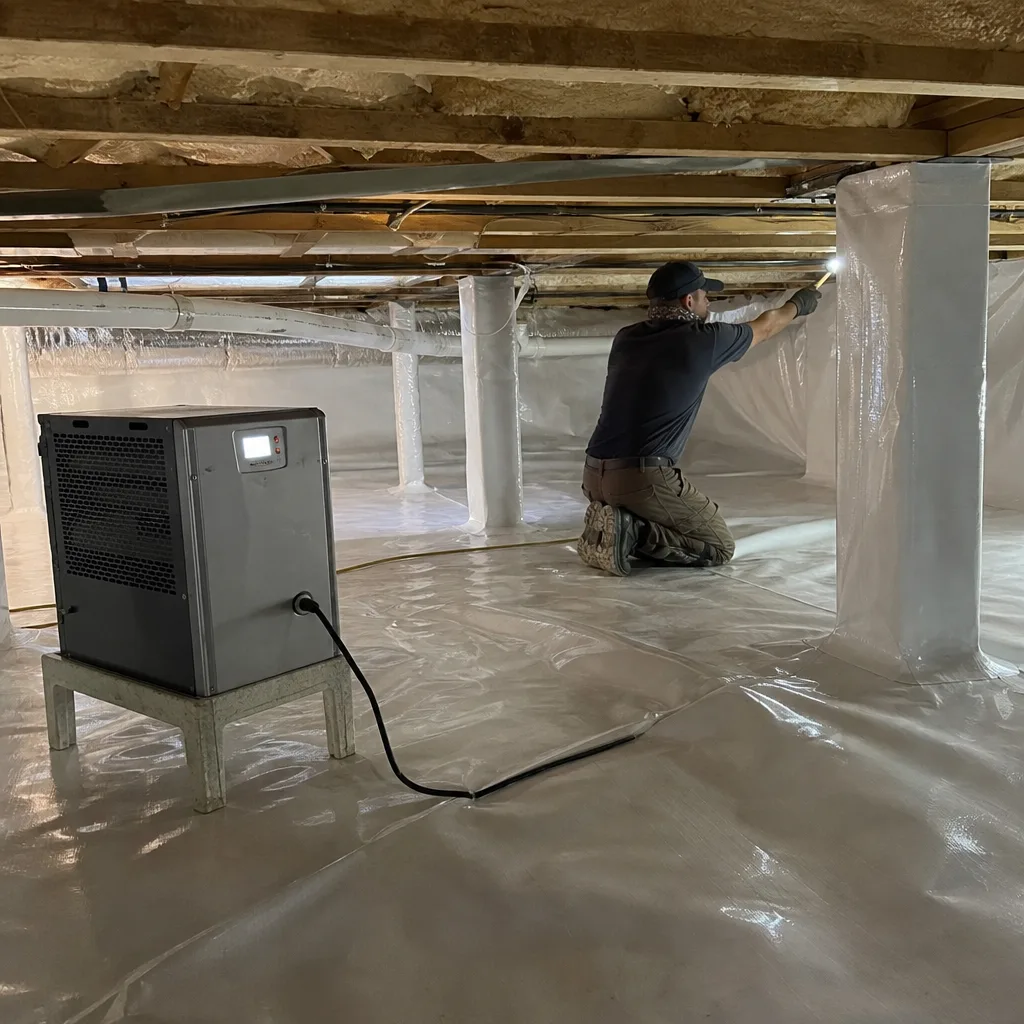
- Attic square footage and roofline complexity. A straightforward gable roof over a ranch-style home on Kenney Fort Boulevard costs less to cover than a hip roof with multiple valleys over a two-story home in Mayfield Ranch. Each valley and pitch change requires additional cutting, fitting, and fastening time. Budget roughly 10 to 15 percent more per square foot for complex rooflines.
- Whether air sealing is done first. In Round Rock’s climate – where summer attic temperatures routinely reach 145 to 155 degrees Fahrenheit – a radiant barrier installed over an unsealed attic floor is working against itself. Hot air from the attic still infiltrates the living space through unsealed top plates, recessed lights, and HVAC penetrations. We seal those before the foil goes in, which adds $350 to $900 to a typical job but also makes the radiant barrier actually perform. Contractors who skip this step are not doing you a favor at a lower price.
- Existing insulation condition and depth. If the current blown-in or batt insulation is in good shape, we work around it. If it’s compressed, wet from a past roof leak, or contaminated – which we see with some regularity in homes along the lower sections of the Brushy Creek drainage area – it has to come out first. Removal adds $1.00 to $1.75 per square foot before the new work starts.
- Attic access and working height. Standard pull-down attic stairs in a Round Rock tract home built between 2000 and 2015 usually allow adequate access. Older homes in the historic downtown neighborhoods near Mays Street sometimes have smaller hatches or partial flooring that creates obstacles. Limited access means more time and more labor cost.
- HVAC ductwork placement. Homes in Round Rock built before 2005 often have ductwork in the attic rather than in conditioned space. When ducts run through the attic, the foil has to be cut and fitted around them carefully rather than run in continuous sheets. This slows installation and increases material waste. Done correctly, though, a radiant barrier in a duct-in-attic configuration makes a measurable difference – those ducts lose a significant fraction of their delivered cooling to radiant heat gain before it reaches your registers.
- Method: staple-up versus lay-over. Stapling the foil to the underside of the roof deck is generally the higher-performing method because it keeps a small air gap between the foil and the roof deck – that air gap is what allows the reflective surface to work. The lay-over method costs slightly less in labor but the foil accumulates dust on the upward-facing surface over time, which gradually reduces its emissivity. For most Round Rock homeowners planning to stay in the home longer than five years, staple-up is the better long-term value.
Round Rock-Specific Conditions That Affect Your Radiant Barrier Decision
Round Rock sits in Central Texas’s humid subtropical zone, and the local climate creates a specific set of attic conditions that differ from what you’d read in a generic national guide. Summers here run from late May through October, and attic temperatures at the peak of a July afternoon commonly reach 150 degrees in homes with dark shingles – which describes most of the builder-grade construction in neighborhoods like Cat Hollow, Stone Oak at Round Rock, and the older sections of Brushy Creek.
What that means in practice: the radiant load on a Round Rock attic is among the highest of any metro in Texas. A well-installed foil barrier with a proper air gap can reduce radiant heat transfer through the roof deck by 95 percent, according to published data from the Florida Solar Energy Center – one of the most-cited independent sources on radiant barrier performance. That doesn’t translate to a 95 percent reduction in cooling bills, but it does typically show up as a 10 to 25 percent reduction in attic heat gain, which matters when your HVAC system is running eight to ten hours a day from June through September.
Round Rock also sees humidity spikes in spring and during tropical moisture events that push up from the Gulf. Condensation in the attic – visible as efflorescence on the underside of the decking or as moisture staining on top plates – is a signal that the building envelope has air leakage problems that need to be addressed before any insulation upgrade. If you’re in a home in the older sections near IH-35 or the Round Rock Premium Outlets corridor and you haven’t had the attic inspected in the past few years, that’s worth checking before any radiant barrier work starts.
We began tracking this pattern in the Teravista neighborhood specifically around 2019, when several homes built in the 2006 to 2009 window started showing early duct degradation from combined heat and humidity. In those cases, the right sequence was air sealing first, radiant barrier second, and duct remediation third – not all at once, but in that order so each step builds on the last. That’s the same logic that sits behind how we do every job here: sealed first, then insulated.
Radiant Barrier vs. Adding More Attic Insulation: Which Makes More Sense in Round Rock?
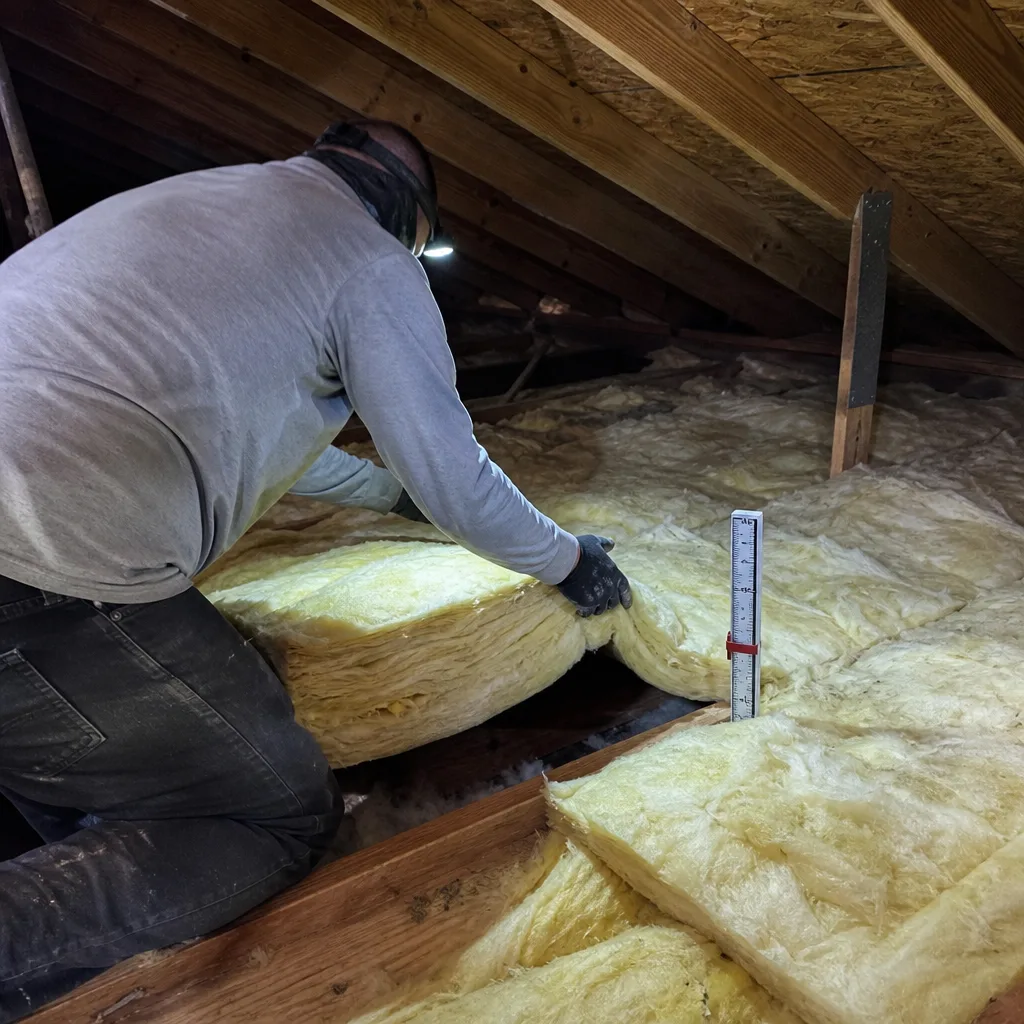
This is one of the most common questions we field, and the answer depends on what your attic already has. If you’re under R-30 in your attic insulation – which is below what most energy codes have required in Central Texas since the early 2000s – adding blown-in insulation is usually the faster path to lower energy bills. Attic insulation in Round Rock costs roughly $1.20 to $2.10 per square foot installed depending on depth and material, and going from R-19 to R-38 is a measurable improvement that shows up in blower-door numbers.
If you’re already at R-38 or higher and your bills are still running high in July and August, the problem is likely radiant gain and air leakage – not a lack of insulation mass. That’s the situation where a radiant barrier makes the clearest case for itself. The two products address different heat transfer mechanisms: insulation slows conductive heat flow, while a radiant barrier blocks the infrared heat radiating down from a 150-degree roof deck. In Round Rock’s climate, you often need both.
For a full picture of your home’s thermal envelope, a home energy audit with a blower-door test gives you actual numbers rather than guesses. The test produces a CFM50 reading – the volume of air in cubic feet per minute escaping the envelope at 50 pascals of pressure – and that single number tells you whether air leakage or heat gain is your bigger problem. We publish before-and-after blower-door readings on every applicable job so you can see what changed, not just take our word for it.
How to Save on Radiant Barrier Installation in Round Rock
There are legitimate ways to reduce the cost of this project without cutting corners on the result. And there are moves that look like savings but cost more in the end.
Bundle with attic air sealing. When air sealing and radiant barrier installation are scheduled as a single visit, you pay for one mobilization, one crew setup, and one job closeout. Doing them separately – radiant barrier now and air sealing later when you notice the bills haven’t dropped – means paying twice for the crew to access the attic and twice for the documentation. Most homeowners who bundle save between $200 and $400 compared to two separate jobs.
Check for local utility rebates. Austin Energy and some other Central Texas utilities have offered rebates on radiant barrier installation in the past, and some continue to do so on a program-year basis. Rebate availability changes, but it’s worth asking specifically about the current cycle before you schedule work. We can confirm what’s currently available when you call for your written estimate.
Ask for a written price before any work starts. This is non-negotiable under Haven Standard Clause 1. A flat price, a written scope, and a written warranty before anyone lifts a tool. That way you know exactly what you’re paying and what you’re getting. Any contractor who can’t give you a written price in advance of starting is one you should decline.
Get a second opinion on a competing quote. We offer a free second opinion on any written estimate – bring us a competing quote and we’ll read it with you. Not to undercut it, but to help you understand what’s included, what’s excluded, and whether the scope actually matches your attic’s needs. That’s a genuine offer, not a sales tactic.
Don’t choose a method for short-term cost savings that you’ll regret in three years. The lay-over method is cheaper upfront. Radiant barrier paint is cheaper still. But if you’re planning to stay in your home in Chandler Creek, Highlands at Mayfield Ranch, or anywhere else in Round Rock for the next decade, the staple-up foil installed by someone who knows what they’re doing is going to outperform both of those alternatives over time. The $200 to $300 you save on a paint coating instead of foil will not offset the performance gap in the second and third summers.
For a written estimate on your specific home, call us at (737) 259-7528. We’ll give you a price before any work starts – that’s not a policy we make exceptions to.
What the Installation Process Looks Like
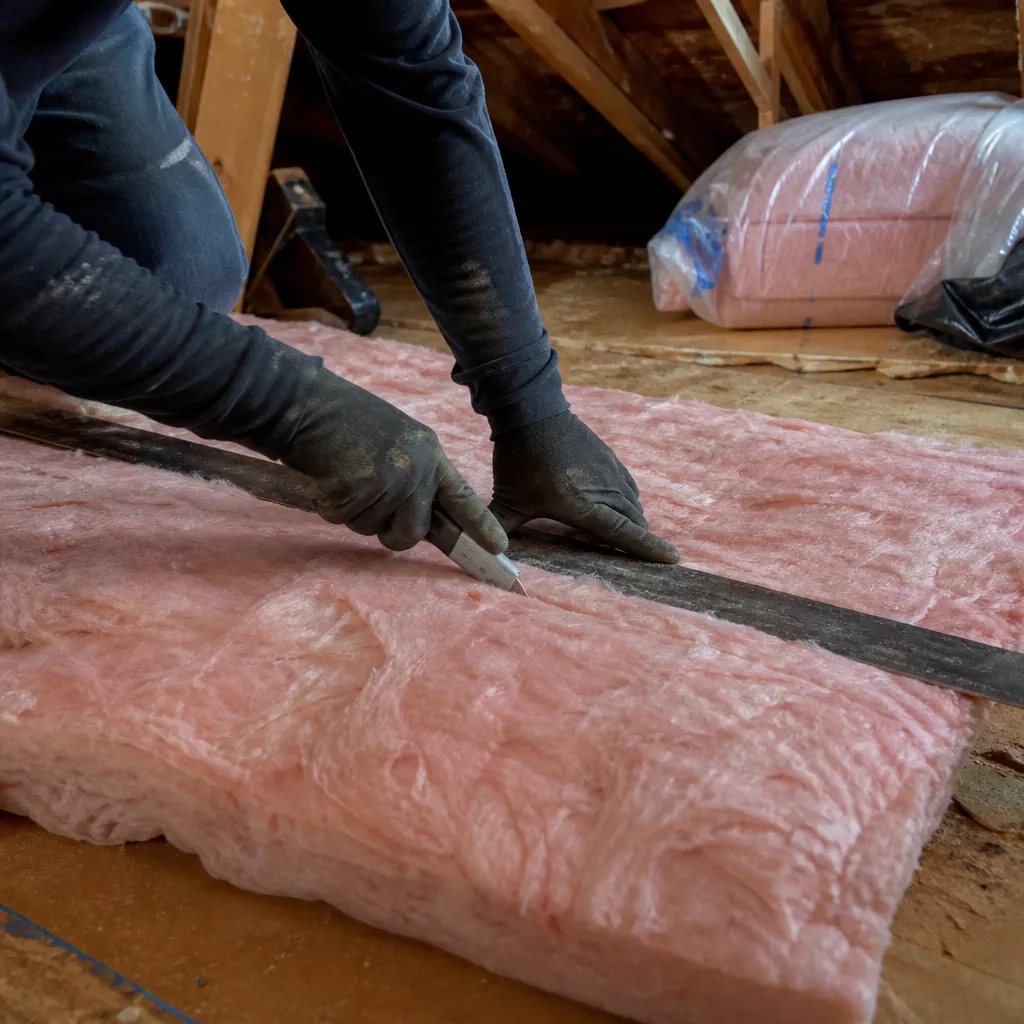
Understanding what actually happens during a radiant barrier job helps you evaluate competing quotes more accurately. Here’s the sequence we follow on a standard Round Rock attic job.
First, we inspect the attic before quoting anything. We check the current insulation depth and condition, look for signs of moisture or air leakage, locate the HVAC equipment and ductwork, and measure the actual square footage – not the exterior footprint, which is often different. That inspection produces the written scope and written price you receive before we schedule installation.
If air sealing is included – and we recommend it on any attic that hasn’t had documented air sealing done – that work happens first. Top plates, recessed light housings, HVAC boot penetrations, attic hatch framing, and any chase openings are sealed with foam and/or mastic before the foil goes up. This is the part most contractors skip. We don’t, because installing a radiant barrier over an unsealed attic floor is like putting on a down jacket over a screen door.
Once sealing is complete, the foil installation starts from the ridge and works down toward the eaves, leaving a gap at the bottom for ventilation. Sheets are overlapped and fastened to the underside of the roof deck rafters, cut around obstructions, and checked for consistent coverage. On a 1,500 square foot attic with reasonable access, the full job typically takes four to six hours.
When the crew leaves, you receive a Documented Photo Record – photos of the attic before, during, and after installation. On jobs that include air sealing, you also get the before-and-after blower-door readings: the CFM50 number before sealing and the CFM50 number after, so you can verify what changed. That documentation is included on every applicable job – not available on request, included as standard.
FAQs – Radiant Barrier Installation Cost in Round Rock
How much does radiant barrier installation cost in Round Rock, TX?
Most Round Rock homes pay between $1,400 and $2,800 for foil radiant barrier installation, with the average falling around $1,800 to $2,200 for a 1,200 to 1,800 square foot attic. Larger homes, complex rooflines, and attics that need air sealing first will push toward $3,000 to $3,800 for the combined scope. Call (737) 259-7528 and we’ll give you a written price for your specific home before any work starts.
Is a radiant barrier worth it in Round Rock’s climate?
For most Round Rock homeowners, yes – particularly if your attic currently runs above 145 degrees in July and August, which is typical here. A properly installed staple-up foil barrier reduces radiant heat transfer through the roof deck by up to 95 percent, and homes with ductwork in the attic see some of the clearest payback because the ducts gain heat before delivering air to your registers. The payback period in Central Texas is generally estimated at three to seven years depending on your home’s current insulation levels and how much your HVAC system is working. Pair it with attic air sealing and the numbers improve further.
How long does radiant barrier installation take?
A standard single-story home in Round Rock with a 1,200 to 1,800 square foot attic typically takes four to six hours for the foil installation alone. Add two to three hours if attic air sealing is included. Larger homes with complex rooflines or limited attic access can run eight to ten hours total. You’ll know the scope and time estimate in writing before we schedule anything.
Can I install a radiant barrier myself to save money?
The materials are available at home improvement stores, and staple-up installation doesn’t involve the same hazards as, say, electrical work or high-tension mechanical components. That said, working in a Round Rock attic in summer – even early morning – means heat that can reach 120 degrees or more before noon, and the risk of missing coverage at key seams, cutting around HVAC equipment incorrectly, or blocking soffit ventilation is real. Gaps in coverage and blocked ventilation are two of the most common failure modes we document when we inspect DIY radiant barrier jobs. If you do proceed yourself, ensure you leave at least a two-inch gap at the eaves to maintain airflow, use perforated foil to allow moisture vapor to escape, and don’t cover soffit vents. For most homeowners, the labor cost difference between DIY and professional installation is modest relative to the risk of getting the coverage or ventilation wrong.
Does Envelope Insulation Co. offer financing or bundle pricing?
We price radiant barrier and attic air sealing as a bundle when both are needed, which saves most homeowners $200 to $400 compared to scheduling them separately. Financing options vary; ask when you call. What we can confirm is that you’ll have a written price covering every line item before any work starts – that’s Haven Standard Clause 1 and we don’t waive it. Call (737) 259-7528 for your written estimate.
How does Envelope Insulation Co. differ from other Round Rock insulation contractors?
The short answer is documentation and sequencing. We complete attic air sealing before any insulation or radiant barrier work – not as an upsell but as a technical prerequisite – because the performance data shows that insulating over an unsealed attic floor leaves significant heat gain and air infiltration unaddressed. Every applicable job closes with before-and-after blower-door numbers, a Documented Photo Record, and a written warranty. We’ve done this on 9,000-plus homes since 2016, every one with a written price before work started. That’s the standard, not the exception. You can read more about our full service approach on our Radiant Barrier Installation in Round Rock page.
Key Takeaways
- Radiant barrier installation in Round Rock costs $1,400 to $2,800 for most homes; larger or more complex attics run $2,200 to $3,400+.
- The staple-up foil method outperforms radiant barrier paint and lay-over foil for homeowners staying in the home more than three to five years.
- Round Rock’s summer attic temperatures – regularly 145 to 155 degrees – make this one of the higher-radiant-load markets in Texas, which strengthens the case for a properly installed barrier.
- Air sealing should always happen before a radiant barrier goes in. Skipping it leaves the biggest performance gains on the table.
- A written price before any work starts is non-negotiable. If a contractor can’t provide one, that’s a signal worth taking seriously.
- Bundling radiant barrier with attic air sealing typically saves $200 to $400 versus two separate jobs.
- Every job at Envelope Insulation Co. closes with a Documented Photo Record and, on applicable jobs, before-and-after blower-door readings – both included as standard.
Ready to Get a Written Price for Your Round Rock Home?
If you want to know what radiant barrier installation will actually cost for your home – not a range pulled from a national calculator but a flat written price based on your specific attic – call Envelope Insulation Co. at (737) 259-7528. A live person answers, and we’ll schedule an attic inspection at your convenience. You’ll have a written scope, written price, and written warranty before anyone touches a tool. That’s Haven Standard Clause 1, and it applies to every job we do in Round Rock and the surrounding area.
If you have a written estimate from another contractor, bring it. We’ll review it with you at no charge – not to undercut it, but to help you understand exactly what you’re comparing. That’s the free second opinion offer, and it’s a standing offer with no strings attached.
Wes Okafor leads the team at Envelope Insulation Co., and under the Haven Standard that Wes has operated by since 2016, the job isn’t done until the documentation is in your hands. Before-and-after blower-door numbers, photos from every stage of the install, and a warranty you can actually read before we start. That’s what leaving looks like on one of our jobs.
Written by Wes Okafor, Owner at Envelope Insulation Co., serving Round Rock, TX since 2016.
Pricing reflects the Round Rock market as of 2026. Topside Attic Insulation Round Rock offers free estimates – call (737) 259-7528.
What Our Customers Say
"The winter gas bill dropped by about a third. They had estimated a quarter, so they under-promised."
- Genevieve R."Crawl space encapsulation done properly. Photographs of the vapour barrier at every seam, and the damp smell in the hallway is gone."
- Ainsley P."They air-sealed the attic floor before insulating and showed me the blower-door number before and after. The upstairs is finally the same temperature as downstairs."
- Marisol D.