
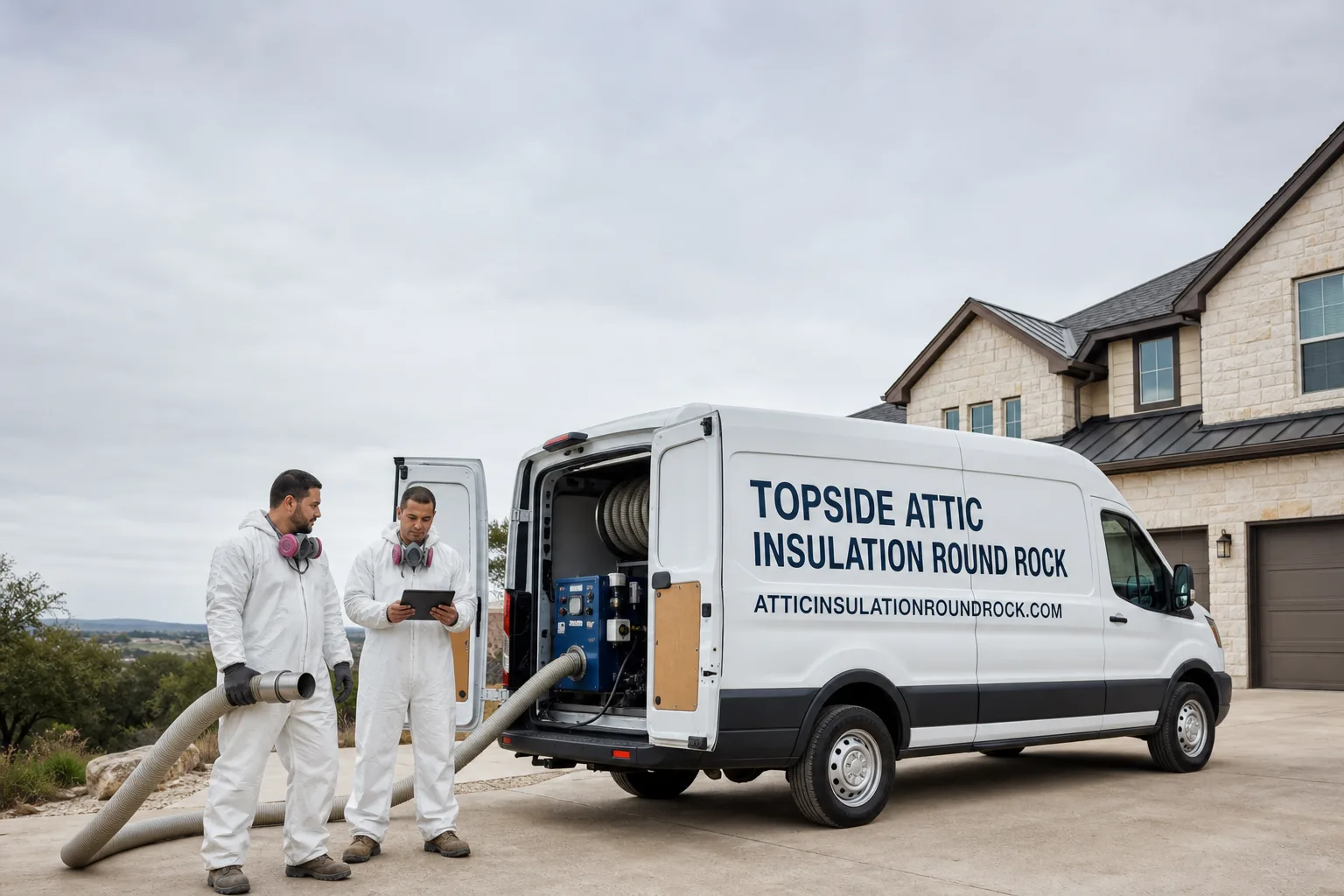
How Much Does Spray Foam Insulation Cost in Round Rock?
Our Spray Foam Insulation services in Round Rock, TX typically cost between $1.50 and $4.50 per square foot, depending on the foam type, application area, and thickness required. A full attic application in an average Round Rock home (1,800-2,400 sq ft) generally runs $2,800 to $7,200, while a crawl space or rim-joist job comes in closer to $1,200 to $3,000. Most jobs are completed in a single day, and under the Haven Standard, you’ll have a written price in hand before anyone lifts a tool.
Below, we’ve broken out the numbers by application type, explained what moves the price up or down in the Round Rock market specifically, and answered the questions we hear most often from homeowners in Teravista, Forest Creek, and Avery Ranch. If you’re cross-shopping estimates, bring any written quote to us and we’ll read it with you – free, no strings.
Spray Foam Insulation Cost Breakdown (2026)
The table below reflects actual project ranges for Round Rock and the broader Williamson County market as of early 2026. Prices assume a standard residential application with current material costs from manufacturers including Icynene, Demilec, and Johns Manville. Labor rates in the Round Rock metro have risen roughly 8-11% since 2023, driven by construction demand from the continued growth along the 45 and 130 corridors.
| Application Area | Foam Type | Typical Thickness | Cost Range (Round Rock, 2026) |
|---|---|---|---|
| Attic rafters / roof deck (unvented attic) | Closed-cell SPF | 3-4 in. | $3,800 - $7,200 |
| Attic floor (open-cell over sealed top plates) | Open-cell SPF | 6-8 in. | $2,800 - $5,400 |
| Crawl space walls and rim joists | Closed-cell SPF | 2-3 in. | $1,200 - $3,000 |
| Exterior walls (new construction or open cavity) | Open- or closed-cell SPF | 3.5 in. cavity fill | $1.80 - $3.50 per sq ft |
| Rim joists only (basement or slab edge) | Closed-cell SPF | 2 in. | $600 - $1,400 |
| Garage ceiling (conditioned living above) | Closed-cell SPF | 2-3 in. | $900 - $2,200 |
| Air sealing (top plates, can lights, penetrations) – required prerequisite | 2-part foam / caulk | As needed | $400 - $900 (included in scope) |
A note on air sealing: at Envelope Insulation Co., air sealing of top plates, can lights, and all attic penetrations is completed before any insulation goes in – always. This is not an optional add-on. We won’t blow foam over an unsealed attic floor, because doing so locks in the air leaks rather than addressing them. The cost is included in the written scope you receive before work starts. On every applicable job, we provide before-and-after blower-door readings – a pressurization measurement that shows, in a single number, how much conditioned air your home was losing before sealing and how much it’s losing after. In Round Rock homes built in the mid-2000s boom years (a lot of Sendero Springs and Cat Hollow falls into this window), pre-seal blower-door readings above 4,500 CFM50 are common. After thorough air sealing and spray foam, we regularly document readings below 2,200 CFM50 on those same homes.
Open-Cell vs. Closed-Cell: What the Price Difference Actually Buys You
Open-cell foam costs less per board foot – roughly $0.50-$0.80 per board foot installed versus $1.25-$1.75 for closed-cell – but the two products are not interchangeable. Closed-cell has an R-value of approximately R-6.5 per inch and doubles as a vapor retarder and structural reinforcement. Open-cell runs around R-3.7 per inch and is vapor-permeable. In Round Rock’s climate (IECC Zone 2A, hot and humid), closed-cell is generally preferred for roof deck applications and any surface in contact with the exterior envelope, because vapor drive from the outside is a real issue from May through September. Open-cell works well for interior attic floors and interior wall cavities where vapor management isn’t the primary concern. We’ll tell you which product is appropriate for each surface in the written scope – not after the job is done.
What Affects Spray Foam Insulation Pricing in Round Rock
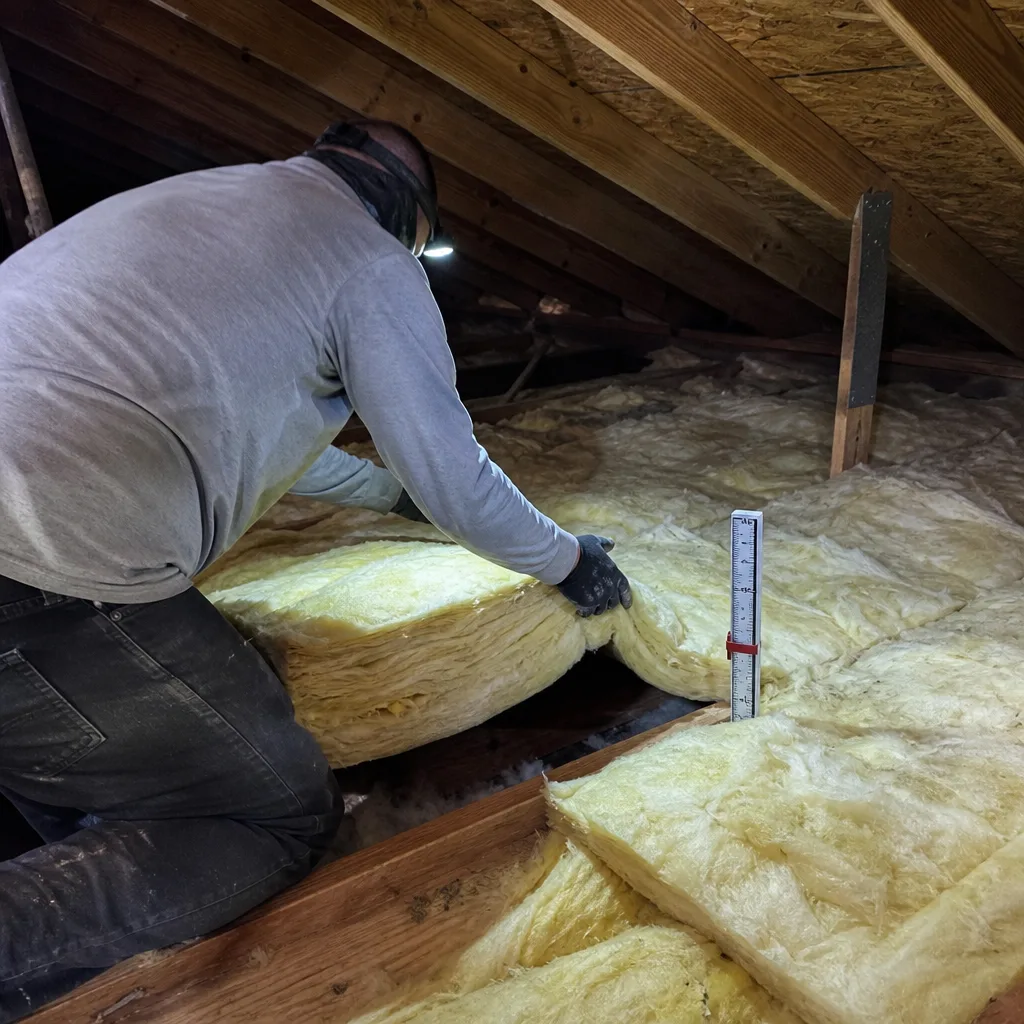
- Attic configuration and access: Round Rock has a high proportion of homes built between 1998 and 2012 with hip roofs and multiple valleys. Complex roof geometry means more linear feet of ridge and hip to address and tighter access for the spray rig. A straightforward gable-roof attic in Georgetown Village costs less to work in than a multi-hip attic in Teravista with a walk-up stair and cross-braced trusses – plan for a 10-18% premium on complex configurations.
- Foam type and required R-value: Texas Energy Code (2021 IECC as adopted by Williamson County) requires R-38 minimum in attic assemblies for new construction and R-49 for certain permit-required retrofits. Getting from R-0 to R-49 with closed-cell foam (R-6.5/in.) means roughly 7.5 inches of foam, which costs meaningfully more than a 3-inch closed-cell application targeting R-20. Your written scope will cite the target R-value explicitly.
- Existing insulation removal: If the attic has old blown fiberglass or damaged batt that has to come out before spray foam goes in, add roughly $0.40-$0.80 per square foot for removal and bagging. In Round Rock homes that were original-owner occupied through the 2010s and never upgraded, this is common. Insulation removal is a separate line item on every estimate.
- Encapsulation vs. air-sealing-only scope: Full attic encapsulation – where closed-cell is applied to the entire roof deck, creating an unvented conditioned attic – costs more upfront than an attic-floor air-seal-and-insulate job, but it brings HVAC equipment inside the conditioned envelope. In Round Rock, where summer attic temperatures regularly hit 140-150°F, HVAC equipment in a vented attic can lose 20-30% of its capacity to heat gain. We document the application type in the written scope so you can compare it accurately against competing quotes.
- Material costs and market timing: Spray foam chemical costs (MDI and polyol blends) are tied to petrochemical markets and have fluctuated 12-22% over the past three years. Prices quoted in early 2026 reflect current supplier costs from Icynene and Demilec. A quote from 18 months ago may be materially lower – not because the competitor is cheaper, but because chemistry costs have moved.
- Conditioned square footage vs. application area: The price is driven by the area being sprayed, not the living area of the home. A 2,200 sq ft home in Forest Creek with a full attic encapsulation scope might have 2,400 sq ft of roof-deck surface area. A 3,000 sq ft home with a partial encapsulation and sealed attic hatch might have a smaller application footprint. We measure the actual surface before quoting.
Round Rock-Specific Factors Worth Knowing
Round Rock sits in IECC Climate Zone 2A – hot and humid – which is one of the more demanding thermal environments in the country for building envelopes. The combination of long cooling seasons (April through October), high humidity, and frequent temperature swings in late winter (the kind that caused widespread pipe failures in February 2021) means that vapor management and air tightness are not optional design concerns here.
Homes in the Hutto and Pflugerville corridors adjacent to Round Rock frequently have vapor drive issues that show up as mold in the upper wall cavities or deteriorated batt insulation against the roof deck – direct consequences of installing vapor-permeable insulation without addressing the vapor drive direction. In Round Rock’s climate, exterior vapor drive (outside-in) dominates for roughly eight months of the year, which is why we favor closed-cell on any surface exposed to the exterior envelope and always pair it with air sealing that has been verified before foam is applied.
Williamson County does not currently require a permit for insulation-only retrofits in existing homes, but any work that involves modifying the attic ventilation configuration (converting a vented attic to an unvented encapsulated attic) does require a permit and inspection. We pull permits where required and include that process in the written scope. Some contractors skip this step to save time – it creates a disclosure problem when you sell the home.
How to Save on Spray Foam Insulation in Round Rock
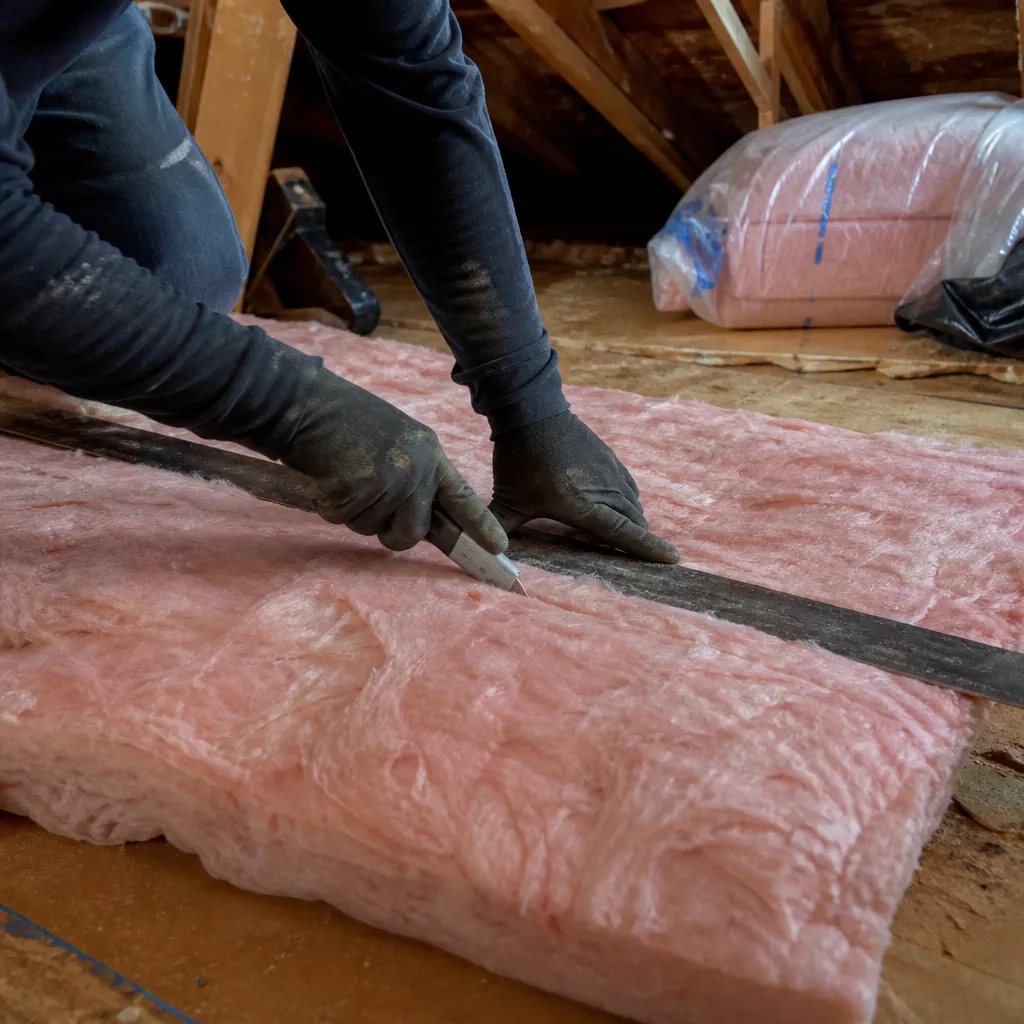
Spray foam is the higher-cost insulation option upfront. That’s factual. The question is whether the performance gain justifies it for your specific situation, and the honest answer is: sometimes yes, sometimes the better path is high-density blown-in insulation over a properly air-sealed floor. Here’s how to make sure you’re getting real value rather than paying for foam where it doesn’t help:
- Get a blower-door test before you commit to any insulation scope. A blower-door test – a pressurization reading that shows, in one number, how much air your building envelope is losing – tells you whether air leakage or thermal resistance is your primary problem. If your home reads 6,000 CFM50 on the blower door, you have an air-sealing problem first. Adding R-49 insulation over an unsealed attic floor addresses maybe 20% of that problem. The test costs less than a typical insulation quote and guides every dollar you spend after it.
- Scope only the surfaces that need closed-cell. On a typical Round Rock attic-floor application, the roof deck doesn’t need to be encapsulated if the HVAC equipment is in the conditioned space. Closed-cell on the attic floor (or open-cell over sealed top plates) can achieve the same thermal and air-tightness result at lower cost. We will tell you which product belongs where and why, in writing.
- Combine air sealing and insulation in one visit. Air sealing and insulation done in the same mobilization is cheaper than two separate visits. Scheduling them separately – which some contractors do when insulation is a division of a larger HVAC or construction company – adds mobilization cost and extends the timeline.
- Use available utility rebates. Oncor and Bluebonnet Electric have offered residential insulation upgrade rebates in the past; check current availability before your project. The Inflation Reduction Act’s Section 25C credit (currently 30% of project cost, up to applicable limits) applies to qualifying insulation and air-sealing work on existing homes. We can’t give you tax advice, but we can provide the documentation you’ll need to claim it.
- Use the Free Second Opinion. If you’ve received a written estimate from another contractor, bring it to us. We’ll read it with you – line by line – and flag anything that looks off: undersized R-values, missing air-sealing scope, foam types that don’t match the application surface. This is free, regardless of whether you hire us. Call (737) 259-7528 to schedule it, or request it when you call for your own estimate.
One thing we don’t do: urgency pricing. We don’t manufacture scarcity or run “this week only” specials. The written price you receive reflects current material and labor costs, and it’s good for 30 days. If you need more time to compare, take it.
What You Get With Envelope Insulation Co. – Beyond the Foam
The spray foam itself is the same chemistry regardless of who buys it – Icynene, Demilec, Owens Corning, Johns Manville products are available to any licensed contractor. What varies is the documentation, the sequencing, and what happens when something isn’t right.
Every job under the Haven Standard includes:
- Written Price Before Any Work Starts – flat price, written scope, written warranty before anyone touches your attic. Haven Standard Clause 1, no exceptions.
- Before-and-after blower-door readings on applicable jobs – so you can see, in a single number, what changed. We publish these on job records. “We significantly improved your efficiency” is not a measurement; 4,100 CFM50 down to 1,950 CFM50 is.
- Documented Photo Record – included on every visit, not available by request. You receive photos of the attic before work, during application, and after completion.
- 365-Day Done Right Promise – if it’s not done right, we make it right, backed by the written scope you received before work started. This isn’t a feelings-based guarantee; it’s enforceable because the scope is written.
- Background-checked, uniformed technicians – you’ll receive a text with the technician’s name before they arrive. Live person answers calls 24/7 – no voicemail queues, no callback windows measured in business days.
Since 2016, we’ve sealed and insulated more than 9,000 homes across the region – every one with a written price before work started and a documented record when the crew left. Wes Okafor has been part of building that record since the beginning, and his name is on every scope we write in Round Rock. If a job isn’t right, there’s a named person accountable for making it right. That’s not a marketing line; it’s the structure of how we operate.
You can read more about our full approach on our Spray Foam Insulation in Round Rock service page, or browse our complete service offering from our home page.
FAQs – Spray Foam Insulation Cost in Round Rock
How much does spray foam insulation cost per square foot in Round Rock, TX?
Spray foam insulation in Round Rock runs $1.50 to $4.50 per square foot installed, depending on whether you’re using open-cell or closed-cell foam and the thickness required. Open-cell (roughly $0.50-$0.80 per board foot) costs less than closed-cell ($1.25-$1.75 per board foot), but the right choice depends on where it’s being applied and the vapor management requirements of that surface. For a free written estimate specific to your home’s square footage and configuration, call (737) 259-7528.
Is spray foam insulation worth it in Round Rock’s climate?
For most Round Rock homes built before 2010, yes – particularly if you have HVAC equipment in the attic. Attic temperatures in Round Rock regularly hit 145-150°F in July and August, and spray foam (especially a full roof-deck encapsulation that moves HVAC equipment inside the conditioned envelope) can reduce summer cooling loads measurably. The blower-door readings we document before and after tell you the exact air-tightness improvement. That said, the right answer depends on your home’s current condition. If your blower-door score suggests a major air-sealing problem, addressing leaks first – before adding any insulation – is where the real performance gain is. We won’t recommend foam before we know what the actual problem is.
What’s the difference between open-cell and closed-cell spray foam cost in Round Rock?
Closed-cell spray foam costs roughly 60-80% more per board foot than open-cell – approximately $1.25-$1.75/board foot versus $0.50-$0.80 for open-cell. Closed-cell delivers higher R-value per inch (R-6.5 vs. R-3.7), acts as a vapor retarder, and adds structural rigidity. In Round Rock’s Zone 2A humid climate, closed-cell is typically the right call for roof deck applications and any exterior-facing surface. Open-cell works well for interior attic floors and interior walls where vapor drive isn’t the primary concern. Your written scope will specify which product goes where, and why.
Does spray foam insulation qualify for a tax credit in Round Rock, TX?
Qualifying insulation and air-sealing projects on existing homes may be eligible for the Section 25C federal tax credit – currently 30% of project cost up to applicable limits through the Inflation Reduction Act. This applies to the primary residence, not rental properties, and requires specific documentation. We’re not tax advisors, but we provide the itemized written scope and cost documentation you’ll need to submit the claim. Check with your tax professional for your specific situation before assuming eligibility.
How long does spray foam insulation last in Round Rock homes?
Properly installed spray foam has a rated service life of 80+ years and doesn’t settle, absorb moisture, or lose R-value over time the way fiberglass batts and blown cellulose can in high-humidity climates. In Round Rock attics, where temperatures cycle between roughly 30°F in February and 150°F in August, closed-cell foam’s dimensional stability matters more than it would in a milder climate. The documented photo record we provide at job completion gives you a baseline you can reference years later if you’re ever verifying the installation or transferring the warranty during a home sale.
Can Envelope Insulation Co. give me a firm price before starting work in Round Rock?
Yes – a written price before any work starts is the entire foundation of how we operate. Under Haven Standard Clause 1, you receive a flat price, a written scope, and a written warranty before anyone lifts a tool. There are no “estimates that turn into something else” and no scope changes without your written approval. If you want to compare that against another quote you’ve already received, call (737) 259-7528 and ask for the Free Second Opinion – we’ll review the competing estimate with you at no charge.
Get a Written Estimate for Spray Foam Insulation in Round Rock
If you’re weighing spray foam for your Round Rock home, the most useful next step is a written estimate based on your actual attic dimensions and current insulation condition – not a price-per-square-foot ballpark based on your home’s living area. Wes Okafor and the Envelope Insulation Co. team have been documenting and sealing Round Rock homes since 2016, and every estimate comes with a written scope, a documented photo record, and the 365-Day Done Right Promise in writing before anyone starts.
Call (737) 259-7528 to schedule your free estimate. A live person answers – no voicemail loops, no callback windows. If you have a written estimate from another contractor, bring it. We’ll read it with you, free, and tell you exactly what it includes and what it doesn’t.
Written by Wes Okafor, Owner at Envelope Insulation Co. / Topside Attic Insulation Round Rock, serving Round Rock, TX since 2016.
Pricing reflects the Round Rock market as of 2026. Topside Attic Insulation Round Rock offers free estimates – call (737) 259-7528.
What Our Customers Say
"The winter gas bill dropped by about a third. They had estimated a quarter, so they under-promised."
- Genevieve R."Crawl space encapsulation done properly. Photographs of the vapour barrier at every seam, and the damp smell in the hallway is gone."
- Ainsley P."They air-sealed the attic floor before insulating and showed me the blower-door number before and after. The upstairs is finally the same temperature as downstairs."
- Marisol D.