
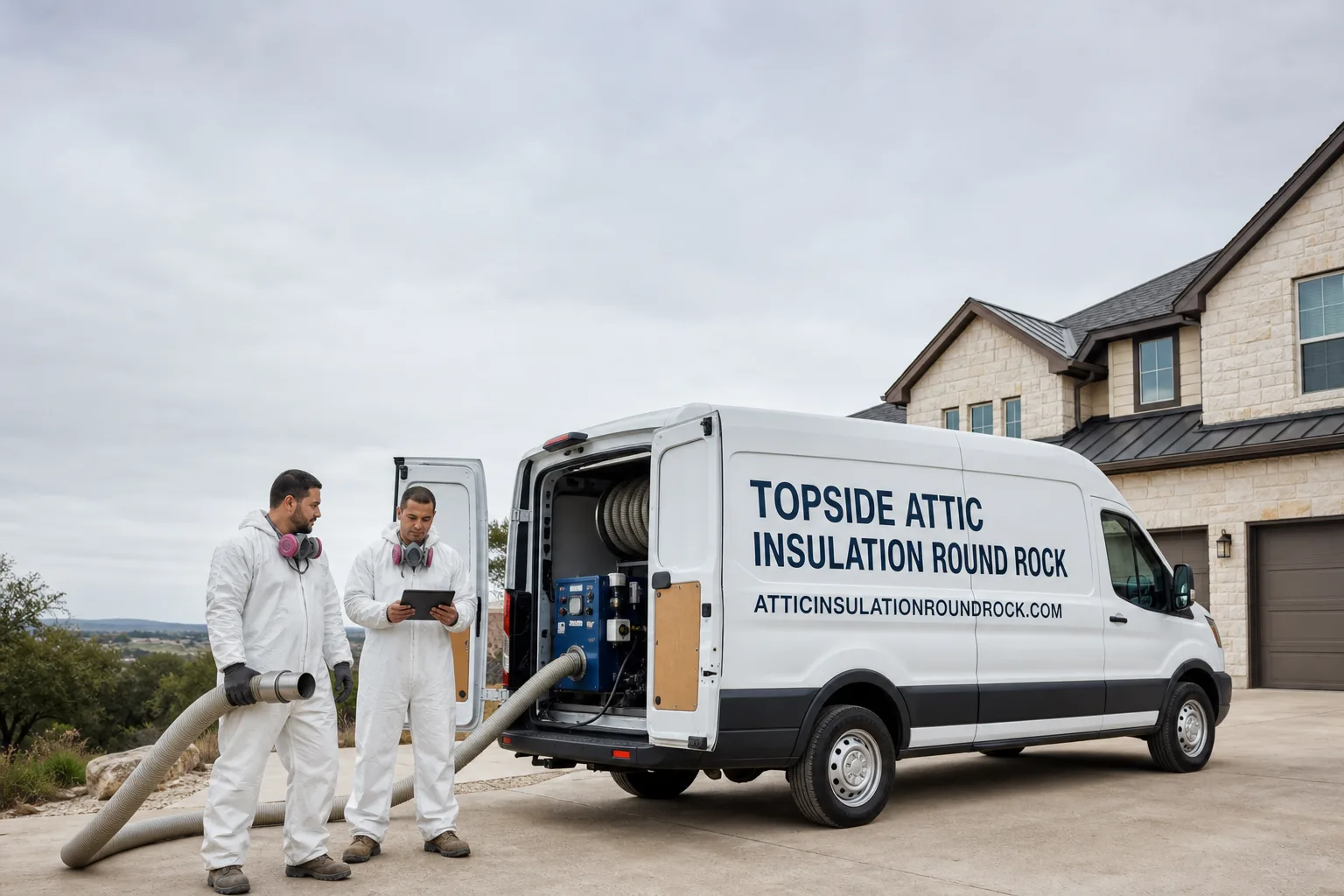
How Much Does Wall Insulation Cost in Round Rock?
Our Wall Insulation services in Round Rock, TX typically cost between $1.50 and $4.25 per square foot of wall area, depending on the method used and the current condition of the walls. For a 2,000-square-foot home with roughly 1,400 square feet of exterior wall surface, most homeowners in Round Rock pay somewhere between $2,100 and $5,950 for a full wall insulation project. We give you a flat written price before any work starts – no surprises when the crew leaves.
Wall Insulation Cost Breakdown (2026)
Wall insulation in Round Rock, TX typically runs between $1.50 and $4.25 per square foot of wall surface. A 2,000-square-foot home with roughly 1,400 square feet of exterior wall area will usually land between $2,100 and $5,950 total, depending on which insulation type fits the walls and what condition they’re in before we start. Prices below reflect the Round Rock market as of early 2026, including labor.
| Insulation Type | Method | Cost per Sq Ft (Wall Area) | Typical Total (1,400 sq ft wall) |
|---|---|---|---|
| Blown-in fiberglass (dense-pack) | Small holes drilled from exterior or interior, filled under pressure, patched | $1.80 – $2.60 | $2,520 – $3,640 |
| Blown-in cellulose (dense-pack) | Same drill-and-fill process; recycled paper product | $1.50 – $2.40 | $2,100 – $3,360 |
| Open-cell spray foam | Requires open wall cavity; best during renovation or new construction | $2.00 – $3.10 | $2,800 – $4,340 |
| Closed-cell spray foam | Requires open wall cavity; adds structural rigidity, vapor control | $3.00 – $4.25 | $4,200 – $5,950 |
| Batt insulation (fiberglass or mineral wool) | Open walls only; retrofit jobs almost never use this | $0.90 – $1.60 | $1,260 – $2,240 |
| Air sealing only (pre-insulation) | Sealing top plates, electrical penetrations, and rim joists before insulating | $0.35 – $0.75 | $490 – $1,050 |
A few things can push a job toward the high end or keep it closer to the low end. Homes built before 1980 in neighborhoods like Brushy Creek or the older sections of Vista Oaks sometimes have plaster over metal lath, which makes patching after drill-and-fill more labor-intensive than standard drywall repair. Homes with brick veneer exteriors – common throughout Round Rock’s newer subdivisions – require drilling from the interior rather than the exterior, which adds time but not usually a significant amount to the total. Two-story homes cost more in absolute terms simply because there’s more wall surface, and scaffolding or ladder work on the upper floors adds to labor.
One line item that surprises people: air sealing. At Envelope Insulation Co., we treat air sealing as a prerequisite, not an upsell. We will not blow dense-pack into a wall cavity that isn’t sealed at the top and bottom plates, because doing so just traps air movement inside the insulation itself. That’s a detail a lot of contractors skip, and it’s one of the reasons before-and-after blower-door numbers on those jobs often don’t show the improvement the homeowner expected. The air sealing line in the table above is the honest cost of doing the job correctly, and it’s included in every written scope we deliver.
What Affects Wall Insulation Pricing in Round Rock
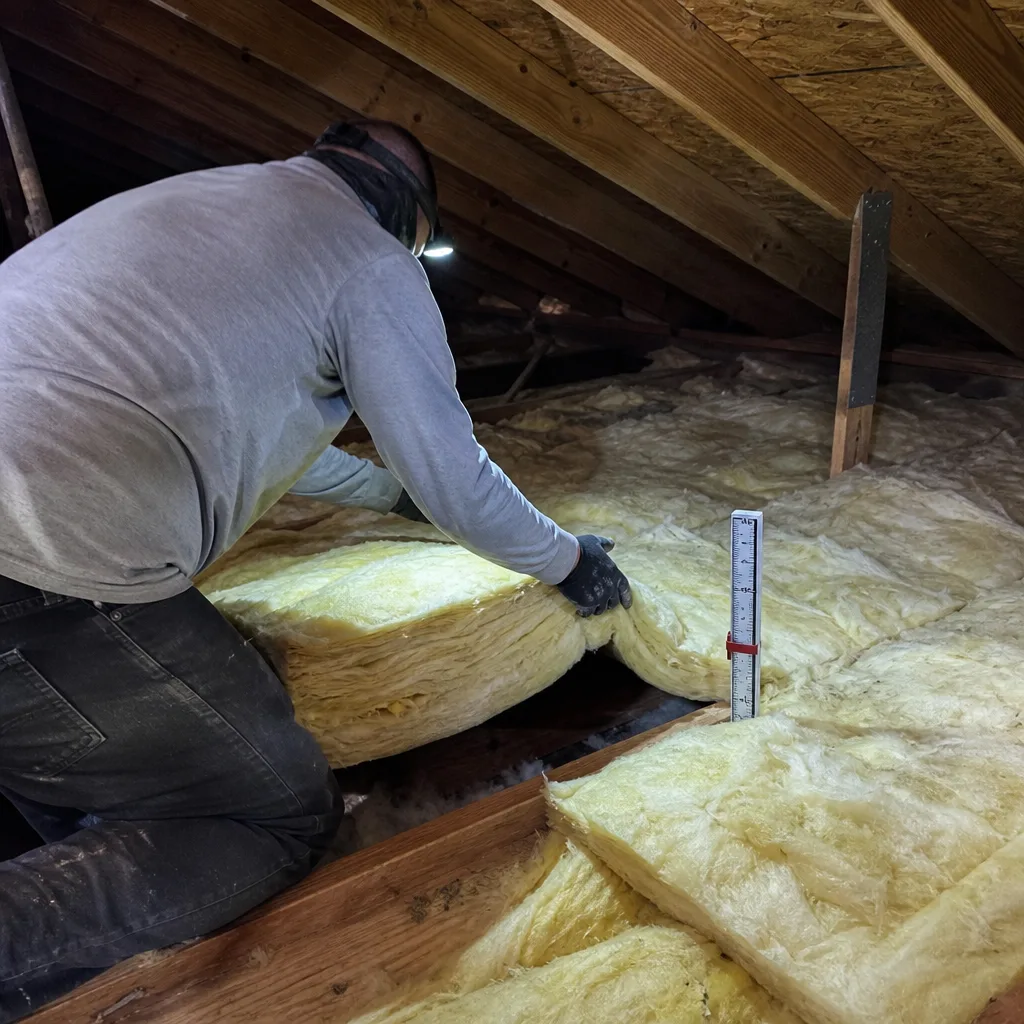
- Insulation method and material: Dense-pack cellulose is almost always the most cost-effective retrofit option for existing walls with closed cavities. Closed-cell spray foam costs more per square foot but adds a vapor retarder and some structural stiffness – useful in Round Rock’s high-humidity summers but usually only practical when walls are already open.
- Wall construction type: Standard 2×4 framing (common in homes built through the mid-1990s in areas like the Brushy Creek Municipal Utility District zone) holds less insulation than 2×6 framing. A 2×4 wall cavity can accept about R-13 of dense-pack fiberglass; a 2×6 cavity can reach R-21. The deeper cavity costs more to fill but delivers more performance per dollar.
- Exterior finish: Brick veneer is widespread in Round Rock subdivisions – Teravista, Stone Canyon, Highlands at Mayfield Ranch. Drilling through brick requires a masonry bit and leaves a larger hole to patch with a color-matched plug. It adds roughly $0.15 to $0.30 per square foot versus drilling through wood siding or stucco.
- Current insulation condition: About one in four homes we assess in Round Rock has partial or deteriorated wall insulation – fiberglass batts that have sagged or settled over 20-plus years, leaving the top third of each stud bay empty. We use a thermal camera and sometimes a small borescope camera to confirm what’s actually in the cavity before quoting. If the existing material can be dense-packed over, we do that; if it needs to come out first, that’s a separate line item and we’ll tell you exactly what it costs before we touch anything.
- Round Rock’s climate load: The Austin metro’s 100-plus-degree summers and the radiant heat that comes off Central Texas limestone soil mean wall insulation here does double duty – it slows heat gain in summer and keeps conditioned air from escaping in winter. That context matters when choosing R-value targets. A wall that might be adequately insulated at R-13 in a milder climate often benefits from R-21 here, and that difference shows up in long-term energy bills and HVAC wear.
- Access and patching scope: A straightforward exterior-drill job on a single-story home with fiber-cement or wood lap siding is the simplest retrofit scenario. Interior drills through drywall require patching and texturing to match, which varies by drywall finish type. Skip trowel and orange peel – both common in Round Rock homes built between 2000 and 2015 – can be matched reasonably well, but hand-applied knock-down texture is harder to blend and may require repainting a full wall section. We include patching in the written price; we note the finish type in the documented photo record so you know exactly what was done.
Wall Insulation vs. Attic Insulation: Where Should Your Dollar Go First in Round Rock?
This is one of the most common questions we hear from homeowners in neighborhoods like Teravista or Round Rock Ranch who are working with a fixed renovation budget. The short answer: attic insulation usually delivers a larger energy-bill reduction per dollar spent than wall insulation, because heat moves through an uninsulated or under-insulated attic much faster than through an uninsulated wall. The attic is where Round Rock’s afternoon heat hits the building envelope hardest.
That said, wall insulation is often the right next step once the attic is addressed – and for homes built in the 1970s and 1980s that have no wall insulation at all, it can account for 15 to 25 percent of total heating and cooling load. If you want to understand your specific home’s energy profile before spending money on either, a home energy audit – which includes a blower-door test and a thermal imaging scan – gives you a ranked list of where the losses are actually occurring. That audit result is a written document you walk away with, and it shapes the scope and sequencing of any insulation work we recommend.
If you’ve already addressed the attic and you’re still seeing high utility bills or uneven room temperatures, walls are the logical next investigation. We’ve done exactly this sequence for dozens of homeowners in the Wall Insulation in Round Rock service area – attic air sealing and insulation first, then a follow-up blower-door test, then wall insulation where the thermal camera showed continued heat transfer.
Dense-Pack vs. Spray Foam for Existing Round Rock Walls
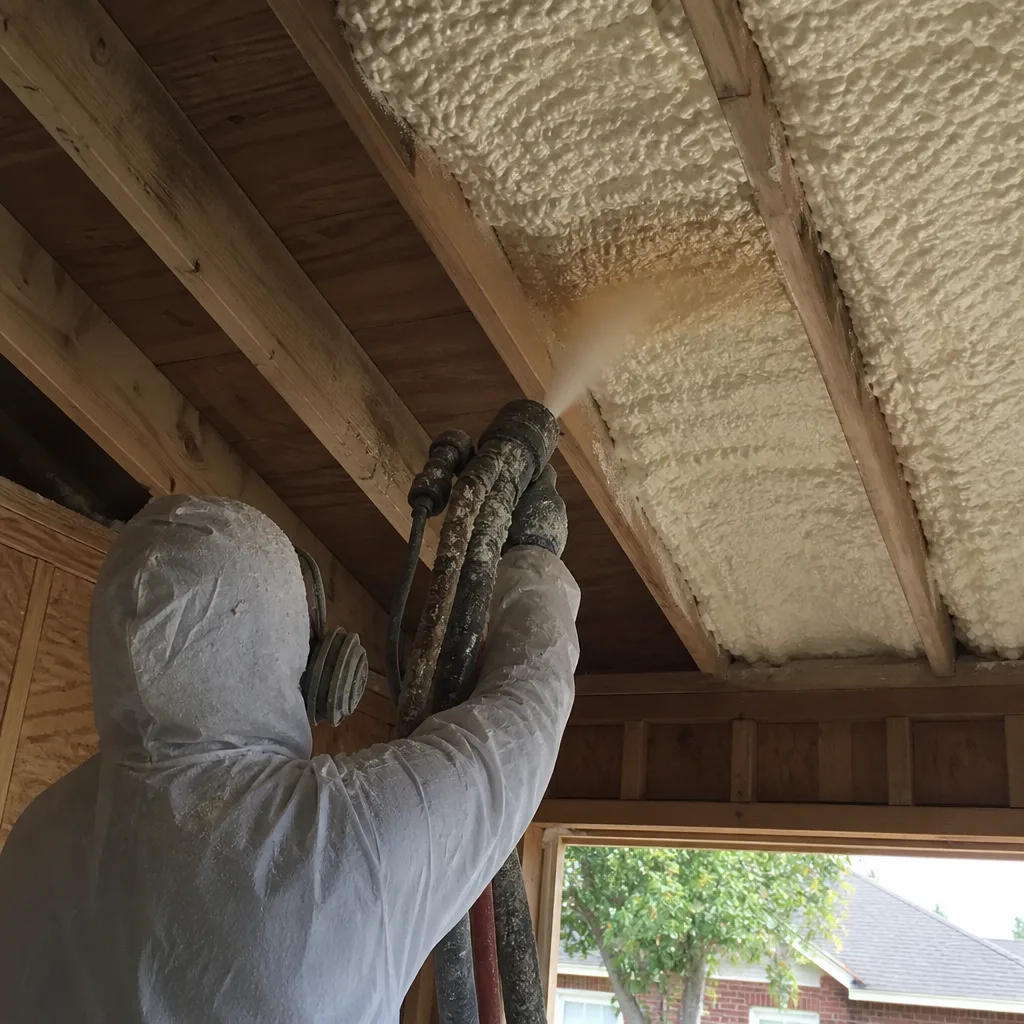
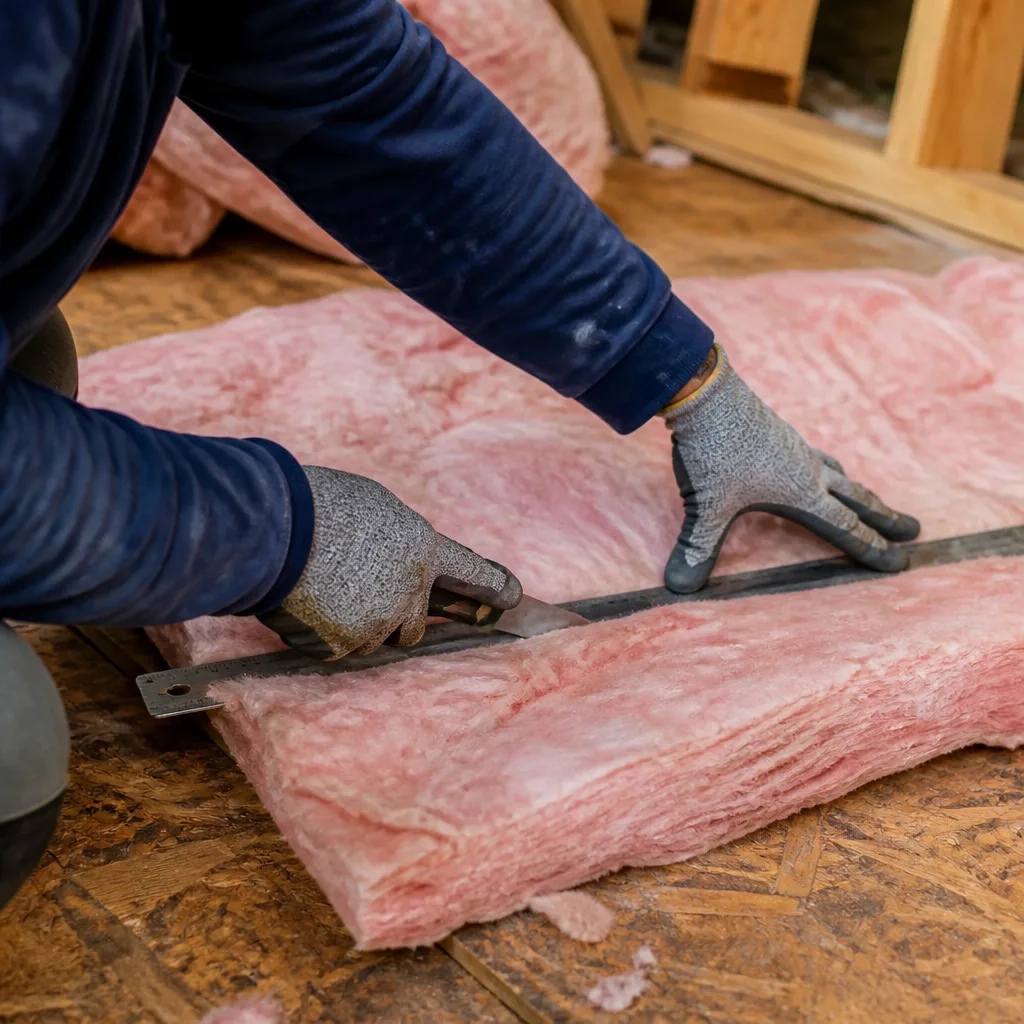
If your walls are already closed – meaning you’re not doing a renovation that opens the framing – dense-pack is almost always the right choice. The process drills small holes (typically 2 inches in diameter) at the top of each stud bay, either from the exterior or interior, fills the cavity under pressure so the material packs tight enough to resist settling, then patches the holes. Done correctly, dense-pack cellulose or fiberglass leaves no voids and achieves R-3.5 to R-4.2 per inch, depending on the product.
Spray foam requires open cavities. It’s the right call during a gut renovation, during new construction, or when a wall section is being opened for another reason – replacing rotted sheathing, adding an electrical circuit, or repairing plumbing. We source from Icynene and Demilec for spray foam applications, and from Owens Corning, Johns Manville, Knauf, and GreenFiber for blown-in products. There’s no proprietary product lock-in in our written scopes – the material specified is the one that fits the situation.
One note on closed-cell spray foam specifically: it acts as a vapor retarder, which in Round Rock’s climate (hot-humid summers, mild winters) means placement matters. Applied to the wrong side of the wall assembly, it can trap moisture rather than manage it. This is the kind of building-science detail that doesn’t show up in a competitor’s one-page quote but does show up in a blower-door reading two years later when a homeowner calls about mold. We note the vapor management strategy in every spray foam scope we write.
How to Save on Wall Insulation in Round Rock
The biggest lever most homeowners have is sequencing. If you’re planning a kitchen update, a bathroom remodel, or any work that will open walls, coordinate wall insulation at the same time. The labor cost drops significantly when cavities are already exposed – there’s no drilling, no patching, and spray foam becomes viable. A homeowner in the Mayfield Ranch area saved roughly $800 on a wall insulation project last year simply by scheduling it to overlap with a bathroom tile replacement that had already opened two exterior walls.
A few other practical ways to keep costs reasonable:
- Get a blower-door test first. A blower-door reading – a pressurization measurement that shows, in one number, how much conditioned air your home’s envelope is losing – tells you whether your walls are actually the primary problem. We’ve had homeowners ready to spend $4,000 on wall insulation whose blower-door test revealed that the attic bypasses and unsealed can lights were responsible for 70 percent of the air leakage. Addressing those first, at a fraction of the wall insulation cost, solved most of the comfort complaint without touching the walls at all.
- Don’t skip air sealing to save money up front. Air sealing the top and bottom plates before dense-packing adds cost on the day of the job, but skipping it means the insulation underperforms. We’ve seen this pattern clearly in Round Rock homes where a previous contractor blew insulation into the walls without sealing: the homeowner paid for insulation and got limited benefit because conditioned air was still bypassing through the wall framing at the top plate. Under Haven Standard, we complete air sealing before insulation goes in, every time.
- Use a free second opinion before signing any estimate. If you’ve received a written quote from another contractor, bring it to us. We’ll read it with you – line by line – and tell you whether the scope covers what it should, whether the material specified suits your wall type, and whether the price is in the expected range for Round Rock in 2026. This is not a sales call; it’s a review of what you’ve been offered.
- Ask about utility rebates. Oncor Electric Delivery and Austin Energy both offer rebates on insulation upgrades that meet certain R-value thresholds. The qualifying specs change year to year, so we confirm current eligibility during the estimate process rather than publishing a number that may be outdated by the time you read this page. We include the relevant documentation in the job record so you have what you need to submit the rebate.
- Price the whole envelope, not just the walls. A combined attic-and-wall project is almost always more cost-effective per square foot than two separate mobilizations. If you know both need attention, getting a single written scope for both lets you see the total investment and the total performance change – including the before-and-after blower-door numbers – in one documented project.
For a written estimate specific to your home’s wall type, square footage, and construction year, call (737) 259-7528. A live person answers – no voicemail loops. We can typically schedule an on-site assessment within a few business days, and the written price comes with the visit.
The Air Sealing Step Most Round Rock Contractors Skip
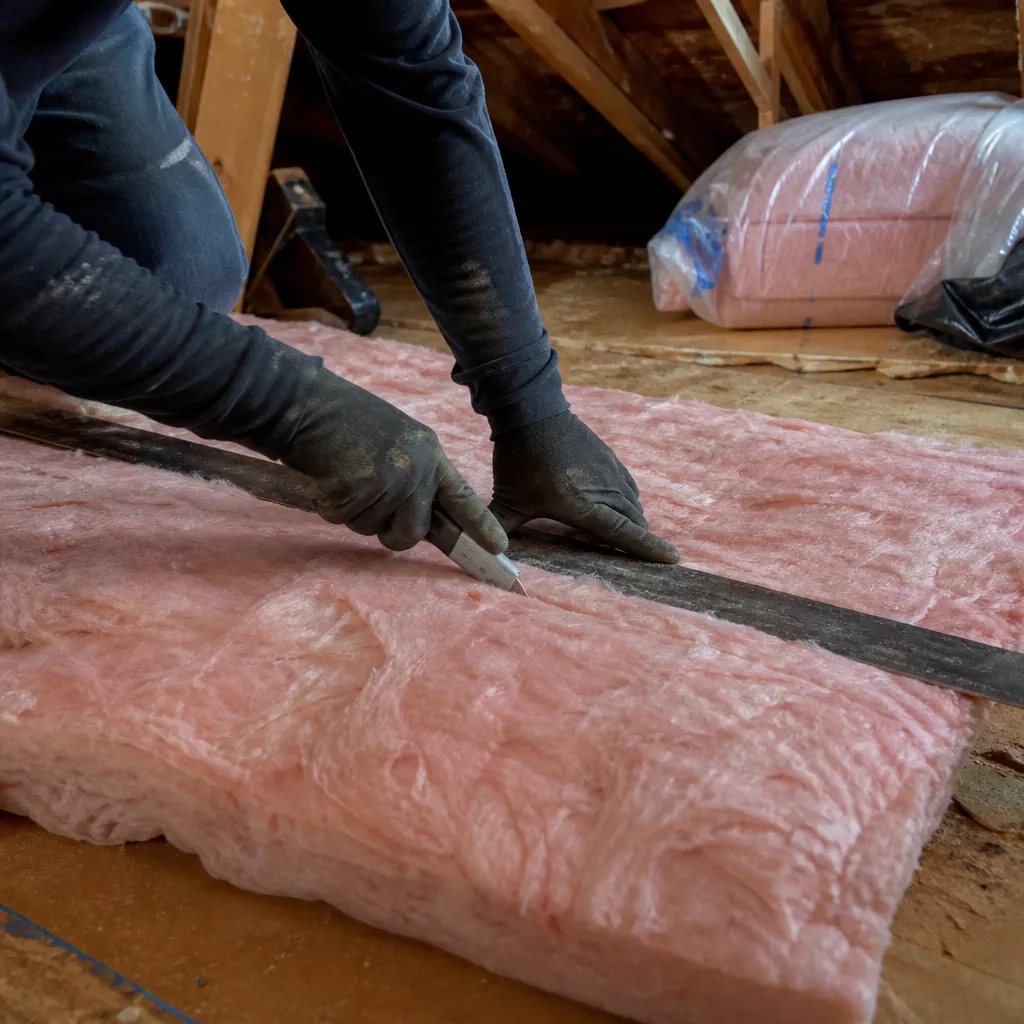
Round Rock homes built in the 1990s and early 2000s – a large share of the housing stock in areas like Forest Creek, Turtle Creek, and Rattan Creek – frequently have unsealed top plates above interior partition walls, unblocked chases where plumbing and electrical runs pass between floors, and recessed lights that open directly into unconditioned space. These are the paths that conditioned air actually uses to leave the building. Insulation slows conductive heat transfer through the wall material itself, but it does nothing for air movement through a gap.
The correct sequence is: seal the air leaks first, then insulate. We complete air sealing of top plates, electrical penetrations, and any accessible bypasses before dense-pack or spray foam goes into the wall cavity. When the work is done, we run a blower-door test and publish the before-and-after CFM50 readings in the job documentation. CFM50 is the number of cubic feet of air per minute moving through the building envelope when the home is depressurized to 50 Pascals – it gives you a single, honest number for envelope performance. Those numbers are in your job record. You can compare them to industry benchmarks or use them as a baseline for future work.
This isn’t a selling point we invented. It’s the sequence that building science has supported for decades, and it’s the reason our before-and-after blower-door readings show consistent, measurable improvement rather than the modest or inconsistent results that show up when insulation goes in without sealing first.
What the Job Documentation Looks Like
Under the Haven Standard, every Envelope Insulation Co. job closes with a Documented Photo Record. For wall insulation projects, that record typically includes:
- Photos of the drill locations before filling, showing hole placement and spacing
- Photos of the patch work after fill, showing the repair at each drill point
- A thermal image of the completed wall sections (where thermal contrast allows imaging) confirming fill coverage
- The blower-door reading before work started and after completion, with both numbers in the same document
- The written scope and material specification – brand, product name, and installed R-value
- The written warranty, active from the day the crew leaves
You receive this record when the job closes. It’s not something you have to request, and it doesn’t require a follow-up call. The purpose is straightforward: you paid for a documented performance change, and you should be able to see it on paper.
Wes Okafor, who leads Envelope Insulation Co., built the Haven Standard documentation process after seeing too many insulation jobs that left homeowners with nothing but a paid invoice and no way to verify what had actually been installed. The photo record and blower-door documentation exist precisely because a homeowner who can verify the work doesn’t have to take anyone’s word for it.
FAQs – Wall Insulation Cost in Round Rock, TX
How much does it cost to insulate the walls of a 2,000 sq ft home in Round Rock?
For a 2,000-square-foot home in Round Rock with typical 2×4 exterior framing, a dense-pack insulation project usually runs between $2,500 and $4,200, depending on wall construction type, exterior finish (brick vs. siding), and whether air sealing is included – which it should be. Homes with brick veneer or interior-only access tend to land toward the higher end. Call (737) 259-7528 for a written price specific to your home’s square footage and wall type.
Is spray foam or blown-in insulation better for Round Rock walls?
For existing walls with closed cavities – the situation in most Round Rock retrofit jobs – blown-in dense-pack is better suited. It achieves R-3.5 to R-4.2 per inch without requiring open walls. Spray foam is the right choice when walls are already open during a renovation, because it can’t be installed in a closed cavity without damaging the existing drywall to get access. Closed-cell spray foam also adds a vapor retarder, which is worth considering in Round Rock’s high-humidity climate, but placement has to be correct or it can trap moisture rather than manage it. We specify the material that fits the wall assembly, not the one with the highest margin.
How long does a wall insulation project take in Round Rock?
Most single-family homes in Round Rock take one full day for the insulation portion of the work – drilling, filling, and patching exterior walls. Air sealing adds two to four hours depending on the number of penetrations. Homes with brick veneer or interior-drill access, multiple stories, or complex wall configurations may extend to a day and a half. The written scope we deliver before work starts will include a realistic time estimate for your specific job.
Do I need a permit for wall insulation in Round Rock?
Adding insulation to existing closed wall cavities through a dense-pack retrofit typically does not require a building permit in Round Rock under current City of Round Rock building codes, provided no structural work or exterior cladding changes are involved. Spray foam applied to open framing during a renovation may fall under the broader renovation permit scope. We confirm permit requirements during the estimate process and note the determination in the written scope. If a permit is needed, we include it in the price before work starts.
Can I insulate my walls without removing the drywall?
Yes – this is exactly what dense-pack retrofit insulation does. Small holes (typically 2 inches in diameter) are drilled at the top of each stud bay from the exterior or interior, material is blown in under pressure until the cavity is fully packed, and the holes are patched and finished. The patch work is included in the written price and documented in the photo record. The result from the inside of the home is a patched wall that you paint to match – no drywall removal, no reconstruction. For a wall insulation method that avoids demolition, call (737) 259-7528 and we’ll walk through what the retrofit process looks like for your specific wall type.
What R-value should Round Rock walls have?
The International Energy Conservation Code as adopted by Texas currently targets R-13 minimum for exterior walls in Climate Zone 2 (which covers Round Rock). Many building scientists recommend R-21 for Central Texas walls given the extended cooling season and high solar gain from summer heat. A 2×4 stud bay filled with dense-pack fiberglass reaches approximately R-15; a 2×6 bay reaches approximately R-21. If your home has 2×4 framing and you want to exceed R-13, the options are dense-packing the existing cavity to R-15 and adding continuous exterior insulation if the cladding is being replaced, or accepting R-13 to R-15 as the realistic retrofit target without major exterior work. We’ll put the R-value and the corresponding CFM50 change in the job documentation so you can see what you actually got.
Why the Air Sealing Comes Before the Invoice
We’ve been operating under the Haven Standard since 2016, and across more than 9,000 homes sealed and insulated, the pattern is consistent: homes where air sealing was completed first show the largest blower-door improvement and the fastest payback on the insulation investment. That’s not a brand statement – it’s what the numbers show, job after job.
Round Rock’s building stock skews toward homes built between 1990 and 2015, and many of those homes were built to code minimums that left wall cavities empty or partially filled. The fix is straightforward. The work is documented. The price is written before anyone starts.
If you’ve read a competitor’s estimate and something in the scope doesn’t match what’s described here – no air sealing line item, no blower-door testing, no written warranty – bring us the quote. We offer a free second opinion on any written estimate, and we’ll tell you specifically what’s missing and what it would cost to include it. You can reach us at (737) 259-7528, and a live person will pick up.
For more on what wall insulation involves in this market, the home page covers the full range of building-envelope services Envelope Insulation Co. provides in Round Rock and the surrounding area.
Key Takeaways
- Wall insulation in Round Rock runs $1.50 to $4.25 per square foot of wall area, with most retrofits falling between $2,100 and $5,950 for a typical home.
- Dense-pack blown-in insulation is the standard retrofit method for existing closed walls; spray foam requires open cavities.
- Air sealing must come before insulation – skipping it reduces performance and leaves the blower-door numbers unchanged even after the insulation is installed.
- Brick veneer exteriors (common in Round Rock subdivisions) add a modest cost for masonry drilling and interior-side patching.
- Every project includes a written price before work starts, a documented photo record on completion, and before-and-after blower-door readings on applicable jobs.
- The 365-Day Done Right Promise applies to all completed work.
- A free second opinion on any written estimate is available – call (737) 259-7528.
Pricing reflects the Round Rock market as of 2026. Topside Attic Insulation Round Rock offers free estimates – call (737) 259-7528.
Written by Wes Okafor, Owner at Envelope Insulation Co., serving Round Rock, TX since 2016.
What Our Customers Say
"The winter gas bill dropped by about a third. They had estimated a quarter, so they under-promised."
- Genevieve R."Crawl space encapsulation done properly. Photographs of the vapour barrier at every seam, and the damp smell in the hallway is gone."
- Ainsley P."They air-sealed the attic floor before insulating and showed me the blower-door number before and after. The upstairs is finally the same temperature as downstairs."
- Marisol D.