
Blown-In Attic Insulation in Round Rock, TX
Blown-in attic insulation – loose-fill material mechanically blown through a hose to fill the attic floor cavity – is the most effective way to bring an under-insulated Round Rock home up to the R-38 minimum the Texas climate demands. Most blown-in attic insulation jobs in Round Rock run between $1,800 and $4,200, depending on square footage, current R-value, and how much air sealing work precedes the install. For a detailed breakdown, see How Much Does Attic Insulation Cost? (2026 Price Guide) - Round Rock, TX. The work is typically completed in a single day.
At Topside Attic Insulation Round Rock, we’ve been operating under The Haven Standard since 2016, and every blown-in job we do in Round Rock follows the same sequence: air sealing first, insulation second. That order matters more than almost anything else about how the job is done, and we won’t reverse it. If you want the full picture of what our attic work covers, our Attic Insulation in Round Rock page walks through the broader service line. To schedule a free estimate or ask a direct question, call (737) 259-7528 – a live person answers, any time of day.
Wes Okafor leads every project at Topside Attic Insulation Round Rock. The written price you receive before any work starts includes a flat rate, a written scope, and a written warranty. No surprises when the crew arrives, and no guessing when they leave.
When You Need Blown-In Attic Insulation
Round Rock’s climate creates a specific set of conditions that accelerate insulation performance loss. Summers regularly push past 100°F, and the heat that builds in an attic above a poorly insulated ceiling doesn’t just raise your electric bill – it shortens HVAC equipment life and makes second floors nearly uninhabitable by August. Here are the situations where blown-in insulation makes the most sense:
- Your home was built before 2000. Homes in older Round Rock neighborhoods like Teravista’s original sections, Chandler Creek, and Forest Creek frequently have R-11 to R-19 in the attic – well short of the current R-38 to R-60 range that Central Texas conditions call for. Adding blown-in cellulose or fiberglass on top of existing batts is often the fastest correction.
- Your second floor is significantly hotter than the first. A 5- to 10-degree difference between floors during summer is a reliable sign that the attic floor isn’t holding conditioned air where it belongs. We see this regularly in Round Rock homes with vaulted ceilings over bedrooms, where the original batt insulation has compressed or settled over 15-plus years.
- Your energy bills have climbed without a clear cause. If your bills have increased year over year but your usage habits haven’t changed, degraded attic insulation is worth investigating before you look at the HVAC system. A blower-door test – a pressurization reading that shows, in one number, how much air your building envelope is losing – can confirm whether the attic is the source.
- You’re seeing uneven cooling across rooms. When the HVAC runs constantly but some rooms never cool down, the problem is frequently air bypassing the insulation layer through unsealed top-plate penetrations or can-light housings – not the equipment itself. Blown-in insulation, preceded by air sealing, addresses both.
- You have an older fiberglass batt install that’s shifted or compressed. Batts lose effective R-value when they’re compressed, disturbed by pest activity, or were never fully continuous to begin with. Blown-in material fills gaps and irregular joist bays that batts miss by design.
- You’re replacing HVAC equipment and want the system sized correctly. An HVAC contractor sizing new equipment for a home with marginal attic insulation will oversize the system to compensate. Bringing the attic to proper R-value before that sizing calculation gives you a smaller, quieter, longer-lasting system.
Our Blown-In Attic Insulation Process
The sequence below isn’t flexible. Every step has a reason, and skipping any of them produces a result we won’t stand behind under the 365-Day Done Right Promise.
- Written scope and price, before anyone enters your attic. Under Haven Standard Clause 1, you receive a flat written price and a written scope before any work begins. The scope names the target R-value, the material, the square footage, and what air sealing will be completed. You know what you’re getting before you say yes.
- Blower-door baseline reading. We run a pressurization test on the home before touching the attic. This gives us a CFM50 number – cubic feet per minute of air leakage at 50 pascals of pressure – that documents exactly where the building envelope stands before we start. In Round Rock homes, we regularly see readings between 3,500 and 6,000 CFM50 on homes that have never had professional air sealing done. That number goes into your Documented Photo Record.
- Attic air sealing – top plates, penetrations, and can lights. Before any blown-in material goes in, we seal every penetration at the attic floor: top-plate gaps where framing meets drywall, plumbing and electrical penetrations, recessed light housings (which are among the worst air leakage points in most Round Rock homes built in the 1990s and early 2000s), and HVAC chases. We use two-part polyurethane foam and fire-rated caulk depending on the penetration type. This is not an upsell – it is a hard prerequisite. Blowing insulation over unsealed penetrations traps the air leakage problem and leaves you with higher R-value that still doesn’t perform.
- Post-sealing blower-door verification. After air sealing is complete, we run a second pressurization test. The difference between the two readings is the documented performance gain from air sealing alone – before any insulation is added. A job that started at 5,200 CFM50 and came down to 2,400 CFM50 after sealing is a result you can read in a single number. Both readings go into your written record.
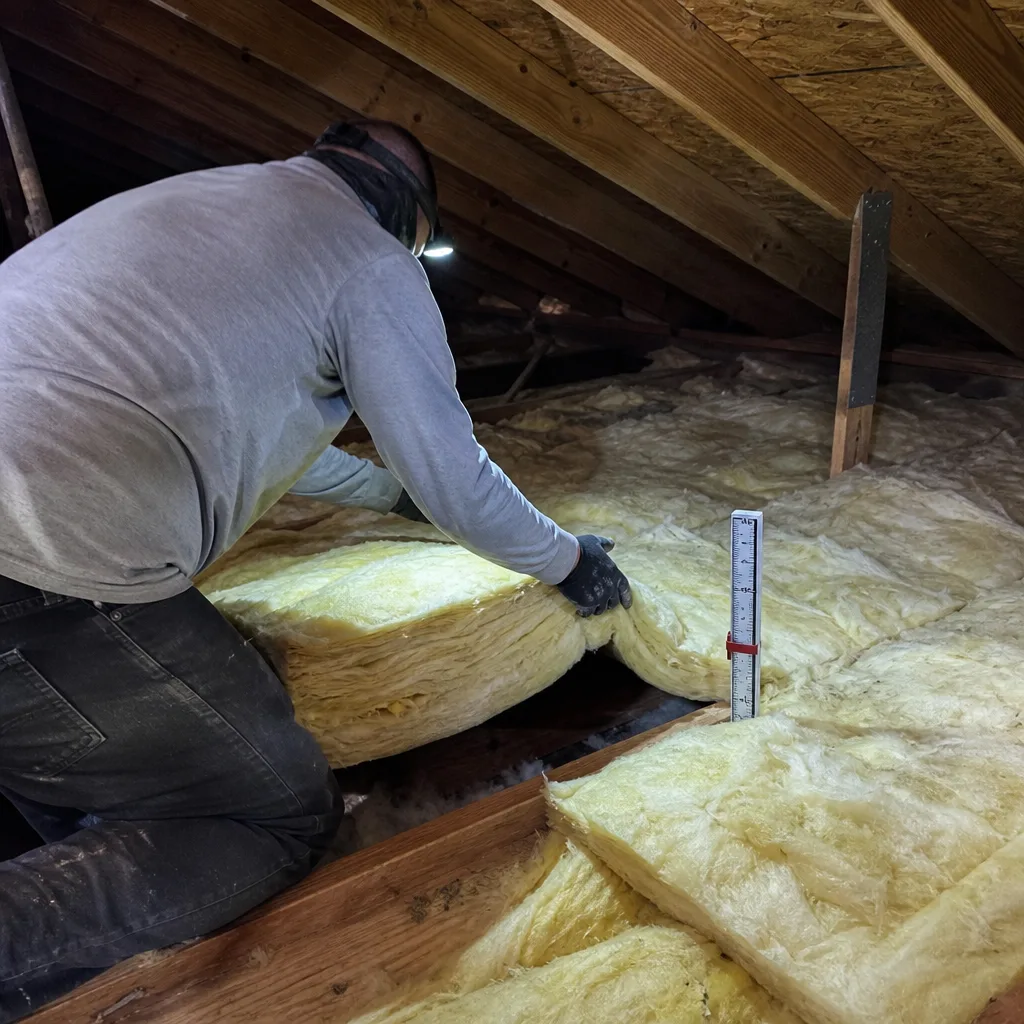
- Blown-in insulation installation to target depth. We install loose-fill material – Johns Manville fiberglass or Knauf cellulose, depending on your attic’s conditions and your preference – to the depth that achieves the agreed R-value. Depth markers are installed across the attic floor so you can verify the coverage yourself. We don’t stop short and we don’t eyeball it; we measure to the spec in the written scope.
- Documented Photo Record and close-out walkthrough. When the crew leaves, you receive a complete photo record of the completed work – before and after photos of air sealing points, depth marker photos showing insulation level, and both blower-door readings. Wes Okafor reviews every job record before it’s delivered to the homeowner. The 365-Day Done Right Promise is active from the moment you sign off on that record.
Blown-In Attic Insulation Pricing in Round Rock
Our Attic Insulation services for blown-in attic insulation in Round Rock cost between $1,800 and $4,200 for most single-family homes, with the majority of jobs landing between $2,200 and $3,400. The range is wide because several variables move the number significantly. Here’s what drives the cost:
| Cost Factor | Typical Range or Impact |
|---|---|
| Attic square footage (conditioned floor area) | 1,200 sq ft home: $1,800-$2,400 / 2,400 sq ft home: $2,800-$4,200 |
| Starting R-value (existing insulation depth) | Bare attic costs more to bring to R-38 than an attic already at R-19 |
| Air sealing complexity (penetrations, can lights) | Homes with 20+ recessed lights or complex HVAC chases add $300-$700 |
| Attic access and working conditions | Low-pitch rooflines or tight knee-wall areas can add $200-$400 |
| Material: fiberglass vs. cellulose | Cellulose runs slightly higher per bag; fiberglass is comparable in most jobs |
| Target R-value (R-38 vs. R-60) | Going to R-60 on a 2,000 sq ft attic adds roughly $400-$600 over R-38 |
Air sealing is included in every job we quote. It is not a separate line item you can opt out of, because a blown-in install without prior air sealing is a job we won’t do under The Haven Standard. The quote you receive reflects the complete scope: sealing, two blower-door tests, material, labor, and the Documented Photo Record.
The estimate is free, and the price you receive is flat – no hourly rates, no materials markup revealed after the fact. Under Haven Standard Clause 1, the written price you receive before work starts is the price you pay. To get your estimate, call (737) 259-7528.
FAQs – Blown-In Attic Insulation
How much does blown-in attic insulation cost in Round Rock?
Blown-in attic insulation in Round Rock typically costs between $1,800 and $4,200 for a single-family home, with most jobs landing in the $2,200-$3,400 range. The main drivers are your attic’s square footage, how much insulation is already there, and the complexity of the air sealing work required before the blown-in material goes in. At Topside Attic Insulation Round Rock, you receive a written flat price before any work starts – no estimates that shift after the crew arrives. Call (737) 259-7528 for a free on-site estimate.
What’s the difference between blown-in insulation and batt insulation for an attic?
Blown-in insulation – loose-fill fiberglass or cellulose mechanically distributed across the attic floor – fills irregular joist bays and gaps that pre-cut batts miss. Attic Batt Insulation performs close to its rated R-value only when installed continuously and without compression; in real attics with pipes, wiring, and framing variations, that’s rarely the case. Blown-in material conforms to the actual space rather than approximating it. For attics in Round Rock homes with complex framing or existing batt installs that have settled, blown-in is generally the more consistent result.
Do I need to remove old insulation before adding blown-in insulation?
Not always. If existing insulation is dry, free of pest contamination, and structurally intact, blown-in material can be added directly on top to bring the total depth to the target R-value. If there’s moisture damage, rodent activity, or settled fiberglass that’s compressed below R-13, removal is the right starting point – putting new material over a compromised base doesn’t fix the base. We document the existing condition with photos before making a recommendation, so you can see what we found rather than take our word for it.
How long does blown-in attic insulation last in the Round Rock climate?
Properly installed blown-in fiberglass or cellulose in a Round Rock attic typically performs at or near its rated R-value for 20 to 30 years. The Central Texas climate – specifically the heat cycling between summer attic temperatures that can exceed 140°F and winter lows in the 30s – doesn’t degrade well-installed blown-in material the way it does batts that weren’t air-sealed correctly. The biggest performance risk isn’t material degradation; it’s unsealed air bypasses underneath the insulation layer. That’s why we seal before we blow, and why the blower-door readings in your photo record give you a baseline you can compare against if you ever have the attic re-tested years later.
Why the Air Sealing Step Is Non-Negotiable
Most insulation contractors in Round Rock will skip air sealing or present it as an add-on you can decline. We don’t do that, and the reason is straightforward: adding R-value over an unsealed attic floor is like insulating the outside of a colander. The blower-door numbers prove it every time.
In a typical 2,000 square foot Round Rock home built in the mid-1990s – the Brushy Creek area is a good example – we frequently measure pre-sealing CFM50 readings above 4,500. After Attic Baffles & Ventilation Prep and sealing top plates, can lights, and penetrations, that number drops to the 1,800-2,600 range before we’ve added a single bag of insulation. The post-blow blower-door number drops further. Both readings go into the Documented Photo Record that closes every job.
That sequence – measure, seal, verify, then insulate – is what separates a job that performs from one that looks right but doesn’t. Under the Haven Standard, we publish those numbers because the documentation is the evidence. A homeowner who can see that their home went from 4,800 CFM50 to 2,100 CFM50 in a single day knows what they paid for.
Materials We Use
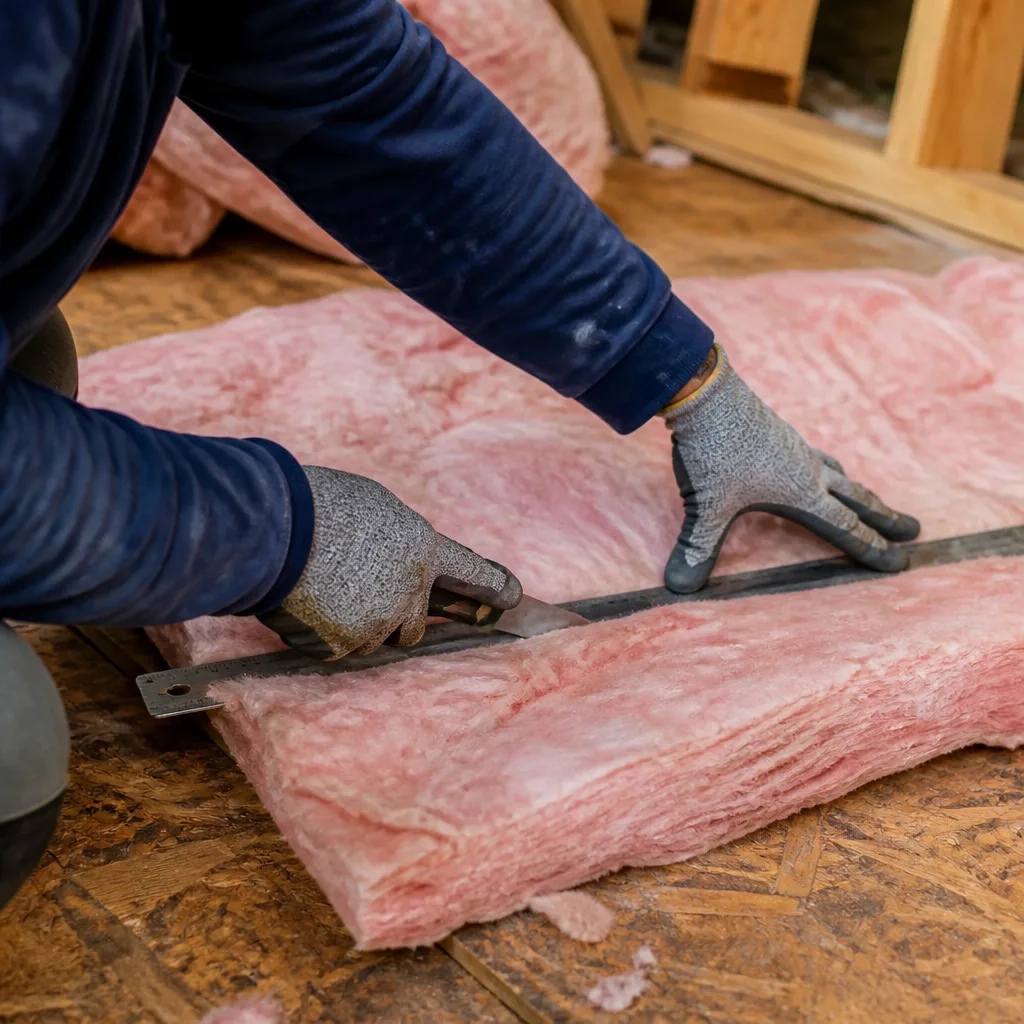
We source blown-in material from Johns Manville and Knauf, depending on job conditions and homeowner preference. Both are established manufacturers with published R-value data and moisture resistance specifications appropriate for Central Texas attics. We don’t have a proprietary product arrangement with either brand, and we’ll tell you which material we’re recommending for your specific attic and why.
For homes where the attic has had past moisture intrusion or where pest activity has contaminated the existing insulation, we remove the old material before installing new. Attic cleaning and insulation removal are part of the full building-envelope service line we operate across Round Rock – you can review the full scope on the home page.
Key Takeaways
- Blown-in attic insulation in Round Rock costs between $1,800 and $4,200 for most single-family homes, with most jobs in the $2,200-$3,400 range.
- Air sealing of top plates, can lights, and penetrations is completed before any insulation is added – not an optional add-on.
- Before-and-after blower-door readings are documented on every applicable job so you can verify the performance change in a single number.
- You receive a written flat price, written scope, and written warranty before any work starts – Haven Standard Clause 1.
- The Documented Photo Record, including depth marker photos and both blower-door readings, is delivered when the crew leaves.
- The 365-Day Done Right Promise covers every completed job – if it’s not right, we make it right.
- Material comes from Johns Manville and Knauf; no proprietary product lock-in.
Schedule Your Free Estimate in Round Rock
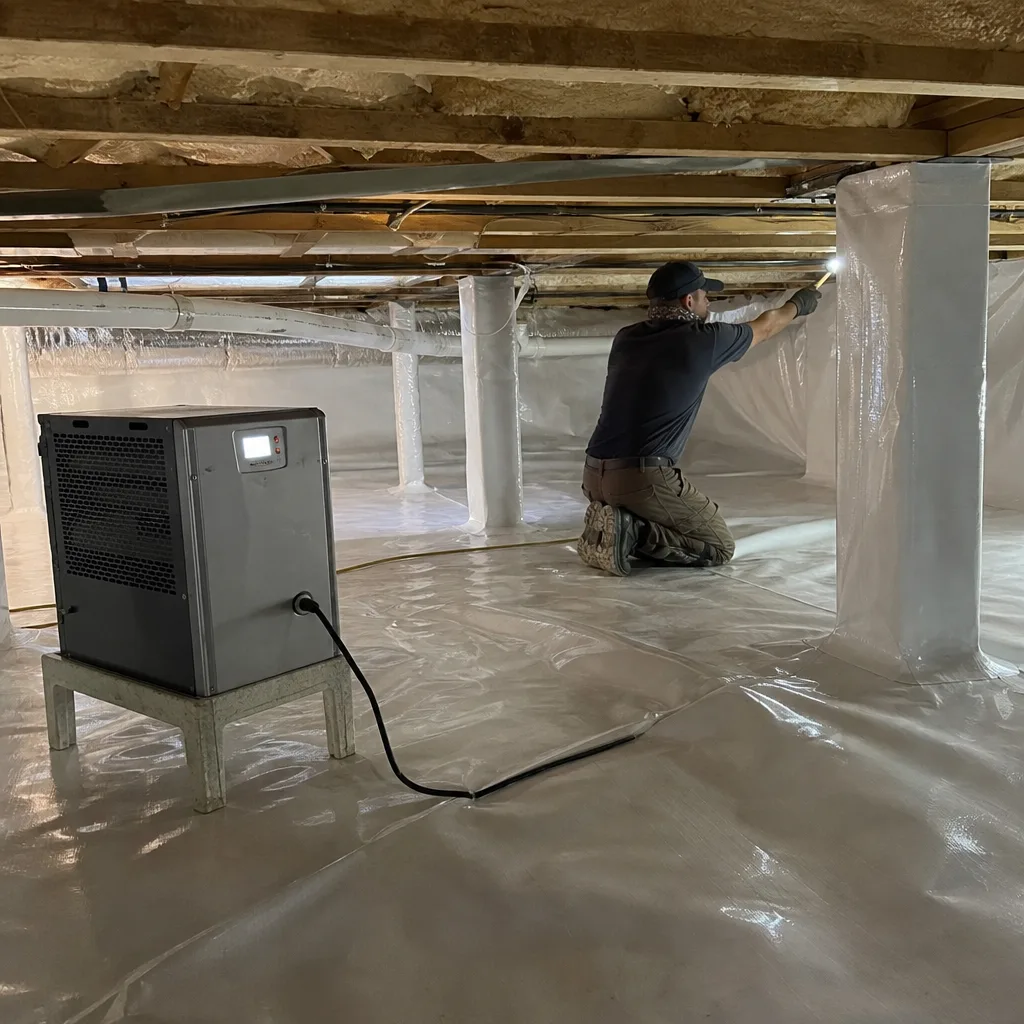
If your home is in Round Rock – whether you’re in Teravista, Forest Creek, Chandler Creek, Old Settlers Park, or anywhere else in Williamson County – and you’re seeing the signs of under-insulated attic performance, the next step is a free on-site estimate. Wes Okafor and the team at Topside Attic Insulation Round Rock will assess your attic, document existing conditions with photos, run an initial blower-door reading, and give you a written flat price before any decision is required. No guessing on pricing, no vague estimates that shift after you’ve agreed to the work.
Call (737) 259-7528 any time. A live person answers – no voicemail loops, no callback windows. The estimate is free, and the price you receive is the price you pay.
Written by Wes Okafor, Owner at Topside Attic Insulation Round Rock, serving Round Rock.