
Attic Baffles & Ventilation Prep in Round Rock, TX
Attic baffles are cardboard, foam, or rigid channels installed at each rafter bay along the eave line to keep soffit air flowing freely up toward the ridge – even after blown-in insulation fills the attic floor. Without them, insulation blocks the intake path, the attic overheats, and moisture has nowhere to go. In Round Rock’s climate, where July and August regularly push attic temperatures past 140°F, that blocked airflow is one of the fastest ways to shorten a roof deck’s lifespan and spike cooling bills at the same time - which is why proper Attic Insulation services always include ventilation prep.
Ventilation prep is the work we do before any Attic Batt Insulation goes in: inspecting existing baffles, replacing damaged ones, air-sealing top plates and penetrations, and confirming the net free area of your soffit-to-ridge ventilation system is actually adequate for the square footage of your attic. If that prep step is skipped, adding R-38 or R-60 of blown cellulose on top of an unvented or under-vented attic floor creates a sealed heat trap – not an energy-efficient envelope.
Envelope Insulation Co., operating as Topside Attic Insulation Round Rock, has been doing this work under The Haven Standard since 2016. We treat ventilation prep and air sealing as hard prerequisites, not line items you can decline. No crew of ours blows insulation over an attic floor that hasn’t been air-sealed and properly baffled first. If you’re planning blown-in insulation or a full attic upgrade, this page covers what baffle and ventilation prep actually involves, what it costs in Round Rock, and what documentation you receive when the job closes. Questions before you read further? Call (737) 259-7528 – a live person answers, no voicemail.
This sub-service is part of our broader Attic Insulation in Round Rock offering, which covers everything from initial blower-door testing through final insulation installation and the photo record we leave behind.
When You Need Attic Baffles & Ventilation Prep
Not every attic needs new baffles, but the scenarios below are common enough in Round Rock that we see at least one of them on the majority of the jobs we inspect. If any of these match what you’re dealing with, ventilation prep belongs on the scope before insulation work begins.
- Your home was built before 1995 and no one has touched the attic since. Homes in Round Rock’s older subdivisions – particularly in the Forest Creek and Cat Hollow neighborhoods – were frequently built with minimal or no rafter baffles. The original blown fiberglass often settled into the soffit channel over decades, choking intake ventilation entirely.
- You’re adding blown-in insulation on top of existing insulation. If you’re topping off from R-19 to R-49, the added depth will bury any short baffles that were installed originally. New extended baffles need to be in place first so the insulation doesn’t block the soffit intake path.
- The attic temperature is significantly higher than you’d expect. A well-vented Round Rock attic on a 98°F day should run roughly 120-130°F. Readings above 145-150°F point to restricted airflow – often blocked soffits, missing baffles, or inadequate ridge ventilation.
- You see moisture staining or mold near the eaves on the roof sheathing. When warm, humid air from the living space migrates up through unaired top plates and sits in a poorly ventilated attic, it condenses on the coldest surfaces – usually the sheathing near the eaves. That’s a ventilation and air-sealing problem together, and both need to be addressed before insulation goes in.
- A previous insulation job left the soffits blocked. This is more common than it should be. We’ve inspected attics in the Teravista and Walsh Ranch areas where a prior contractor blew cellulose right up to the fascia line with no baffles in place. The insulation performs fine in the center of the attic and acts as a plug at the perimeter.
- Your energy bills climbed after a reroof or attic work. Roofers sometimes displace or compress existing baffles during sheathing replacement. If cooling costs went up in the summer after roof work, the attic ventilation system is worth inspecting before assuming the insulation is the problem.
Our Attic Baffles & Ventilation Prep Process
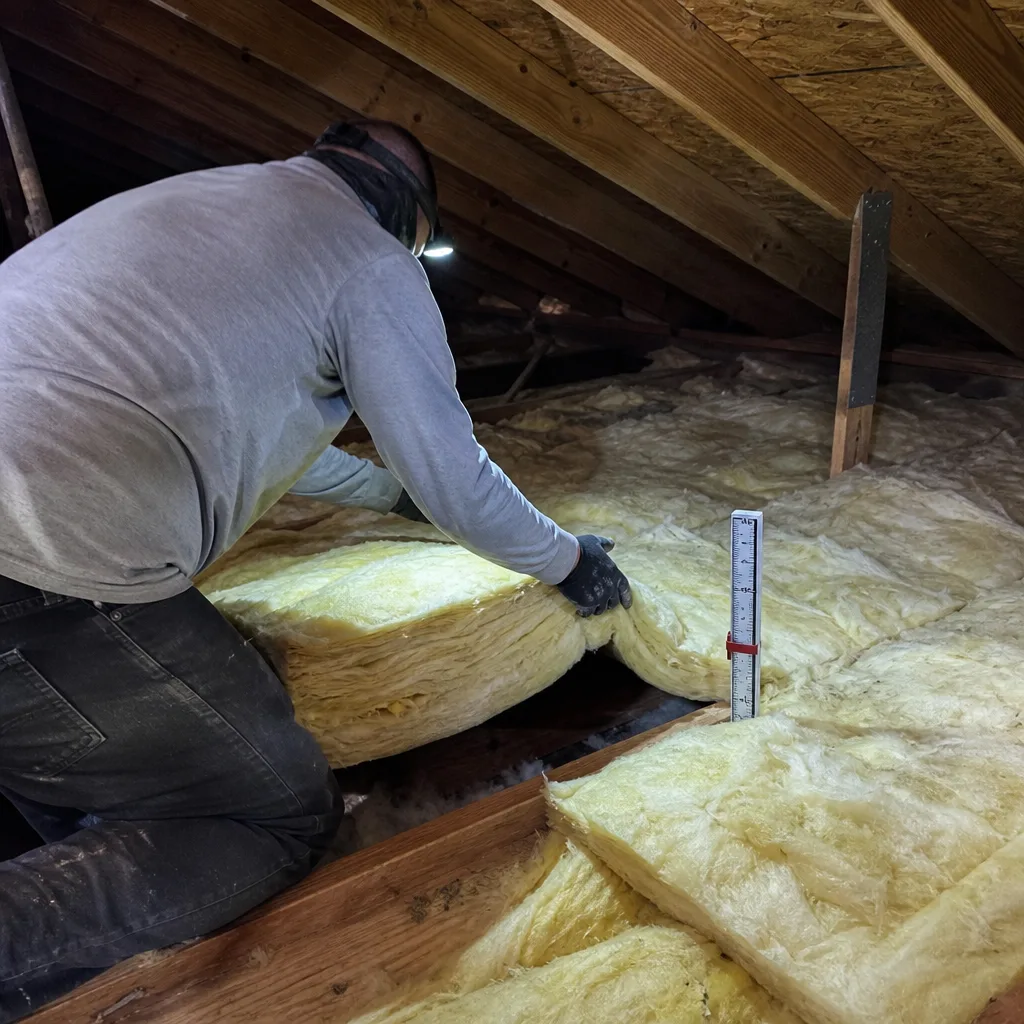
Here’s the sequence we follow on every ventilation prep job in Round Rock. The steps are in this order for a reason: airflow and air-sealing deficiencies have to be mapped before anything gets added, and documentation at each stage is non-negotiable under the Haven Standard.
- Pre-work blower-door test and attic inspection. Before anyone touches the attic, we run a blower-door test – a pressurization measurement that produces a single CFM50 number showing how much conditioned air the home’s envelope is losing. We also photograph the existing insulation depth, baffle condition, soffit venting, and any visible air-sealing deficiencies at top plates, can lights, and penetrations. This baseline becomes part of the documented record you receive at job close.
- Net free area calculation. We measure the total attic square footage and calculate the net free area required for balanced ventilation – typically 1 square foot of net free vent area per 150 square feet of attic floor (or 1:300 with a proper vapor control layer and balanced intake/exhaust). We compare that number against what the existing soffit and ridge vents actually provide. If there’s a deficit, we document it and discuss the options with you before any work starts.
- Air sealing at the attic floor. This is the step most contractors skip or treat as optional. We seal top plates, the gaps around can lights, plumbing stacks, electrical penetrations, and HVAC boots using two-part foam or fire-rated caulk appropriate to the application. On applicable jobs, this step is completed and photographed before a single bag of insulation is opened. The before-and-after blower-door numbers published on every applicable job make this step verifiable – not just our word for it.
- Baffle installation or replacement. We install baffles at every rafter bay along the eave line where the existing baffles are missing, damaged, or too short for the planned insulation depth. For most Round Rock homes being insulated to R-49 or R-60, we use extended baffles that reach at least 12 to 18 inches above the final insulation surface, keeping the soffit-to-ridge air channel open regardless of insulation depth. Material selection – whether foam, cardboard, or rigid channel – depends on the rafter bay geometry and what we found during the inspection.
- Ridge and exhaust vent verification. Intake without exhaust is half a system. We inspect the ridge vent or gable vents for blockage, damage, or inadequate coverage. If the ridge vent is clogged with debris or if the original builder under-specified the exhaust side, we note it in the written scope. In some Round Rock homes built during the rapid subdivision growth of the early 2000s, we find ridge vents that were nailed in but never fully opened – the sheathing slot beneath the cap was never cut through.
- Post-work documentation and blower-door retest. After sealing and before insulation is blown, we photograph every baffle bay and every sealed penetration. On applicable jobs, we run the blower-door test a second time so the CFM50 number after air sealing is on record alongside the pre-work reading. That before-and-after figure is part of the documented record you receive – not a summary statement, but actual measured numbers. The written scope, photo record, and blower-door results leave with you when the crew does.
Attic Baffles & Ventilation Prep Pricing in Round Rock
Attic baffle and ventilation prep pricing in Round Rock depends primarily on attic square footage, the number of rafter bays that need baffles, and how much air sealing the floor requires - see How Much Does Attic Insulation Cost? (2026 Price Guide) - Round Rock, TX for full pricing context. Below are the ranges we see most often on jobs in this area. These are written prices – Haven Standard Clause 1 means you have a flat price, written scope, and written warranty before anyone starts work, without exception.
| Scope | Typical Range (Round Rock Market) | What Drives the Cost |
|---|---|---|
| Baffle inspection + documentation only (pre-insulation assessment) | $150 – $275 | Attic access difficulty, photos, written report |
| Baffle replacement or installation (partial – 10 to 20 bays) | $275 – $550 | Number of bays, baffle material, access |
| Full-perimeter baffle installation (typical 1,500-2,000 sq ft attic) | $550 – $950 | Rafter bay count, extended vs. standard baffle height |
| Attic floor air sealing (top plates, can lights, penetrations) | $400 – $900 | Number of penetrations, existing insulation depth to work through |
| Full ventilation prep package (baffles + air sealing, pre-insulation) | $800 – $1,800 | Attic size, condition, number of penetrations, blower-door testing included |
A few things worth knowing about how these numbers work in practice. Homes in Round Rock’s larger subdivisions – Paloma Lake, Stone Canyon, and the newer sections of Teravista – tend to run toward the middle of the full-package range because attic footprints are large and the rafter bay count is high. Smaller older homes near the Round Rock historic downtown, with simpler roof geometry and fewer penetrations, often come in at the lower end of the air-sealing range because the work is less complex.
When ventilation prep is done as part of a full insulation project, the prep cost is built into the total written price – you see every line before anyone starts. When you’re calling us in specifically because a previous contractor skipped the prep step, that’s scoped and priced separately. Either way, you get the number in writing first. Call (737) 259-7528 for an estimate – it’s free, and you’ll walk away with a written figure, not a ballpark.
FAQs – Attic Baffles & Ventilation Prep
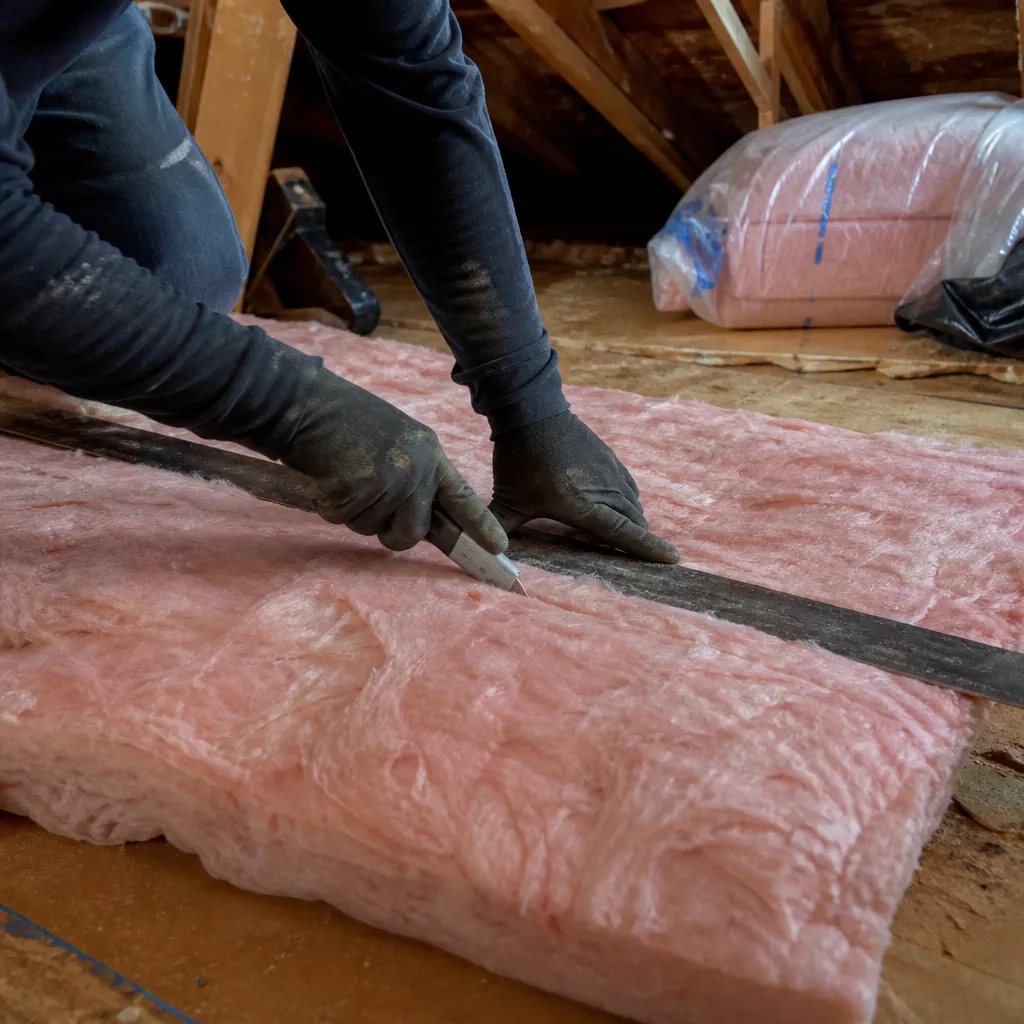
What exactly is an attic baffle and do I actually need one?
An attic baffle is a channel – usually foam, cardboard, or rigid plastic – installed in the triangular space at the eave between the roof decking and the top of the wall, running from the soffit vent opening up to the open attic space. Its job is to keep that pathway clear so outside air can enter through the soffit and travel up toward the ridge, regardless of how deep the insulation is on the attic floor below. Whether you need them depends on what’s in your attic now: if you have blown insulation that extends to the soffit line with no visible channel separating the insulation from the roof decking, you almost certainly have blocked or missing baffles. In Round Rock homes with R-38 or greater insulation depth, baffles aren’t optional – they’re the only reason the ventilation system functions at all once the attic floor is filled. Call (737) 259-7528 and we’ll inspect and document what’s there before any work is scoped.
Can you just blow insulation without doing the baffle and air-sealing prep first?
We won’t, and the reason isn’t procedural – it’s that skipping prep produces a measurably worse result. Air sealing is completed before insulation is added because blown insulation is not an air barrier: warm air from the living space moves through it freely and carries heat and moisture into the attic. Baffles are installed before insulation because adding insulation depth without them blocks the intake path and makes the ventilation problem worse, not better. Every job we do under the Haven Standard follows the sealed-first, then-insulated sequence. If you have a written estimate from another contractor that lists insulation without mentioning air sealing or baffles, we’ll read it with you – that’s our free second opinion offer, and it exists specifically for situations like this.
How much does poor attic ventilation actually affect my energy bills in Round Rock?
A blocked or under-vented attic in Round Rock running 150°F on a summer afternoon transfers heat into your living space through the ceiling at a rate that can add 15-25% to cooling load, depending on insulation depth and ceiling assembly. That’s not a figure we invented – it’s the range documented in Texas A&M Energy Systems Laboratory research on Central Texas residential construction. The blower-door numbers we record before and after air sealing show the air-infiltration side of the equation directly: a home testing at 4,500 CFM50 before sealing and 2,400 after has cut its conditioned-air loss roughly in half. The ventilation side – keeping attic temps lower through proper baffle and ridge vent function – compounds that result. Both matter, and both show up in the documented record we leave with you.
How long does attic baffle and ventilation prep take for a typical Round Rock home?
For a single-story home between 1,500 and 2,200 square feet – the most common footprint in Round Rock subdivisions like Vista Oaks or Sendero Springs – full ventilation prep including baffle installation and attic floor air sealing typically runs four to six hours with a two-person crew. Larger two-story homes, or attics with complex geometry and high penetration counts, can run a full day. The blower-door test at the start and end adds roughly 45 minutes total. We schedule a named technician and send a text when they’re on the way, so you’re not waiting around a four-hour window. Work doesn’t start until you have the written price; the crew doesn’t leave until you have the photo record and blower-door results.
Key Takeaways
- Attic baffles keep the soffit-to-ridge airflow path open after insulation fills the attic floor – without them, added insulation depth makes ventilation worse.
- Air sealing at top plates, can lights, and penetrations must happen before insulation is installed; blown insulation is not an air barrier and cannot substitute for this step.
- Ventilation prep pricing in Round Rock typically ranges from $800 to $1,800 for a full-perimeter baffle installation plus air sealing on a 1,500-2,000 sq ft attic.
- Every job under the Haven Standard begins with a written price and ends with a documented photo record and before-and-after blower-door numbers – you see the measured air-sealing result, not a summary claim.
- If a previous estimate didn’t mention baffles or air sealing, bring it to us – the free second opinion offer covers exactly that situation.
Topside Attic Insulation Round Rock has been completing ventilation prep and baffle installation across Round Rock since 2016 – on more than 9,000 homes, every one of them with a written price before the work started. Materials come from suppliers including Johns Manville and CertainTeed, selected by job requirements rather than supplier relationships. If your attic is due for insulation and you want to know whether the ventilation prep has been done correctly – or at all – search Attic Insulation Near Me in Round Rock, TX or call (737) 259-7528. The estimate is free, the price is written, and the work doesn’t start until both of those are in your hands.
Written by Wes Okafor, Owner at Topside Attic Insulation Round Rock, serving Round Rock.