
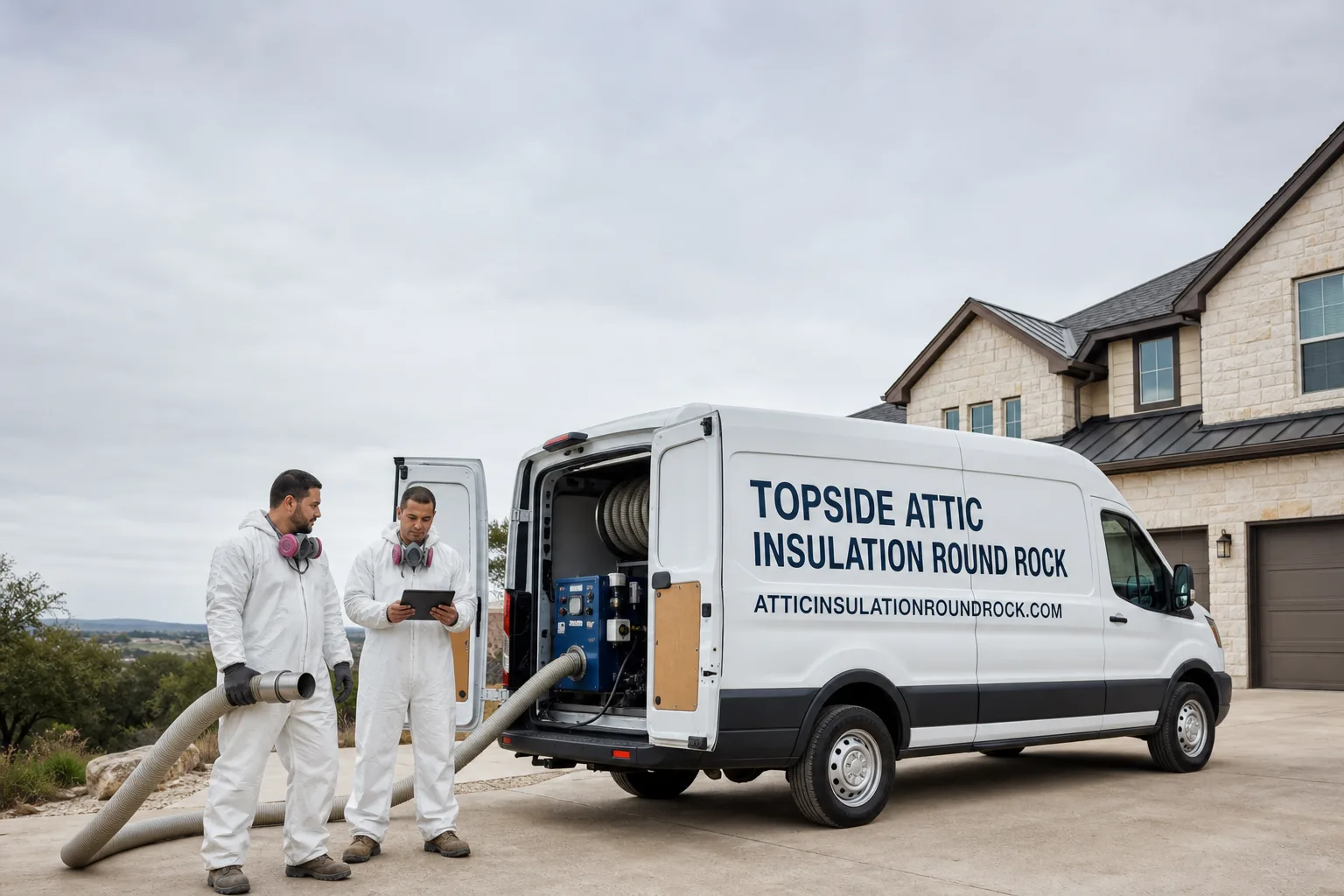
How Much Does Crawl Space Encapsulation & Vapor Barrier Cost in Round Rock?
Crawl Space Encapsulation & Vapor Barrier services in Round Rock, TX typically run between $3,500 and $8,500 for a standard single-family home, with most jobs landing around $5,200 once you account for the liner, seam tape, perimeter insulation, and any moisture remediation the space needs before the barrier goes down. A basic vapor barrier-only installation - a thinner poly sheeting job without full encapsulation - comes in lower, usually $1,200 to $2,800, though in Round Rock’s climate that approach often falls short. Get a written price before any work starts; that’s the only way to know you’re comparing the same scope.
Crawl Space Encapsulation & Vapor Barrier Cost Breakdown (2026)
These are real Round Rock market numbers for 2026 - not national averages inflated or deflated for local flavor. The ranges account for variations in crawl space height, liner thickness, existing moisture damage, and whether the job includes Crawl Space Insulation and conditioning or just sealing the floor.
| Scope of Work | Typical Cost Range | Notes |
|---|---|---|
| Vapor barrier only (6-mil poly, basic) | $1,200 - $2,200 | Covers ground moisture; no wall liner, no conditioning |
| Vapor barrier (20-mil reinforced liner) | $2,400 - $3,800 | Better durability; standard for most Round Rock homes |
| Full encapsulation (liner + wall coverage + tape) | $4,500 - $7,500 | Sealed perimeter, taped seams, vent sealing included |
| Full encapsulation + perimeter insulation | $5,500 - $8,500 | Adds rigid foam or spray foam on foundation walls |
| Crawl space dehumidifier (added to encapsulation) | $800 - $1,800 | Unit + install; necessary when space is conditioned |
| Mold remediation before encapsulation | $500 - $2,500 | Required when existing growth is found; priced separately |
| Old liner removal and disposal | $300 - $700 | Often needed in homes built before 1995 |
| Crawl space air sealing (penetrations, rim joists) | $600 - $1,500 | Seals conditioned air loss at the floor deck above |
For most Round Rock homeowners with a 1,200 to 1,800 square foot crawl space, full encapsulation with a 20-mil liner, sealed vents, and taped seams runs about $5,000 to $6,500 installed. That’s the job that actually solves moisture, not just slows it down. If someone quotes you $1,800 for “full encapsulation,” ask exactly what liner thickness and wall coverage are included – those two numbers tell you whether the scope matches the word.
What You’re Actually Paying For
Liner material is roughly 30 to 40 percent of a typical encapsulation invoice. Labor – which in Round Rock usually means tight, low-clearance crawl spaces under homes built on slab-and-pier foundations common in neighborhoods like Teravista, Hutto Road-adjacent subdivisions, and older areas near Georgetown Street – accounts for another 35 to 45 percent. The rest covers seam tape, vent plugs, drainage matting if needed, and any rim joist sealing at the top of the foundation walls. That rim joist work is where conditioned air actually escapes into the crawl space; skipping it makes the liner below it less effective.
Under the Haven Standard, a written price covers the full scope before anyone enters your crawl space. No “we found more once we got under there” add-ons without your written approval first.
What Affects Crawl Space Encapsulation & Vapor Barrier Pricing in Round Rock
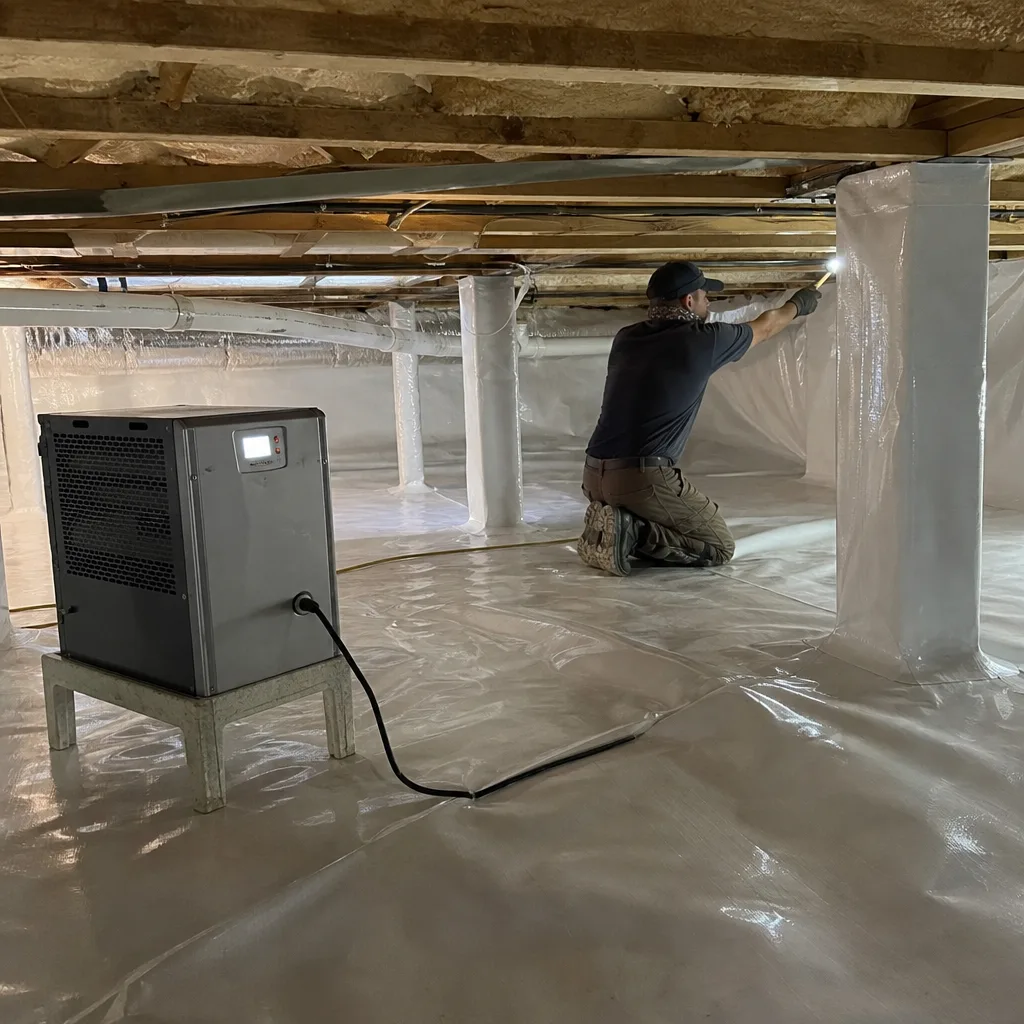
- Crawl space square footage and clearance height. A 2,000 square foot footprint costs more to encapsulate than an 800 square foot one – straightforward. But low clearance (under 18 inches is common in Round Rock’s older stock near downtown and the Old Settlers Boulevard corridor) slows installation significantly, which adds labor hours. Some sub-18-inch spaces require specialized equipment to reach far corners safely.
- Existing moisture damage and standing water history. Central Texas clay soil holds and releases water, and Round Rock sits on a mix of Austin Chalk and Taylor Marl formations that wick moisture upward through the soil during the wet season (March through May, and again in October). If a previous owner never installed any ground cover, the joists and subfloor may show staining, soft spots, or active mold. Remediation before the liner goes down adds cost – typically $500 to $2,500 depending on extent – but skipping it voids the logic of the encapsulation entirely.
- Liner thickness (mil rating). A 6-mil poly liner costs a fraction of a 20-mil reinforced barrier. The 6-mil tears easily during any subsequent crawl space work and degrades faster under the humidity cycles Round Rock sees between June and September. Most reputable contractors in this market spec 12-mil minimum; 20-mil is the choice for long-term performance. The difference in material cost on a 1,500 square foot crawl space is roughly $400 to $900, which is small relative to the cost of replacing a torn liner in five years.
- Whether vents are sealed or left open. Older Round Rock homes built before 2000 were typically constructed with cross-ventilated crawl spaces – vents on opposing foundation walls to let air flow through. That approach made sense in theory but introduces warm, humid Gulf air into the space during summer, which condenses on the cooler surfaces inside. Sealing those vents and conditioning the space (with a dehumidifier or by connecting it to the HVAC) adds $800 to $1,800 to the job but converts the crawl space from a moisture source into a controlled zone.
- Access and obstacles. A crawl space with a single 18×24-inch access hatch on the exterior takes longer to work in than one with an interior access door or a generous exterior opening. Plumbing runs, HVAC ducts suspended from the floor joists, and pest control bait stations all slow liner installation. If the space has had previous rodent activity – not uncommon in Round Rock’s older neighborhoods near Brushy Creek – thorough cleaning and sanitation has to happen before the liner goes down, which adds both time and cost.
- Rim joist and air sealing scope. The rim joist is the band of framing that sits on top of your foundation walls, directly under the first-floor subfloor. In most Round Rock homes, it’s uninsulated and poorly sealed, meaning conditioned air from your living space bleeds into the crawl and outside air enters the building envelope. Sealing and insulating the rim joist (typically with spray foam cut-and-cobble or closed-cell foam) adds $600 to $1,500 but is part of what makes the full encapsulation actually perform. Without it, you’ve sealed the ground but left a gap at the walls.
Round Rock-Specific Moisture Conditions Worth Knowing
Round Rock sits in Williamson County, where the underlying geology creates specific crawl space conditions that don’t show up in national pricing guides. The Austin Chalk and Taylor Marl formations that run through the area expand and contract with moisture – which is why foundation movement is a recurring topic here – but they also drive persistent sub-slab humidity even during dry stretches. Homes in the Meadows of Brushy Creek, Stone Canyon, and Highlands at Mayfield Ranch areas regularly show crawl space relative humidity readings above 70 percent in summer without any active moisture intrusion, simply because the soil below the liner stays cool and damp year-round.
That matters for encapsulation pricing because those conditions typically justify a heavier liner and a dehumidifier, not just a basic Crawl Space Vapor Barrier. A contractor quoting a 6-mil poly sheet for a Round Rock crawl space in those soil zones is probably underquoting the job. We see this regularly when homeowners bring us a competing estimate – one of the clearest value signals of a Free Second Opinion on any written estimate is catching a scope that won’t actually solve the problem.
The City of Round Rock follows the International Residential Code (IRC 2021 as adopted by Texas), which requires crawl space ventilation or conditioning. If vents are being sealed as part of an encapsulation job, the space must meet IRC R408 requirements for conditioning – meaning it connects to the home’s HVAC or has a dedicated dehumidifier. A properly scoped estimate will reference this; one that doesn’t is worth questioning before you sign.
How to Save on Crawl Space Encapsulation & Vapor Barrier
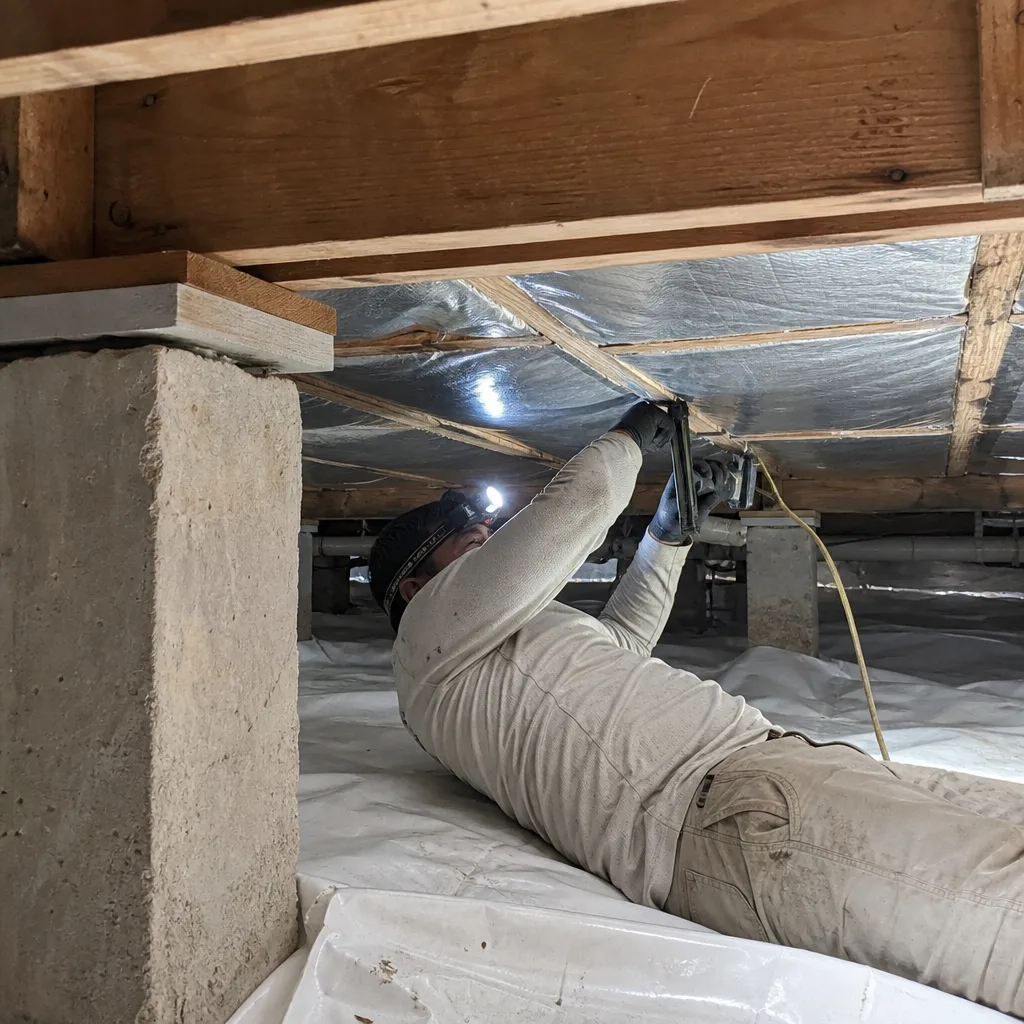
The single most effective way to spend less on crawl space encapsulation is to get the scope right the first time. Encapsulations that fail within three to five years almost always fail because the liner thickness was wrong for the conditions, the vents were left open, or the existing moisture damage wasn’t addressed before the liner went down. A $1,800 repair job on a failed 6-mil liner reinstalls as a $5,500 job done correctly – so the “savings” on the front end cost more in the end.
That said, here are genuine ways to reduce cost without cutting scope:
- Get competing written quotes on the same scope. A quote for “encapsulation” is not comparable to another quote for “encapsulation” unless both specify liner mil thickness, wall coverage height, vent sealing approach, and whether rim joist work is included. Envelope Insulation Co. will read a competing estimate with you at no charge – call (737) 259-7528 to schedule a Free Second Opinion. We’ll tell you exactly what the other quote does and doesn’t cover.
- Ask whether moisture remediation can be staged. If the space has minor surface mold, some contractors will allow you to handle the surface treatment yourself (commercially available antimicrobial solutions, proper PPE, adequate ventilation) before the encapsulation appointment, reducing the remediation line item. This is not appropriate for significant growth – if you’re looking at more than a few square feet of active mold, that’s work for a licensed professional with proper containment.
- Bundle with related building envelope work. If your Crawl Space Encapsulation & Vapor Barrier in Round Rock job is happening around the same time you’re addressing attic insulation, rim joist sealing, or a home energy audit, combining the site visits reduces mobilization cost. The crawl space air sealing and attic air sealing are often done more efficiently by the same crew in the same visit.
- Check for utility rebates. Oncor Electric Delivery and some natural gas providers in the Round Rock area have offered rebates on moisture control and building envelope improvements in recent program years. Eligibility changes year to year, so ask the contractor if the scope you’re considering qualifies and request the paperwork to file the claim yourself – don’t rely on the contractor to do it for you unless that’s explicitly in the written scope.
- Timing matters slightly, but don’t manufacture urgency. Late fall and winter (November through February) tend to be somewhat slower for crawl space encapsulation in Round Rock, and some contractors have scheduling flexibility that translates into a modest cost difference. But a crawl space with active moisture should be addressed promptly regardless of season – the cost of delayed remediation (joist damage, mold growth, pest pressure) outweighs any scheduling discount.
FAQs – Crawl Space Encapsulation & Vapor Barrier Cost
How much does crawl space encapsulation cost in Round Rock, TX?
Full encapsulation in Round Rock typically runs $4,500 to $8,500 for most single-family homes, with the middle of the range – around $5,200 to $6,000 – being most common for a 1,200 to 1,800 square foot crawl space with a 20-mil liner, sealed vents, taped seams, and rim joist insulation. A basic vapor barrier without wall coverage or vent sealing can start around $1,200, but that scope is rarely adequate for Round Rock’s clay soil conditions and summer humidity levels. Call (737) 259-7528 for a written estimate on your specific space – pricing is flat, written before any work starts.
What’s the difference between a vapor barrier and full encapsulation?
A vapor barrier is a ground liner – typically 6 to 20-mil poly sheeting – placed over the crawl space floor to block ground moisture from evaporating upward into the space. Full encapsulation does that and more: it extends liner up the foundation walls, seals the foundation vents, tapes every seam to create a continuous moisture barrier, and typically includes rim joist insulation and a dehumidifier to control the air in the now-sealed space. In Round Rock’s climate, a ground liner alone often reduces but doesn’t eliminate moisture problems because humid summer air still enters through open vents. Full encapsulation addresses both ground moisture and air-carried humidity, which is why the two scopes produce meaningfully different long-term outcomes.
Is crawl space encapsulation worth it in Round Rock?
For most Round Rock homes with a crawl space, yes – particularly those built before 2005, when current moisture management practices weren’t standard. The payback shows up in three ways: reduced HVAC load (because the floor deck above the crawl space stops acting as a cold/hot exchange surface), better indoor air quality (crawl space air is drawn upward into living spaces through the stack effect), and reduced risk of joist deterioration and pest pressure from sustained moisture. Homes in neighborhoods like Brushy Creek, Teravista, and the older sections near Main Street that we work in regularly show measurable humidity reduction within the first summer after encapsulation. Whether the return justifies the cost depends on how severe your current moisture readings are – a free estimate includes a crawl space assessment so you know what you’re actually dealing with before committing.
How long does crawl space encapsulation take, and does it require a permit in Round Rock?
Most encapsulation jobs in Round Rock take one to two days depending on access, crawl space size, and whether remediation or old liner removal is part of the scope. Permit requirements depend on scope: vapor barrier installation alone typically doesn’t require a permit under Round Rock’s IRC 2021 adoption, but conditioned crawl space work (sealing vents and connecting to HVAC) may trigger a mechanical permit review. A licensed contractor should pull any required permits – if a quote doesn’t mention permitting and the scope includes vent sealing with HVAC conditioning, ask the question directly. Under Haven Standard Clause 1, the written scope will specify what permits apply before work starts.
Can I install a vapor barrier myself to save money?
A ground-only vapor barrier – poly sheeting over the crawl space floor, held in place at the edges – is within reach for a physically capable homeowner with appropriate PPE (respirator, knee pads, lighting, and patience for tight spaces). The material cost for a 6-mil liner on a 1,200 square foot space runs $150 to $400 at a building supply store. The challenge is that DIY installations frequently miss the details that make the liner effective: untaped seams, gaps at the perimeter, and nothing done about the open vents above. A 6-mil poly sheet installed without wall coverage and with open vents will reduce ground moisture but leave most of the humidity problem in place. If you’re addressing a genuine moisture issue rather than a code question, the scope that actually solves it – sealed vents, taped seams, wall liner – is consistently done better by a crew that does it daily. Call (737) 259-7528 and we’ll tell you honestly what scope your space needs and what it costs.
Does Envelope Insulation Co. publish before-and-after data on crawl space jobs?
On crawl space and building envelope jobs where air sealing is part of the scope – particularly when the crawl space connects to the living area’s thermal envelope through the floor deck and rim joists – Envelope Insulation Co. provides before-and-after blower-door readings. A blower-door test is a pressurization measurement that shows, in a single CFM50 figure, how much conditioned air the home’s building envelope was losing before and after the work. For a home where the crawl space rim joists were uninsulated and the floor deck was unaddressed, the change in that number is often meaningful. The Documented Photo Record of the installation is included on every job – you receive photos of the crawl space before and after, including seam coverage, wall liner height, and vent plug placement, so you can see what was done without crawling under there yourself.
What a Written Price and a Documented Photo Record Look Like in Practice
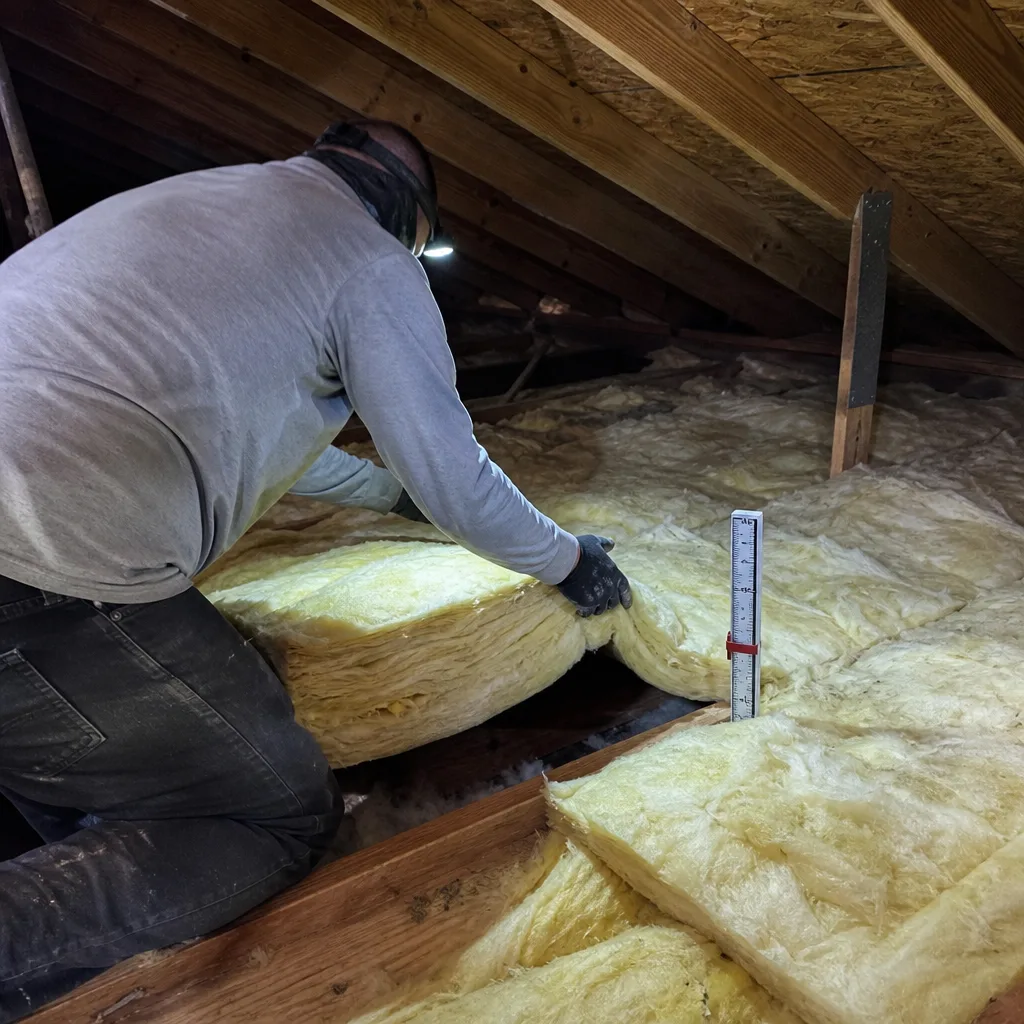
When Wes Okafor’s crew shows up to a crawl space job in Round Rock, the first step is an assessment of what’s actually down there: liner mil thickness needed given the soil and humidity readings, extent of wall coverage required, whether the rim joist needs spray foam or rigid board, whether existing vents can be plugged or need to be built out. That assessment feeds the written price – a flat number tied to a specific scope. Nothing starts until you’ve seen that number and signed off on it.
When the job closes, you receive the Documented Photo Record: crawl space entry point condition, sub-floor condition before liner placement, liner installation in progress, seam tape coverage, wall liner height, vent plugs in place, and the finished condition. If a dehumidifier was installed, you get the unit’s model number and the target humidity setpoint in writing. If rim joist spray foam was applied, the photo record shows coverage.
That’s what Wes means when he says documentation is part of what you paid for. You can see that Envelope Insulation Co. has been building this standard across more than 9,000 homes since 2016. The home page has more on the full building-envelope service line if you want to understand how crawl space encapsulation fits alongside attic air sealing and insulation replacement as a complete approach.
The 365-Day Done Right Promise covers the completed work: if something wasn’t done to the written scope, we make it right. That’s written into every job, not offered after the fact.
Key Takeaways
- Crawl space encapsulation in Round Rock, TX costs $4,500 to $8,500 for full encapsulation on most homes; vapor barrier only starts around $1,200.
- Round Rock’s clay soil and summer humidity (often above 70% relative humidity in the crawl space from June through September) typically justify a 20-mil liner and sealed vents rather than a basic 6-mil ground sheet.
- Mold remediation, low crawl space clearance, old liner removal, and rim joist insulation are the most common add-ons that push total cost higher.
- City of Round Rock follows IRC 2021 – conditioned crawl space work (sealed vents + HVAC connection) may require a permit.
- A written price before any work starts, a Documented Photo Record at close, and the 365-Day Done Right Promise are included on every Envelope Insulation Co. job.
- A Free Second Opinion on any written competing estimate is available – call (737) 259-7528.
To get a flat, written estimate on your Round Rock crawl space – with scope, materials, and liner mil rating spelled out before anyone enters the space – call Wes Okafor and the team at Envelope Insulation Co. at (737) 259-7528. The estimate is free, the price is written, and no work starts until you’ve approved both.
Written by Wes Okafor, Owner at Envelope Insulation Co. (operating as Topside Attic Insulation Round Rock), serving Round Rock, TX since 2016. Pricing reflects the Round Rock market as of 2026. For a free estimate, call (737) 259-7528.
What Our Customers Say
"The winter gas bill dropped by about a third. They had estimated a quarter, so they under-promised."
- Genevieve R."Crawl space encapsulation done properly. Photographs of the vapour barrier at every seam, and the damp smell in the hallway is gone."
- Ainsley P."They air-sealed the attic floor before insulating and showed me the blower-door number before and after. The upstairs is finally the same temperature as downstairs."
- Marisol D.