
Crawl Space Vapor Barrier in Round Rock, TX
A crawl space vapor barrier is a polyethylene or reinforced plastic sheeting installed across the soil floor – and often up the foundation walls – of your crawl space to block ground moisture from migrating into the living space above. In Round Rock, where the clay-heavy soil of the Blackland Prairie holds water long after a rain and summer humidity regularly pushes past 70%, an unprotected crawl space floor can turn a healthy home into one with persistent moisture problems in a single wet season. Most Round Rock homes we inspect with crawl space access see measurable humidity improvements within the first month after a vapor barrier is properly installed and sealed.
Topside Attic Insulation Round Rock has been installing crawl space vapor barriers under The Haven Standard since 2016 – every job starts with a written price, includes a documented photo record, and is backed by our 365-Day Done Right Promise. If you’re seeing signs of crawl space moisture, call us at (737) 259-7528 and we’ll give you a straight assessment and a flat written price before anyone touches a tool. This page covers vapor barrier specifically; if you want the full picture including encapsulation, rim-joist sealing, and dehumidification, see our Crawl Space Encapsulation & Vapor Barrier in Round Rock page.
When You Need a Crawl Space Vapor Barrier
Not every crawl space problem announces itself through the floor. Some of the clearest signals come from places homeowners don’t look – utility bills, door frames, and the air quality in the rooms directly above. Here’s what we see most often in Round Rock before a vapor barrier is in place:
- Musty odors in the first floor rooms or hallways. Bare soil in a Round Rock crawl space releases microbial off-gassing – that basement-like smell traveling up through subfloor gaps and HVAC returns. In neighborhoods like Brushy Creek and Teravista, where homes sit on expansive clay that stays damp well into June, this is the single most common call we get.
- Hardwood floors buckling or cupping at the seams. Wood absorbs the moisture vapor rising from exposed soil. If you’ve already had the floors refinished once and the problem came back, the source is almost certainly the crawl space, not the wood itself.
- Insulation sagging or falling from the subfloor. Fiberglass batts between floor joists can’t hold their position once they’ve absorbed enough moisture. If the batts in your crawl space are drooping, they’ve also lost most of their R-value.
- Higher-than-expected cooling bills from May through September. A damp crawl space adds latent load – the energy your AC spends removing moisture from the air rather than lowering temperature. Round Rock summers are long enough that this effect shows up clearly in utility costs by July.
- Visible condensation or standing water on the crawl space floor after rain. Round Rock received over 37 inches of rain in 2023, and much of that moves through the Blackland clay slowly. Homes in the Mayfield Ranch area, which sits over a subtle grade change, see this after heavier spring events.
- Allergy symptoms or worsening indoor air quality with no clear cause. Mold spores and dust mites thrive above 60% relative humidity. If crawl space air is at 80% RH – which is common here in July without a barrier – some of that air finds its way into the home through the stack effect.
Our Crawl Space Vapor Barrier Process
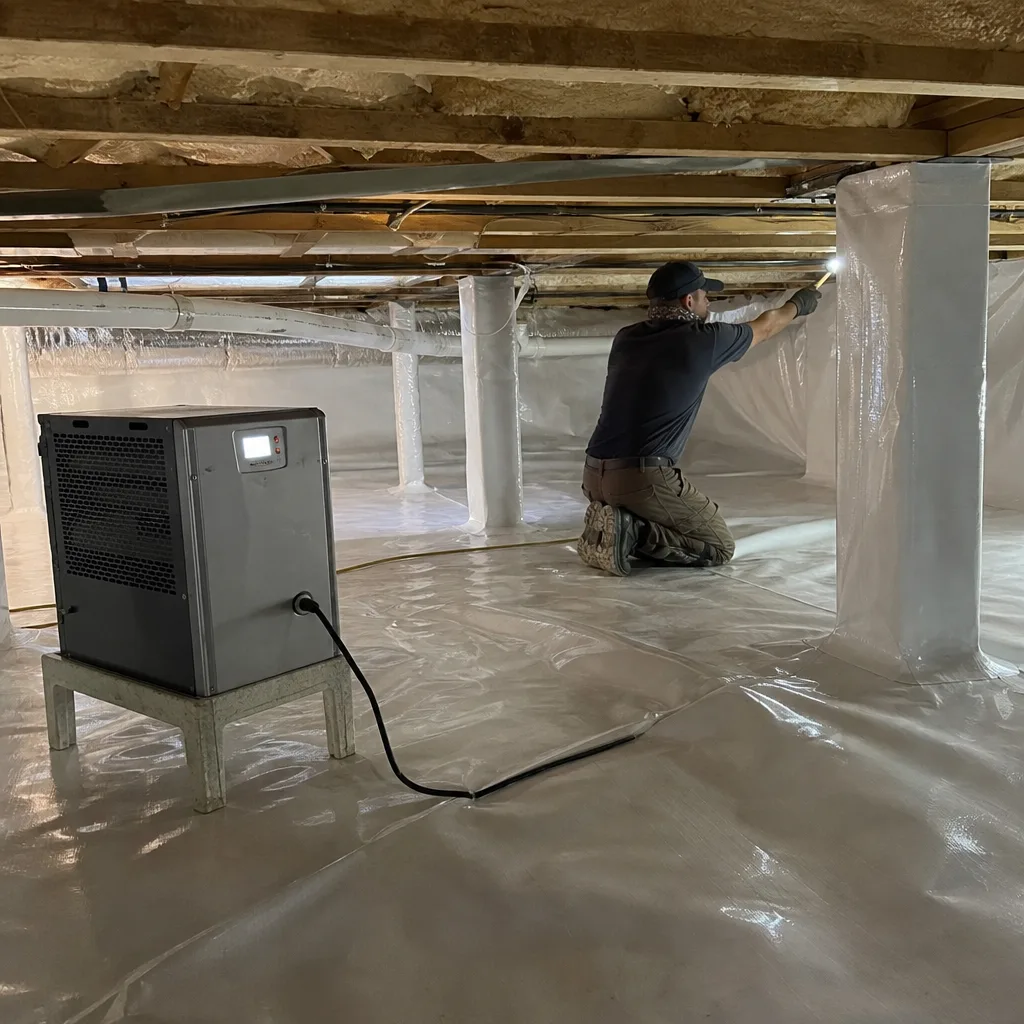
We follow the same documented sequence on every job. No steps get skipped because the crawl is tight or the weather is warm. The order matters – doing it right once is faster than coming back.
- Pre-installation inspection and documentation. Before we unroll a single sheet of plastic, a technician photographs the entire crawl space: existing moisture levels with a pin-type moisture meter, any standing water or efflorescence on the foundation walls, the condition of current insulation and any previous barrier attempts. You receive this photo record as part of your job file – Haven Standard, included, not available on request.
- Debris removal and surface prep. Rocks, wood scraps, old insulation, and any organic debris come out first. Sharp objects left under the barrier create puncture points that defeat the installation. In older Round Rock homes – particularly those built in the early 2000s in neighborhoods like Forest Creek and Stone Canyon – we often find remnant moisture damage that needs to be documented before we cover it.
- Ground cover installation. We lay a minimum 6-mil polyethylene barrier – and typically a 12-mil or 20-mil reinforced liner where budget and conditions call for it – across the entire soil floor. Sheets are overlapped at least 12 inches at every seam and sealed with moisture-resistant tape rated for below-grade use. This is where spec shortcuts cause long-term failures: an unsealed seam is an open path for vapor.
- Foundation wall coverage. A vapor barrier that stops at the soil line leaves the biggest single source of moisture – the foundation walls and footings – exposed. We run the liner up the foundation walls and anchor it 6 inches above the soil line, then secure it with masonry fasteners and tape the perimeter. This step is what separates a functional barrier from a tarp on the ground.
- Penetration sealing around columns, piers, and pipes. Every support post and utility penetration gets its own fitted seal and tape treatment. These are the spots that fail first when installers are moving fast. We photograph each one before we leave.
- Final inspection and written documentation. The technician does a walkthrough of the sealed crawl space, re-photographs key areas, records the post-installation condition, and delivers the completed job file. If you opted for a dehumidifier or any encapsulation work alongside the barrier, those results are documented in the same record. The 365-Day Done Right Promise applies from this date.
Crawl Space Vapor Barrier Pricing in Round Rock
Crawl space vapor barrier installation in Round Rock typically runs between $1,200 and $4,500 for most single-family homes, depending on four variables: square footage of the crawl space, barrier mil thickness, how much wall coverage is included, and the condition of the space before we start. Here’s how those ranges break down in practice, and you can also read our full guide on How Much Does Crawl Space Encapsulation & Vapor Barrier Cost? (2026 Price Guide) - Round Rock, TX for more detail:
| Scope | Typical Range (Round Rock Market) |
|---|---|
| Ground cover only, 6-mil, under 1,000 sq ft crawl | $1,200 – $1,800 |
| Ground cover + wall liner, 12-mil, 1,000-1,800 sq ft | $1,900 – $2,900 |
| Full perimeter seal, 20-mil reinforced, 1,800+ sq ft | $2,800 – $4,500 |
| Debris removal and prep (if needed, added to base) | $150 – $500 |
A few things that move a job toward the higher end: access points that are undersized (common in pre-2005 Round Rock construction), significant debris or old failed liner that needs removal, and crawl spaces with multiple support piers or complex pipe runs that require extra penetration sealing. We won’t pad a quote with contingencies for things we can see on inspection – what we find during the pre-install walk becomes part of the written scope, with costs attached, before any work starts.
Under Haven Standard Clause 1: you receive a flat written price and a written scope before anyone starts. No “we’ll see what we find” pricing once the crew is on-site. Call (737) 259-7528 and we’ll schedule a free on-site assessment – you’ll leave with a number, not a callback window.
Why the Mil Thickness Actually Matters
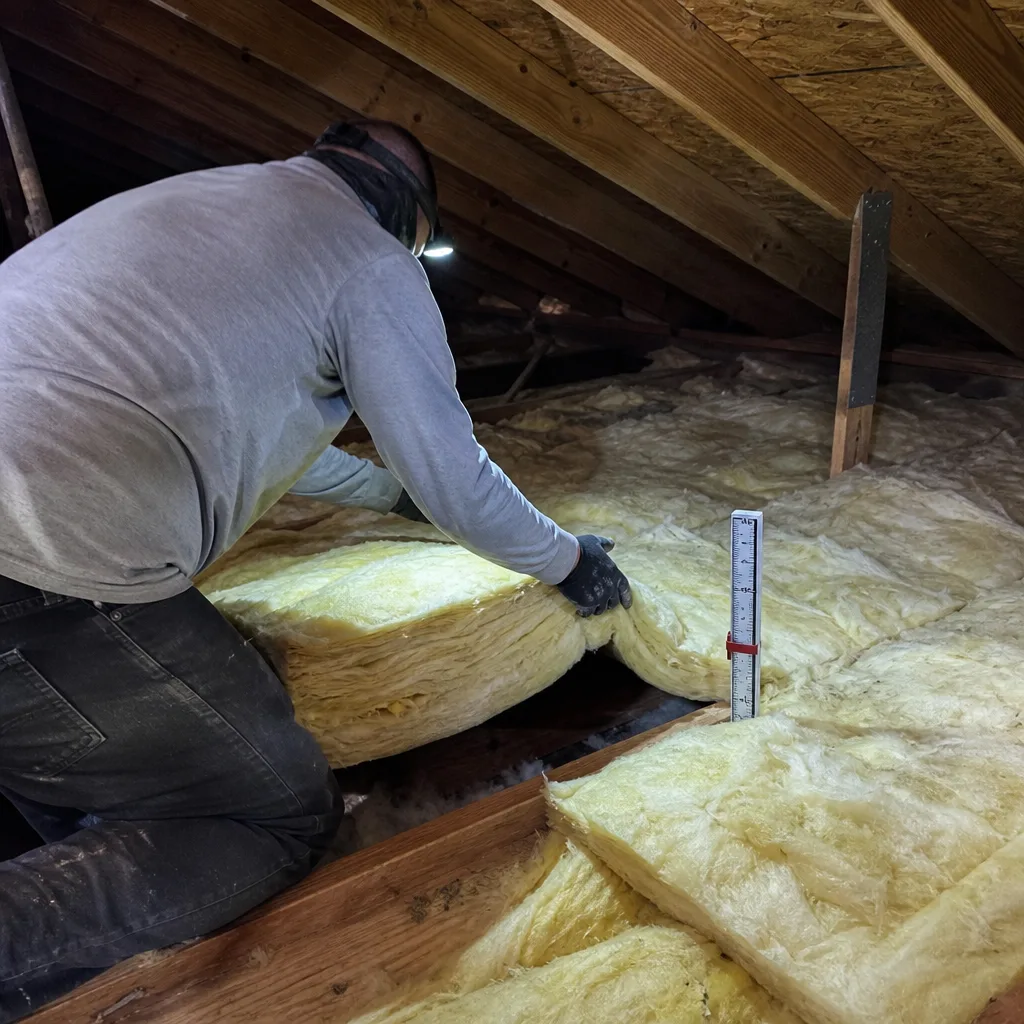
This is the spec detail most homeowners don’t know to ask about until after a cheaper job fails. A 6-mil barrier is the minimum code-referenced thickness in most jurisdictions, and it’s adequate in relatively dry, stable crawl spaces. But under Round Rock conditions – clay soil movement, occasional standing water, and technicians who will need to access the space for HVAC or plumbing work over the years – a 6-mil liner gets punctured. We recommend 12-mil minimum when wall coverage is included, and 20-mil reinforced (similar to what CertainTeed and Johns Manville supply for commercial below-grade applications) when the crawl space will be finished or used for mechanical equipment access. The cost difference between 6-mil and 20-mil on a 1,500-square-foot crawl is typically $300 to $600 – less than one service call to re-install a failed liner.
What a Vapor Barrier Does Not Do on Its Own
A vapor barrier handles ground moisture. It does not address vented crawl spaces where outdoor humid air enters freely through foundation vents, it does not remove existing mold (that requires separate remediation before the liner goes down), and it does not control bulk water intrusion from grading problems or failed gutters outside the home. For complete protection, many homeowners pair it with our Crawl Space Encapsulation & Vapor Barrier services. In Round Rock neighborhoods built on lots with flat drainage – parts of Sendero Springs and the older sections of Round Rock Estates, for example – we sometimes find that the exterior grade problem has to be corrected first or the barrier becomes a collection pan. We’ll tell you that on inspection, in writing, before we quote the barrier work.
If your crawl space needs a complete solution including vent sealing, rim-joist insulation, and a conditioned air supply, that falls under full Crawl Space Encapsulation & Vapor Barrier in Round Rock – a broader scope we also handle under the same written-price, documented-record process.
FAQs – Crawl Space Vapor Barrier
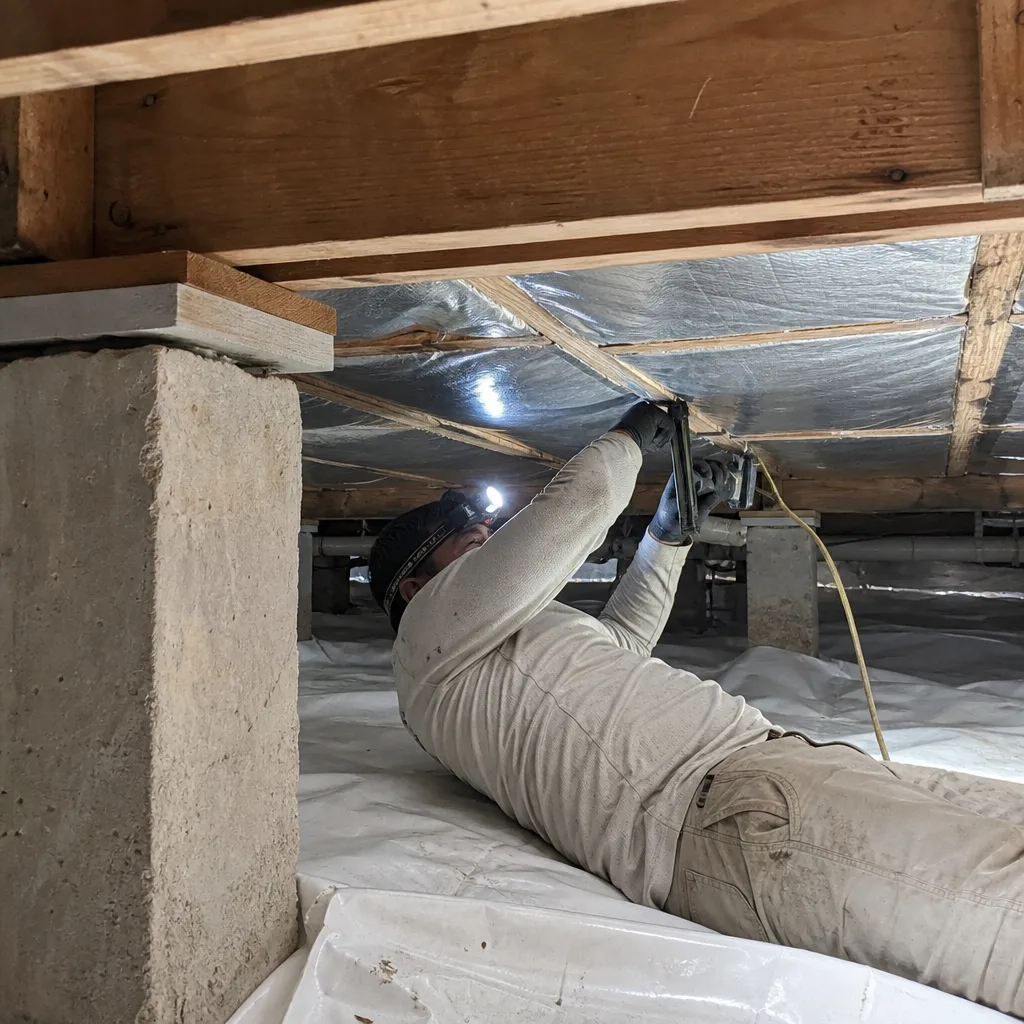
How much does crawl space vapor barrier installation cost in Round Rock?
Most crawl space vapor barrier jobs in Round Rock fall between $1,200 and $4,500, with the majority of single-family homes in the 1,500-square-foot crawl range landing around $1,900 to $2,900 for a 12-mil ground-and-wall installation. The variables that push a job higher are pre-existing debris requiring removal, limited access, and the barrier thickness you select. You’ll get a flat written price before any work begins – call (737) 259-7528 and we’ll schedule an on-site assessment at no charge.
Can I install a crawl space vapor barrier myself?
The physical installation – rolling out plastic sheeting – is not technically dangerous the way electrical or gas work is. But the details that determine whether the barrier actually performs are easy to get wrong: seam overlap, tape adhesion to a damp substrate, anchoring the liner to the foundation wall above the moisture line, and sealing every penetration. A barrier that’s 90% sealed still allows significant vapor transmission through the gaps. If you want a DIY assessment, we’re glad to walk you through what a professionally installed barrier looks like – bring us the written quote from whoever you’re considering, and we’ll read it with you under our Free Second Opinion offer.
How long does a crawl space vapor barrier last?
A properly installed 12-mil or 20-mil reinforced liner in a Round Rock crawl space typically lasts 15 to 25 years under normal conditions – meaning no standing water events and no heavy mechanical traffic across the liner. Thinner 6-mil barriers installed without wall coverage and in spaces with active HVAC or plumbing service access often show punctures and seam separation within 5 to 8 years. The liner’s longevity is directly tied to whether it was sealed at the seams and anchored at the perimeter on installation day; an inspection of an existing barrier takes about 20 minutes and will tell you exactly where it stands.
Do I need a vapor barrier if my crawl space already has vents?
Yes – and a vented crawl space in Round Rock’s climate is arguably where the vapor barrier matters most. Foundation vents were designed for a drier era and a different theory of moisture management; in a humid subtropical climate like Central Texas, they bring in outside air that’s often more humid than the crawl space itself from May through October. The vapor barrier handles ground moisture regardless of whether the vents are open, and it’s the first step before any decision about vent sealing. Venting strategy – whether to seal the vents and condition the crawl space or to leave them open and rely solely on the barrier – depends on your HVAC configuration and is something we assess and document on every inspection.
What You Receive When the Job Is Done
At the close of every vapor barrier installation, your job file includes: a before-and-after photo record of the crawl space floor and wall conditions, documentation of the liner brand and mil thickness installed, a written warranty tied to the 365-Day Done Right Promise, and notes on any conditions we observed that fall outside the vapor barrier scope – grading issues, pest evidence, existing mold – so you have a written record and can make decisions about next steps without relying on memory of what the technician said.
That documentation doesn’t cost extra. It’s how every job closes under The Haven Standard, and it’s been the standard since 2016 across more than 9,000 homes we’ve sealed and insulated in the Austin metro area, including many with Crawl Space Insulation.
Schedule Your Free Crawl Space Assessment in Round Rock
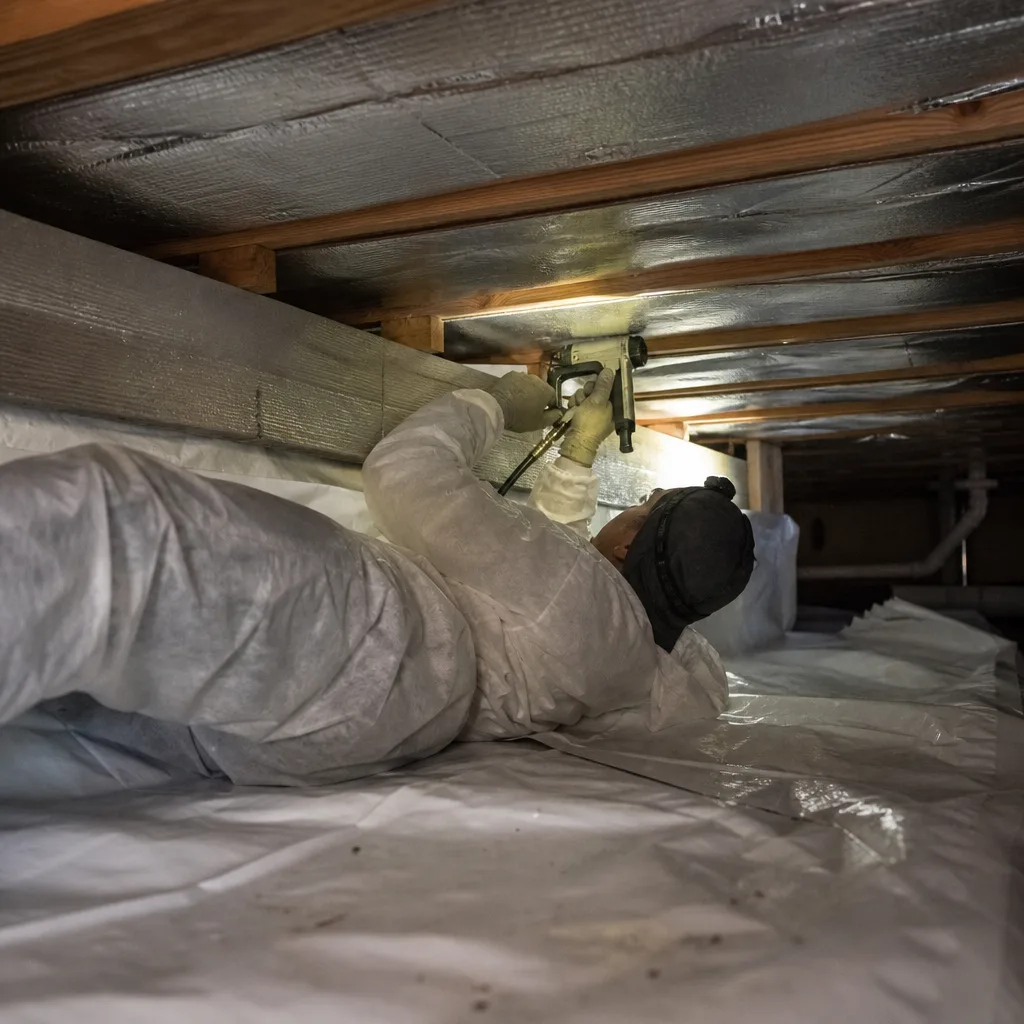
If your Round Rock home has a crawl space and you’re seeing any of the symptoms listed above – or if you’ve never had the crawl space inspected and you’ve owned the home for more than a few years – call us at (737) 259-7528 to schedule a free on-site assessment. A background-checked, uniformed technician will inspect the space, photograph what they find, and give you a flat written price before any work is proposed. No callback windows measured in days. A live person picks up, every time.
Written by Wes Okafor, Owner at Topside Attic Insulation Round Rock, serving Round Rock.