
Crawl Space Insulation in Round Rock, TX
Crawl space insulation in Round Rock typically runs between $1.50 and $3.50 per square foot installed, depending on access, existing conditions, and the insulation type needed. Most Round Rock homes with a standard crawl space fall in the $1,800 to $4,200 range for a full insulation install. The work is usually completed in a single day.
If your floors feel cold in winter, your utility bills spike without explanation, or a musty smell drifts up from below, the crawl space under your home is likely doing very little thermal work. In Round Rock’s climate – where summer heat drives attic temperatures above 130°F and winter cold snaps arrive fast and leave moisture in their wake – an uninsulated or under-insulated crawl space is a real performance problem, not a minor comfort complaint.
At Topside Attic Insulation Round Rock, we treat crawl space insulation as one piece of a tighter building envelope. We do not install insulation over unaddressed air leaks, standing moisture, or damaged vapor barriers. That sequencing is non-negotiable here because reversing it means the insulation you pay for starts degrading almost immediately. If you want to understand the full scope of what happens before insulation goes in, the Crawl Space Encapsulation & Vapor Barrier in Round Rock page covers that in detail. For a free written estimate with no obligation, call us at (737) 259-7528 – a live person answers, no voicemail.
When You Need Crawl Space Insulation
- Cold or uneven floors in winter. In Round Rock neighborhoods like Teravista and Brushy Creek, homes built on pier-and-beam foundations or with vented crawl spaces often show a 10-15°F temperature difference between floor surface and room air on January mornings. That gap is almost always an insulation deficit.
- Utility bills that don’t match your square footage. When the crawl space is uninsulated, your HVAC system is conditioning air that immediately bleeds into an unconditioned void below. If your gas or electric bills are running higher than neighbors in similar-sized homes, the crawl space is a likely contributor.
- Musty odors or humidity complaints on the first floor. Moisture migrating upward from bare soil or degraded vapor barriers gets absorbed by fibrous insulation and never leaves – which means the crawl space becomes a humidity pump into your living area. Round Rock sits in a region where soil moisture stays elevated through spring, and that moisture has to go somewhere.
- Existing insulation that is sagging, wet, or falling. Batt insulation in a crawl space that was not properly secured or was installed without a vapor barrier below it tends to absorb moisture, compress, and drop. Compressed fiberglass has a fraction of its rated R-value. If batts are hanging loose or sitting on the vapor barrier floor, they are not performing.
- Pest or rodent activity in the crawl space. Rodents nest in fiberglass batts. If there has been any pest intrusion, the existing insulation is typically contaminated and needs to be removed before new material goes in. We handle that as part of our pre-install assessment.
- A home built before 2000 with original crawl space insulation. Insulation materials and installation standards have changed considerably since the 1990s. Many Round Rock homes from that era have R-11 or R-13 batts where current Texas energy code recommends R-19 or higher for floor assemblies in Climate Zone 2.
Our Crawl Space Insulation Process
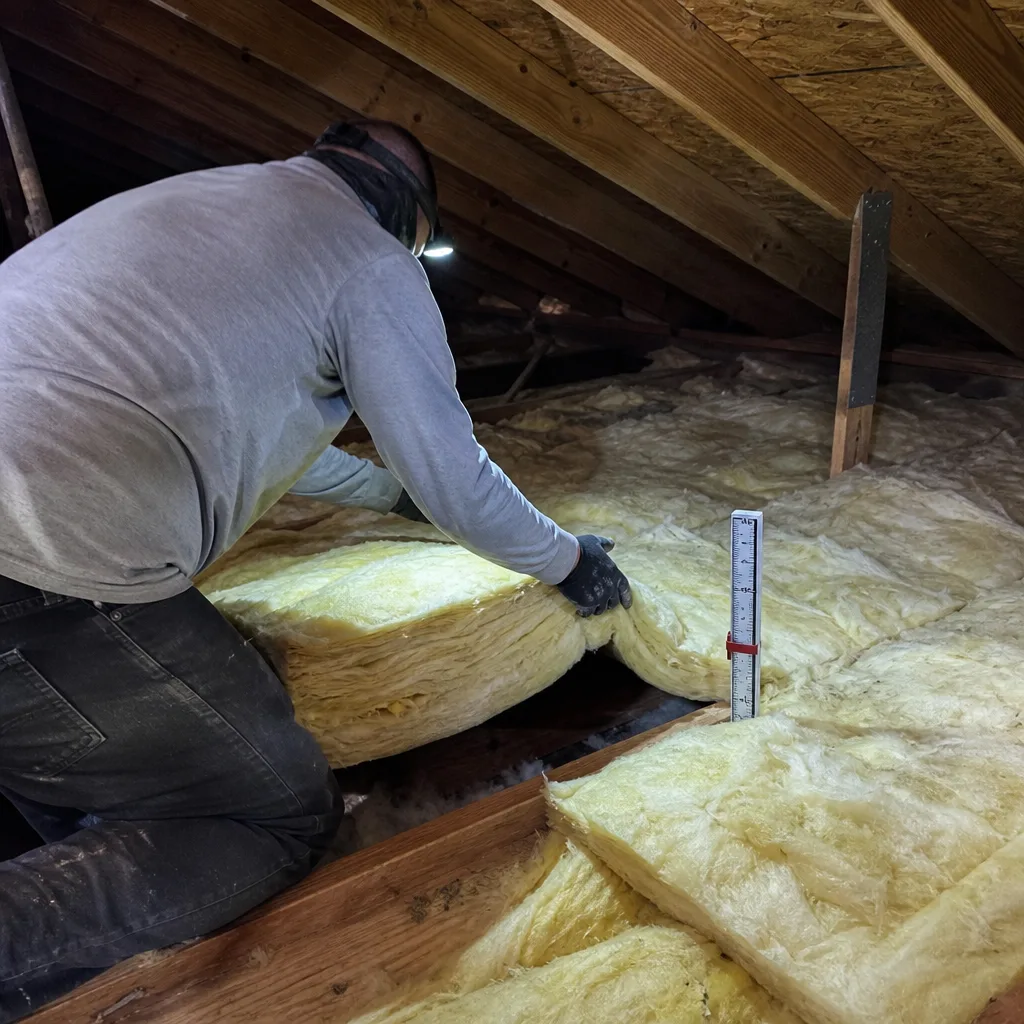
- Pre-install assessment and moisture check. Before we quote a single dollar, a technician does a full visual assessment of the crawl space – measuring access dimensions, checking for standing water or active moisture intrusion, assessing the condition of any existing vapor barrier, and documenting what is there with photos. Under the Haven Standard, you receive a Documented Photo Record from this visit, not on request but as part of the standard process. We flag any moisture or air-sealing issues that need to be addressed before insulation goes in.
- Air sealing of the rim joist and penetrations. The rim joist – the band of framing that runs around the perimeter of your foundation just above the crawl space – is one of the most consistent air-leak points we find in Round Rock homes. Before any insulation is installed, we seal the rim joist and any pipe, wire, or duct penetrations with spray foam or caulk. Insulating over an unsealed rim joist is a measurable waste of money; conditioned air will continue to escape around the insulation regardless of its R-value.
- Vapor barrier installation or confirmation. If no vapor barrier is present – or if the existing one is torn, undersized, or improperly lapped – we install or repair it before touching the insulation. A 6-mil to 20-mil poly barrier, sealed at the seams and run up the foundation walls, stops ground moisture from migrating into the insulation. This step is part of our full Crawl Space Encapsulation & Vapor Barrier in Round Rock service; if your crawl space needs full encapsulation, we scope that separately with its own written price.
- Removal of degraded existing insulation. If the assessment found sagging, wet, contaminated, or compressed batts, we remove them first. Old insulation that has lost loft or absorbed moisture has a real R-value well below its label – in some cases below R-5 on material rated R-13. Leaving it in place and adding on top of it does not solve the problem.
- Insulation installation to current code or better. For vented crawl spaces, we install fiberglass batts – typically Johns Manville or CertainTeed – between the floor joists, friction-fit and secured with wire stays or netting so they stay in position. For conditioned or encapsulated crawl spaces, we use rigid foam board or closed-cell spray foam on the foundation walls rather than the floor above. The right approach depends on whether your crawl space is vented or sealed – we explain the distinction before any material is ordered.
- Post-install documentation and walkthrough. When the crew leaves, you receive a written record of the materials installed, the R-values achieved, and the Documented Photo Record of the finished work. On applicable jobs – particularly where air sealing was part of the scope – we provide before-and-after blower-door readings so you can see, in one number, how much the air-leakage rate of the building envelope changed. The 365-Day Done Right Promise covers all completed work: if something is not right within that window, we come back and make it right.
Crawl Space Insulation Pricing in Round Rock
Most crawl space insulation jobs in Round Rock fall between $1,800 and $4,200 for the insulation work itself. Here is what drives the range:
| Cost Factor | Typical Impact |
|---|---|
| Square footage of crawl space | Primary driver – most jobs are priced per sq ft ($1.50-$3.50 installed) |
| Insulation type (batts vs. spray foam vs. rigid board) | Closed-cell spray foam runs $1.50-$2.00/sq ft more than fiberglass batts |
| Access difficulty | Low-clearance or obstacle-heavy spaces add $200-$600 to labor |
| Old insulation removal | Typically $0.75-$1.25/sq ft for removal and disposal |
| Rim joist sealing (if not previously done) | Usually $300-$700 depending on linear footage |
| Vapor barrier condition | If replacement is needed, add $600-$2,000 depending on coverage and mil thickness |
A 1,000-square-foot crawl space with no existing insulation, a functioning crawl space vapor barrier, and normal access typically costs $2,000 to $2,800 installed with fiberglass batts. The same space with degraded insulation that needs removal, a vapor barrier in poor condition, and rim joist sealing included can reach $3,500 to $5,500.
Under Haven Standard Clause 1, you receive a written price before any work starts – flat price, written scope, written warranty. There are no estimates that balloon after the crew arrives. If you have a competing written quote, bring it. We will read it with you and tell you what it includes and what it does not – that is our Free Second Opinion offer, and it costs nothing.
To get a written price specific to your home and crawl space, call (737) 259-7528. A technician will schedule the assessment, document what is there, and deliver a written number before any work is scoped.
What Affects R-Value in a Round Rock Crawl Space
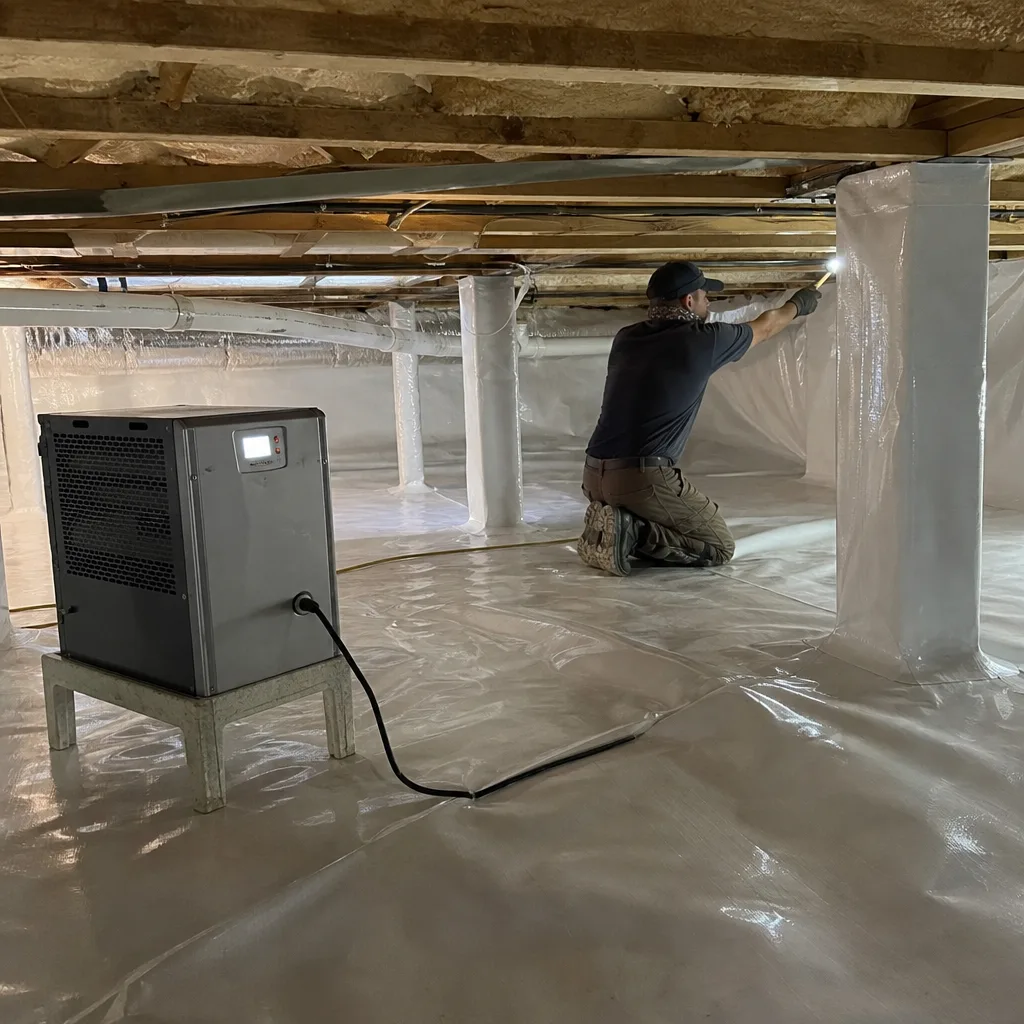
R-value is a measure of thermal resistance – the higher the number, the more slowly heat moves through the material. Texas energy code places Round Rock in Climate Zone 2, which recommends a minimum R-19 for floor assemblies over unconditioned crawl spaces. Many homes we visit in the Brushy Creek MUD area and along the Stone Oak corridor have original R-11 or R-13 batts that have also lost loft over the years, putting actual performance closer to R-7 or R-8.
Three things kill R-value in a crawl space faster than in any other part of the building envelope:
- Moisture contact. Fiberglass batts that have been wet – even once – compress and hold that compressed form. A batt rated R-13 that has absorbed moisture and dried in a compressed state may test at R-6 or lower. This is why vapor barrier condition is checked before insulation is ordered.
- Air movement through the insulation. Insulation slows conductive heat transfer. It does almost nothing to stop convective heat transfer – air moving through it. An unsealed rim joist lets outdoor air circulate through the batt cavity, which is why we air-seal before we insulate, not as an optional add-on.
- Installation gaps and compression against framing. Batts that are too thick for the joist cavity get compressed against the subfloor above and lose R-value. Batts with gaps at the edges lose it even faster. Correct sizing and a proper friction fit are not details – they are most of the performance.
FAQs – Crawl Space Insulation in Round Rock
How much does crawl space insulation cost in Round Rock, TX?
Most crawl space insulation jobs in Round Rock run between $1,800 and $4,200, with the final number depending on square footage, insulation type, whether old material needs to be removed, and the condition of the existing vapor barrier. For a detailed breakdown, see our guide on how much crawl space encapsulation and vapor barrier cost in Round Rock, TX. A straightforward install on a 1,000-square-foot crawl space with no removal needed typically lands around $2,000 to $2,800. To get a written price for your specific home, call (737) 259-7528 – a live technician will schedule an assessment and deliver a flat written price before any work starts.
Should I insulate the floor joists or the crawl space walls?
It depends on whether your crawl space is vented or conditioned. In a vented crawl space – which is most common in older Round Rock construction – insulation goes between the floor joists above, keeping the crawl space itself outside the thermal envelope. In a conditioned or fully encapsulated crawl space, insulation goes on the foundation walls, and the crawl space becomes part of the conditioned envelope. The wrong choice for the configuration you have reduces performance significantly. We assess which approach applies to your home during the pre-install visit and explain the reasoning in writing before any material is selected.
Can crawl space insulation reduce my energy bills in Round Rock?
Yes, measurably so – but the amount depends on what else is happening with the building envelope. In homes where the crawl space was completely uninsulated and the rim joist was open, we regularly see HVAC runtime drop after the work is done, and homeowners in areas like Teravista and the Chandler Creek neighborhood have reported monthly savings of $40 to $90 in peak summer and winter months. Air sealing done alongside the insulation multiplies the result. On applicable jobs we provide before-and-after blower-door readings – a pressurization test that puts a single number on how much the air-leakage rate of the home changed – so the performance difference is documented, not estimated.
Do I need a vapor barrier before crawl space insulation is installed?
Yes. Installing insulation over bare soil or a damaged vapor barrier is one of the most consistent mistakes we see in crawl spaces across Round Rock. Ground moisture migrates upward into the insulation, compresses the fibers, and drops the R-value while creating conditions for mold growth. A functioning vapor barrier – typically 6-mil to 20-mil poly, properly lapped and sealed at seams – must be in place before any insulation goes in. If yours is damaged or absent, we address that first. Full details on the vapor barrier work are on our Crawl Space Encapsulation & Vapor Barrier in Round Rock page.
How long does crawl space insulation installation take?
Most crawl space insulation jobs in Round Rock are completed in a single day. A straightforward batt install on a standard-access crawl space typically takes four to six hours. Jobs that include old insulation removal, rim joist sealing, or vapor barrier repair alongside the insulation work may run a full day or require a follow-up appointment for the second scope. We give you a realistic time estimate in the written scope before the crew arrives – no surprises on the day of install.
Why Envelope Insulation Co. in Round Rock
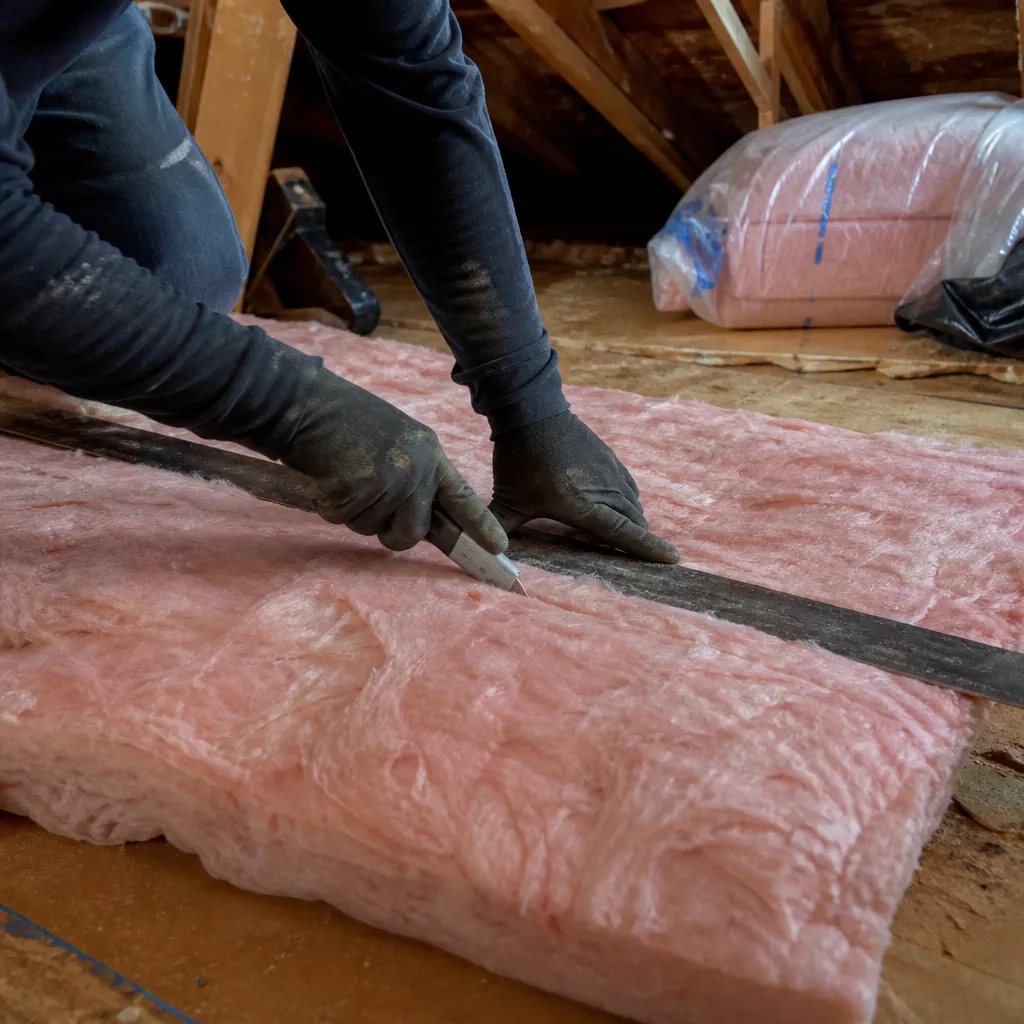
Wes Okafor and the team at Topside Attic Insulation Round Rock have operated under The Haven Standard since 2016, which means every job starts with a written price and ends with a Documented Photo Record. No work starts without a flat written scope and warranty in the customer’s hands first. That is Haven Standard Clause 1, and it applies to every crawl space job regardless of size.
Since 2016, we have worked on more than 9,000 homes across the Austin metro. In that time, crawl space insulation jobs that failed – sagging batts, moisture-damaged material, insulation installed over an unsealed rim joist – nearly always traced back to the same sequence problem: insulation before air sealing and vapor control. We do not skip those steps because skipping them produces a result that does not hold up, and the 365-Day Done Right Promise means we would have to come back and fix it anyway. It is cleaner to do it right the first time.
Materials we install come from Johns Manville, CertainTeed, Knauf, and Rockwool, among others. We do not lock customers into proprietary product systems, and we do not take margins on material choices that do not serve the job. The right insulation for a vented crawl space in the Brushy Creek area is not the same as the right insulation for a conditioned slab-edge detail in Teravista, and we scope accordingly.
If you want to see how crawl space insulation fits into a full building-envelope approach – including encapsulation, air sealing, and attic work – start with the home page for a full picture of what we do.
For a written estimate on crawl space insulation at your Round Rock home, call (737) 259-7528. A live person answers. You will get a named technician and a text when they are on the way – no callback windows, no voicemail loops. The written price comes before any work starts, every time.
Written by Wes Okafor, Owner at Topside Attic Insulation Round Rock, serving Round Rock.