
Last updated September 24, 2026
DIY vs Professional Insulation: The Round Rock Homeowner’s Decision Guide
Big-box rental blowers in Round Rock are calibrated for the bagged cellulose sold in that same store. Change the product, the bag count, or the hose length, and installed density drops enough to reduce effective R-value by 15 to 20 percent versus the bag label, with no way for the homeowner to verify the difference. We’ve pulled back enough DIY attic jobs in Round Rock neighborhoods like Forest Creek and Behrens Ranch to know the pattern: what looks like a full coverage job often performs like a partial one. This guide - along with our more guides & resources - walks you through exactly which insulation scopes are genuinely DIY-appropriate, which ones aren’t regardless of your skill level, and how to tell the difference before you rent equipment or call a pro.
Quick Answer
DIY insulation in Round Rock is technically defensible only when you’re adding blown-in depth over existing, undamaged material in an attic with confirmed adequate ventilation, no air-sealing deficiencies, and no prior moisture or rodent activity. That exact combination of conditions exists in fewer than one in five Round Rock attics that need service. For everything else - including any work involving spray foam, air sealing at top plates, or insulation removal - the scope, safety requirements, and documentation gap make professional installation the sound choice, as covered in our How to Hire a Insulation Contractor in Round Rock: A Step-by-Step Guide.
Table of Contents
- When DIY Insulation Actually Makes Sense in Round Rock
- The Density Problem Most DIYers Never Know About
- Two Categories of Work That Are Never DIY
- The Liability Gap: What DIY Leaves Behind
- The Three-Question Test Before You Decide
- Cost Comparison: DIY vs Professional in Round Rock
- How Round Rock’s Climate Affects the Decision
- Common Mistakes to Avoid
- When to Call a Professional
- Frequently Asked Questions
- The Bottom Line
When DIY Insulation Actually Makes Sense in Round Rock
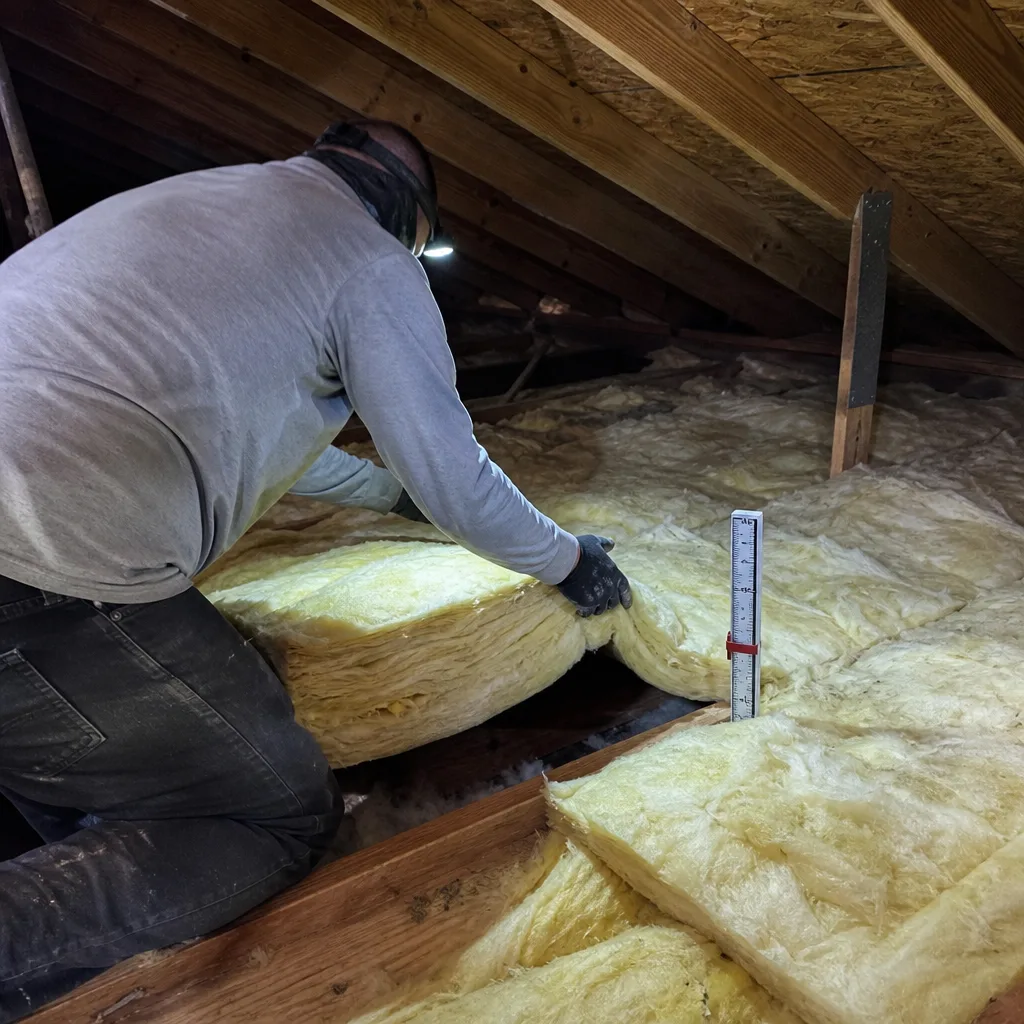
The defensible DIY scope is narrow, but it exists. Here’s what has to be true before you load a rental blower into your truck:
- The existing insulation is undamaged. No compression from storage boxes, no displacement from wiring work, no staining from roof leaks. In Round Rock, we see a lot of cellulose that’s been flattened by Christmas decoration traffic or disturbed by HVAC retrofits. If the existing layer isn’t uniform, adding more on top won’t fix the thermal bridges underneath.
- The attic has no air-sealing deficiencies. This means top plates - the horizontal framing member where interior walls meet the ceiling - are already sealed. It means can lights, plumbing penetrations, and electrical chases are gasketed or foamed. It means the attic floor is a continuous air barrier. In our experience across Round Rock, from Old Town to Paloma Lake, attics built before 2010 almost never meet this standard without prior remediation.
- Ventilation is confirmed adequate. The attic needs intake at the soffits and exhaust at or near the ridge, with clear airflow paths. Blocked soffits from over-insulation is the most common DIY error we correct. In Round Rock’s summer heat, an under-ventilated attic can reach 140°F, accelerating degradation of asphalt shingles and cooking whatever insulation you’ve added from both sides.
- No prior moisture events or rodent activity. Insulation over damp material traps moisture against the deck. Insulation over rodent-soiled material is a health hazard. Both conditions require removal, not addition, and removal is not a DIY scope.
- You’re adding the same product type. Blown cellulose over blown cellulose, or blown fiberglass over blown fiberglass. Mixing fiber types can create density mismatches and settling issues. The rental blower’s settings are optimized for a specific product; deviating from that product without recalibrating voids the density assumption.
If all five conditions are met, the job is straightforward: calculate square footage, determine target R-value based on Round Rock’s climate zone requirements, consult the manufacturer’s bag-count table per 100 square feet, and install to uniform depth using marked rulers or depth strips.
Here’s the catch. We’ve inspected thousands of attics in Round Rock since 2016. The combination of all five conditions being true? It happens in roughly one of every five homes that contact us for service. The other four out of five have at least one disqualifying factor that turns a simple “add more” job into something requiring professional assessment.
The Density Problem Most DIYers Never Know About
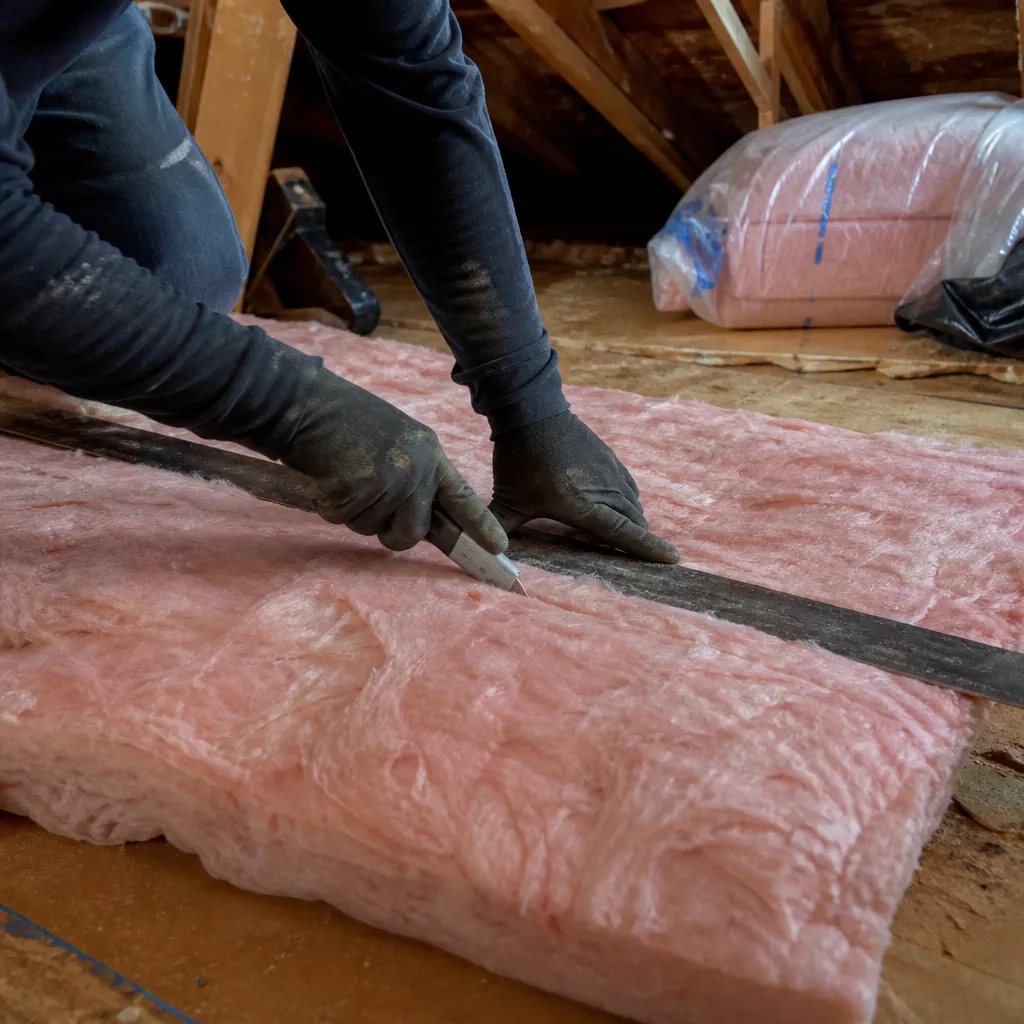
Insulation R-value is not just a thickness number. It’s a thickness-at-specified-density number. A bag of GreenFiber cellulose labeled R-19 at 5.5 inches assumes 1.6 pounds per cubic foot installed density. Achieving that density requires a specific machine setting, hose length, and bag count per unit area.
Rental blowers at Round Rock home improvement stores are factory-set for the bagged product sold in that store. The machine’s auger speed, air gate, and hose pressure are calibrated to a specific product weight and fiber length. Here’s what changes the equation:
- Different product: Switching from the store-brand cellulose to a lighter fiberglass blend, or to a heavier wet-spray product, changes the throw and settling pattern. The machine doesn’t know you switched.
- Longer hose: Adding a 25-foot extension to reach a detached garage or second attic access reduces air velocity at the nozzle. Material falls out of suspension sooner, creating uneven distribution and lower density at the far end.
- Bag count shortcuts: The manufacturer’s table specifies, for example, 12.5 bags per 1,000 square feet for R-38. A homeowner who stops at 10 bags because “it looks full enough” has installed 20 percent less material by weight. The attic looks insulated. The thermal performance is not what the label promised.
- No verification method: A professional installer checks density with a scale and sample cup - a known volume weighed on site. A DIYer has no equivalent tool. Depth rulers only measure thickness, not density, and settled material can read full depth while performing at half the rated R-value.
In Round Rock’s climate, where summer attic temperatures regularly exceed 130°F and winter overnight lows dip into the 20s, that 15 to 20 percent performance gap translates directly to equipment runtime and energy cost. We’ve measured it. A DIY attic in Teravista that should have performed at R-38 tested effectively at R-30 due to under-density, and the homeowner’s summer cooling load increased proportionally.
The documentation gap matters too. A professional job includes a certificate of installed depth and density, with bag count recorded. A DIY job has a receipt from the rental counter and hope.
Two Categories of Work That Are Never DIY
Regardless of your comfort with tools, two insulation scopes should never be attempted without professional credentials and equipment.
Spray Foam Insulation
Two-component spray polyurethane foam, whether open-cell (Icynene, Demilec) or closed-cell, requires a licensed installer in Texas. The chemistry is not forgiving. The A-side (isocyanate) and B-side (polyol blend) must mix at precise temperature and pressure ratios. Off-ratio foam fails to cure properly, creating persistent odor, reduced R-value, and in some cases structural adhesion problems.
The exothermic reaction generates significant heat. A 2-inch lift of closed-cell foam can reach 200°F during cure. Without thermal monitoring and proper lift timing, this creates fire risk and substrate damage. Professional applicators use infrared cameras during installation and observe manufacturer-specified recoat windows.
Respiratory protection requirements are substantial. The National Institute for Occupational Safety and Health mandates supplied-air respirators for applicators and adjacent workers during spray operations. A standard dust mask is not adequate protection against isocyanate aerosols.
For Round Rock homeowners considering spray foam insulation, the scope includes substrate preparation, moisture content verification, and post-installation thickness verification with a pin probe. None of these steps are accessible to DIY equipment or training.
Air Sealing at Top Plates and Penetrations
Air sealing is the work that happens before insulation, not after. In a mechanically complex attic - one with multiple HVAC zones, recessed lighting, vaulted ceilings, or chase walls - the air leakage paths are not visible from the attic hatch. They require systematic detection with a blower door and infrared camera, followed by targeted sealing with appropriate materials: fire-rated foam for large penetrations, high-temperature caulk for flue chases, rigid foam and tape for top plate gaps, and proper covers for can lights rated for contact with insulation.
The safety considerations are real. Sealing around combustion appliance vents without maintaining required clearances creates carbon monoxide risk. Foam-sealing a recessed light not rated for insulation contact creates fire risk. Working near energized electrical in a hot attic creates electrocution risk. In Round Rock, where many homes in neighborhoods like Mayfield Ranch and Sonoma have complex rooflines with multiple dormers and chase walls, the air sealing topology can be genuinely difficult to map without diagnostic equipment.
We treat air sealing as a hard prerequisite, not an upsell. Topside Attic Insulation Round Rock home crews will never blow insulation over an unsealed attic floor. The performance penalty of insulating before sealing is well-documented: conditioned air continues to leak into the attic, and the insulation becomes a filter for that air, not a barrier against heat flow.
The Liability Gap: What DIY Leaves Behind
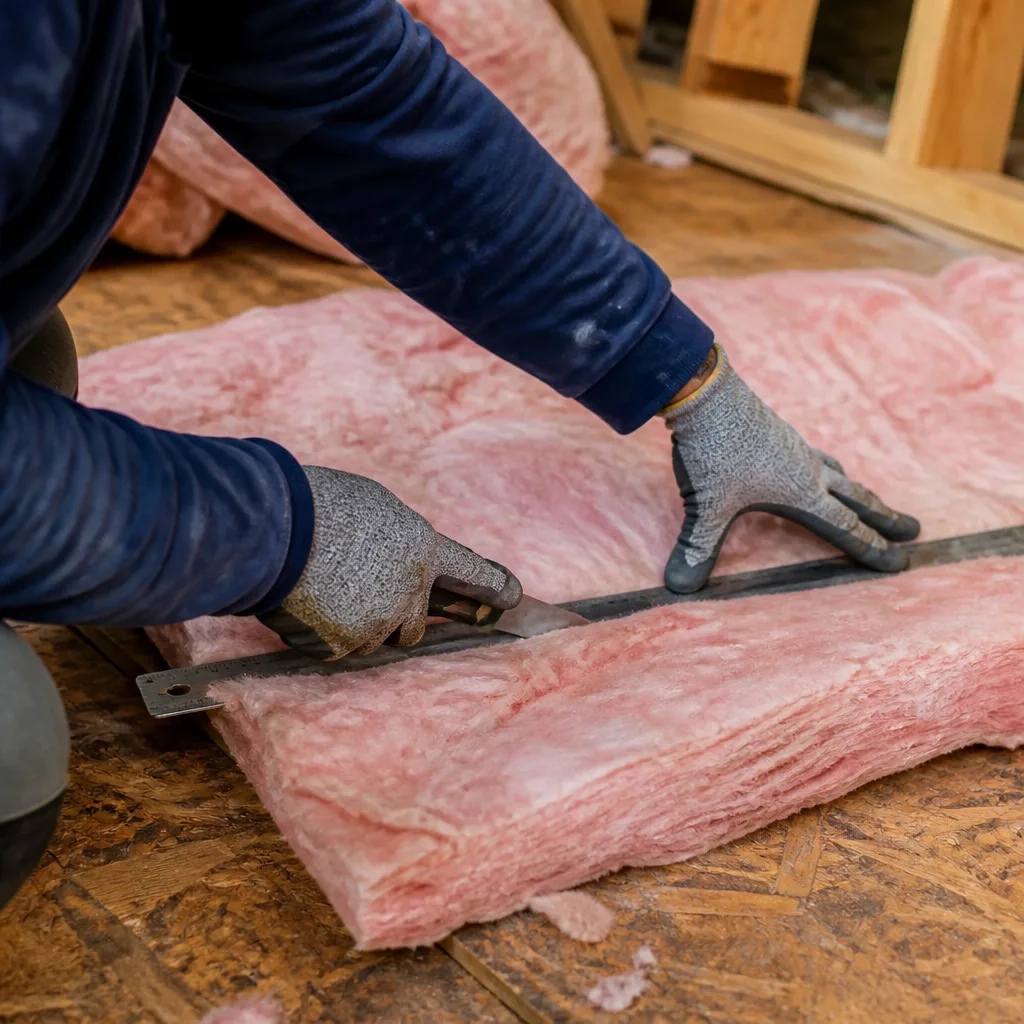
A professional insulation job in Round Rock generates a specific set of documents. A DIY job generates none of them. The gap has consequences at two critical moments: when something goes wrong, and when you sell the home.
The Insurance Claim Scenario
A roof leak develops. Water migrates through the attic, saturates insulation, and collapses a ceiling section. You file a homeowner’s insurance claim. The adjuster asks: what insulation is installed, at what R-value, and when was it placed? A professional job has a dated invoice specifying product, depth, and coverage area. A DIY job has a credit card charge from a home improvement store and a vague memory of “last fall sometime.”
Worse, if the leak’s origin is traced to a ventilation deficiency - say, blocked soffit vents from over-blowing - the insurer may dispute coverage on maintenance grounds. A professional job includes ventilation assessment documentation. A DIY job does not.
The Resale Home Inspection Scenario
Round Rock’s housing market moves fast, but buyers in the $400K+ range are increasingly energy-conscious. A pre-listing inspection notes inadequate attic insulation depth. The buyer’s inspector uses a probe and finds uneven distribution, compressed material near the hatch, and visible gaps around the chimney chase. There’s no documentation of original installation scope, no blower-door baseline, no certificate of completion.
The buyer requests a credit for professional remediation. The seller has no basis to dispute the scope or cost. The DIY savings evaporate, with interest, at closing.
By contrast, a professional job from Envelope Insulation Co. includes: a written scope signed before work, a Documented Photo Record of the completed installation, and on air-sealing jobs, before-and-after blower-door numbers showing the actual performance change. Under Haven Standard Clause 1: flat price, written scope, written warranty before anyone lifts a tool. That documentation transfers with the home and speaks for itself at inspection time.
The Three-Question Test Before You Decide
We’ve developed this framework from nine years of Round Rock attic inspections. Answer these three questions honestly before committing to either path.
- Has the attic been inspected for moisture damage in the last 12 months? Not “I haven’t noticed leaks” - has someone been in the attic with a moisture meter, checked the roof deck for staining, and verified bathroom exhausts terminate outside (not into the attic)? In Round Rock’s spring storm season, intermittent leaks are common and often hidden by insulation until decking damage is advanced. If you cannot answer yes with documentation, you need professional assessment before adding material.
- Does the existing air sealing meet current code? Current Texas Residential Code requires air sealing of top plates, penetrations, and attic access panels in new construction. Existing homes are not automatically grandfathered into performance. If your home was built before 2012, or if any HVAC, electrical, or plumbing work has occurred since original construction, the air sealing topology has likely been compromised. Without a blower-door test - a pressurization reading that shows, in one number, how much air your building envelope is losing - you cannot confirm this condition.
- Can I obtain and read a pre-job blower-door report? This is the diagnostic that changes everything. A blower-door test depressurizes the house to -50 Pascals and measures airflow in cubic feet per minute at that pressure (CFM50). A Round Rock home of 2,000 square feet with reasonable air sealing should read below 2,500 CFM50. Readings above 3,500 indicate significant leakage that insulation alone will not address. If you cannot obtain this number and understand what it means, you cannot make an informed DIY scope decision.
If any answer is no, the professional scope is justified on evidence, not preference. The cost of professional assessment is modest compared to the cost of insulating over a problem that insulation cannot fix.
Cost Comparison: DIY vs Professional in Round Rock
Here’s how the numbers break down - with full pricing context in our Insulation Cost Breakdown: The Round Rock Homeowner’s Reference for 2026 - for a typical 1,500 square foot attic in Round Rock, targeting R-38 over existing R-19:
| Cost Component | DIY Route | Professional Route |
|---|---|---|
| Material (cellulose, 30 bags) | $450-$600 | Included in labor |
| Rental blower (2 days) | $75-$125 | Not applicable |
| Personal protective equipment | $40-$80 | Not applicable |
| Air sealing materials (if attempted) | $100-$200 | Included in scope |
| Diagnostic testing (blower door) | Not typically done | Included or $150-$250 |
| Documentation package | None | Written scope, photo record, warranty |
| Total Out-of-Pocket | $665-$1,005 | $1,800-$3,200 (typical Round Rock range for full scope) |
The DIY route saves $800-$2,500 upfront, but that savings assumes perfect execution: correct density, complete coverage, no equipment damage, no personal injury, and no underlying conditions requiring remediation. It also assumes the homeowner’s time has no value. A typical DIY blown-in job in a 1,500 square foot attic takes 6-10 hours for preparation, installation, and cleanup, plus equipment pickup and return.
The professional route includes verification: depth checks, density confirmation, ventilation inspection, and on jobs where we perform air sealing, before-and-after blower-door numbers published on every job. The 365-Day Done Right Promise applies - if it’s not done right, we make it right. Under Haven Standard: you get a written price before any work starts, always. No work starts without it.
For homeowners evaluating competing quotes, we offer a Free Second Opinion on Any Written Estimate. Bring us a competing quote; we will read it with you line by line and explain scope differences.
How Round Rock’s Climate Affects the Decision
Round Rock sits in Climate Zone 2, the hot-humid edge of central Texas. This classification matters for insulation decisions in specific ways that don’t apply to cooler or drier regions.
Summer design temperature is 99°F, but attic temperatures routinely reach 130-140°F in July and August. This extreme delta-T (temperature difference) between conditioned space and attic drives enormous heat gain through the ceiling plane. R-value performance degrades slightly at these temperatures - fiberglass less so than cellulose - but the dominant factor is air leakage. A ceiling with even modest air leakage paths will convect conditioned air into the attic continuously, and no amount of additional R-value will fully compensate.
Humidity is the second factor. Round Rock’s average outdoor relative humidity hovers near 70 percent in summer mornings. Attic ventilation must be sufficient to exhaust moisture from household sources - cooking, bathing, breathing - that migrates upward through air leaks. An under-ventilated attic with added insulation but unchanged air sealing becomes a moisture trap. We’ve removed mold-compromised insulation from attics in Brushy Creek and Walsh Ranch where well-intentioned DIY additions created exactly this condition.
Finally, the freeze events of recent winters - February 2021 most dramatically, but also December 2022 and January 2024 - have exposed the inadequacy of pre-2012 insulation standards in Round Rock homes. Attics insulated to R-19 or R-22 in the 2000s building boom experienced pipe freeze events that better-sealed, better-insulated attics avoided. The lesson: in this climate, insulation performance is inseparable from air sealing performance, and both matter for winter resilience as well as summer efficiency.
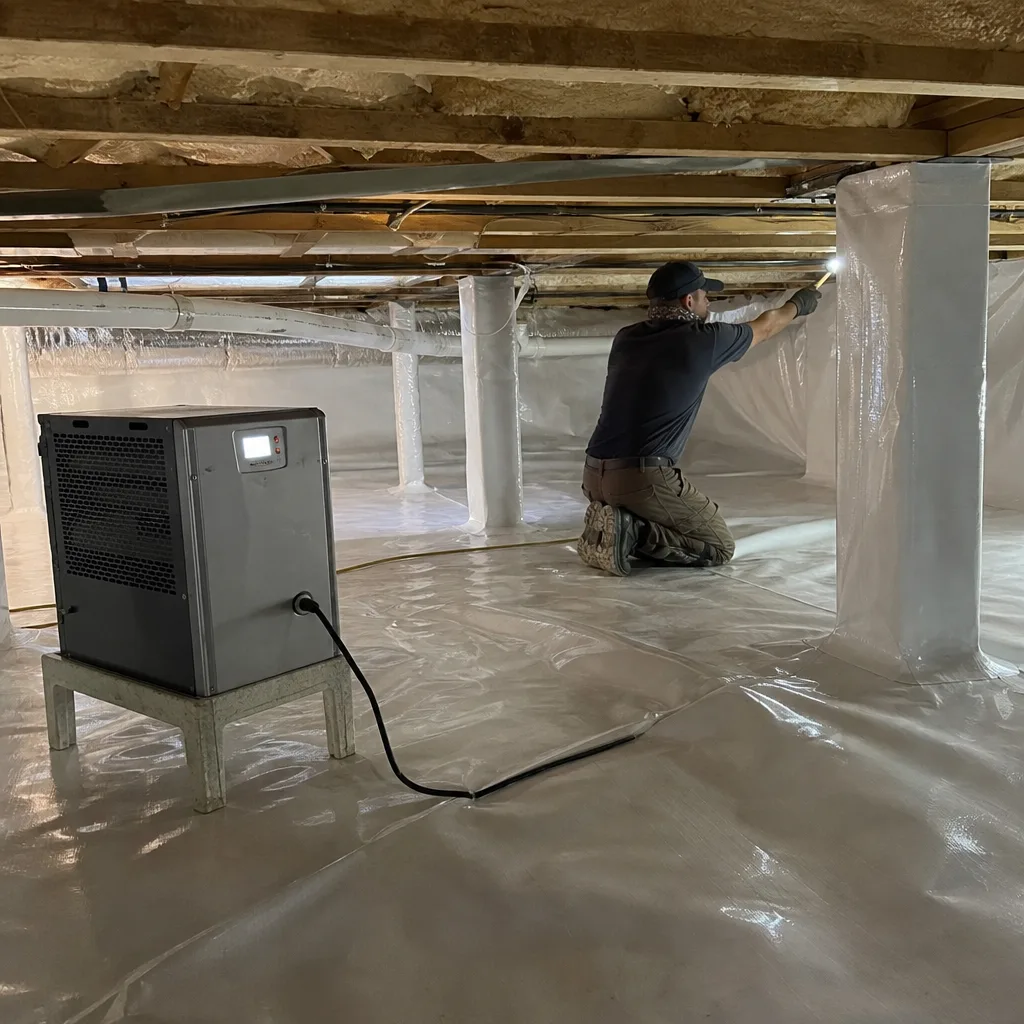
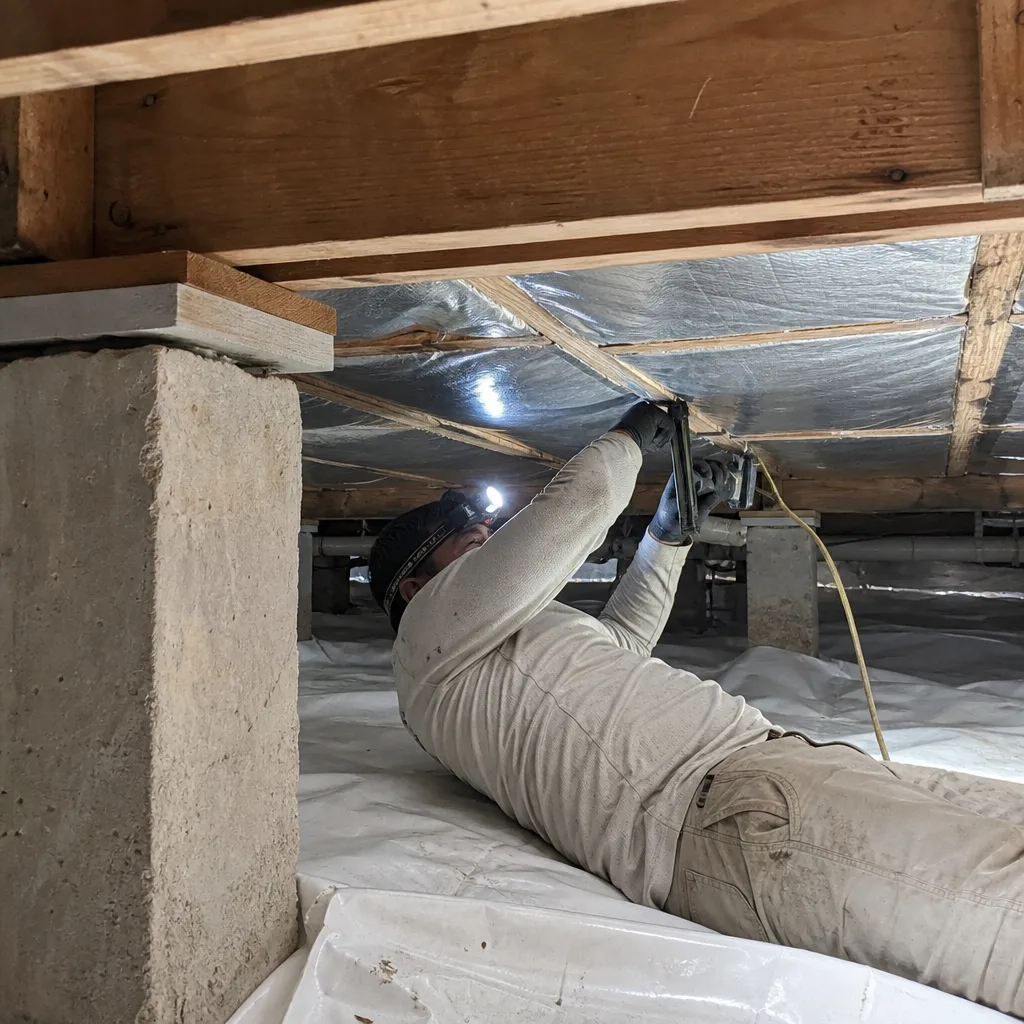
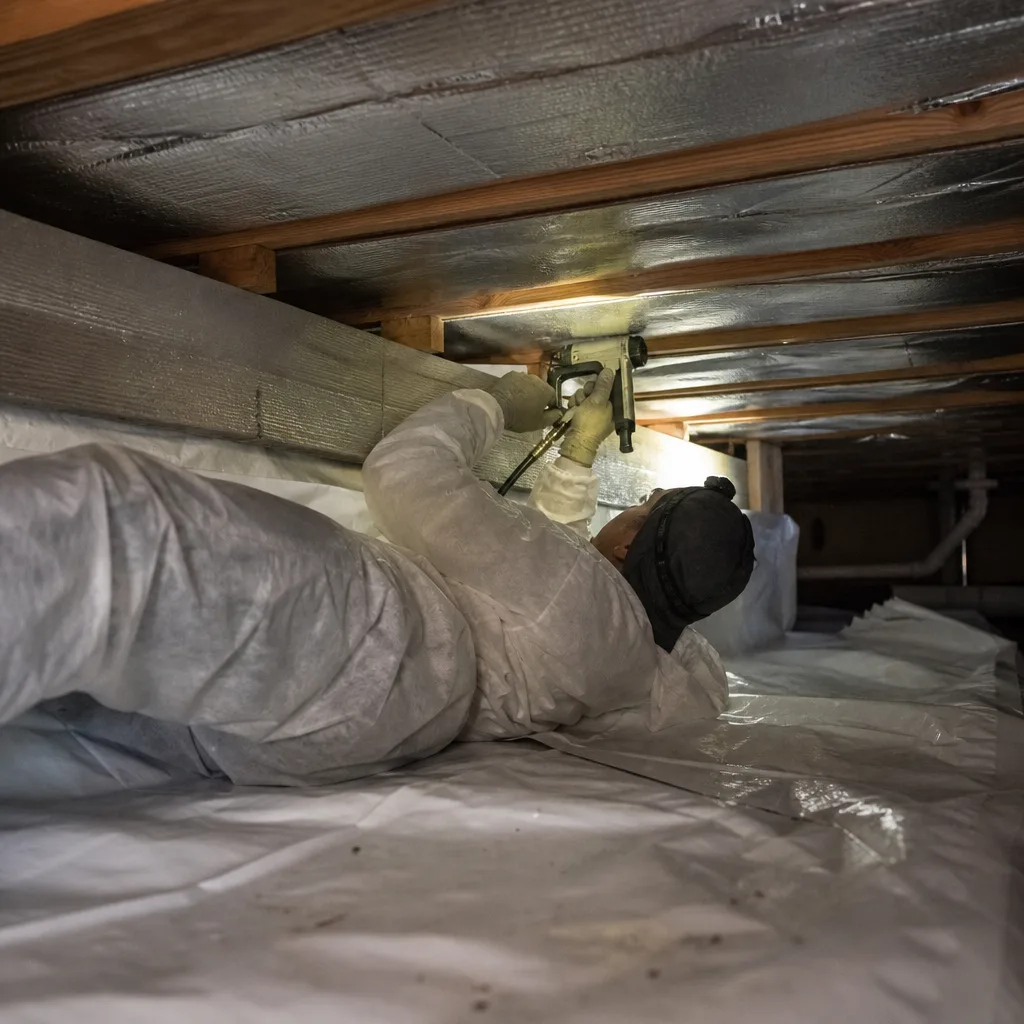
For homes with crawl space foundations, which are common in Round Rock’s newer developments, the same climate dynamics apply below grade. Crawl space encapsulation and vapor barrier work addresses ground moisture and winter floor cold that attic insulation cannot reach. This is never a DIY scope: it requires vapor barrier specification, dehumidification sizing, and often conditioned-air integration.
Common Mistakes to Avoid
- Insulating over bathroom exhaust vents that terminate in the attic. In Round Rock’s humidity, this dumps moist conditioned air directly into the insulation layer. The correct fix is ducting to exterior, then insulating. We’ve found this condition in roughly 30 percent of pre-2010 homes we inspect.
- Covering can lights not rated for insulation contact (IC). Non-IC recessed lights require 3-inch clearance to combustible material. Blowing insulation against them creates fire risk. The correct fix is replacement with IC-rated housings or installation of fire-rated covers, then insulation.
- Blocking soffit vents with blown material. Cardboard or foam baffles must maintain a 2-inch clear airway from soffit to attic. Without them, insulation drifts into the eave and creates the very ventilation deficiency that accelerates shingle degradation and winter moisture accumulation.
- Ignoring the hatch. An uninsulated, unsealed attic hatch is a thermal chimney and air leakage superhighway. A ¼-inch gap around a standard hatch leaks as much air as a 4-inch diameter hole in the ceiling. Rigid foam board, weatherstripping, and latch hardware are required - not optional.
- Adding insulation over rodent-contaminated material. Round Rock’s suburban interface with greenbelt areas means roof rat activity is common, particularly near creek corridors. Rodent waste in insulation is a health hazard requiring professional removal, sanitization, and often rodent proofing before new material is installed.
- Assuming more is always better. Attic insulation has diminishing returns. In Round Rock’s climate, the cost-effective optimum is typically R-38 to R-49. Beyond that, incremental energy savings do not justify material cost, and over-insulation can compress existing material or block ventilation paths.
- Skipping the blower-door test. Without this baseline measurement, you cannot know whether your air sealing is adequate or whether your insulation investment will perform as intended. It’s the diagnostic that separates educated scope from guesswork.
When to Call a Professional
Call a professional when any of these conditions apply: your attic has not been inspected for moisture or rodent activity in the past year; you cannot confirm adequate ventilation and functional soffit baffles; your home was built before 2012 and has not had a blower-door test; you need spray foam, air sealing, or insulation removal; or you simply want documented proof of what was installed and how it performs. See Insulation Permits, Codes & Inspections in TX: What You Need to Know for regulatory context.
Topside Attic Insulation Round Rock offers free estimates in Round Rock. We’ll inspect your attic, run diagnostics if indicated, and provide a written scope and flat price before any work starts. No voicemail loops, no callback windows measured in business days - a live person answers calls 24/7 at (737) 259-7528. Our crews are background-checked and uniformed, and every job closes with a Documented Photo Record. On applicable jobs, you’ll receive before-and-after blower-door numbers so you can verify the air-sealing result in a single figure.
Frequently Asked Questions
Most attic insulation jobs in a 1,500 to 2,500 square foot Round Rock home run between $1,800 and $3,200 for blown-in material over sealed surfaces, including air sealing, ventilation inspection, and documentation. Spray foam ranges higher depending on thickness and substrate condition. Call (737) 259-7528 for an exact quote - estimates are free, and we provide a written price before any work starts.
Repair is cheaper only when the existing material is uniformly distributed, uncontaminated, and at or above R-19 with no compression or moisture damage. In our Round Rock inspections, this condition is rare in attics more than 10 years old. Replacement is required for rodent contamination, mold, significant settling, or water damage. We evaluate this on inspection and document our recommendation with photos.
No. Two-component spray polyurethane foam requires a licensed installer in Texas due to chemical handling, exothermic reaction safety, and respiratory protection requirements. Products from manufacturers like Icynene and Demilec are sold only to trained applicators. The liability and health risks of DIY spray foam application far exceed any potential savings.
Verify three things: soffit vents exist and are unobstructed by insulation or paint; ridge vents or gable vents provide exhaust path; and airflow is physically detectable (hold a smoke pencil or thin ribbon near soffit vents on a breezy day). In Round Rock’s mature neighborhoods like Meadow Lake and Round Rock West, we commonly find painted-over soffit vents and blocked ridge vents from re-roofing debris. Without confirmed airflow, do not add insulation.
Current Texas code prescribes R-38 minimum for attic insulation in Climate Zone 2, with R-49 recommended for optimal performance given Round Rock’s summer heat load. Older homes at R-19 or R-22 benefit significantly from addition to R-38. Diminishing returns set in above R-49; we rarely recommend beyond that except in specific high-performance builds.
DIY insulation without documentation creates uncertainty at inspection time. Buyers and their inspectors cannot verify what was installed, when, or to what standard. Professional installation with written scope, photo documentation, and performance verification (blower-door numbers where applicable) transfers confidence. In Round Rock’s competitive market, documented energy improvements are increasingly noted in listings and appraisals.
The Bottom Line
The DIY-versus-professional question for insulation is answered by scope, not skill. Adding blown-in depth to a clean, dry, well-ventilated, pre-sealed attic is genuinely DIY-appropriate, but that attic is the exception in Round Rock, not the rule. For the majority of homes - those with air leakage, ventilation questions, moisture history, or complex attic geometry - professional assessment and installation pays for itself in verified performance, documented compliance, and transferable warranty. The three-question test gives you an objective framework. If any answer is no, the evidence points to calling a pro. We’ve sealed and insulated over 9,000 homes since 2016, every one with a written price before work started and a documented record when the crew left. The documentation is what separates a job you hope performed from one you know did.
Written by Wes Okafor, Owner at Topside Attic Insulation Round Rock, serving Round Rock since 2016.