
Last updated September 24, 2026
How to Hire a Insulation Contractor in Round Rock: A Step-by-Step Guide
When a Round Rock homeowner accepts the lowest of three attic insulation bids, there is a better-than-even chance that bid specifies a lower installed depth, omits air sealing entirely, or uses a product with a lower aged R-value than the label suggests - none of which is visible in a dollar-per-square-foot number. We’ve reviewed thousands of competitor quotes since 2016, and the pattern is consistent: the cheapest bid is cheapest because it promises less, not because the contractor found some secret efficiency. In this guide, you’ll learn how to build a scope document before you call anyone, what license and insurance checks actually matter in Texas, and how to use blower-door testing as a hiring filter so you know what changed when the crew leaves. For Insulation Warning Signs: A Round Rock Homeowner’s Reference Guide, see our companion resource.
Quick Answer
To hire a reliable insulation contractor in Round Rock, build a written scope document specifying your square footage, target installed depth, product type, and air-sealing requirements; verify TDLR registration, $1M general liability, and workers’ comp coverage; then compare only bids that respond to that identical scope. The contractor who tests with a blower door before and after, and delivers a documented photo record with written warranty, is the one who can prove the work performed.
Table of Contents
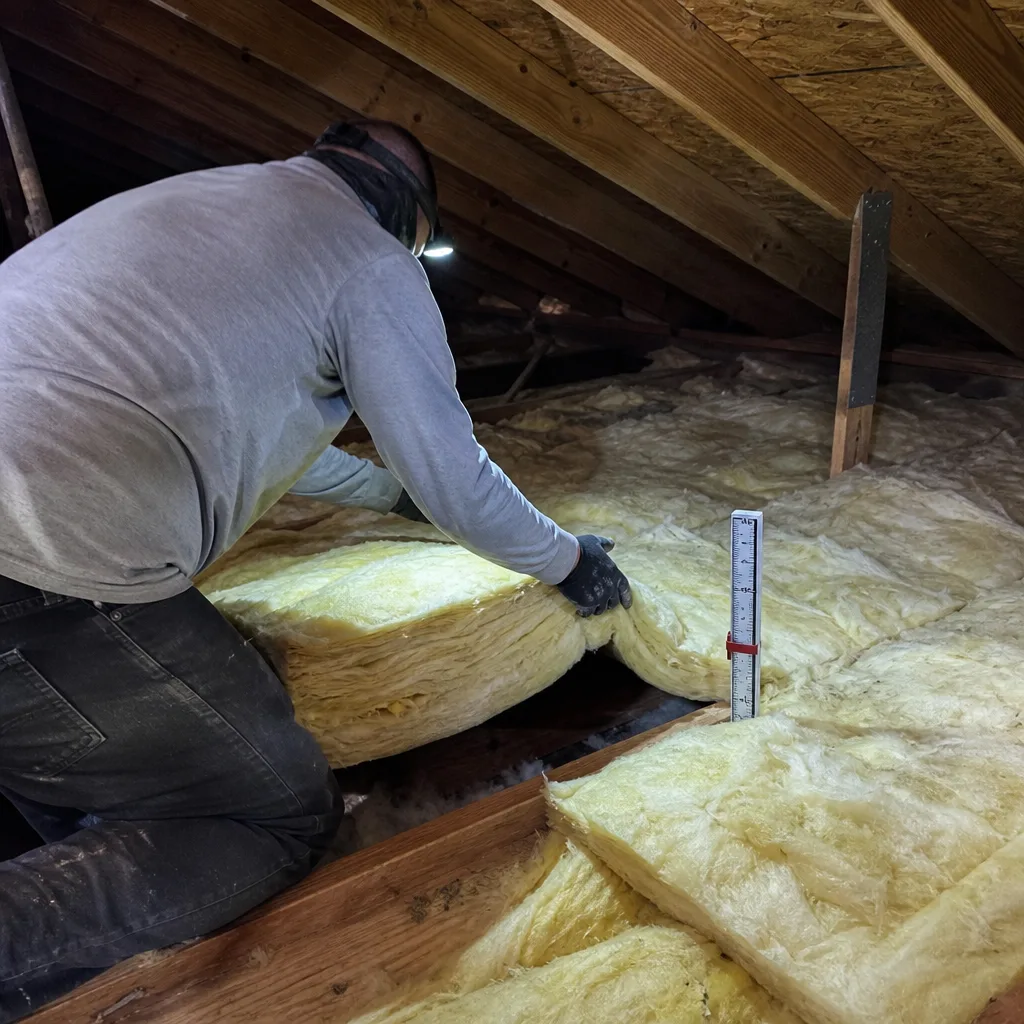
- Why Three Quotes in Round Rock Are Rarely Comparable
- Build Your Scope Document First (Free Template)
- Texas License and Insurance Checks That Actually Matter
- What a Legitimate Written Price Includes
- Two Contractor Behaviors That Predict Documentation Failure
- Using Blower-Door Testing as a Hiring Filter
- Round Rock Climate, Code, and Neighborhood Considerations
- Common Mistakes to Avoid
- When to Call a Professional
- Frequently Asked Questions
Why Three Quotes in Round Rock Are Rarely Comparable
The standard advice - “get three quotes and pick the middle one” - fails in insulation because the bids almost never describe the same job. One contractor quotes blown fiberglass at R-30, another quotes blown cellulose at R-38, and a third quotes spray foam without specifying open-cell or closed-cell. None of them mention air sealing, or they list it as a separate, optional line item. The homeowner sees three dollar amounts for “attic insulation” and assumes they’re buying the same thing.
Here’s what we’ve found reviewing competitor bids across Round Rock, from Forest Creek to Behrens Ranch to the older homes near downtown. A typical low bid for attic insulation in a 2,400-square-foot home might run $1,800-$2,400. But that bid often specifies:
- Blown fiberglass at 10 inches, not the 14-16 inches needed for R-38 in our climate zone
- No air sealing of top plates, can lights, or duct penetrations
- A generic “fiberglass” product without manufacturer or density specification
- No documentation beyond a handwritten receipt
- No stated warranty period, or a “lifetime” warranty with no warrantor named
The higher bid at $3,200-$4,500 might actually deliver lower cost per R-value over the life of the home, plus measurable air leakage reduction, as detailed in our Insulation Cost Breakdown: The Round Rock Homeowner’s Reference for 2026. But you can’t see that from the dollar amounts alone. The only way to compare bids is to force every contractor to bid on the same scope. That scope document is your responsibility to create, and the rest of this guide shows you how.
In Round Rock’s Climate Zone 2, the IECC 2021 code requires R-38 in attics for new construction, but many existing homes built between 1980 and 2010 have R-19 or less. A contractor who doesn’t mention this gap, or who proposes adding a thin layer over existing insulation without assessing condition, is not solving your problem. They’re selling you a product.
Build Your Scope Document First (Free Template)
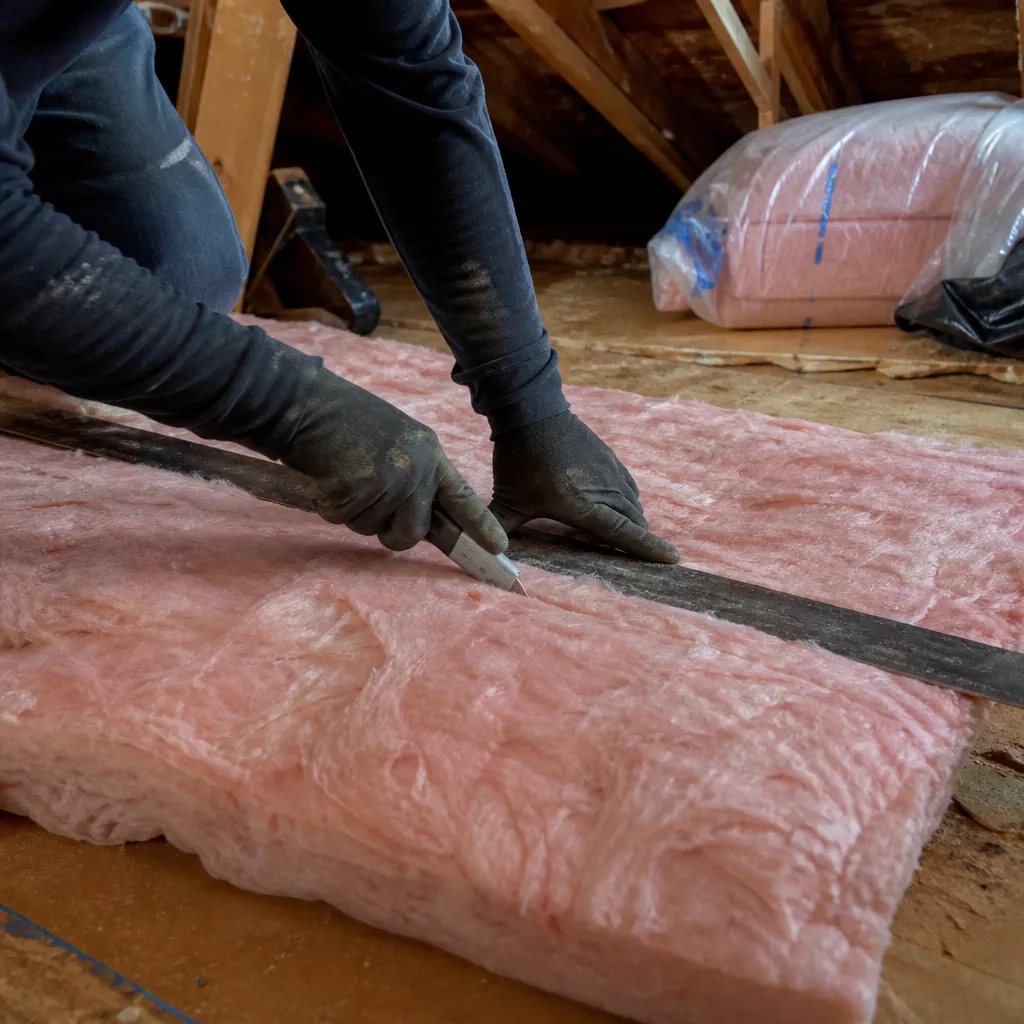
Before you call any contractor, write down exactly what you want done. Hand this document to every bidder. The bids you receive will still vary in price, but now you’ll know why, and you’ll be able to evaluate whether the price difference reflects a real difference in work performed.
Here’s the five-line scope template we recommend for Round Rock homeowners:
- Square footage of insulated surface: Measure your attic floor, wall area, or crawl space footprint. For attics, measure the conditioned floor below - the attic floor is typically the same dimensions.
- Target installed depth in inches: Specify the depth needed for your target R-value. In Round Rock’s climate, attic insulation to R-38 typically requires 14-16 inches of blown fiberglass or 10-12 inches of blown cellulose, depending on product density.
- Product type and manufacturer: Name the product category (blown fiberglass, blown cellulose, spray foam open-cell, spray foam closed-cell, mineral wool batt) and preferred manufacturer if you have one. Owens Corning, Johns Manville, and Knauf are widely available in the Austin-Round Rock market.
- Air-sealing inclusion: State explicitly: “Air sealing of top plates, electrical penetrations, can lights, duct boots, and chimney chases to be completed before insulation is installed. Air sealing is not optional.” This single line eliminates half of the low bids you’ll receive.
- Documentation deliverables: Specify: “Written scope, written warranty with warrantor named, photo record of work areas before and after, and blower-door test results before and after if applicable.”
When you hand this scope to contractors, watch their reaction. The ones who nod and ask clarifying questions - “What’s your current insulation depth?” or “Do you have can lights or a chimney chase?” - are engaged with the work. The ones who wave it off and say “we’ll figure it out when we get there” are planning to figure out the cheapest way to complete the job, not the right way.
Under Haven Standard: Have it in writing. Every job we perform begins with a written price based on a written scope. No work starts without it. If a contractor won’t commit your scope to paper with a price, you don’t have a contract. You have a conversation.
Texas License and Insurance Checks That Actually Matter
Texas does not require a state-level contractor license for insulation work specifically, but three credentials separate legitimate operators from the rest; see Insulation Permits, Codes & Inspections in TX: What You Need to Know for full regulatory context. Verify all three before anyone enters your home.
TDLR Registration: The Texas Department of Licensing and Regulation requires all contractors performing insulation work to register. You can verify registration at tdlr.texas.gov using the contractor’s business name or individual name. Unregistered contractors are working illegally in Texas, and their “warranty” is unenforceable.
General Liability Insurance - Minimum $1M Per Occurrence: Ask for a certificate of insurance (COI) naming you as additional insured for the project duration. The COI should show $1,000,000 per occurrence and $2,000,000 aggregate minimum. Call the insurance company to verify; fake COIs are common. In Round Rock’s established neighborhoods like Teravista and Paloma Lake, where homes often exceed $500,000 in value, inadequate coverage puts your asset at risk.
Workers’ Compensation - Not a Waiver: If the crew has more than one person, the contractor must carry workers’ comp. Texas allows non-subscription, but a contractor who shows you a waiver instead of a policy is asking you to accept liability if a worker is injured on your property. Ask specifically: “Do you carry workers’ comp, or are you a non-subscriber?” If non-subscriber, ask to see their occupational accident coverage. If they hedge, hire someone else.
We’ve seen crews working in Round Rock without TDLR registration, without verifiable insurance, and with workers classified as “independent contractors” to avoid coverage. These aren’t edge cases. They’re common enough that verification is your responsibility, not a formality.
What a Legitimate Written Price Includes
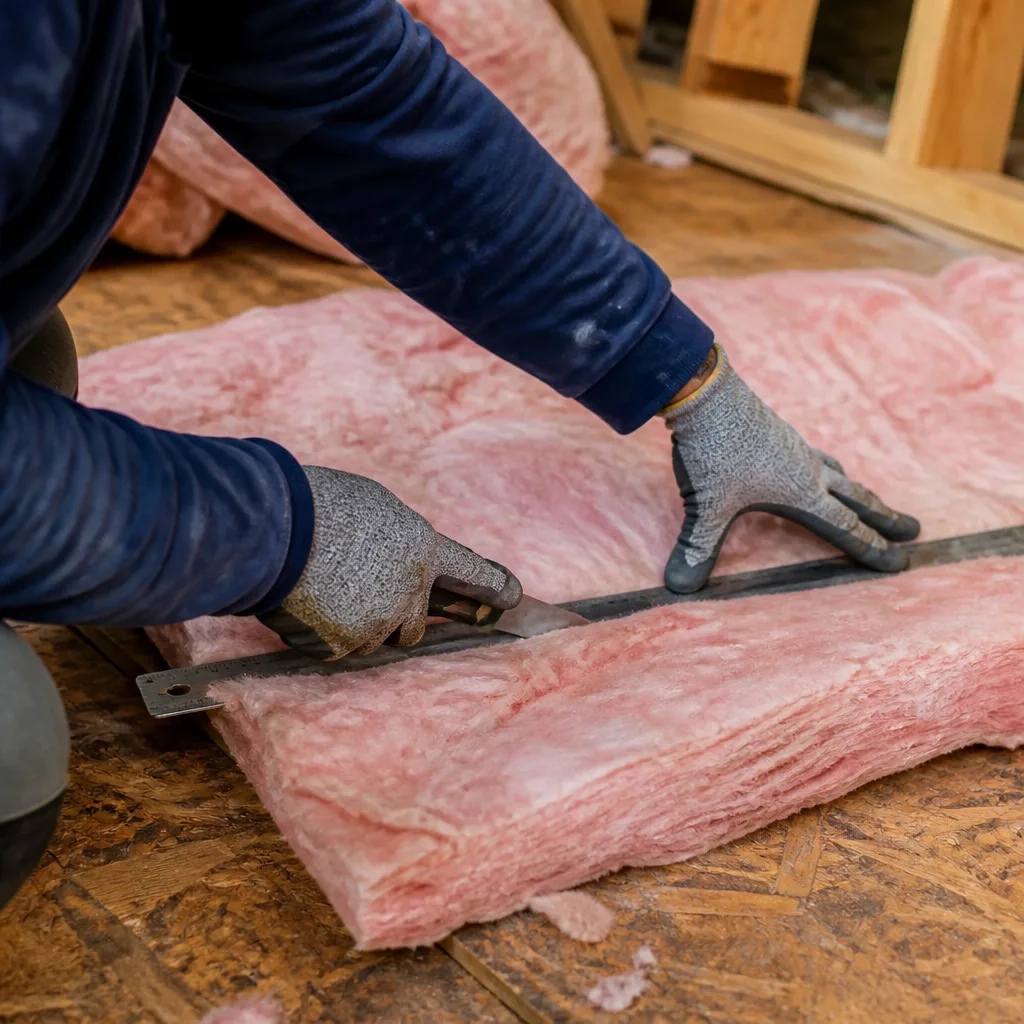
There’s a difference between a written estimate and a written price. An estimate says “approximately $3,500.” A written price says “$3,487” and tells you exactly what that figure buys. Under Haven Standard Clause 1, every price we deliver is a written price with these elements:
- Line-item material quantities: Not “insulation for attic” but “Owens Corning AttiCat blown fiberglass, 67 bags at 0.5 lbs/cubic foot density, covering 2,400 sq ft to 15 inches installed depth.”
- Named product with manufacturer spec sheet: The product name, R-value per inch at stated density, and aged R-value (the value after settling, which matters for blown products). We source from Owens Corning, Johns Manville, Knauf, Rockwool, and other manufacturers - no proprietary lock-in, and we name what we’re using.
- Stated warranty period with warrantor identified: “10-year workmanship warranty by Envelope Insulation Co., backed by manufacturer’s limited lifetime product warranty.” Not “lifetime warranty” with no named warrantor.
- Air-sealing scope: Specific penetrations to be sealed, materials to be used (fire-rated caulk, spray foam, rigid foam with fire barrier where required), and whether blower-door-guided sealing is included.
- Exclusions: What the price does not include - electrical work, HVAC modifications, drywall repair - so there’s no surprise billing later.
A verbal estimate, or a one-line email saying “about $3,500,” gives you no basis for comparison and no recourse if the final invoice differs. In Round Rock’s competitive market, some contractors use low verbal estimates to get in the door, then add charges for “unexpected” conditions that were visible on arrival. A written price with exclusions protects both parties.
We also offer a Free Second Opinion on any written estimate. Bring us a competitor’s written quote; we’ll read it with you line by line and tell you what’s specified, what’s omitted, and what questions to ask.
Two Contractor Behaviors That Predict Documentation Failure
After 9,000+ homes sealed and insulated since 2016, we’ve learned that certain contractor behaviors predict poor outcomes with near-certainty. Watch for these two specifically.
Reluctance to Provide a Post-Job Report: Ask every candidate: “What documentation will I receive when the job is complete?” If the answer is “a receipt” or “we’ll email you something,” press for specifics. A contractor who cannot describe their documentation process has no documentation process. You’ll receive whatever the crew remembers to photograph, which is often nothing. At Topside Attic Insulation Round Rock, every job closes with a Documented Photo Record - included on every visit, not available on request. You know what leaving looks like before we arrive.
Pricing Air Sealing as a Separate, Optional Line Item: This is the single most reliable predictor of a contractor who does not understand building science. Air sealing is not an upsell. It is a prerequisite. Blowing insulation over an unsealed attic floor traps conditioned air leaks inside the insulation, where they continue to waste energy and can create moisture problems. In Round Rock’s hot-humid climate, an unsealed attic with new insulation often performs worse than the original under-insulated attic because the insulation blocks visual inspection of developing issues.
We never blow insulation over an unsealed attic floor. Air sealing of top plates, can lights, and penetrations is completed before any insulation is added. A contractor who presents air sealing as optional - “would you like to add air sealing for $800?” - is asking you to pay extra for the correct installation method. That is not how we work, and it should not be how anyone works.
Using Blower-Door Testing as a Hiring Filter
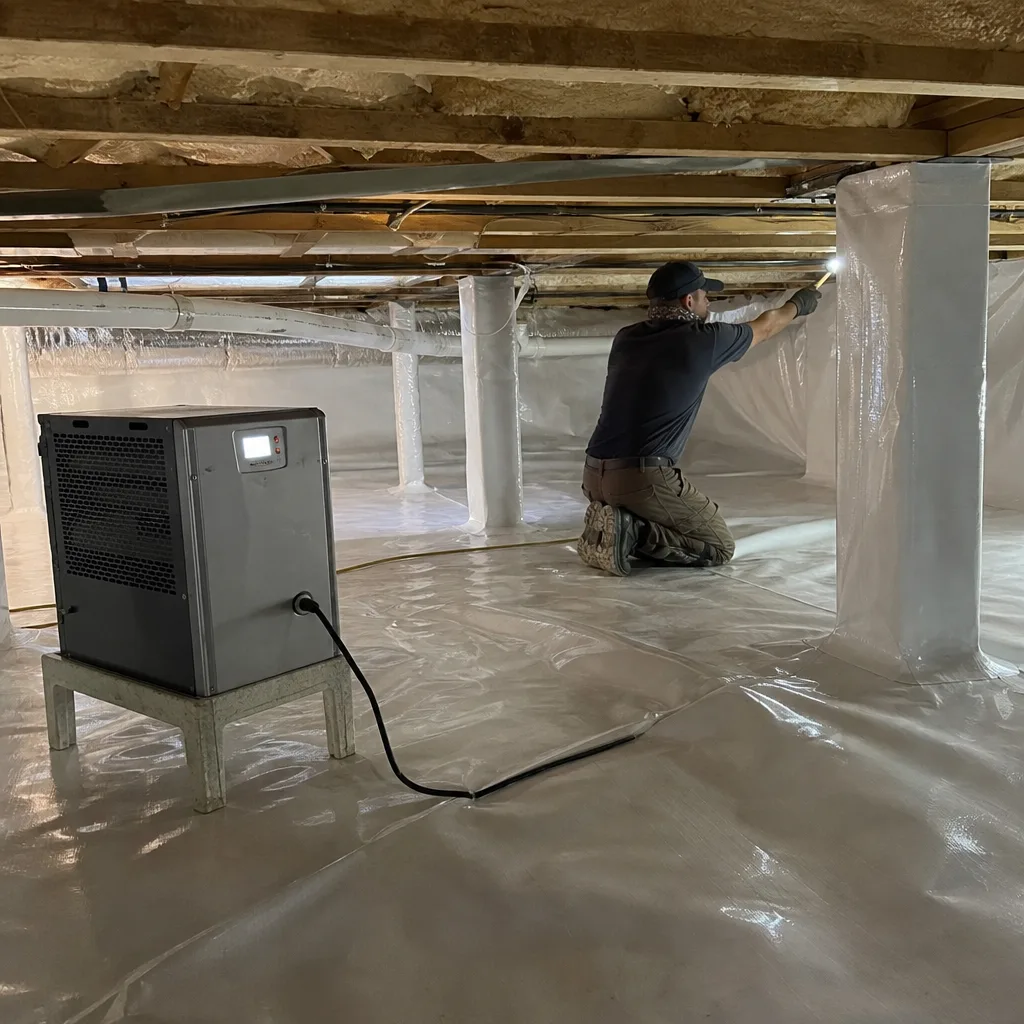
A blower-door test - a pressurization reading that shows, in one number, how much air your building envelope is losing - is the only objective measure of air-sealing performance. Ask every candidate two questions:
- “Do you test with a blower door before and after air sealing?” If no, they cannot prove what changed. They can only describe what they did.
- “Can you show me a sample job report with before-and-after numbers?” A contractor who tests but cannot produce a report is not documenting for your benefit. They’re testing for their own troubleshooting, if they test at all.
Here’s what legitimate blower-door documentation looks like: “Pre-sealing: 4,200 CFM50. Post-sealing: 2,100 CFM50. 50% reduction in air leakage.” CFM50 means cubic feet per minute at 50 Pascals of pressure - the standard test pressure. The percentage reduction matters more than the absolute number, because homes of different sizes have different baseline leakage. A 50% reduction in a 3,000-square-foot home in Brushy Creek is comparable to a 50% reduction in a 1,800-square-foot home near Round Rock High.
We publish before-and-after blower-door numbers on every applicable job so homeowners can see the performance change they actually paid for. Not every job requires blower-door testing - some are insulation-only with no air-sealing component - but when air sealing is performed, the test is how you verify the result. Any contractor who resists this transparency is asking for trust they haven’t earned.
In Round Rock’s older neighborhoods, we regularly see pre-sealing readings above 5,000 CFM50 in homes built before 1990. Post-sealing, we target below 3,000 CFM50 or a 35% reduction, whichever is more stringent for the specific home. Newer homes in developments like Siena often start below 3,500 CFM50 but still benefit from targeted sealing of top plates and penetrations.
Round Rock Climate, Code, and Neighborhood Considerations
Round Rock sits in IECC Climate Zone 2, hot-humid, with roughly 2,800 cooling degree days and 1,500 heating degree days annually. This asymmetry matters for insulation strategy. Your attic insulation primarily resists heat gain, not heat loss, and your air sealing primarily prevents humid outdoor air from entering conditioned space.
The 2021 IECC requires R-38 in attics for new construction, but Round Rock’s building department enforces this at permit for new builds only. Existing homes are not required to upgrade, which means most insulation contractors work to whatever standard they choose. A contractor who proposes R-30 in an attic “to save you money” is proposing below-code performance in a climate where code is already the minimum reasonable standard.
Neighborhood-specific factors we’ve encountered:
- Older homes near downtown and Mays Street (pre-1980): Often have no wall insulation, minimal attic insulation, and significant air leakage through balloon framing and unsealed chases. These homes benefit most from comprehensive air sealing plus insulation, but contractors must be careful with knob-and-tube wiring remnants and asbestos-containing materials in older vermiculite insulation.
- 1990s-2000s subdivisions like Forest Creek and Windy Park: Typically have R-19 batt insulation in attics, often poorly installed with gaps and compression. Blown-in insulation over existing batts is common, but only after air sealing. These homes often have recessed can lights that require airtight IC-rated covers before insulation contact.
- Newer construction in Teravista and Paloma Lake (2010+): Usually meet or approach code for insulation but often have thermal bypasses at dropped soffits, tray ceilings, and attic stairs. Blower-door testing frequently reveals leakage concentrated at these architectural features.
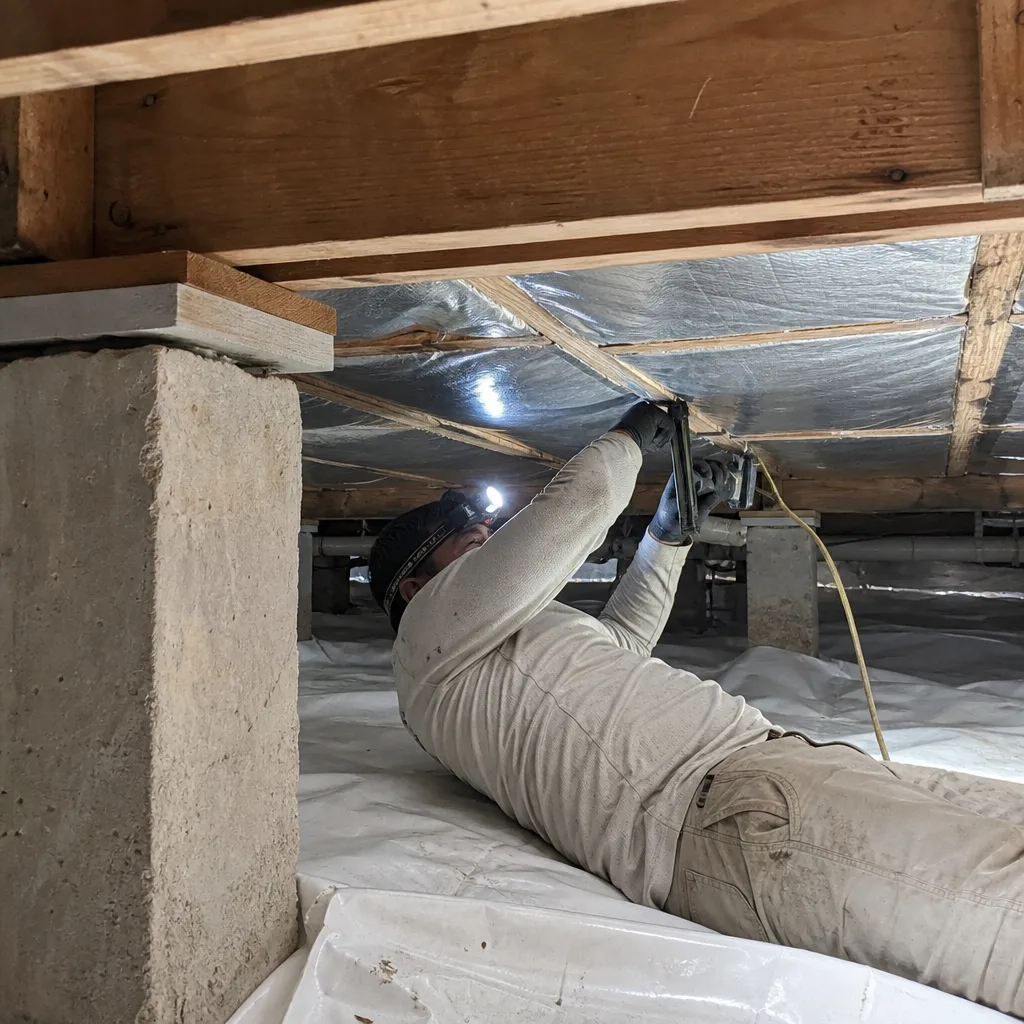
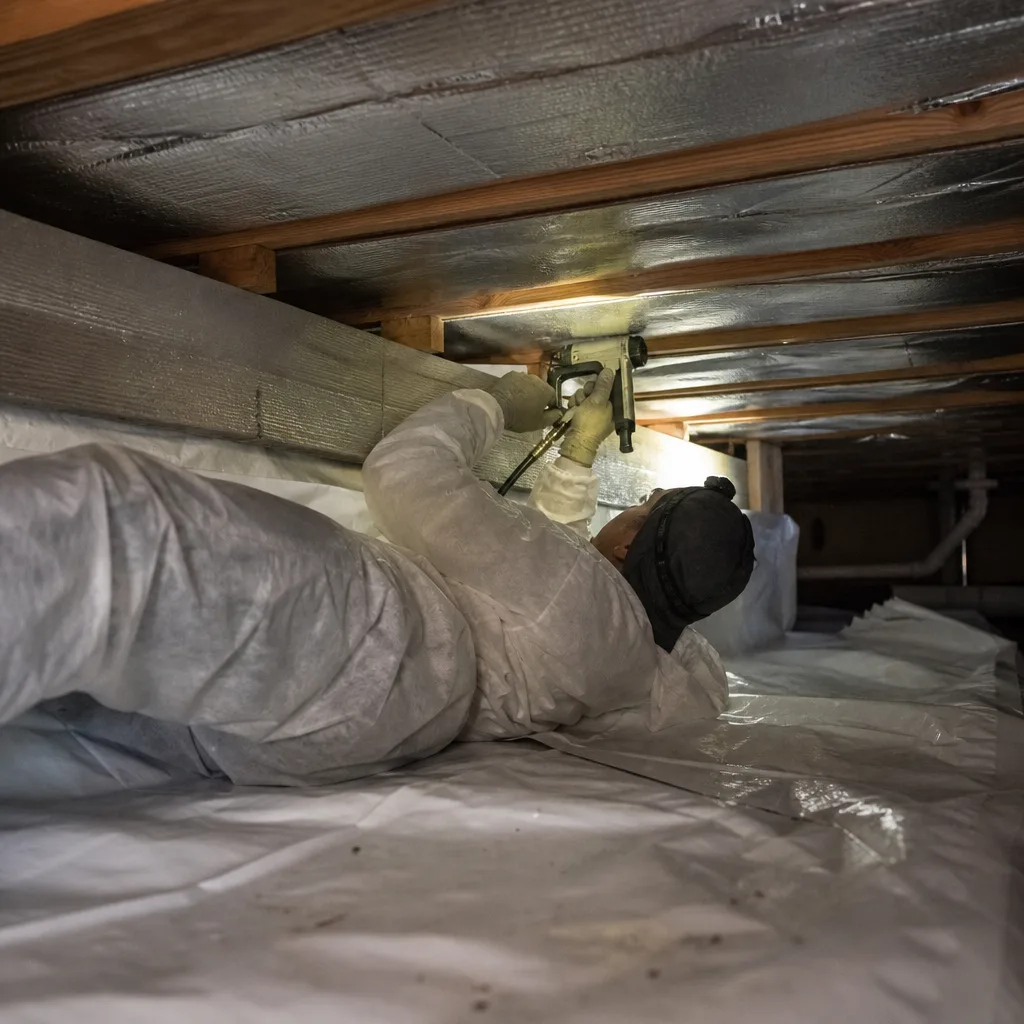
- Crawl space homes in areas with high water tables: Some Round Rock neighborhoods, particularly near Brushy Creek tributaries, have crawl spaces with moisture issues. Crawl space encapsulation and vapor barrier may be needed before or alongside floor insulation. Insulating a damp crawl space without moisture control traps moisture against floor joists.
Round Rock’s clay soils also create foundation movement that can crack rim joists and create new air leakage paths over time. A contractor who doesn’t inspect rim joist sealing as part of a whole-house assessment is missing a common local issue.
Common Mistakes to Avoid
- Comparing bids without a written scope: The lowest bid is almost always the lowest scope. Force comparability by writing your scope first.
- Ignoring air sealing: In Round Rock’s climate, an unsealed attic with R-38 performs like a sealed attic with R-25. Air sealing is not optional; it’s the foundation of performance.
- Accepting “R-value per inch” without installed depth: A contractor who quotes “R-3.7 per inch” but installs 10 inches instead of 14 is delivering R-37, not R-38, and hoping you won’t measure. Specify installed depth, not just product R-value.
- Not verifying TDLR registration: Unregistered contractors operate throughout Williamson County. Verification takes two minutes online and protects you from unenforceable contracts.
- Skipping the blower-door question: If a contractor tests, they’ll tell you eagerly. If they don’t, they’ll deflect. The deflection is your answer.
- Paying for “removal” of existing insulation that isn’t contaminated: In most Round Rock homes, existing fiberglass or cellulose can be left in place and supplemented. Removal should be reserved for contamination (rodent activity, water damage, vermiculite with asbestos risk) - not sold as a standard prerequisite.
- Choosing spray foam based on R-value alone: Spray foam insulation in Round Rock provides air sealing and R-value simultaneously, but open-cell and closed-cell have different vapor permeance characteristics. In our humid climate, open-cell spray foam on roof decks requires careful humidity management. The contractor should explain this, not just quote a price.
When to Call a Professional
Call a professional insulation contractor when your energy bills exceed comparable homes in your neighborhood, when you have hot or cold rooms that don’t respond to HVAC adjustments, when you see insulation settling below joist tops in your attic, or when you’re finishing a renovation and need to meet code. In Round Rock, many homeowners also call after receiving high summer electric bills - our cooling season runs May through October, and poorly insulated homes pay the penalty monthly.
Topside Attic Insulation Round Rock offers free estimates in Round Rock. We’ll review your existing conditions, build a written scope with you, and deliver a written price before any work starts. Call (737) 259-7528 to schedule. Every estimate includes a Documented Photo Record of what we find, and on applicable jobs, we show you sample blower-door reports so you know what documentation looks like.
Frequently Asked Questions
Most attic insulation jobs in a 2,400-square-foot Round Rock home run between $2,800 and $5,500, depending on product type, installed depth, and air-sealing scope. Blown fiberglass to R-38 with comprehensive air sealing typically falls in the middle of that range. Call (737) 259-7528 for an exact quote - estimates are free, and we deliver a written price before any work starts.
Air sealing is necessary. Adding insulation over unsealed leaks traps conditioned air inside the insulation, where it continues to waste energy and can create moisture problems. In Round Rock’s hot-humid climate, this is particularly risky. We never install insulation before completing air sealing of top plates, can lights, and penetrations.
Closed-cell spray foam is denser (2 lbs/cubic foot), has a higher R-value per inch (approximately R-6.5), and acts as a vapor barrier. Open-cell is lighter (0.5 lbs/cubic foot), has a lower R-value per inch (approximately R-3.6), and is vapor-permeable. In Round Rock’s climate, open-cell on roof decks requires careful humidity management to avoid moisture accumulation. We explain the trade-offs and recommend based on your specific assembly, not a one-size-fits-all approach.
Verify TDLR registration at tdlr.texas.gov using the contractor’s business or individual name. Ask for a certificate of insurance showing $1M general liability per occurrence, and verify workers’ comp coverage or occupational accident insurance for crews larger than one. These three checks take under ten minutes and eliminate most unqualified operators.
Dense-pack cellulose and mineral wool products like Rockwool provide meaningful sound attenuation between floors and against exterior walls. Standard blown fiberglass provides minimal acoustic benefit. If noise control is a priority, specify it in your scope document so contractors recommend appropriate products and densities.
You should receive a written scope confirming work performed, a written warranty with warrantor named, a photo record of work areas before and after, and on air-sealing jobs, blower-door test results before and after. At Topside Attic Insulation Round Rock, this documentation is standard on every job - not available on request, delivered automatically.
The Bottom Line
Hiring an insulation contractor in Round Rock is not about finding the lowest bid. It’s about forcing every bid to respond to the same scope, then verifying that the contractor who wins can prove what they did. Build your scope document first. Verify TDLR registration, insurance, and workers’ comp. Demand a written price with line-item materials, named products, and stated warranty. Ask for blower-door testing and sample reports. Reject any contractor who treats air sealing as optional or documentation as an afterthought. The 9,000+ homes we’ve sealed and insulated since 2016 have taught us this: the homeowners who get what they paid for are the ones who knew what to ask for before anyone arrived. Explore more guides & resources to prepare for your project.
Written by Wes Okafor, Owner at Topside Attic Insulation Round Rock, serving Round Rock since 2016.