
Last updated September 24, 2026
Insulation Warning Signs: A Round Rock Homeowner’s Reference Guide
A thermostat set to 74°F that can’t hold setpoint on a 98°F July afternoon in Round Rock is not necessarily an undersized HVAC unit. In our experience across more than 9,000 homes since 2016, it is more often a sign that the attic floor’s effective R-value has dropped below the threshold where the equipment was sized to perform. The warning signs that insulation is failing in a Round Rock home are almost never visible from inside the living space. They show up first as HVAC runtime patterns, utility bill anomalies, and humidity readings that homeowners routinely blame on equipment age rather than envelope failure. This guide will teach you to read those signals, use a simple infrared thermometer to confirm your suspicions, and know when the problem requires professional diagnosis with a blower-door test. For a deeper dive, see The Complete Guide to Insulation in Round Rock.
Quick Answer
Insulation failure in Round Rock homes typically announces itself through five utility-bill patterns before any physical symptom appears: a rising cost-per-degree-day ratio, longer HVAC runtime per cycle, inability to hold setpoint during peak afternoon hours, elevated overnight minimum temperatures on cooling bills, and indoor humidity climbing above 55% RH despite functioning equipment. Physical confirmation can be obtained with a non-contact infrared thermometer scanning ceiling surfaces for temperature differentials greater than 5°F, which indicate insulation voids or compression. A professional blower-door test quantifies total air leakage in ACH50, distinguishing whether the problem is insufficient R-value, poor air sealing, or both. For ongoing upkeep tips, see our Attic Insulation Maintenance Checklist for Round Rock Homeowners.
Table of Contents
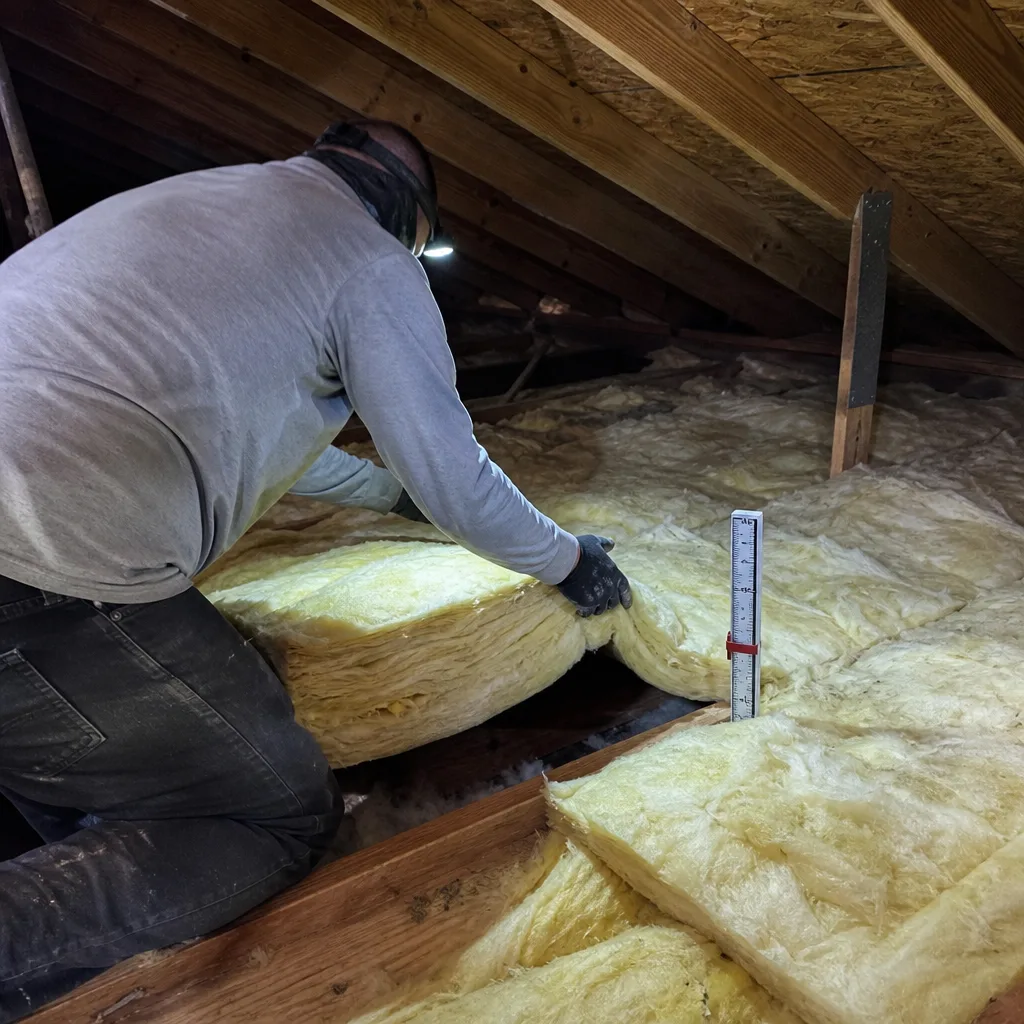
- The Five Utility-Bill Patterns That Precede Physical Symptoms
- Physical Signs Visible Inside the Home (and How They’re Misread)
- How to Perform a Basic Thermal Scan with a $30 Infrared Thermometer
- Pest Damage Warning Signs Specific to Central Texas
- What a Blower-Door Test Number Tells You That Visual Inspection Cannot
- How Round Rock’s Climate and Building Stock Affect Insulation Performance
- Common Mistakes to Avoid
- When to Call a Professional
- Frequently Asked Questions
The Five Utility-Bill Patterns That Precede Physical Symptoms
Most Round Rock homeowners we meet have already replaced a capacitor, added refrigerant, or received a quote for an entirely new HVAC system before they consider the envelope. The equipment is working harder because the thermal boundary is failing. Here are the five patterns we look for on utility bills, listed in the order they typically appear.
1. Rising Cost-per-Degree-Day Ratio
Your utility bill shows cooling degree days (CDD) and heating degree days (HDD) somewhere in the fine print, or you can pull them from the National Weather Service for the Austin-Round Rock metro. Divide your kWh by CDD in summer, or therms by HDD in winter. A steady climb in this ratio means your home requires more energy to maintain the same temperature difference against outdoor conditions. In Round Rock, where summer design temperatures hit 99°F and winter lows occasionally reach the teens, this ratio should remain relatively stable year-over-year for a given thermostat setpoint. When it rises 15% or more without a corresponding rate increase or setpoint change, the envelope is the prime suspect.
2. Longer HVAC Runtime per Cycle
Modern thermostats log runtime data. If your compressor is running 18-22 minutes per cycle in July where it once ran 12-15, the system is struggling to overcome heat gain. The equipment has not changed; the load has. In neighborhoods like Behrens Ranch and Forest Creek, where many homes were built during the 2005-2012 construction boom with fiberglass batts that settle or are poorly installed at top plates, we see this pattern constantly. The insulation was never dense-packed to begin with, and gravity plus thermal cycling has opened gaps at the perimeter.
3. Inability to Hold Setpoint During Peak Hours
This is the pattern described in our opening. Between 3:00 PM and 7:00 PM in August, when solar gain on the roof deck peaks and attic temperatures in unconditioned attics can exceed 140°F, a properly insulated home should still recover to setpoint within 30-45 minutes of the compressor cycling on. If the temperature drifts upward despite continuous operation, the attic floor is likely underperforming. We measure this with data loggers on service calls in Round Rock, and the homes that fail this test almost always have effective R-values below R-30 in the attic, sometimes as low as R-15 due to compression, displacement, or moisture damage.
4. Elevated Overnight Minimum on Cooling Bills
Even on the hottest Round Rock nights, outdoor temperatures drop into the upper 70s by 5:00 AM. A well-insulated home should shed heat and allow the compressor to cycle off for meaningful periods overnight. If your overnight indoor temperature never drops more than 2-3°F below your setpoint, the envelope is not releasing heat as designed. This is often the first pattern homeowners notice, because it affects sleep comfort, but they blame it on an oversized or improperly charged system rather than insulation that has lost its ability to resist heat flow.
5. Indoor Humidity Above 55% RH Despite Functioning Equipment
Central Texas humidity is a given, but your HVAC system should maintain 45-55% relative humidity during normal operation. When insulation fails, the building envelope becomes more permeable to both heat and moisture. The equipment runs longer to hold temperature, which should dehumidify more, but the increased air leakage introduces humid outdoor air faster than the coil can remove it. The result is a clammy feeling at 74°F that you never had before. In Round Rock’s clay-heavy soils and frequent spring storms, this pattern also correlates with crawl space moisture problems that compound attic issues.
Key Takeaway: These five patterns form a diagnostic sequence. One pattern alone might indicate equipment issues; two or more together strongly suggest envelope failure. Document them before calling any contractor, and you’ll get a more accurate assessment.
Physical Signs Visible Inside the Home (and How They’re Misread)
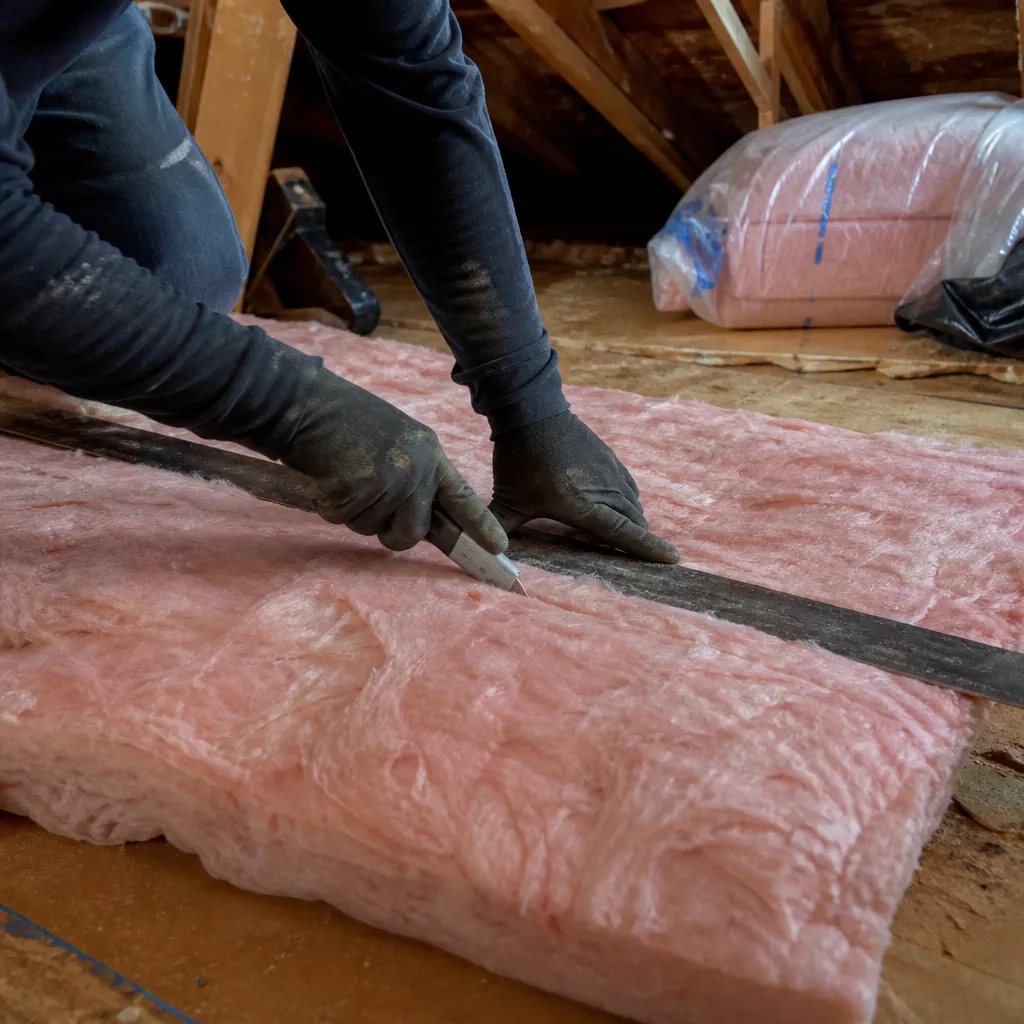
Once utility-bill patterns have appeared, physical symptoms eventually follow. The problem is that Round Rock homeowners, and often their contractors, misattribute these signs to roofing, plumbing, or structural issues.
Roof Deck Discoloration from Heat Cycling
In climates with true snow loads, failing attic insulation produces ice dams, water staining at eaves, and obvious icicle formations. Round Rock does not have this diagnostic luxury. What we get instead is heat cycling damage to the roof deck itself. When attic insulation is thin, displaced, or missing at the eaves, the roof deck experiences extreme temperature differentials: 140°F+ on the shingle side in afternoon sun, perhaps 90°F on the attic side. This differential causes plywood and OSB to expand and contract at different rates than the rafters, eventually producing a characteristic alligator-skin pattern or dark streaking that homeowners mistake for algae, mold, or shingle failure.
We’ve inspected homes in Teravista and Paloma Lake where the homeowner had already received a $12,000 roof quote for “deck deterioration” that was actually thermal stress from an uninsulated or poorly sealed attic. The roof was structurally sound; the envelope was failing it.
“Striped” Ceiling Staining Above Joists
This is the signature pattern most often misread as a roof leak. Insulation compressed or missing above ceiling joists creates thermal bridges, points where framing members conduct heat or cold more readily than the insulated cavity between them. In summer, the drywall above joists runs 8-15°F cooler than the insulated bays. This temperature differential drives condensation on the interior surface, particularly in bathrooms and kitchens where humidity is higher. The result: parallel brown or yellow stripes aligned with joist spacing, typically 16 or 24 inches on center.
Homeowners call roofers or plumbers. The roof shows no breach. The plumbing is dry. The stains are insulation voids revealed through thermal bridging. We’ve documented this pattern with infrared photography on dozens of Round Rock jobs, and the joist-location correlation is unmistakable once you know to look for it.
Dust Accumulation at Ceiling Penetrations
Every recessed can light, ceiling speaker, and HVAC register is a potential air leak. When attic air is moving through these penetrations due to pressure differentials, it carries fine dust that deposits in telltale dark rings. Homeowners clean them repeatedly; they return within weeks. This is not a housekeeping failure. It is conditioned air escaping into the attic, or worse, attic air entering the living space, carrying fiberglass particles, rodent droppings, and whatever else is present in the attic environment.
In older Round Rock subdivisions like Round Rock West, where original can lights are rarely airtight IC-rated fixtures, this pattern is nearly universal. The insulation may be present but bypassed entirely by air moving around it.
How to Perform a Basic Thermal Scan with a $30 Infrared Thermometer
You do not need professional equipment to gather meaningful data. A non-contact infrared thermometer, available at any hardware store for $25-40, will reveal insulation voids that are invisible to the eye. Here’s how to conduct a useful scan.
- Choose the right conditions. Scan on a hot afternoon (after 3:00 PM in summer) or cold morning (before 9:00 AM in winter). The greater the temperature difference between indoors and outdoors, the clearer the thermal signatures. Avoid days when outdoor temperature is within 10°F of your indoor setpoint.
- Measure a reference point. Aim at a section of ceiling you believe to be properly insulated, away from fixtures, vents, or exterior walls. Record this temperature. In a Round Rock home with R-38 or better attic insulation, ceiling surface temperature in summer should typically read within 5°F of the indoor air temperature.
- Scan in a grid pattern. Move systematically across the ceiling, measuring every 2-3 feet. Pay special attention to corners, areas above exterior walls, and locations near can lights or duct boots.
- Interpret the differentials. A reading more than 5°F warmer than your reference in summer (or colder in winter) indicates a thermal anomaly. Differentials of 10°F or more are severe and warrant professional evaluation. The shape of the anomaly matters: a linear cold strip usually indicates a missing or compressed batt above a joist; a round or irregular patch suggests a void or displacement; a spot directly below a fixture indicates an air leak bypassing insulation entirely.
- Document with photos. Photograph each anomalous reading with the temperature visible on the display. This documentation is valuable for any contractor you later consult, and it helps you track whether conditions are worsening over time.
Limitations: Infrared thermometers measure surface temperature, not air temperature or R-value directly. They cannot detect air leakage, only its thermal consequence. They also cannot see through drywall to distinguish between missing insulation and moisture-compromised insulation. For that, you need a blower-door test and possibly moisture meters.
Pest Damage Warning Signs Specific to Central Texas
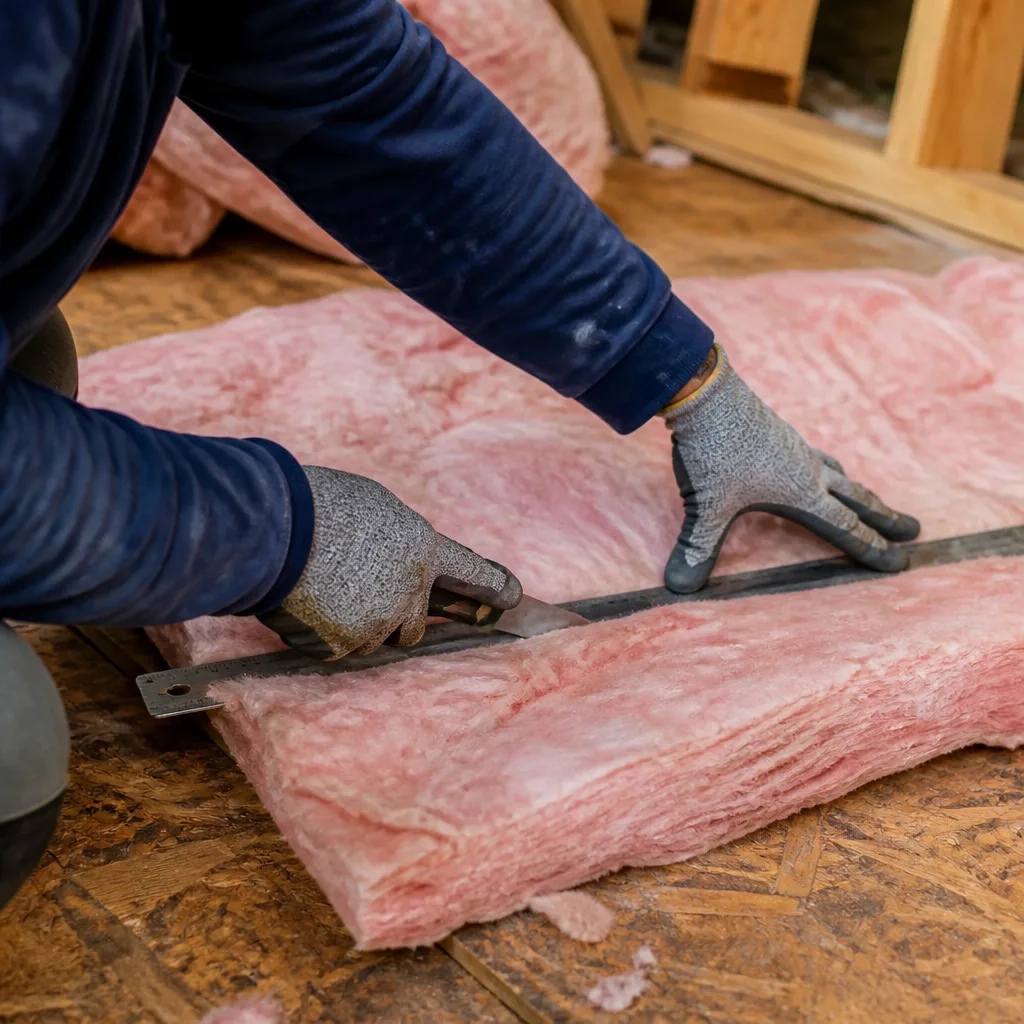
Round Rock’s combination of hot summers, mild winters, and suburban interface with Hill Country habitat makes attics attractive to rodents, raccoons, and insects. Pest activity destroys insulation through compression, contamination, and displacement. The signs are specific to the pest and the insulation type.
Blown Cellulose Displaced into Trails
Cellulose insulation, treated with borate for fire resistance, is a favored nesting material for roof rats and mice. Their activity produces distinctive trails: narrow pathways, 3-4 inches wide, where cellulose has been packed down or completely removed to expose the drywall below. The displaced material piles up at tunnel endpoints or around vertical penetrations. In Round Rock, where cellulose was heavily promoted during the 2008-2014 energy-efficiency rebate programs, we find this damage frequently in homes built or reinsulated during that period.
The contamination is not merely physical. Rodent urine introduces ammonia compounds that degrade cellulose’s fire-retardant treatment and can corrode metal fasteners. The odor enters the living space through ceiling penetrations, particularly when attic pressure is negative due to duct leakage.
Fiberglass Batting with Linear Tunnels
Fiberglass does not compress as readily as cellulose, so rodents tunnel through it instead, creating straight, clean-edged channels that follow joist bays. The batting may appear intact from a distance but lifts away to reveal hollow cores. In severe cases, the entire thickness of a batt is tunneled, leaving only the facing paper as a cosmetic cover.
We see this pattern often in Round Rock’s 1990s-era subdivisions like Meadow Lake and Windy Park, where original fiberglass batts have been in place for 25-30 years, long enough for multiple generations of pest activity. The insulation looks adequate until you touch it; then it collapses into separated layers.
Signature Odor in the Return Air Path
The most definitive sign of pest-compromised insulation is odor in the HVAC return. If you detect a sharp, ammonia-like smell when the system first cycles on, particularly in heating mode when attic air is drawn toward the return, rodents have likely contaminated insulation near the air handler or duct boots. This is both an insulation problem and an indoor air quality problem. The contaminated material must be removed, the attic sanitized, and the entry points sealed before new insulation is installed.
Under our Haven Standard, we do not install new insulation over pest-contaminated material. The 365-Day Done Right Promise would be meaningless if we buried active contamination. We document the condition with photos, provide a written scope for remediation, and only proceed with insulation after the envelope is clean and sealed.
What a Blower-Door Test Number Tells You That Visual Inspection Cannot
Visual inspection, even with infrared, can identify where insulation is missing or damaged. It cannot quantify how much conditioned air your home is losing through leaks, or distinguish between an R-value problem and an air-sealing problem. That requires a blower-door test.
A blower door is a calibrated fan mounted in an exterior door frame that depressurizes the house to a standard -50 Pascals. The airflow required to maintain this pressure, measured in cubic feet per minute at 50 Pascals (CFM50), is your home’s leakage rate. Dividing by conditioned volume and multiplying by 60 yields air changes per hour at 50 Pascals (ACH50), the standard metric for comparing homes.
For Round Rock’s climate zone and typical home sizes, we evaluate ACH50 as follows:
- Below 3.0 ACH50: Excellent air sealing. If comfort or efficiency problems persist, the issue is almost certainly insufficient R-value or duct leakage, not envelope leakage.
- 3.0-5.0 ACH50: Moderate leakage. Typical of homes built 2000-2015 with code-minimum air sealing. Problems may stem from a combination of leakage and insufficient insulation.
- 5.0-7.0 ACH50: Significant leakage. The envelope is losing conditioned air faster than typical insulation can compensate. Air sealing is the priority; adding insulation without sealing will produce disappointing results.
- Above 7.0 ACH50: Severe leakage. Common in pre-1990 construction or homes with major envelope modifications (added can lights, removed chimney chases, unsealed attic access). Insulation replacement without comprehensive air sealing is not recommended.
The critical insight: a blower-door test performed before and after air sealing quantifies the improvement. On every applicable job, we publish these numbers so homeowners can verify the performance change they paid for. A recent job in Forest Creek read 5,800 CFM50 before work and 2,900 after sealing top plates, can lights, and penetrations, with corresponding ACH50 dropping from 6.2 to 3.1. The homeowner’s summer peak electricity usage fell 23% the following year, with identical equipment and setpoints.
This is the difference between guessing and measuring. We do not guess.
How Round Rock’s Climate and Building Stock Affect Insulation Performance
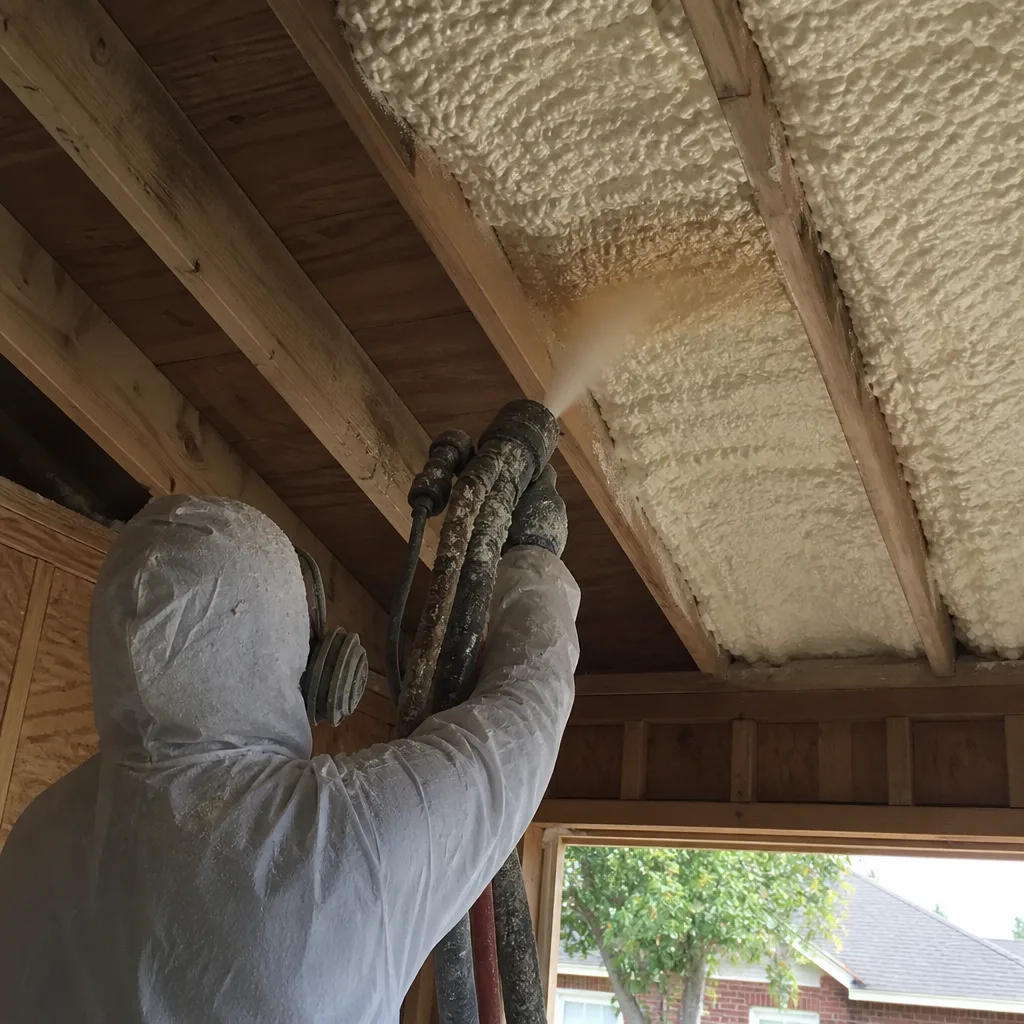
Round Rock sits at the western edge of the humid subtropical zone, with characteristics that stress building envelopes in specific ways. For seasonal maintenance advice, read Seasonal Insulation Care for Round Rock: Year-Round Homeowner’s Guide.
High solar gain, long cooling season. From May through October, attic temperatures regularly exceed 130°F. This places continuous thermal load on ceiling insulation. Fiberglass batts, particularly faced batts with kraft paper, degrade faster under this stress than loose-fill cellulose or mineral wool. Rockwool, with its higher melting point and dimensional stability, performs well here but was less commonly specified during Round Rock’s major construction periods.
Clay soils and seasonal moisture. Round Rock’s expansive clay soils create foundation movement that cracks slab perimeters and separates bottom plates from slabs. This introduces crawl space and wall base leaks that bypass attic insulation entirely. Homes in neighborhoods with notable foundation issues, including portions of Round Rock West and Chisholm Valley, often show attic insulation in good condition while the overall envelope performs poorly due to lower-zone leakage.
Construction-era vulnerabilities. Homes built 1995-2005, common in Round Rock’s northern growth areas, typically received R-30 fiberglass batts in attics, installed to minimum thickness without attention to edge sealing or top plate coverage. The “wind washing” effect, where attic ventilation air moves through exposed batt edges, reduces effective R-value by 15-30% in these installations. Homes built 2005-2012 often have better initial R-value but frequently lack air sealing, as the 2009 IECC air-sealing requirements were not consistently enforced in this market until 2012-2013.
HVAC sizing practices. Round Rock’s historical cooling load calculations often assumed R-30 attic insulation and minimal duct leakage. When insulation degrades or ducts leak into the attic, the equipment is effectively undersized for the actual load. Homeowners receive quotes for larger equipment when the correct intervention is envelope improvement. We have never recommended equipment upsizing without first verifying envelope performance; the results are consistently poor when the root cause is ignored.
Topside Attic Insulation Round Rock home provides building envelope services tailored to these local conditions, with materials selected for Central Texas performance rather than national average specifications.
Common Mistakes to Avoid
- Replacing HVAC equipment before evaluating the envelope. A new 16 SEER system on a leaky, underinsulated envelope will deliver 16 SEER performance on paper and 10 SEER performance in practice. The equipment warranty does not cover poor installation conditions.
- Adding blown insulation over unsealed air leaks. This is the most common error we correct in Round Rock. Insulation does not stop air movement; it only filters it. Fiberglass especially becomes an effective air filter, collecting dust and losing R-value where air passes through. We seal first, then insulate, in that order, on every job.
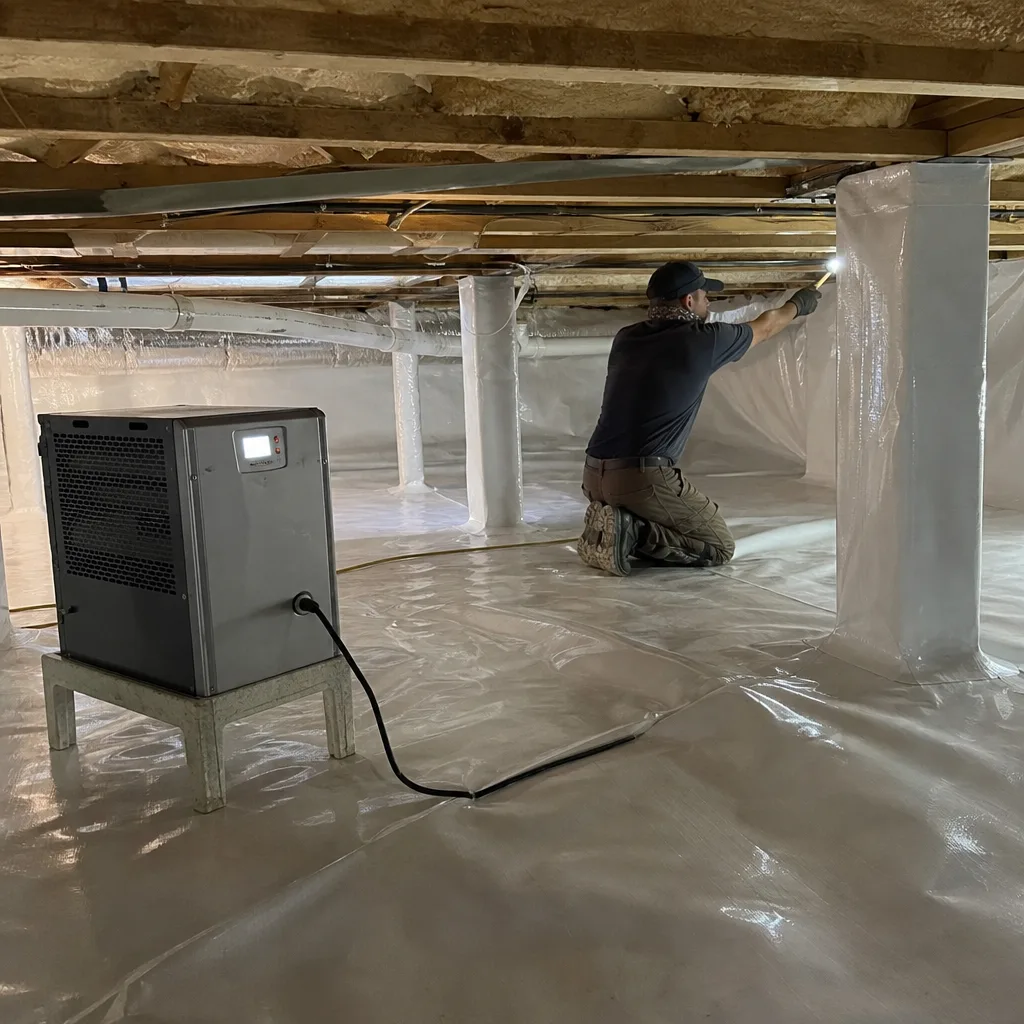
- Ignoring the crawl space while fixing the attic. In Round Rock’s clay-soil environment, crawl space moisture and rim joist leakage often contribute more to summer humidity problems than attic conditions. A comprehensive assessment addresses the entire envelope, not the symptom that happens to be visible.
- Trusting visual inspection alone. Insulation that looks adequate may be moisture-compromised, pest-contaminated, or bypassed by air leaks. The infrared thermometer scan described above takes 20 minutes and provides objective data that visual inspection cannot.
- Accepting a quote without a written scope and blower-door target. Under Haven Standard Clause 1, every job begins with a written price, written scope, and written warranty. If a contractor cannot specify what ACH50 improvement they expect to achieve, they are not measuring performance and cannot guarantee it.
- Using R-value alone to specify insulation. R-value is measured under laboratory conditions with no air movement. Effective R-value in your Round Rock attic, with wind washing and thermal bridging, is always lower. Air sealing and continuous insulation layers matter as much as nominal R-value.
- Neglecting to document pre-existing conditions. Photos, infrared readings, and utility bills establish a baseline. Without documentation, you cannot verify improvement or resolve disputes. Our Documented Photo Record on every visit exists precisely because memories fade and claims require evidence.
When to Call a Professional
Call for professional evaluation when two or more utility-bill patterns appear together, when infrared scanning reveals temperature differentials exceeding 10°F, or when you detect pest-related odors or visible contamination. Any home built before 2012 that has never had a blower-door test is a candidate for assessment, as code enforcement for air sealing was inconsistent in the Round Rock market during that period.
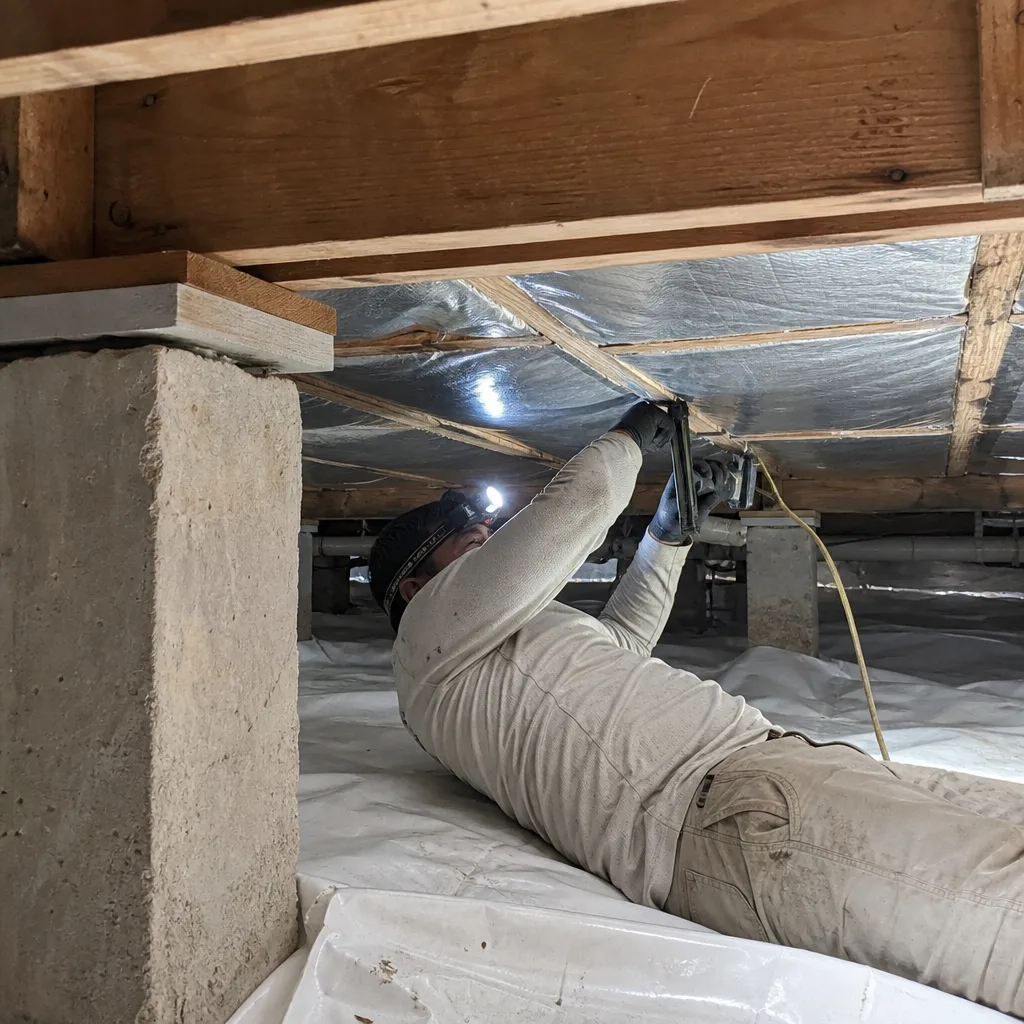
A professional evaluation should include: a blower-door test with published ACH50 result; infrared documentation of thermal anomalies; inspection of attic, crawl space, and accessible wall cavities; and a written scope with specific air-sealing targets and insulation recommendations. Anyone who provides a quote without these steps is estimating, not diagnosing.
Topside Attic Insulation Round Rock offers free estimates in Round Rock. We begin with a blower-door test on every assessment, publish before-and-after numbers on every applicable job, and provide a Written Price Before Any Work Starts under Haven Standard Clause 1. Call (737) 259-7528 to schedule.
Frequently Asked Questions
Most attic insulation and air-sealing jobs for a 2,000-2,500 square foot home in Round Rock run between $3,800 and $7,500, depending on existing conditions, accessibility, and whether insulation removal is required. Crawl space work adds $2,500-5,000 for encapsulation and vapor barrier. We provide a written price before any work starts, and we offer a Free Second Opinion on any written estimate from another contractor. Call (737) 259-7528 for an exact quote for your home.
Only if the existing insulation is dry, uncontaminated, and the air leaks are sealed first. In our experience across Round Rock, fewer than 20% of attics meet all three conditions without some remediation. Adding new Knauf or CertainTeed loose-fill over wet, compressed, or pest-damaged material traps the problem and often accelerates degradation. We inspect and test before recommending any addition strategy.
Fiberglass batts begin losing effective R-value within 10-15 years in our climate due to thermal cycling, moisture exposure, and settling. Blown cellulose maintains performance longer if properly installed to density but is more vulnerable to pest damage. Spray foam, including Icynene open-cell products, lasts 25+ years when properly applied but requires professional installation and is not suitable for all applications. The building stock in Round Rock’s major growth periods (1995-2012) is now at or beyond typical fiberglass batt service life.
Both systems interact, but envelope improvement consistently outperforms equipment replacement for cost-per-comfort improvement. We have documented cases in Round Rock where comprehensive air sealing and insulation upgrades reduced summer peak kWh by 20-35% with no equipment change. The blower-door test distinguishes whether your problem is leakage, R-value, or equipment efficiency. We never recommend equipment replacement without first quantifying envelope performance.
Air sealing stops air movement; insulation slows heat transfer. They are complementary but not interchangeable. A home can be well-insulated but leaky, or well-sealed but underinsulated. The optimal envelope has both: continuous air barrier with sufficient R-value outside it. At Envelope Insulation Co., we seal first, then insulate, because adding insulation to a leaky envelope produces mediocre results and can conceal problems that worsen over time.
The indoor signs are: ammonia or musky odors when HVAC cycles on, particularly in heating mode; increased allergy symptoms or respiratory irritation; dust or debris visible at ceiling penetrations that returns after cleaning; and uneven temperatures between rooms that worsen over time. These signs warrant professional attic inspection with photo documentation. We include this assessment in our standard evaluation and will show you what we find before recommending any work.
The Bottom Line
Insulation failure in Round Rock rarely announces itself with obvious visual cues. It whispers first through utility bills, HVAC runtime data, and humidity readings that homeowners attribute to equipment age or normal Texas heat. Learning to read these five patterns, confirming suspicions with a simple infrared thermometer scan, and understanding what a blower-door test number actually means puts you ahead of most homeowners and many contractors. The homes that perform best in our climate are not necessarily the newest or the most expensive; they are the ones where air sealing was treated as a hard prerequisite, insulation was selected for local conditions, and performance was verified with published numbers. That is the standard we apply to every job, and it is available to any Round Rock homeowner who asks for it.
Attic Insulation in Round Rock addresses the most common intervention for failing ceiling insulation. For homes with crawl space moisture compounding attic issues, Crawl Space Encapsulation & Vapor Barrier in Round Rock provides the lower-envelope solution. Where complete thermal boundary reconstruction is needed, Spray Foam Insulation in Round Rock offers the highest-performance option for specific applications.
Written by Wes Okafor, Owner at Topside Attic Insulation Round Rock, serving Round Rock since 2016.