
Last updated September 24, 2026
The Complete Guide to Insulation in Round Rock
A home in Round Rock with R-38 in the attic and zero air sealing will outperform a home with R-49 and a leaky top plate. That’s not a guess; it’s what the blower-door numbers show us on every job. Every 1 ACH50 of air leakage carries more latent heat load than two inches of blown cellulose can offset in our humid Central Texas climate. In this guide, you’ll learn why IECC Climate Zone 2A demands a different approach than what’s sold in drier parts of Texas, how to read a blower-door test, what documentation to demand at job completion, and why the gap between code minimum and performance minimum matters more here than almost anywhere else in the state. For more guides & resources on attic insulation and air sealing, visit our blog.
Quick Answer
Insulation in Round Rock should be designed for IECC Climate Zone 2A: a humid, mixed-hot zone where air sealing must precede insulation installation, vapor retarder selection must account for year-round moisture drive, and slab-on-grade construction creates three predictable leak pathways that R-value alone cannot fix. Most well-sealed Round Rock homes need R-38 to R-49 in vented attics, R-13 to R-19 in above-grade walls, and proper crawl space moisture control, with blower-door verification proving the assembly performs rather than assuming it does.
Table of Contents
- Why Round Rock’s Climate Zone Changes Everything
- Air Sealing: The Step Most Contractors Skip
- Attic Insulation in Round Rock: Materials and R-Values
- Wall Insulation and the Vapor Retarder Question
- Crawl Space Encapsulation and Vapor Barriers
- Reading a Blower-Door Test: What the Numbers Mean
- The Documentation You Should Hold at Job Completion
- What Insulation Costs in Round Rock
Why Round Rock’s Climate Zone Changes Everything
Round Rock sits in IECC Climate Zone 2A, the “warm-humid” designation that covers most of Central and East Texas. This classification isn’t bureaucratic trivia. It determines which insulation assemblies are legal under code, which vapor retarder classes are permitted, and why strategies that work in El Paso (Zone 3B, dry) or Dallas (Zone 3A, mixed-humid) often fail here.
Zone 2A means our cooling load dominates, but we also shoulder significant latent load - moisture that must be removed before sensible cooling can occur. A typical July day in Round Rock runs 95°F with 60% relative humidity. That air holds roughly 30 grains of moisture per pound more than the conditioned air inside your home. Every cubic foot of outside air that leaks in carries that moisture burden with it. Your air conditioner then burns energy removing it, often before it ever touches the thermostat setpoint.
The 2021 IECC, adopted by reference into Round Rock’s building code, sets minimum R-values for Zone 2A: R-38 for vented attics, R-13 for cavity-insulated wood-frame walls, R-19 for floors over unconditioned space. These are legal minimums, not performance targets. In our experience across Round Rock neighborhoods from Behrens Ranch to Forest Creek to Round Rock West, homes insulated to code minimum and not air-sealed typically test at 8-12 ACH50 - meaning they exchange their entire air volume eight to twelve times per hour under test pressure. A home that tests at 3 ACH50 after proper air sealing and insulation upgrades will use 25-40% less cooling energy in July and August, even if the nominal R-value only increased from R-30 to R-38.
The code also quietly acknowledges our moisture reality. In Zone 2A, the IRC permits Class III vapor retarders (latex paint on drywall) in most above-grade wall assemblies. Class I or II retarders - polyethylene sheeting, kraft facing, foil - are actually prohibited on the interior side of insulated walls in many Zone 2A configurations because they can trap summer moisture driven inward by solar heating. This is the opposite of northern practice, where interior vapor barriers are standard. We’ve removed mold-damaged drywall in Round Rock homes where a well-meaning contractor installed interior poly sheeting “to stop moisture,” creating a condensation plane where none should exist.
Air Sealing: The Step Most Contractors Skip
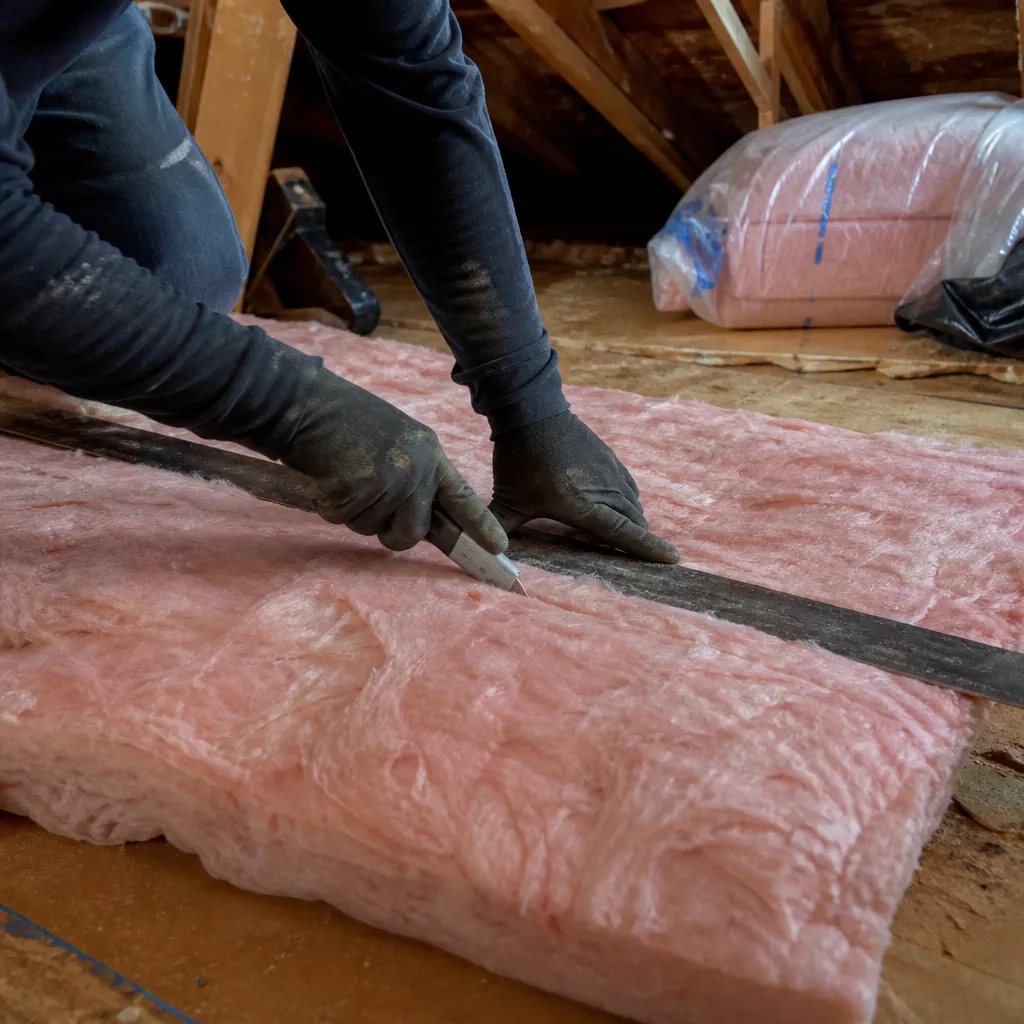
We don’t blow insulation over an unsealed attic floor. That’s Haven Standard practice, not a sales pitch. The attic floor in a typical Round Rock home built 1995-2015 is perforated by dozens of penetrations: electrical top plates, plumbing vent stacks, recessed light housings, HVAC chase openings, smoke detector wiring, bathroom fan ducts. Each is a chimney for conditioned air to escape into the attic, where it meets 140°F roof sheathing in August and condenses on the underside if the dew point is crossed.
Three leak pathways dominate Texas slab-on-grade construction:
- Top-plate bypasses. The double top plate where wall framing meets ceiling drywall has gaps at every stud bay. In a two-story home, these connect the conditioned wall cavity directly to the attic. We’ve measured 300+ CFM50 escaping through top-plate gaps alone in a 2,400 square foot Round Rock home built in 2008.
- Recessed light cans. Non-IC-rated “can” lights are open to the attic by design for thermal clearance. Even IC-rated cans have leakage paths through the housing seams. A kitchen with six can lights can leak more air than an open window.
- HVAC chase penetrations. Flex duct connections at ceiling boots, return air platform seams, and platform-to-attic transitions are rarely sealed at original construction. The return side operates under negative pressure, so it pulls 130°F attic air directly into the system when leaks exist.
Our crews seal top plates with fire-rated caulk or foam, cover non-IC cans with sealed LED retrofit housings or pre-formed covers, and mastic-seal every duct connection before insulation touches the attic floor. The blower-door test confirms the result. In a 2019 job in Teravista, we measured 4,200 CFM50 before sealing and 2,100 after - a 50% reduction in envelope leakage with zero insulation added yet. The cellulose we blew next actually performed at its rated R-value because wind washing through the attic floor was eliminated.
Attic Insulation in Round Rock: Materials and R-Values
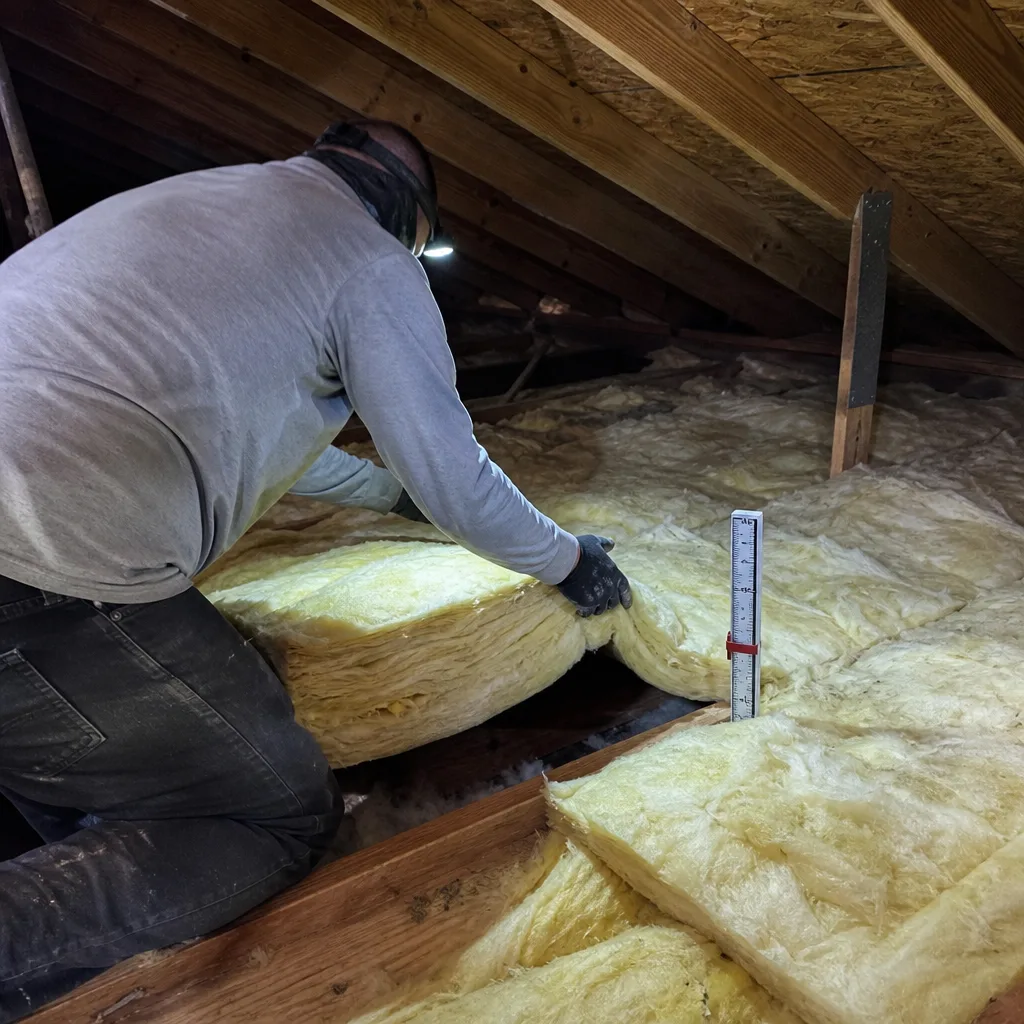
Most Round Rock homes have vented attics with insulation at the attic floor. This is the correct assembly for our climate when properly air-sealed. Unvented or “conditioned” attics, sometimes promoted as a cure-all, introduce significant moisture risk in Zone 2A unless the roof deck is insulated with closed-cell spray foam to a thickness that prevents condensation - typically 5.5 inches or more at R-6.5 per inch. That’s expensive and often unnecessary when the existing vented assembly can be optimized.
For vented attics, we install three materials regularly, selected by application rather than brand loyalty:
- Blown cellulose. Ground paper fiber treated with borate fire retardant, typically installed at R-3.2 to R-3.8 per inch depending on density. We dense-pack to 3.5 pounds per cubic foot in attics, which resists settling and provides some air-flow resistance. GreenFiber and Owens Corning both supply quality cellulose; we specify by availability and project requirements, never by rebate or spiff.
- Blown fiberglass. Spun glass fibers, R-2.5 to R-4.3 per inch depending on product and installation density. Johns Manville Spider blown system achieves higher densities with adhesive, reducing settling concerns. Better for homes with active rodent issues where cellulose’s organic content is a concern.
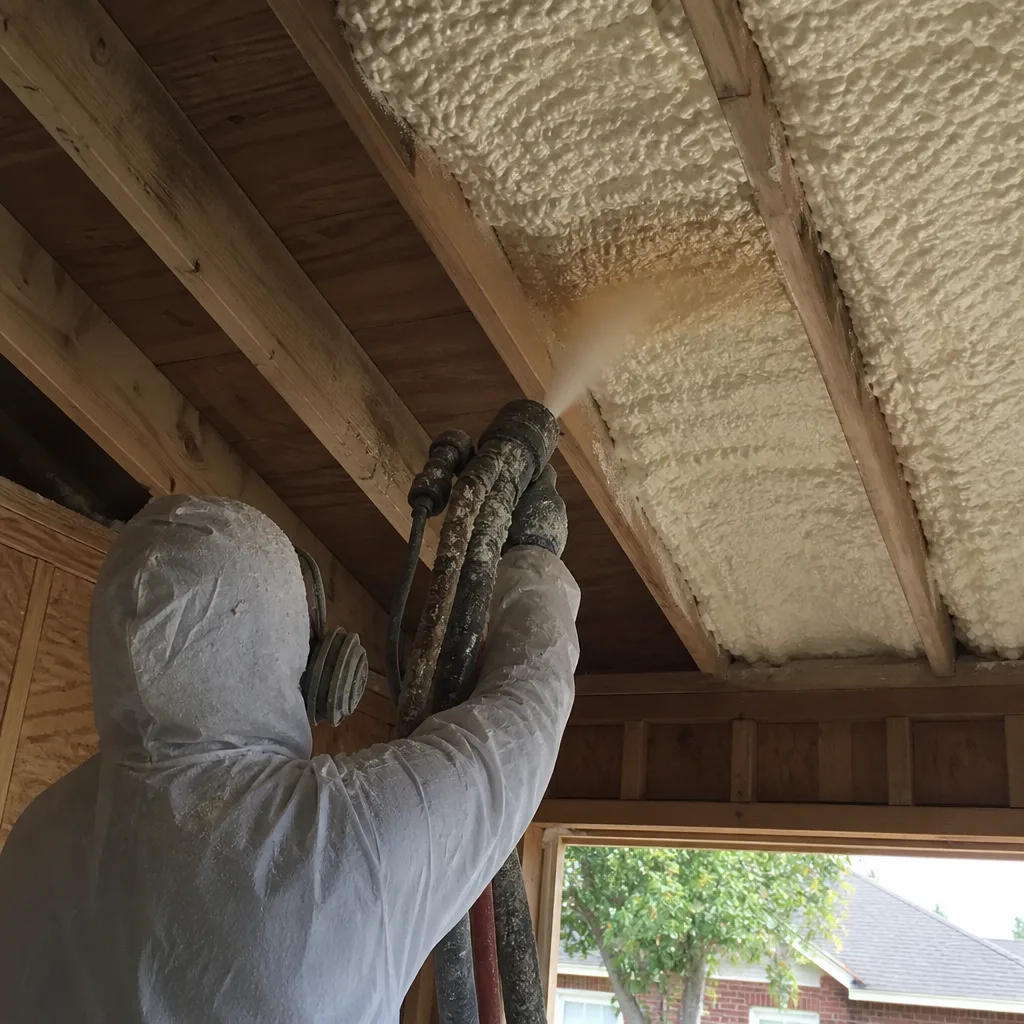
- Open-cell spray foam. Water-blown polyurethane, R-3.6 to R-3.8 per inch, applied to the attic floor over sealed decking. Creates an imperfect air barrier at thicknesses below 3 inches, so we only use it when the attic floor is already well-sealed by other means. Demilec supplies our open-cell products.
R-38 is the practical performance minimum for Round Rock attics, achieved at roughly 10-12 inches of blown cellulose or 11-14 inches of blown fiberglass depending on product. R-49, the next common target, adds 2-3 inches and meaningful performance margin for west-facing roofs or homes with limited shade. We don’t recommend exceeding R-60 in our climate; the incremental cost yields diminishing returns compared to spending those dollars on wall insulation or window upgrades.
Radiant barriers - foil-faced sheathing or draped foil sheets - are sometimes sold as insulation alternatives in Central Texas. They work by reducing radiant heat gain from roof decking to attic floor, not by resisting conductive flow. In a well-insulated, well-sealed attic, radiant barrier adds 2-5% cooling reduction. In a leaky attic with R-19 insulation, it does almost nothing because convective and conductive losses swamp any radiant benefit. We install radiant barrier in Round Rock only when the attic assembly is already performing well and the homeowner wants marginal improvement without adding insulation depth that could block soffit vents.
Wall Insulation and the Vapor Retarder Question
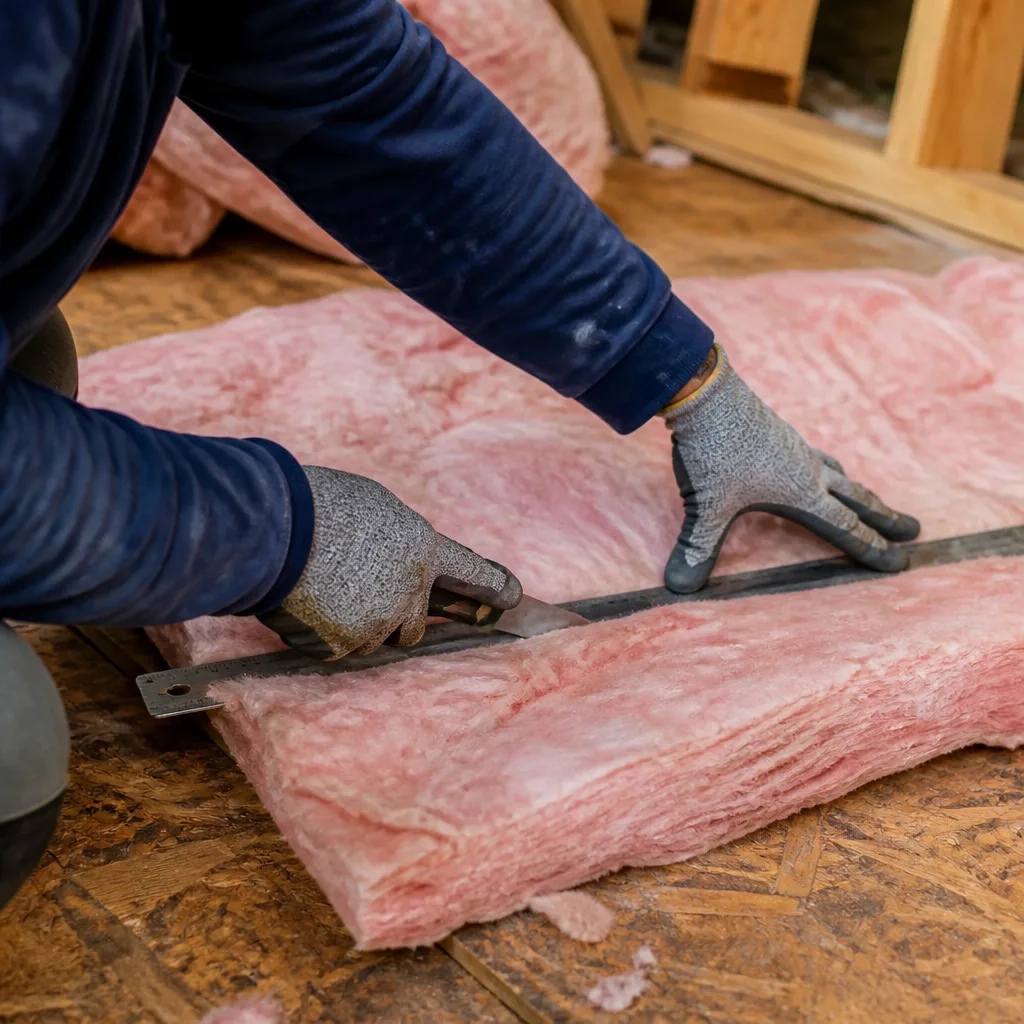
Above-grade walls in Round Rock are typically 2×4 or 2×6 wood frame with OSB or plywood sheathing, brick or siding veneer, and either batt insulation or empty cavities. Homes built 2000-2015 often have R-13 fiberglass batts in 2×4 walls; older homes may have no cavity insulation at all.
The vapor retarder question trips up contractors who apply northern practice to Zone 2A. Here’s what the IRC actually permits for our climate:
| Wall Assembly | Interior Vapor Retarder Class | Notes for Zone 2A |
|---|---|---|
| 2×4 or 2×6 with cavity insulation, permeable exterior | Class III (latex paint) | Standard practice. No polyethylene, no kraft facing required. |
| 2×6 with >R-20 cavity insulation | Class III with vented cladding | Ensure exterior sheathing can dry outward. |
| Interior spray foam (closed-cell) | Class I inherent to foam | Permitted because foam is on warm side in cooling climate; requires minimum thickness to avoid condensation on back side. |
| Interior spray foam (open-cell) | Class III inherent to foam | Requires vapor-aware design; not a standalone air barrier. |
The critical error we correct: installing Class I or II vapor retarders (poly sheeting, foil-faced batts) on the interior of Zone 2A walls with air conditioning. In summer, solar-heated brick or siding drives moisture inward through the sheathing. If it hits an impermeable interior surface, it condenses. We’ve cut open walls in Round Rock’s Paloma Lake and Stone Oak subdivisions to find mold on the interior face of OSB where poly sheeting was installed “to meet code” by a contractor who didn’t understand Zone 2A.
For existing walls without insulation, we use dense-pack cellulose or fiberglass through drilled access holes, or inject slow-rise open-cell foam where cavity conditions allow. For gut renovations, we prefer netted and blown cavity fill to batts, which are difficult to install without gaps and compression at electrical boxes and plumbing.
Crawl Space Encapsulation and Vapor Barriers
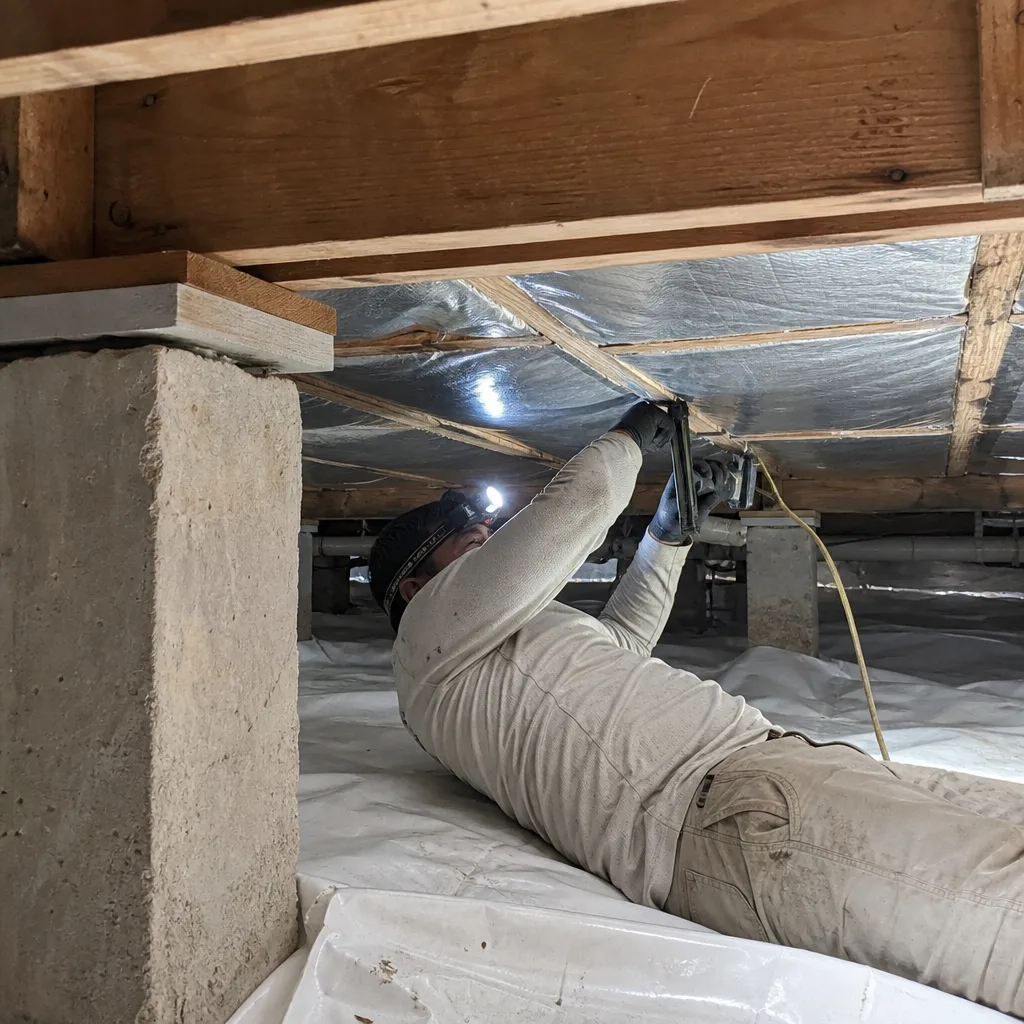
Round Rock’s clay soils hold moisture year-round, and vented crawl spaces without ground cover are humidity pumps that raise floor assembly moisture content above 20% for months at a time. This isn’t hypothetical; we moisture-meter floor joists in unencapsulated crawls across Round Rock and routinely read 22-28% in summer. Wood decay fungi activate above 20%. Mold colonizes at 60% relative humidity in the cavity, which a vented crawl in July achieves effortlessly.
Crawl space encapsulation in Round Rock follows a specific sequence:
- Remove organic debris and grade for drainage.
- Seal foundation vents permanently - they admit humid outdoor air that condenses on cool surfaces.
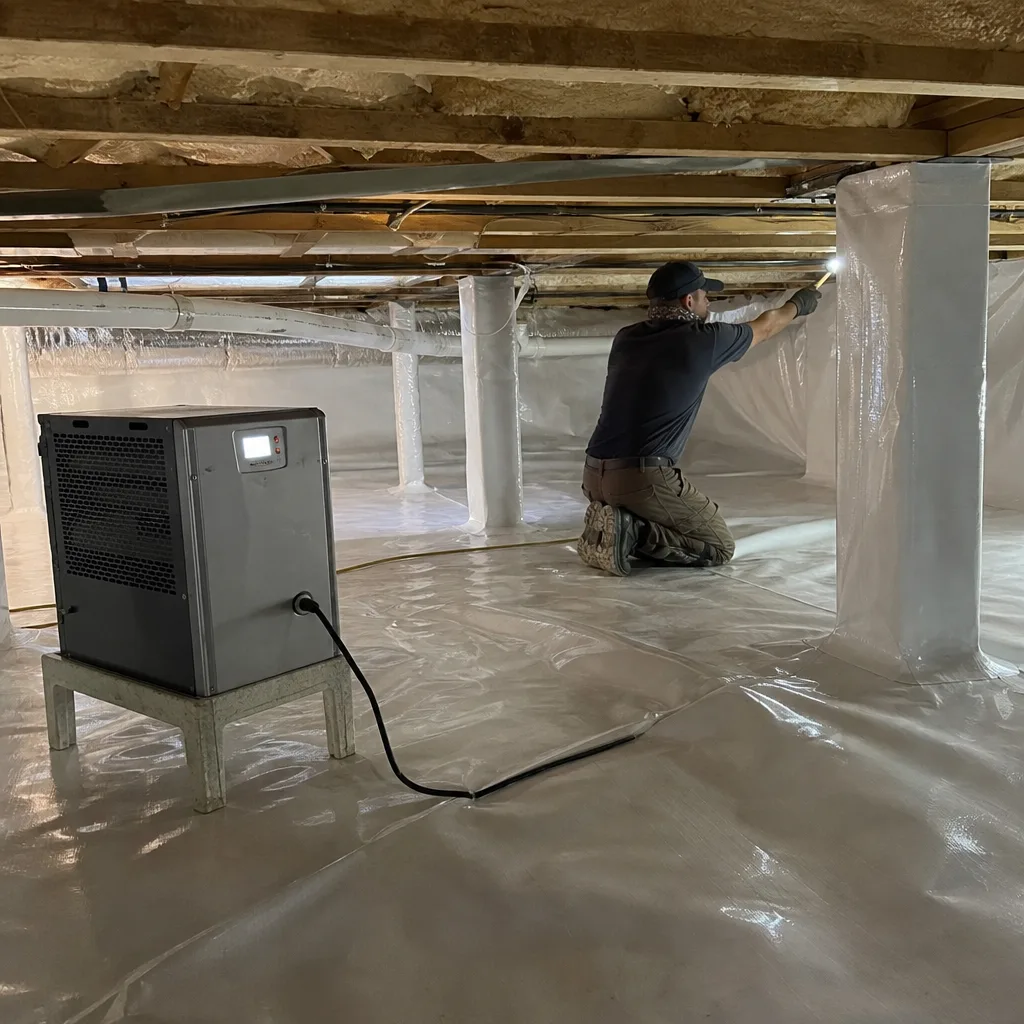
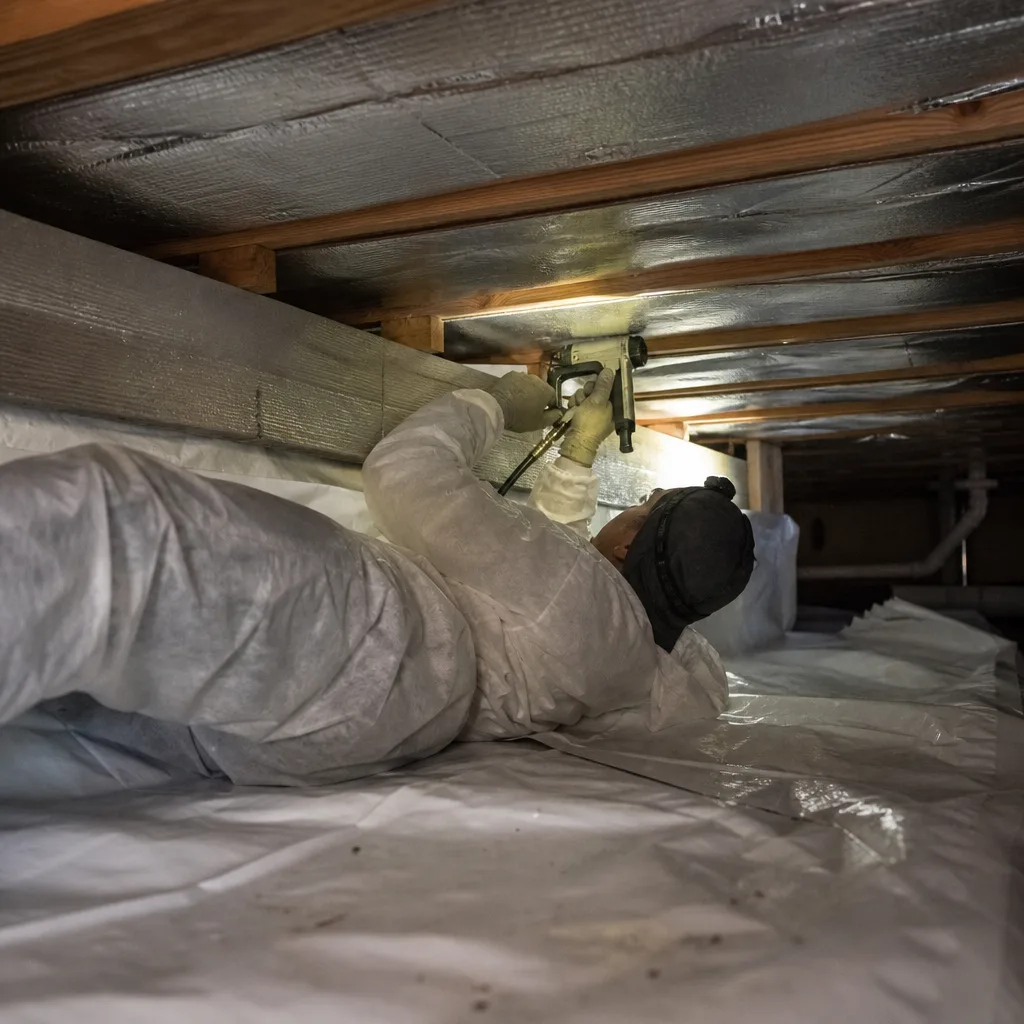
- Install 10-mil or thicker reinforced polyethylene vapor barrier across 100% of ground surface, sealed at seams and extended 6 inches up foundation walls.
- Insulate foundation walls with rigid foam (R-10 minimum in Zone 2A) or closed-cell spray foam, leaving a termite inspection gap per Texas regulations.
- Install conditioned air supply or dedicated dehumidifier to maintain <60% relative humidity year-round.
- Verify with humidity logging for 30 days minimum.
The alternative - insulating the floor joists from below with batts - fails in our climate unless the crawl is already dry and sealed. We’ve removed saturated fiberglass batts hanging like wet laundry from too many Round Rock crawls. Encapsulation costs more upfront but eliminates the moisture source rather than filtering it through insulation.
Reading a Blower-Door Test: What the Numbers Mean
A blower-door test is a pressurization reading that shows, in one number, how much air your building envelope is losing. The equipment - a calibrated fan mounted in an exterior door frame - depressurizes the house to 50 pascals below outdoor pressure, then measures the airflow required to maintain that difference. The result is reported as CFM50 (cubic feet per minute at 50 pascals) or ACH50 (air changes per hour at 50 pascals).
ACH50 is more useful for comparison because it normalizes for house size. Here’s how to read it for a Round Rock home:
| ACH50 Range | What It Means | Typical Condition |
|---|---|---|
| 15+ | Severe leakage. Equivalent to a window open year-round. | Pre-1990 construction, no air sealing, minimal insulation. |
| 10-15 | Very leaky. Comfort complaints common, energy bills high. | 1990-2005 construction, code-minimum or absent sealing. |
| 7-10 | Below average for Texas. Some comfort issues in extreme weather. | 2005-2015 construction, basic builder-grade sealing. |
| 5-7 | Average for improved homes. Acceptable but not optimized. | Post-2015 code, or older home with moderate retrofit. |
| 3-5 | Good performance. Noticeable comfort and efficiency gains. | Well-sealed and insulated, quality construction or thorough retrofit. |
| <3 | Excellent. Approaches Passive House territory. | Intentional high-performance build, or exceptional retrofit. |
A 7 ACH50 house is exchanging its entire air volume seven times per hour at test pressure. At natural pressure conditions, that’s roughly 0.35 natural air changes per hour - still significant. Every one of those exchanges carries latent heat load in Round Rock’s climate. Reducing from 7 to 3 ACH50 doesn’t make the house “too tight”; it makes the ventilation you control (bathroom fans, kitchen range hood, ERV if installed) more effective than the leakage you don’t.
We publish before-and-after blower-door numbers on every applicable job. Not a marketing claim - the actual readings, in writing, with the date and conditions. A homeowner in Round Rock’s Cat Hollow neighborhood received our report showing 6,800 CFM50 pre-work and 2,400 CFM50 after attic air sealing and R-38 cellulose. That’s a 65% reduction in envelope leakage, documented, not estimated.
The Documentation You Should Hold at Job Completion
What leaving looks like should be clear before anyone arrives. Under Haven Standard, every job closes with specific documentation. For insulation and air-sealing work in Round Rock, demand these items:
- Pre- and post-blower-door readings. Two numbers, same unit, same test conditions. If a contractor won’t test after the work, they can’t prove it worked.
- Written scope of work. What was sealed, what insulation was installed where, to what depth or thickness, with what material. Not an invoice line item - a technical description.
- Material spec sheets with R-value per inch. The actual product installed, not “fiberglass” or “foam.” R-value degrades with settling, temperature, and moisture; baseline documentation protects both parties.
- Photo log of sealed penetrations. Before, during, and after images of top plates, can lights, duct connections, and any problem areas found. Our Documented Photo Record is included on every job, not available on request.
- Warranty document. Our 365-Day Done Right Promise - if it’s not done right, we make it right - is in writing before work starts. Anything less is a conversation, not a commitment.
We’ve reviewed competitors’ “completion packets” that contain only an invoice and a one-page warranty. The homeowner has no proof of what was actually installed, no verification that air sealing occurred, no baseline for future comparison. That’s not service; it’s a transaction. Haven Standard Clause 1 requires a Written Price Before Any Work Starts; the closing documentation completes the loop so you know what you paid for and can verify it performed.
What Insulation Costs in Round Rock
We name price ranges because “call for a quote” contradicts Haven Standard. These are actual ranges for most jobs we complete in Round Rock, based on 9,000+ homes sealed and insulated since 2016. Every home differs; these are starting points for planning, not guarantees.
| Service | Typical Range | What Drives Cost |
|---|---|---|
| Attic air sealing only | $800-$1,800 | Attic accessibility, number of penetrations, can light count. |
| Attic insulation (blown cellulose or fiberglass) to R-38 | $1,500-$3,500 | Attic square footage, existing insulation removal, access difficulty. |
| Attic insulation + air sealing package | $2,500-$5,500 | Combined scope, attic complexity, need for baffles or vent repair. |
| Spray foam insulation (open-cell, attic floor or roof deck) | $3.50-$5.50 per board foot | Thickness, access, need for ignition barrier coating. |
| Wall insulation (dense-pack existing walls) | $2.00-$4.50 per square foot of wall | Cavity accessibility, number of stories, interior or exterior access. |
| Crawl space encapsulation | $4,500-$9,000 | Crawl square footage, height, drainage needs, dehumidifier sizing. |
| Insulation removal and replacement | $1,200-$3,000 plus new insulation | Contamination level (rodent, mold), volume, disposal requirements. |
These ranges assume typical 1,800-3,200 square foot Round Rock homes built 1985-2020. Older homes with irregular framing, additions with multiple roof lines, or significant rodent damage fall outside these bands. We provide a Written Price Before Any Work Starts - flat price, written scope, written warranty - after inspection, never after starting work.
We also offer a Free Second Opinion on Any Written Estimate. Bring us a competing quote; we’ll read it with you line by line and explain where the scope differs from what we would specify. No obligation, no pressure. We’ve found that many Round Rock homeowners who thought they were comparing “the same job” were actually looking at proposals with different air-sealing scope, different insulation depths, or no blower-door verification at all. See our DIY vs Professional Insulation: The Round Rock Homeowner’s Decision Guide to understand when expert help is worth the investment.
Common Mistakes to Avoid
- Blowing insulation over unsealed attic floors. The insulation becomes a filter for dust and a bridge for moisture, while air continues to bypass it through gaps. We remove and re-do this regularly in Round Rock homes where “attic insulation” was sold without “attic sealing.”
- Installing interior vapor barriers in Zone 2A walls. Polyethylene sheeting or foil-faced batts on the interior side of above-grade walls trap summer moisture and create mold conditions. The IRC permits Class III retarders here for good reason.
- Ignoring can lights and top plates. A contractor who quotes “attic insulation” without inspecting these two leak sources is quoting decoration, not performance. Ask specifically: what is your air-sealing scope?
- Encapsulating crawl spaces without dehumidification. Sealing the vents traps humidity from the ground and foundation walls. Without active drying, you’ve created a terrarium under your floor.
- Trusting R-value alone in hot climates. R-value measures conductive resistance at 75°F mean temperature. It doesn’t account for air leakage, radiant gain, or the fact that fiberglass performs worse at temperature extremes. A lower-R, well-sealed assembly often outperforms a higher-R, leaky one.
- Accepting “estimated” or “typical” energy savings. Without blower-door verification, savings claims are guesses. Demand measured before-and-after numbers or walk away.
When to Call a Professional
Call when your summer cooling bills exceed $0.12 per square foot of conditioned space in a home built after 2000. Call when rooms farthest from the air handler are more than 3°F different from the thermostat setpoint. Call when you find insulation displaced in the attic, indicating air movement strong enough to move material. Call when your crawl space smells musty or your hardwood floors cup seasonally - both indicate moisture migration through the envelope.
Topside Attic Insulation Round Rock offers free estimates in Round Rock. We’ll inspect your attic, crawl space, and accessible wall cavities; run a blower-door test if the home is suitable; and provide a Written Price Before Any Work Starts with no obligation. If you’re still evaluating options, read our How to Hire a Insulation Contractor in Round Rock: A Step-by-Step Guide before you decide. Call (737) 259-7528 or text us to schedule. A live person answers 24/7 - no voicemail loops, no callback windows measured in business days.
Frequently Asked Questions
Most attic insulation jobs in Round Rock homes between 1,800 and 3,200 square feet run $1,500-$3,500 for blown cellulose or fiberglass to R-38, or $2,500-$5,500 when combined with comprehensive air sealing. For detailed pricing factors, see our Insulation Cost Breakdown: The Round Rock Homeowner’s Reference for 2026. Homes with existing insulation removal, difficult attic access, or significant air-sealing complexity fall toward the upper end. Call (737) 259-7528 for a written estimate specific to your home - estimates are free.
R-38 meets the performance minimum for most well-sealed Round Rock attics; R-49 adds margin for west-facing roofs, limited shade, or homeowners planning long-term occupancy. The bigger variable is air sealing - a leaky R-49 attic underperforms a tight R-38 attic every time. We test and prove the difference rather than assuming it.
No interior vapor barrier is required or recommended for standard above-grade walls in Zone 2A. Latex paint on drywall (Class III vapor retarder) is the correct choice. Interior polyethylene or foil-faced batts trap summer moisture driven inward by solar heating and can cause mold and rot in the wall cavity. This is one of the most common errors we correct in Round Rock homes.
Open-cell spray foam is vapor-permeable and not a moisture barrier; closed-cell is vapor-impermeable and can trap moisture if applied too thin on the cold side of an assembly. In Round Rock’s climate, we specify closed-cell thickness carefully to keep the condensation plane outside the foam layer, and we never apply open-cell below 3 inches where air barrier performance is needed. The material isn’t the risk; incorrect specification is.
Demand documentation: pre- and post-blower-door readings, material spec sheets with installed depth, and photos of sealed penetrations. If your contractor provided none of these, you don’t know - and neither do they. We deliver this on every job as standard practice, not upgrade.
Cellulose and fiberglass insulation last 20-30 years when protected from moisture and disturbance, but performance degrades within 5-10 years if the attic leaks air or the crawl space floods seasonally. The critical lifespan isn’t the material’s; it’s the assembly’s. A well-sealed, dry assembly maintains performance for decades; a leaky or wet one fails regardless of material age.
The Bottom Line
Round Rock’s Zone 2A climate demands insulation strategy built on air sealing first, moisture-aware material selection, and verified performance rather than assumed R-value. The three leak pathways of Texas slab construction - top plates, can lights, HVAC chases - matter more here than nominal insulation depth. Vapor retarder choices that work in Dallas or El Paso fail here. And the only proof that matters is measured: blower-door numbers before and after, with documentation you hold in hand. We’ve sealed and insulated 9,000+ homes since 2016 under The Haven Standard, every one with a written price before work started and a documented record when the crew left. The principles in this guide apply whether you hire us or not; the measurement and documentation standards should apply regardless.
Written by Wes Okafor, Owner at Topside Attic Insulation Round Rock, serving Round Rock since 2016.