
Last updated September 24, 2026
Insulation Cost Breakdown: The Round Rock Homeowner’s Reference for 2026
Here’s what we see on the other side of most Round Rock insulation estimates: the average attic quote omits three cost categories that appear on the final invoice more than half the time. Debris removal of existing material. Air sealing labor as a separate phase. And the blower-door test that would prove the work performed as specified. A 2026 cost breakdown is only useful if it defines what each line should contain, not just what it should cost. This guide walks through installed pricing by material, the line items that belong on every quote, and the payback math that tells you whether R-30 or R-49 actually pencils out for your specific house in Round Rock’s Zone 2A climate. For seasonal insulation care and year-round maintenance guidance, see our dedicated homeowner’s guide.
Quick Answer
Most complete attic insulation jobs in Round Rock in 2026 run between $2,800 and $6,500 for a 2,000-square-foot home, depending on material type and whether existing insulation must be removed first. Blown fiberglass and cellulose sit at the lower end of that range, while closed-cell spray foam runs higher due to material cost and labor intensity. The critical variable most quotes skip: whether air sealing and post-job blower-door verification are included as separate, priced line items or omitted entirely.
Table of Contents
- Why Round Rock Insulation Quotes Vary by 60 Percent for the Same Stated Scope
- 2026 Installed Costs per Square Foot by Material Type
- The Four Line Items That Belong on Every Quote
- The R-Value Cost Curve: Where Round Rock’s Optimum Actually Sits
- Payback Math Using Actual Round Rock Utility Data
- Two Red Flags in Underpriced Quotes
- Round Rock Neighborhood Factors That Shift Pricing
- Common Mistakes to Avoid
- When to Call a Professional
- Frequently Asked Questions
- The Bottom Line
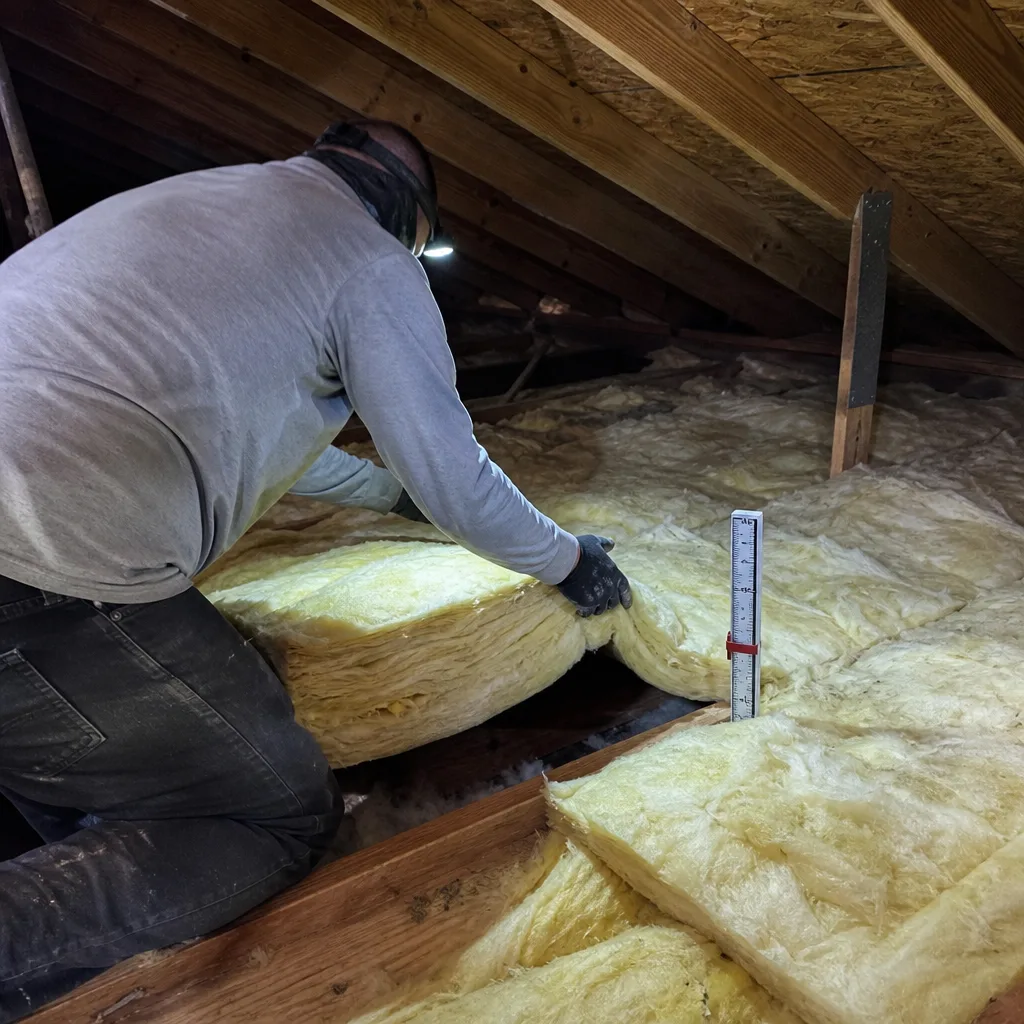
Why Round Rock Insulation Quotes Vary by 60 Percent for the Same Stated Scope
We’ve reviewed thousands of competing estimates since 2016, and the pattern holds steady in Round Rock. Two contractors can quote “attic insulation to R-38” and arrive at prices 60 percent apart because they’re describing fundamentally different scopes of work.
The lower quote typically bundles everything into a single per-square-foot rate. It assumes the attic floor is ready to receive new material. It assumes no existing insulation needs removal. It assumes air sealing happens, if at all, as an incidental step during installation rather than a dedicated phase with specified materials and labor hours. And it assumes no post-job verification, because verification would require a blower-door test - a pressurization reading that shows, in one number, how much air your building envelope is losing - and that test costs money and time that would erode the low price.
The higher quote breaks these elements into separate line items with individual pricing. This transparency looks more expensive at first glance. But the lower quote often generates change orders once the crew discovers the existing material is contaminated, the top plates leak like a sieve, or the homeowner expected proof that the work actually performed as specified.
In Round Rock specifically, we’ve seen this divergence widen since 2023 as building code enforcement tightened and more homeowners requested documentation for resale or energy-efficiency financing. The 2021 IECC adoption by the city, with local amendments, means inspectors in newer developments like Behrens Ranch and Forest Creek are more likely to flag inadequate envelope sealing during resale inspections. Our guide to Insulation Permits, Codes & Inspections in TX: What You Need to Know breaks down what triggers these flags. Contractors who’ve adapted quote higher because they’re doing more work. Contractors who haven’t adapted quote lower because they’re doing less, hoping the homeowner won’t know the difference until it’s too late.
The Haven Standard approach, which we’ve operated under since 2016, treats this differently. Every job begins with a written price that specifies each phase: removal if needed, air sealing with material and labor broken out, insulation installation with R-value target and material type named, and post-job documentation including blower-door numbers where applicable. No work starts without this written scope. The price might land in the middle of the range you collect, but it won’t grow after the crew arrives.
2026 Installed Costs per Square Foot by Material Type
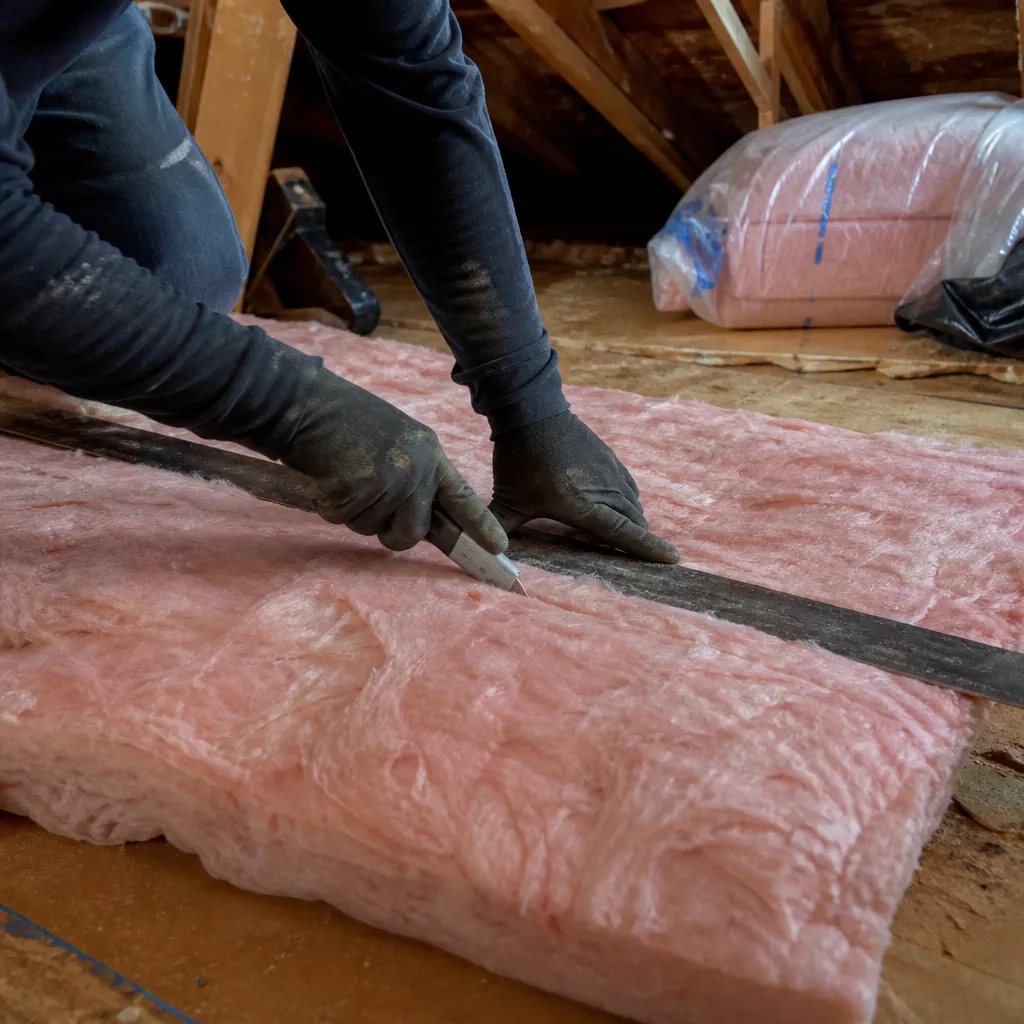
These ranges reflect what we’re seeing in the Round Rock market for completed jobs in early 2026, including labor, equipment, and standard access conditions. Prices assume a 2,000-square-foot attic footprint with 4:12 to 6:12 pitch, accessible via attic stairs or scuttle, with no active roof leaks or structural remediation needed. Your specific home may vary based on access difficulty, existing material condition, and whether air sealing is included as a separate phase.
| Material | Installed Cost per Sq Ft | Typical R-Value Achieved | R-Value per Dollar (higher = more efficient spend) |
|---|---|---|---|
| Blown cellulose (GreenFiber or equivalent) | $1.40 - $2.10 | R-3.2 to R-3.8 per inch | 1.7 - 2.4 |
| Blown fiberglass (CertainTeed or Owens Corning) | $1.60 - $2.40 | R-2.9 to R-3.7 per inch | 1.5 - 2.1 |
| Open-cell spray foam (Icynene or Demilec) | $2.80 - $4.20 | R-3.6 to R-3.9 per inch | 1.0 - 1.3 |
| Closed-cell spray foam (Demilec or equivalent) | $4.50 - $6.80 | R-6.0 to R-6.5 per inch | 1.1 - 1.4 |
Blown fiberglass and cellulose dominate Round Rock’s retrofit market because they achieve code-compliant R-values at the lowest installed cost. Cellulose runs slightly less per square foot and offers marginally better R-value per dollar, though fiberglass maintains its R-value more reliably if attic moisture conditions fluctuate. In Round Rock’s Zone 2A climate, with hot, humid summers and mild winters, either performs adequately when paired with proper air sealing.
Open-cell spray foam makes sense for specific applications: cathedral ceilings where depth is limited, irregular framing bays that are difficult to dense-pack, or homeowners prioritizing air barrier performance over raw R-value per dollar. Closed-cell spray foam, at roughly double the installed cost, is typically reserved for crawl space rim joists, metal building applications, or situations where moisture management and structural rigidity matter as much as thermal performance. We’ve installed closed-cell in Round Rock homes near Brushy Creek where seasonal flooding risk made the vapor barrier properties worthwhile, but it’s overkill for standard attic floors.
Material brand matters less than installation quality, but we source from Owens Corning, Johns Manville, Knauf, Rockwool, CertainTeed, Icynene, Demilec, and GreenFiber specifically to avoid proprietary lock-in. If a contractor specifies only their “exclusive” foam system, ask who manufactures it and whether you’re paying a premium for a private label.
The Four Line Items That Belong on Every Quote
A legitimate insulation quote in Round Rock should read like a small construction contract, not a menu item. These four categories should appear as distinct, priced elements:
1. Existing Material Removal and Disposal
If your attic contains degraded fiberglass, vermiculite, rodent-contaminated material, or pre-1990s insulation of unknown composition, removal is not optional. In Round Rock’s older neighborhoods like Old Town and Kenney Fort, we regularly encounter attics with three layers of mismatched material, some compressed to R-5 equivalent or below. These are classic insulation warning signs Round Rock homeowners should watch for. Removal pricing should specify: dumpster or bagged disposal, labor hours estimated, and any hazardous material testing if vermiculite or asbestos is suspected. Typical range for a 2,000-square-foot attic: $800 to $1,800, depending on material volume and access.
2. Air Sealing Phase
This is where most low bids cut corners. Proper air sealing in a Round Rock attic targets: top plates where interior walls meet the attic floor, electrical and plumbing penetrations, can light housings, chimney chases, duct boot connections, and the attic access hatch itself. Materials include acrylic latex caulk, fire-rated foam, metal flashing, and weatherstripping. Labor is typically 4 to 8 hours for a 2,000-square-foot footprint. This phase should appear as its own line item with material and labor separated, not buried in a single “insulation” rate. Typical range: $1,200 to $2,400.
We won’t blow insulation over an unsealed attic floor. The thermal performance of even the best insulation collapses when conditioned air streams through gaps below it. Our attic insulation in Round Rock process completes this sealing before any new material goes in.
3. Insulation Installation
This is the line item most quotes lead with, and it should specify: material type and brand, installed R-value target, depth markers or verification method, and coverage area in square feet. For blown materials, density matters as much as depth. Cellulose should be installed at approximately 1.6 to 2.0 pounds per cubic foot to prevent settling below target R-value. The quote should state whether density verification is included.
4. Post-Job Documentation
Every job should close with proof of what was done. At minimum: photos of completed work, depth measurements at multiple locations, and a written invoice matching the written scope. For jobs where air sealing was performed, a blower-door test - a pressurization reading that shows, in one number, how much air your building envelope is losing - provides before-and-after comparison. Typical cost for this testing: $300 to $500 when performed by the insulation contractor, or $450 to $700 if a third-party HERS rater is involved.
Under Haven Standard: Have it in writing, this documentation is not optional. Every one of the 9,000+ homes we’ve sealed and insulated since 2016 received a written price before work started and a documented record when the crew left.
The R-Value Cost Curve: Where Round Rock’s Optimum Actually Sits
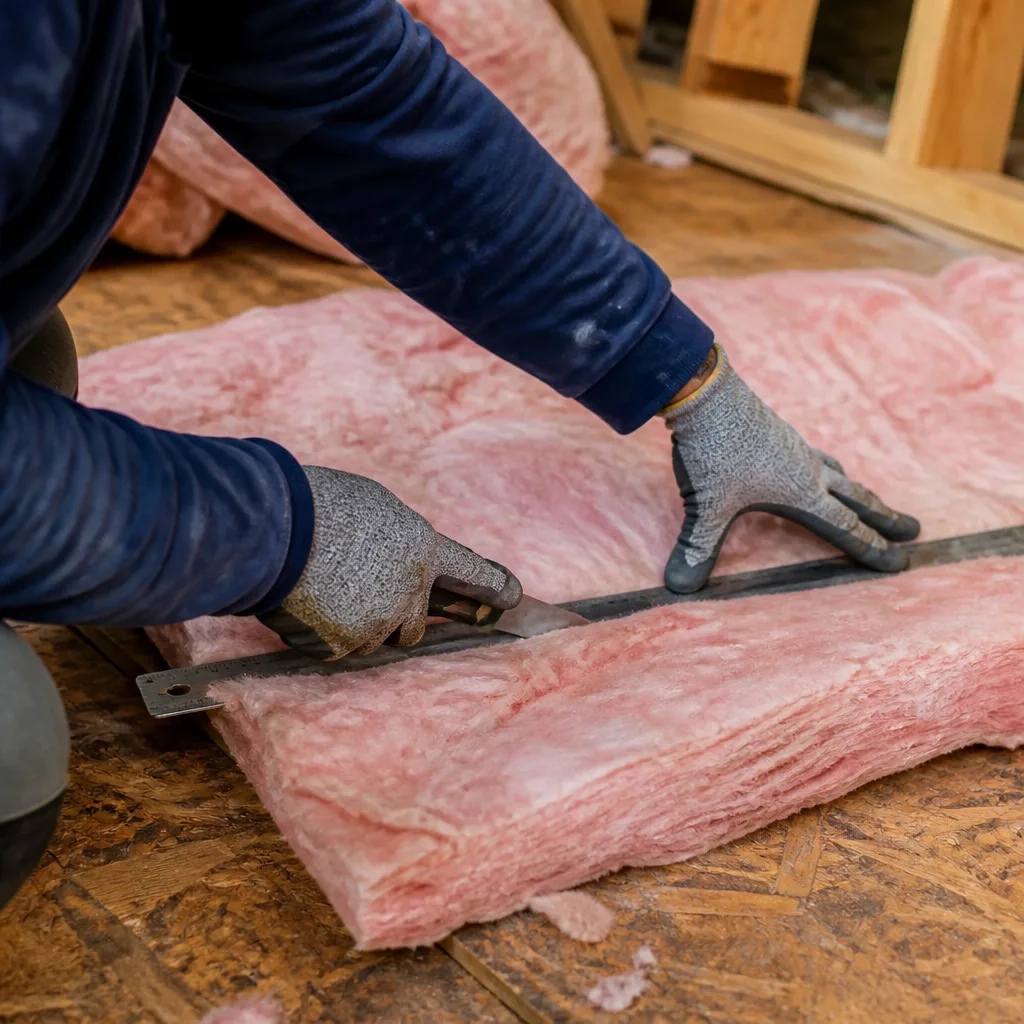
The relationship between R-value and cost is not linear. Each additional R-unit costs more than the one before it, because you’re adding material thickness while the incremental energy savings diminish. Understanding this curve prevents overspending on R-60 when R-38 or R-49 captures nearly all available return.
Here’s how the cost curve typically breaks for a standard Round Rock attic:
- R-0 to R-20: Lowest cost per R-unit. Moving from uninsulated to basic insulation yields dramatic reduction in heat transfer. In Round Rock’s cooling-dominated climate, this is the steepest part of the savings curve.
- R-20 to R-38: Moderate cost per R-unit. This is the 2021 IECC code minimum for Round Rock’s Zone 2A climate - R-30 for ceilings in some construction types, R-38 in others. Most existing homes built between 1990 and 2010 sit in the R-19 to R-30 range and benefit from topping off to this level.
- R-38 to R-49: Higher cost per R-unit, but often the performance optimum for homeowners planning to stay 7+ years. The incremental material cost is recoverable through extended ownership, particularly with current utility rates.
- R-49 to R-60: Highest cost per R-unit with diminishing marginal return. Justifiable primarily for net-zero or passive house targets, or where utility incentives specifically reward this threshold.
Round Rock’s position in IECC Climate Zone 2A means heating degree days are low and cooling degree days are high. The R-value cost curve is slightly flatter on the cooling side than heating-dominated climates, because radiant heat gain through the roof deck matters as much as conductive heat transfer. This is why radiant barrier installation - a reflective layer that reduces radiant heat transfer - sometimes appears as a cost-effective supplement to mid-range R-values rather than pushing to R-60 with insulation alone.
For most Round Rock homes we assess in neighborhoods like Cat Hollow, Paloma Lake, or Sonoma, the practical optimum sits at R-38 to R-49 when air sealing is performed to complement the thermal barrier. A home at R-30 with excellent air sealing often outperforms a home at R-49 with leaky top plates and unsealed can lights. The blower-door test proves this: we’ve seen 4,200 CFM50 drop to 2,100 CFM50 with air sealing alone, before adding a single bag of insulation.
Payback Math Using Actual Round Rock Utility Data
Generic national payback estimates are worse than useless in Round Rock because they don’t account for local rate structures, degree-day profiles, or the ERCOT grid’s pricing volatility. Here’s how to calculate actual payback for your specific situation.
Step 1: Establish Your Baseline
Pull 12 months of electric bills. In Round Rock, most homes are served by Oncor for delivery and choose a retail electric provider. Average residential rates in early 2026 are running 14 to 18 cents per kWh all-in, though time-of-use plans shift this significantly. Natural gas, where present for heating, adds another variable. Total your annual heating and cooling spend, or use the percentage your provider estimates if combined with baseload.
Step 2: Estimate Savings by Improvement Level
For a 2,000-square-foot home in Round Rock with typical pre-2010 insulation (R-19 or less, minimal air sealing), modeled savings from improvement are approximately:
- R-19 to R-30 with air sealing: 15 to 22 percent reduction in heating/cooling load
- R-19 to R-38 with air sealing: 22 to 30 percent reduction
- R-19 to R-49 with air sealing: 28 to 35 percent reduction
These percentages come from REMC modeling calibrated to Central Texas degree-day data: approximately 2,400 cooling degree days and 1,800 heating degree days annually. The cooling dominance means attic insulation improvements yield proportionally more savings here than in northern climates where wall and basement losses dominate.
Step 3: Calculate Simple Payback
Multiply annual heating/cooling spend by estimated percentage savings. Divide total job cost by annual savings. Example: $2,400 annual HVAC spend, 25 percent savings from R-38 with air sealing, $4,500 job cost. Annual savings: $600. Simple payback: 7.5 years.
With Round Rock’s growth trajectory and typical homeowner tenure, payback periods under 10 years generally make financial sense. Periods under 7 years are strong recommendations. The calculation shifts favorably if you’re replacing HVAC equipment simultaneously - right-sizing a system based on reduced load can reduce equipment cost by 15 to 25 percent, an indirect insulation benefit rarely captured in simple payback.
Our Topside Attic Insulation Round Rock home assessments include this calculation using your actual bills, not estimates. The written price you receive before any work starts incorporates these specifics.
Two Red Flags in Underpriced Quotes
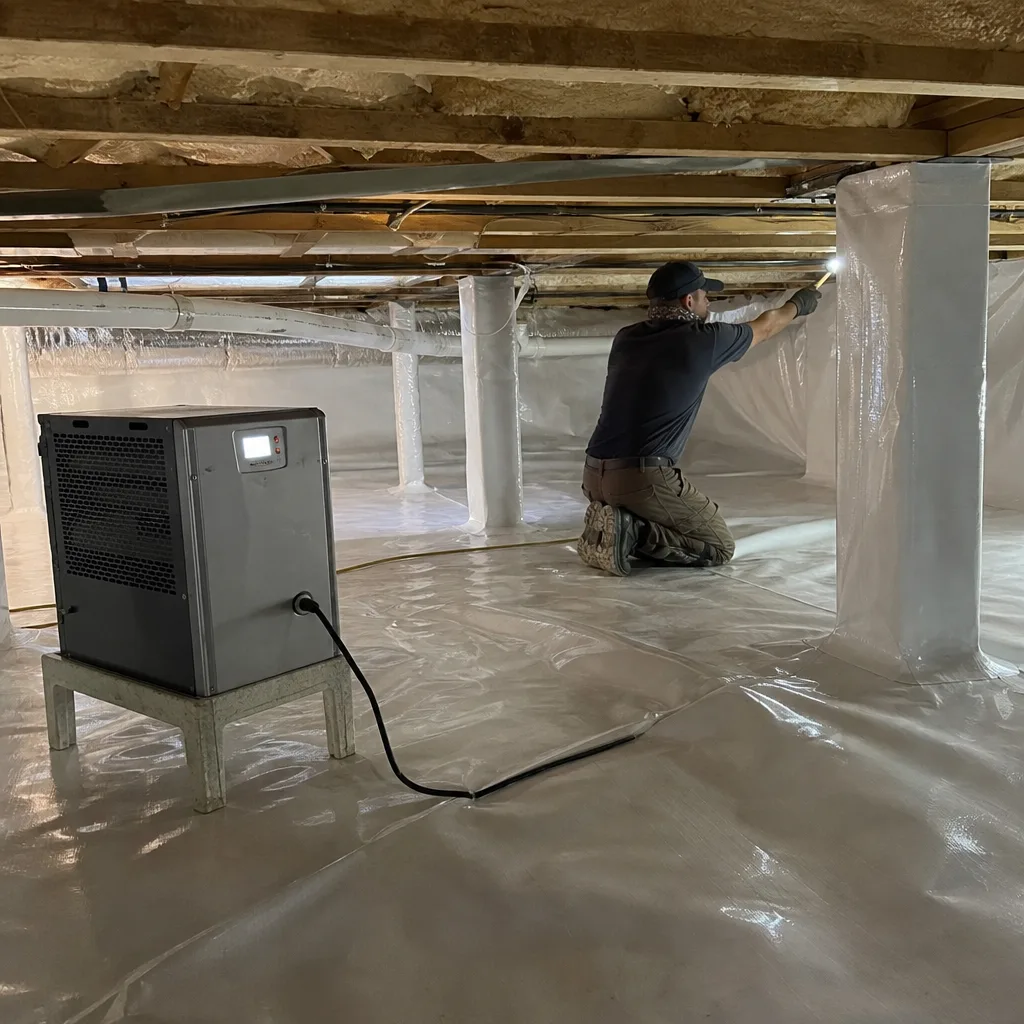
After reviewing competitor estimates with hundreds of Round Rock homeowners, two omissions predict problems with near-perfect reliability:
Red Flag 1: No Air Sealing Phase
If the quote lists “insulation installation” as a single line item with no preceding air sealing phase, the contractor plans to blow material over whatever’s there. In Round Rock’s climate, this means summer attic air at 140 degrees will still stream through top plates and can light gaps, convecting around and through your new insulation. The R-value on the bag becomes irrelevant. We’ve removed one-year-old insulation in Round Rock homes where the homeowner realized their upstairs bedrooms were still unbearable - the material was fine, but the air leaks were never addressed.
Red Flag 2: No Post-Job Documentation
If there’s no mention of photos, depth verification, or blower-door testing, the contractor intends to leave no proof of what was installed. You have no recourse if settling drops R-value below target, if coverage is uneven, or if air sealing was skipped. The 365-Day Done Right Promise we offer is only enforceable because we deliver a documented record on every visit - photos, measurements, and blower-door readings where applicable - before anyone leaves the site. A contractor who won’t document their work won’t stand behind it.
These two omissions are how underpriced quotes hit their number. Labor and material costs don’t vary that dramatically between legitimate contractors in the Round Rock market. What varies is how much work they actually plan to do, and whether they’ll prove they did it.
Round Rock Neighborhood Factors That Shift Pricing
Local geography and housing stock create predictable price variations across Round Rock. These aren’t excuses for vague estimating - they’re specifics that should appear in your written scope.
Age of housing stock: Homes in Old Town Round Rock and pre-2000 developments often have smaller attic access openings, active knob-and-tube wiring that must be avoided or upgraded, and multiple material layers requiring removal. Crew labor hours increase 20 to 40 percent. Homes in newer developments like Teravista or Mayfield Ranch typically have cleaner attics but may have builder-grade R-30 that settled to R-22 within five years.
Proximity to Brushy Creek and water features: Attics in these areas show higher humidity loading, which can degrade fiberglass performance and make vapor retarder strategies more important. We’ve found mold-stained sheathing in attics near Creekbend and Forest Creek that required remediation before insulation could be safely installed.
HOA and architectural review requirements: Some Round Rock HOAs require specific exterior vent colors, visible material types, or contractor insurance certificates above standard levels. These aren’t major cost drivers but should be anticipated in scheduling and documentation.
Utility rebate programs: Oncor periodically offers insulation rebates for qualifying improvements, typically $0.15 to $0.30 per square foot for attic insulation meeting specific R-value and installation standards. These programs require pre-approval and post-installation verification. A contractor familiar with Round Rock’s program cycles can time your project to capture these - we track these opportunities and include them in written pricing when available.
For homes with crawl space concerns, our crawl space encapsulation and vapor barrier in Round Rock addresses the other half of the building envelope that Round Rock’s clay soils and seasonal moisture affect.
Common Mistakes to Avoid
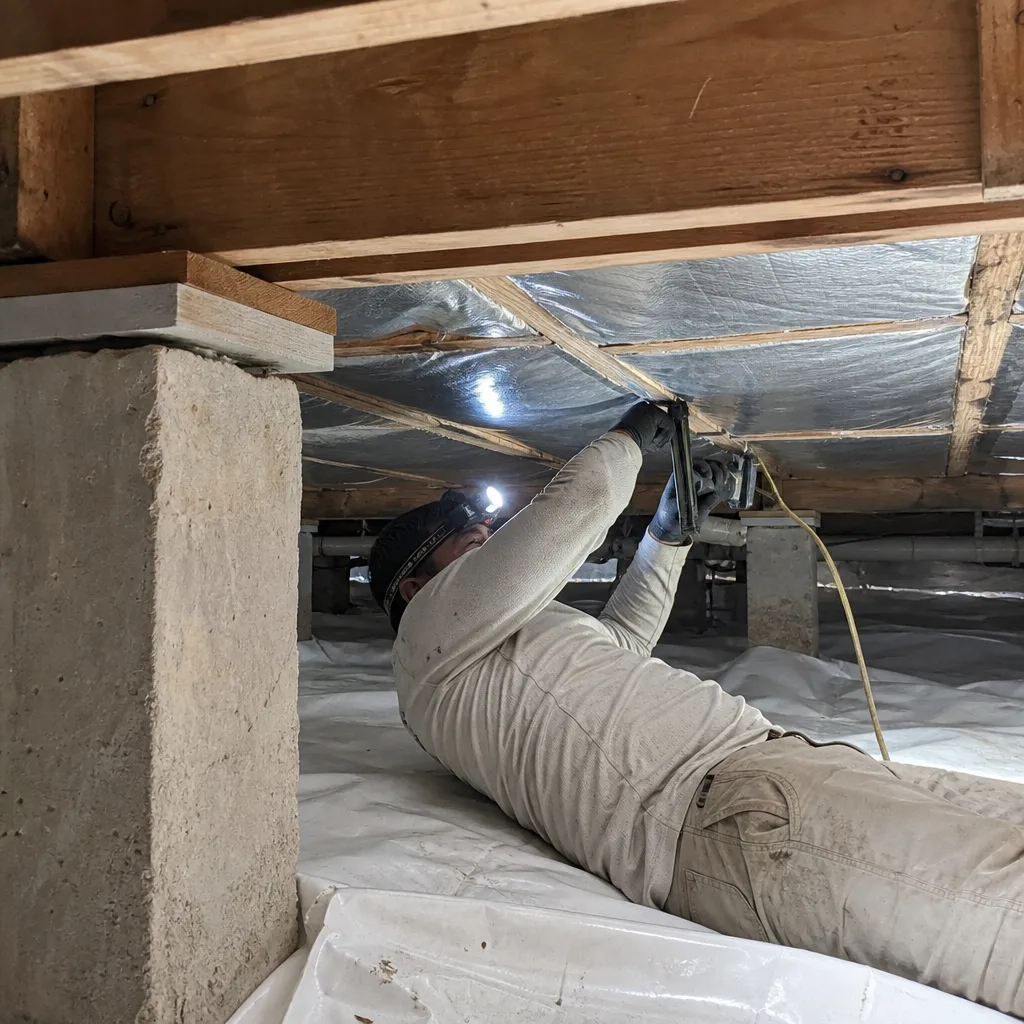
- Comparing single-line quotes without asking what’s included. The $2,200 quote and the $4,800 quote rarely describe the same work. Request itemization before comparing.
- Ignoring air sealing because it “wasn’t in the budget.” Unsealed insulation performs like a windbreaker with the zipper open. In Round Rock’s summer heat, this mistake costs more than the air sealing would have.
- Assuming R-value on the bag equals R-value in your attic. Settling, gaps, and compression reduce installed performance. Density verification and depth markers are the only proof.
- Skipping the pre-job assessment of existing material. Vermiculite, asbestos, or heavy rodent contamination requires specialized removal. Discovering this after work starts generates change orders that erase any “savings” from the low bid.
- Neglecting to verify contractor insurance and workers’ compensation. Texas does not require workers’ comp for small contractors, but you should require it. An uninsured worker injured in your attic becomes your homeowner’s policy’s problem.
- Expecting spray foam to solve everything. Spray foam is excellent air barrier material but poor moisture manager if applied to damp surfaces. Round Rock’s humid summers require dry substrate verification, not just foam application.
- Forgetting that attic insulation affects roof deck temperature. Inadequate ventilation paired with high R-value insulation can create moisture accumulation at the sheathing. Your quote should address ventilation balance, not just insulation depth.
When to Call a Professional
Call for assessment before your attic situation becomes more expensive: if your upstairs rooms run 8+ degrees warmer than downstairs in July, if you’ve noticed compressed or displaced insulation after roof work, if your energy bills have climbed without rate changes, or if you’re planning HVAC replacement and want to right-size based on actual load. Explore our more guides & resources for additional homeowner tools. In Round Rock’s competitive housing market, documented insulation and air sealing improvements also support resale value, particularly in neighborhoods where buyers expect move-in efficiency.
Topside Attic Insulation Round Rock offers free estimates in Round Rock - call (737) 259-7528. Every estimate includes a written price before any work starts, and we provide a Free Second Opinion on any written estimate you’ve already collected. Bring us a competing quote; we will read it with you and identify what’s actually included.
Frequently Asked Questions
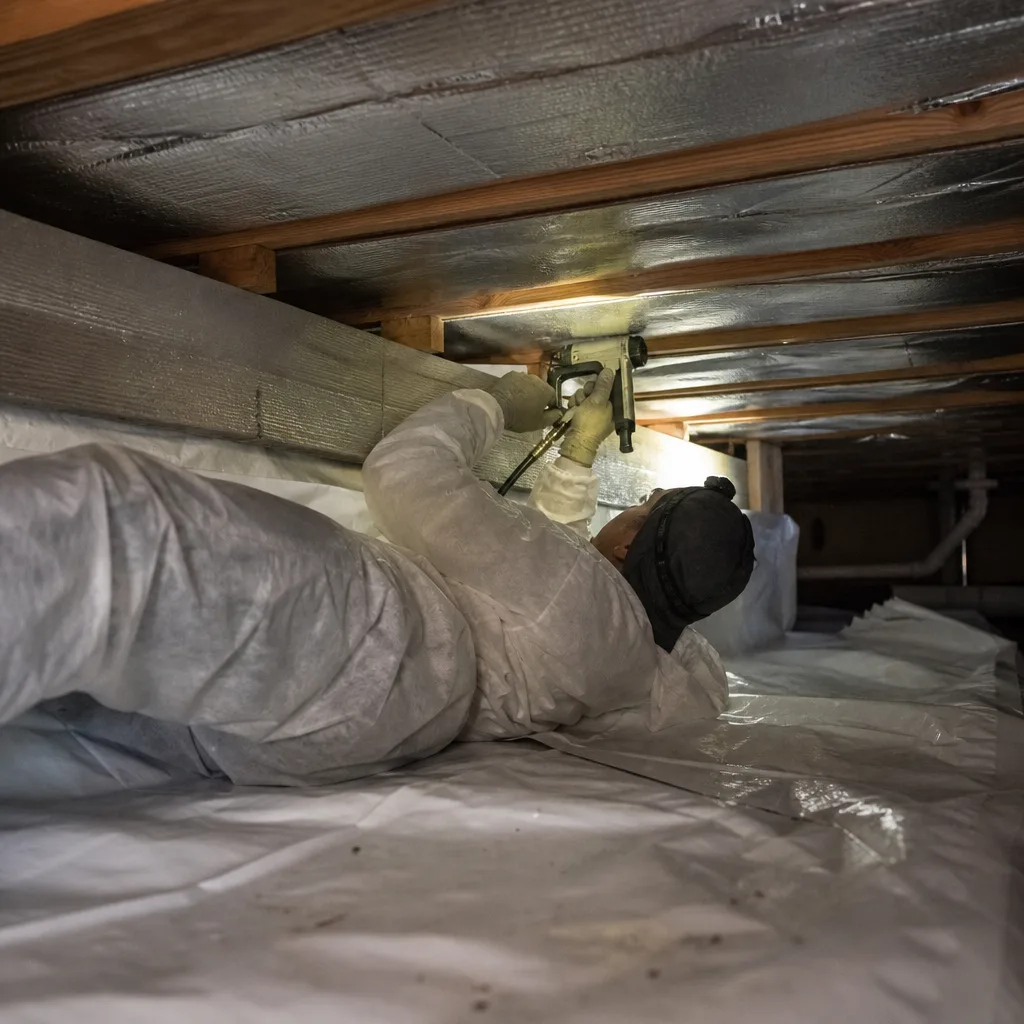
Most complete jobs for a 2,000-square-foot home run $2,800 to $6,500, with blown fiberglass and cellulose at the lower end and closed-cell spray foam at the upper end. The critical variable is whether air sealing, removal, and documentation are included as separate line items or omitted to hit a lower number. Call (737) 259-7528 for a written price specific to your home - estimates are free.
Repair, or “top-off,” is cheaper only if existing material is uniformly distributed, uncontaminated, and not compressed below R-10 equivalent. In most Round Rock homes over 15 years old, we find uneven distribution, moisture staining, or rodent activity that makes removal and replacement the more cost-effective long-term choice. A visual assessment determines which applies - we document this with photos and include them in your written scope.
No, and you should be suspicious of any contractor who offers this. Proper assessment requires attic entry, moisture and structural evaluation, and written scope development. Under Haven Standard: Have it in writing, we deliver a flat price, written scope, and written warranty before anyone lifts a tool. Same-day installation skips these steps and virtually guarantees omitted work.
R-38 to R-49 represents the performance optimum for most Round Rock homes when paired with comprehensive air sealing. Code minimum is R-30 for some construction types, but the incremental cost to reach R-38 or R-49 typically pays back within 7 to 10 years at current utility rates. R-60 and above rarely pencil out unless you’re pursuing net-zero certification.
Demand a blower-door test - a pressurization reading that shows, in one number, how much air your building envelope is losing - with before and after results. Without this, you have no verification. We publish before-and-after blower-door numbers on every applicable job so homeowners can see the performance change they actually paid for. The written record you receive includes these figures, not promises.
Open-cell spray foam can make sense for cathedral ceilings, irregular framing, or where air barrier performance is prioritized over R-value per dollar. Closed-cell is typically overkill for standard attic floors but valuable for crawl space rim joists or moisture-prone areas. Our spray foam insulation in Round Rock assessments evaluate whether your specific situation justifies the premium over blown materials.
You should receive: a final invoice matching the written scope, photos of completed work, depth measurements at multiple attic locations, and blower-door readings if air sealing was performed. Under Haven Standard, this documented photo record is included on every job, not available on request. You should know what leaving looks like before we arrive.
The Bottom Line
Insulation cost in Round Rock in 2026 is not a single number - it’s a bundle of decisions about what work gets done and how you’ll know it was done right. The 60 percent price spread between quotes reflects real differences in scope, not market inefficiency. Define your line items before comparing prices: removal if needed, air sealing as a dedicated phase, insulation installation with material and R-value specified, and post-job documentation including blower-door verification where applicable. The payback math favors R-38 to R-49 for most homeowners planning to stay 7+ years, but only when air sealing accompanies the insulation. A low quote without these elements isn’t savings - it’s deferred cost, usually discovered in July when your upstairs won’t cool below 82 degrees.
Written by Wes Okafor, Owner at Topside Attic Insulation Round Rock, serving Round Rock since 2016.