
Last updated September 24, 2026
Attic Insulation Maintenance Checklist for Round Rock Homeowners
A single HVAC condensate line drip - less than a cup of water per day - can reduce blown-fiberglass R-value by 40 percent in the wet zone within one cooling season, with no visible ceiling stain to tip off the homeowner. In Round Rock, where cooling loads run eight months of the year and sudden thunderstorms drive wind-driven rain through ridge vents, attic insulation degrades at trigger events, not on a calendar. This guide shows how to inspect after those events, what to measure, and why the installer’s certificate - not your memory of the quote - is your maintenance baseline.
Quick Answer
Attic insulation maintenance in Round Rock means inspecting after five specific trigger events: HVAC service calls, roof work, hail or wind events above 60 mph, confirmed rodent activity, and equipment changeouts. Homeowners should check settled depth with a 12-inch ruler against the installer’s certificate, look for moisture damage (clumping, discoloration, brittle crust) versus compression (uniform thinning), and verify soffit-to-ridge airflow is adequate for Central Texas cooling loads. Keep the installer’s certificate - required by FTC R-value Rule - as your baseline document.
Table of Contents
- The Five Trigger-Event Inspections
- Compression vs. Moisture Damage: How to Tell by Sight
- Measurements You Can Take Yourself
- The Installer’s Certificate: Your Maintenance Baseline
- Two Attic Features That Accelerate Degradation in Round Rock’s Climate
- A Practical Annual Walkthrough
- Common Mistakes to Avoid
- When to Call a Professional
- Frequently Asked Questions
The Five Trigger-Event Inspections
Most attic insulation guides in Round Rock suggest quarterly inspections. That’s fine for smoke detectors, but insulation doesn’t degrade on a schedule. It degrades when something happens to it. We’ve sealed and insulated over 9,000 homes since 2016, and the pattern is consistent: the worst insulation we find is rarely old. It’s recently disturbed, recently wetted, or recently compressed by someone who didn’t know it was there.
Here are the five events that should trigger an attic inspection in Round Rock:
- After any HVAC service call. Technicians walk joist paths, drag hoses, and occasionally disconnect condensate lines. A drain pan overflow or a line left unsealed can wet insulation for weeks before any ceiling stain appears. In our Round Rock work, we regularly find a 4-foot radius of degraded fiberglass beneath condensate drain connections that were bumped during filter changes or coil cleanings.
- After any roof work. New shingles, ridge vent replacement, or satellite dish installation means foot traffic on the attic floor and potential fastener penetrations. We’ve inspected attics in Forest Creek and Behrens Ranch where nail guns missed decking and punched holes through top plates, creating air leaks that bypass insulation entirely.
- After hail or wind events above 60 mph. Round Rock sits on the edge of Hail Alley. A March 2025 storm dropped golf-ball hail across much of Williamson County. Wind-driven rain enters through ridge vent gaps, turbine vent bearings, and gable vent screens. Insulation near these penetrations wets first. The damage shows as a darkened wedge pointing down from the vent, often dry to the touch by the time you look but with a brittle surface crust that indicates past wetting.
- After confirmed rodent activity. Roof rats and squirrels are active year-round in Round Rock’s mature neighborhoods - Old Town, Round Rock West, and the creek corridors near Brushy Creek. They tunnel through loose-fill fiberglass, compressing it to nest density and contaminating it with urine that breaks down binder resins. One active nest can destroy R-value across 20 square feet in a single season.
- At each equipment changeout. New water heater, new HVAC air handler, new whole-house fan - any equipment swap means removed decking, displaced insulation, and often a decision by the installer to “just push it back” rather than restore depth. We’ve measured 50 percent depth loss around equipment platforms in attics where the homeowner never knew the work happened.
Each of these events changes the attic environment. The insulation you had before the event is not the insulation you have after. Treat the inspection as part of the event, not as a separate calendar task.
Compression vs. Moisture Damage: How to Tell by Sight
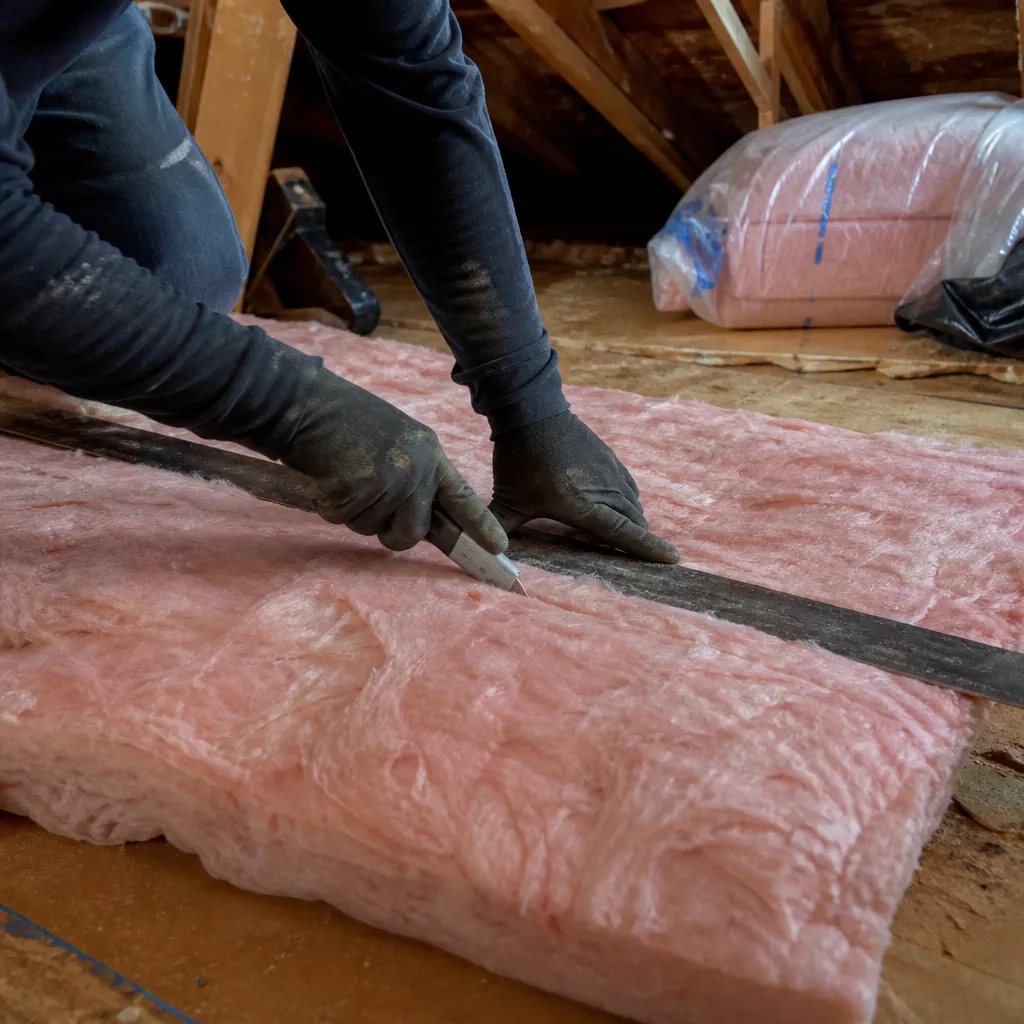
Homeowners often call us saying their insulation “looks flat.” Flat can mean two very different things, and the fix for each is different. Misidentifying one for the other wastes money or misses a problem.
Compression happens when something presses insulation down: foot traffic, stored boxes, a technician’s kneeling board, or rodent tunneling. Compressed fiberglass looks uniform and thin. The surface is level. The color is consistent with the surrounding material, just lower. The fibers are still fluffy if you lift a sample; they spring back partially. Compression reduces R-value proportionally to depth loss - 50 percent depth means roughly 50 percent R-value loss for loose-fill fiberglass.
Moisture damage looks different. The material shows discoloration, often yellowing or graying against the original pink, yellow, or white. It clumps. The fibers mat together and won’t spring back. In advanced cases, there’s a brittle surface crust - almost like stale cotton candy - where binder resins have broken down and re-crystallized. Moisture-damaged insulation can read near full depth but perform at half its rated R-value because air moves through the matted structure.
Here’s what to look for in a Round Rock attic specifically:
- Near HVAC equipment: Look directly beneath the air handler and along the condensate drain path. Check the low point of the attic floor where water would collect.
- Near ridge vents and turbines: Wind-driven rain enters at the vent-to-decking joint. The wet pattern points downward in a wedge, widest at the vent.
- Near soffit vents: In Round Rock’s humid summers, poorly baffled soffit vents can allow moisture-laden air to wash across insulation edges. Look for darkening at the attic perimeter.
- Near any roof penetration: Plumbing vents, electrical masts, and chimney chases are leak-prone. Insulation within 3 feet of these should be lifted and checked from below.
If you find moisture damage, don’t add new insulation over it. The wet layer will continue to degrade and can mold. Remove and replace the affected section, identify the leak source, and fix it before restoring depth.
Measurements You Can Take Yourself
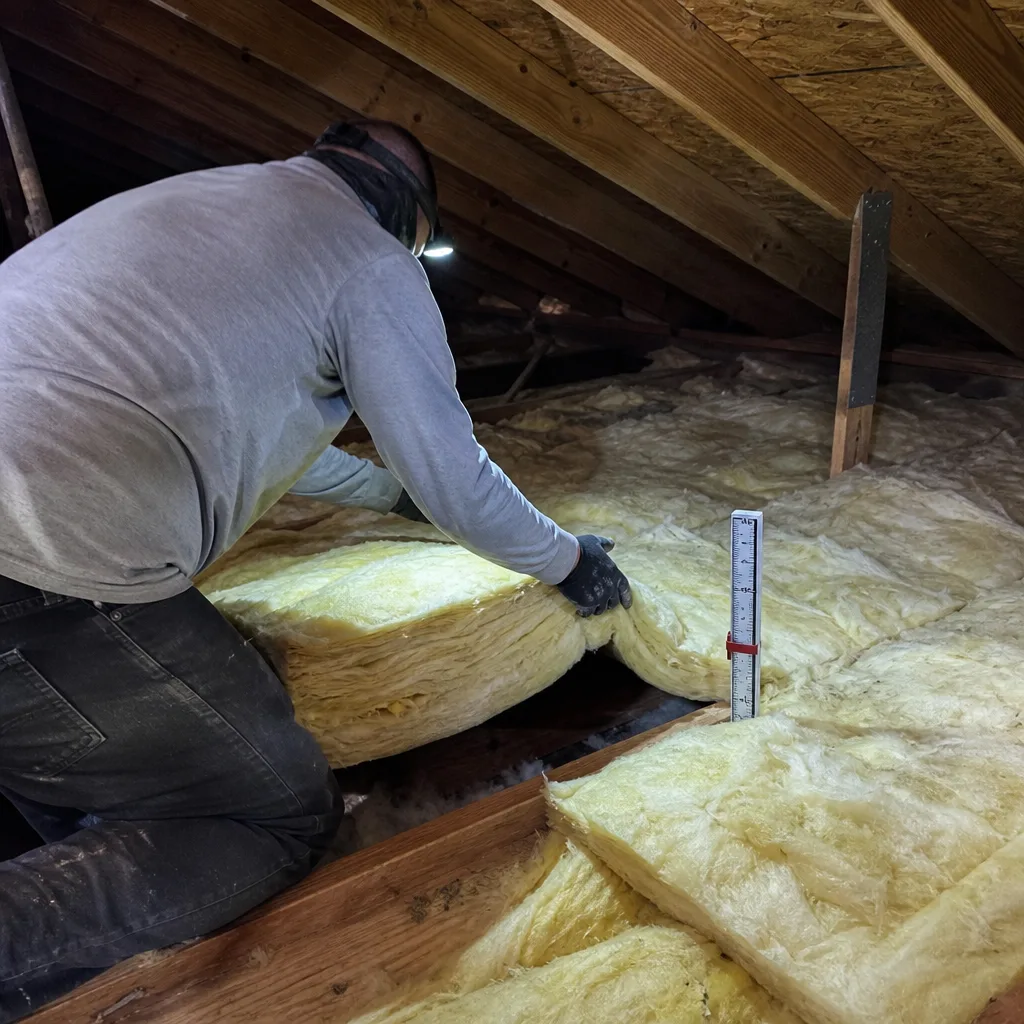
You don’t need specialized equipment to check whether your attic insulation is performing as installed. You need a 12-inch ruler, a flashlight, and the installer’s certificate.
Step 1: Locate the installer’s certificate. This document - required by the FTC’s R-value Rule for all insulation sold in the United States - states the installed R-value, the coverage area, the settled thickness, and the number of bags used. If you don’t have it, the installer failed a federal requirement. We provide this document on every Attic Insulation in Round Rock job before the crew leaves.
Step 2: Find the measurement locations. Avoid the attic hatch area (disturbed by traffic), the center of the attic (often walked by technicians), and within 3 feet of the eaves (often thin to allow soffit airflow). Pick four representative spots: midway between the ridge and the eave, between joist bays, in undisturbed areas.
Step 3: Measure settled depth. Insert the ruler vertically until it hits the drywall or the original ceiling substrate. Read the depth at the average surface level, not the peak of a fluff pile. Loose-fill fiberglass settles 1-3 percent over time; cellulose settles 10-15 percent in the first year. The installer’s certificate should state both installed and settled depth. If your measurement is below the settled depth on the certificate, you have depth loss from compression, removal, or disturbance.
Step 4: Check for uniformity. Depth should vary by no more than 1 inch across the attic in a quality installation. Greater variation suggests wind washing (air movement from soffit vents scouring material), uneven installation, or localized compression.
Step 5: Document with photos. Photograph each measurement location with the ruler visible and the depth readable. Date the photos. This becomes your maintenance record and supports any warranty claim.
In Round Rock’s climate, we see two common measurement surprises. First, attics with radiant barrier decking often show lower insulation depth because the barrier reduces radiant heat gain and contractors sometimes spec less insulation - but the R-value should still match the certificate. Second, attics with spray foam on the roof deck (creating a conditioned attic) have no loose-fill to measure; instead, check the foam thickness at visible edges and look for yellowing or powdering that indicates UV degradation if the foam is exposed.
For homeowners considering Spray Foam Insulation in Round Rock, the measurement protocol differs. We publish before-and-after blower-door numbers on every applicable job so you can verify air-sealing performance rather than just thickness.
The Installer’s Certificate: Your Maintenance Baseline
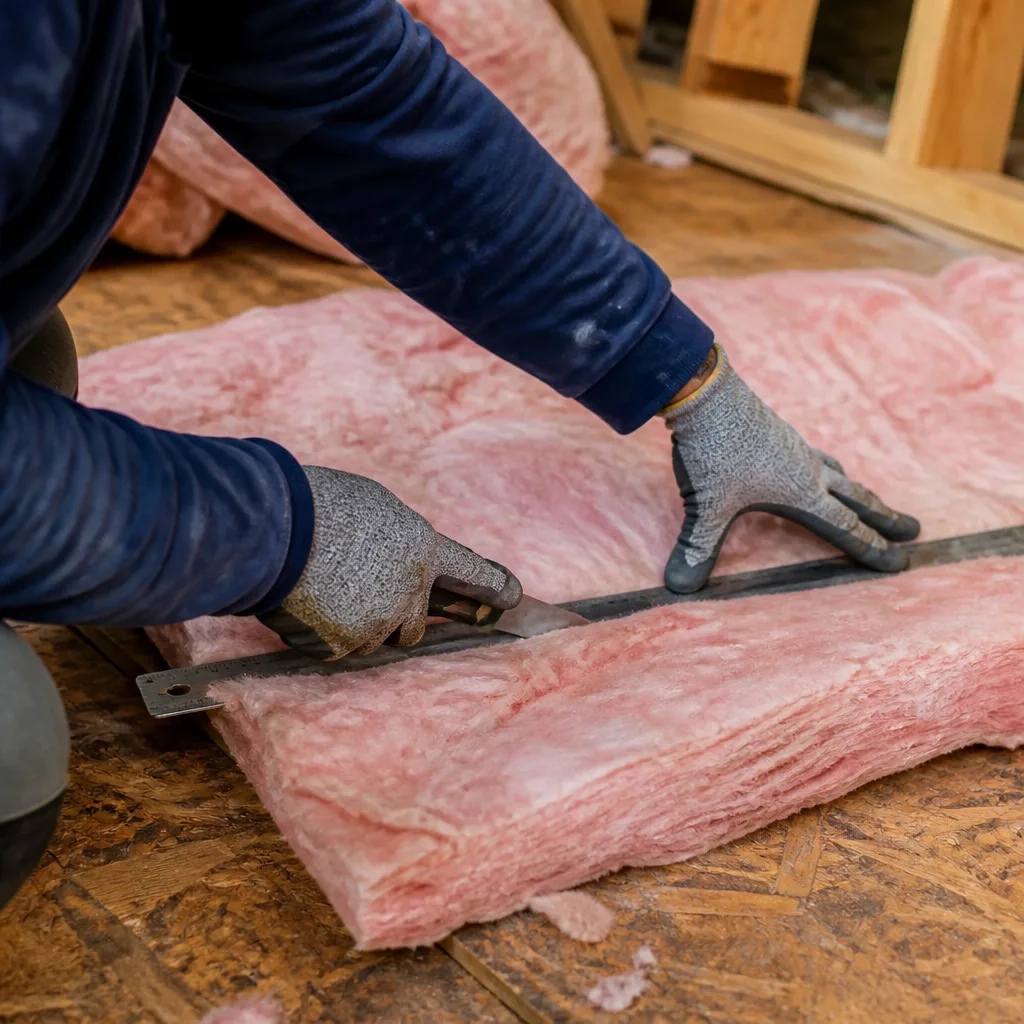
The FTC R-value Rule (16 CFR Part 460) requires every insulation installer to provide a certificate or receipt stating specific facts about the installation. This is not a quote, a proposal, or a verbal assurance. It is a post-installation document that becomes your maintenance baseline.
The certificate must state:
- The coverage area in square feet
- The installed R-value
- The thickness installed
- The settled thickness (if applicable)
- The number of bags installed (for loose-fill)
- The brand and type of insulation
Why this matters for maintenance: memory fades, quotes get lost, and “they told me it was R-38” is not a measurement. The certificate gives you a number to check against. If your 12-inch ruler reads 8 inches in a spot that should have 12 inches settled, you have documentation of the deficit.
We’ve inspected attics in Round Rock where homeowners believed they had R-38 fiberglass because “that’s what the builder said in 2014.” The actual depth measured R-19 equivalent, and the builder had never provided a certificate. Without that document, there’s no warranty path and no clear scope for remediation.
Under Haven Standard Clause 1, every job we complete begins with a written price and ends with a documented record - the certificate, the photo record, and on applicable jobs, the before-and-after blower-door readings. You know what leaving looks like before we arrive.
If you’re missing your certificate, contact your original installer. If they’re unresponsive, a professional energy audit can estimate existing R-value, but it’s an estimate. The certificate is definitive. Keep it with your home records, not in the attic where heat degrades paper.
Two Attic Features That Accelerate Degradation in Round Rock’s Climate
Round Rock’s climate presents specific challenges that generic insulation advice misses. Two attic features, in particular, determine whether your insulation lasts or degrades faster than it should.
Inadequate Soffit-to-Ridge Airflow
Texas building code requires attic ventilation at a minimum 1:150 ratio - one square foot of net free vent area for every 150 square feet of attic floor area. Many Round Rock homes built between 2015 and 2025 meet this minimum on paper but fail in practice due to blocked soffit vents, missing baffles, or ridge vents cut short of the full ridge length.
When airflow drops below adequate, three things happen. First, attic temperatures spike. We’ve measured 165°F in poorly vented Round Rock attics in August. That heat degrades fiberglass binder resins over time and accelerates cellulose settling. Second, moisture from HVAC ducts and occasional leaks lingers. Third, the pressure differential between the attic and conditioned space increases, pulling conditioned air upward through ceiling penetrations and reducing effective R-value through air movement.
To check your ventilation: count your soffit vent openings and estimate their net free area (typically 50-70 percent of gross opening for perforated vinyl). Compare to your attic floor area. If you’re short, or if insulation is blocking soffit openings, that’s a maintenance priority. We address this in our Topside Attic Insulation Round Rock home assessments with specific venting recommendations.
Uninsulated HVAC Ducts in the Conditioned Attic Boundary
Round Rock’s 2015-2025 housing stock includes many homes with flex duct running through vented attics. When attic insulation sits at the ceiling plane but ducts run through 140°F air in summer, the system loses 10-30 percent of cooling capacity to duct conduction and leakage. The insulation “works” at the ceiling, but the house doesn’t feel comfortable because the delivery system is in a hostile environment.
Maintenance implications: check duct insulation condition annually. The R-6 flex duct jacket degrades in high heat. Look for torn vapor barriers, sagging runs, and disconnected collars. If your ducts are uninsulated or poorly insulated, adding ceiling insulation has diminishing returns. The fix is either duct insulation upgrade, duct encapsulation with spray foam, or moving the thermal boundary to the roof deck with Spray Foam Insulation in Round Rock.
We see this pattern repeatedly in Round Rock neighborhoods like Paloma Lake and Siena, where builders met code-minimum ceiling insulation but left ducts exposed. Homeowners add more ceiling insulation and wonder why upstairs rooms still run 5°F warmer. The answer is in the ductwork, not the floor.
A Practical Annual Walkthrough
Beyond trigger-event inspections, one methodical walkthrough per year catches developing problems. Schedule it for October, after the worst heat and before heating season. Round Rock’s mild winters mean minimal heating load, but occasional hard freezes make attic performance relevant.
Before you enter: Turn off the HVAC at the thermostat. You don’t want the system running while you’re moving around the attic. Wear a respirator (N95 minimum), gloves, and long sleeves. Fiberglass is an irritant, and rodent droppings carry disease.
- Check the attic hatch. Is the access panel weatherstripped? Is the pull-down stair insulated? Unsealed attic hatches are equivalent to a 2-square-foot hole in your ceiling. We regularly find 300 CFM50 of air leakage through hatches alone - that’s like leaving a window cracked year-round.
- Walk the perimeter. Check soffit baffles at every location. Insulation should not block the vent opening. Look for daylight through the soffit - if you see none, the vent may be blocked by insulation, paint, or wasp nests.
- Inspect around all penetrations. Plumbing vents, electrical boxes, recessed can lights, and chimney chases should show sealed gaps. Top plates (the horizontal framing member where wall studs meet the ceiling) are the single largest source of attic air leakage in most homes. If you see gaps or feel air movement with the back of your hand, sealing is needed.
- Measure depth at four spots. Use the protocol above. Record in a notebook or phone.
- Check moisture indicators. Look for darkened insulation, rusted nail heads in the roof deck (indicates past condensation), and any mold on the roof sheathing. Mold on sheathing usually means moisture is entering from below - a bathroom fan vented into the attic, or a leak - not from above.
- Inspect HVAC equipment and ducts. Check the condensate line for cracks, the drain pan for rust, and duct connections for separation. The flex duct should be supported every 4 feet minimum; sagging creates low points where condensation collects.
- Look for pest evidence. Droppings, tunneling in insulation, gnawed wires, or stored acorn caches. Roof rats in Round Rock prefer attic temperatures between 80-90°F; they move in when outdoor conditions push them.
- Photograph everything. Date-stamped photos create your maintenance record and help any professional you call understand what changed.
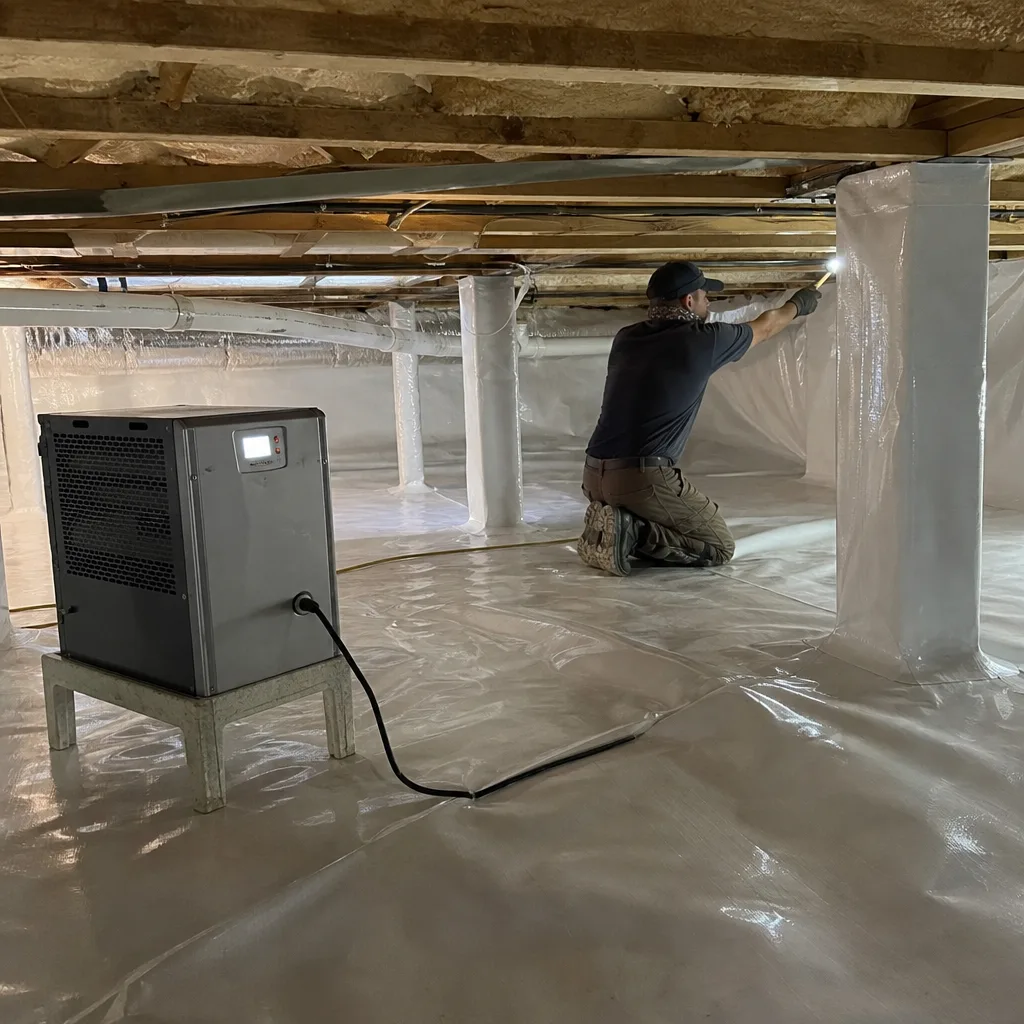
If this walkthrough reveals issues beyond your comfort level, Crawl Space Encapsulation & Vapor Barrier in Round Rock is a related service we provide - many homes with attic problems also have crawl space moisture driving stack effect.
Common Mistakes to Avoid
- Adding insulation over wet or damaged material. This traps moisture, accelerates mold, and wastes the new material. Always remove damaged sections first. We’ve pulled back new Owens Corning blown fiberglass in Round Rock attics to find saturated layers beneath, installed by homeowners who didn’t know the old material was wet.
- Measuring only at the attic hatch. The hatch area is the most disturbed spot in the attic. Depth here is almost always lower than the field. Measure away from traffic paths.
- Ignoring the installer’s certificate and relying on memory. “I think they said R-38” is not a measurement. The certificate states settled depth. Without it, you can’t know if you’re maintaining what was installed.
- Compressing insulation by walking on it or storing items. R-38 fiberglass at 12 inches compresses to R-19 equivalent if you walk it down to 6 inches. Use walk boards placed across joists, and never store anything directly on insulation.
- Sealing attic ventilation in an attempt to improve efficiency. Some homeowners block soffit vents to “keep hot air out.” This creates moisture problems and can violate code. Ventilation and insulation work together; one does not replace the other.
- DIY air sealing around recessed can lights without checking fixture rating. IC-rated (insulation contact) cans can be covered; non-IC cans cannot. Covering a non-IC can with insulation or sealant creates a fire hazard. Check the fixture label inside the housing.
- Assuming all insulation types behave the same. Cellulose, fiberglass, mineral wool, and spray foam each have different failure modes. Cellulose settles more and is more moisture-sensitive. Spray foam can shrink or crack at joints. Know what you have before you maintain it.
When to Call a Professional
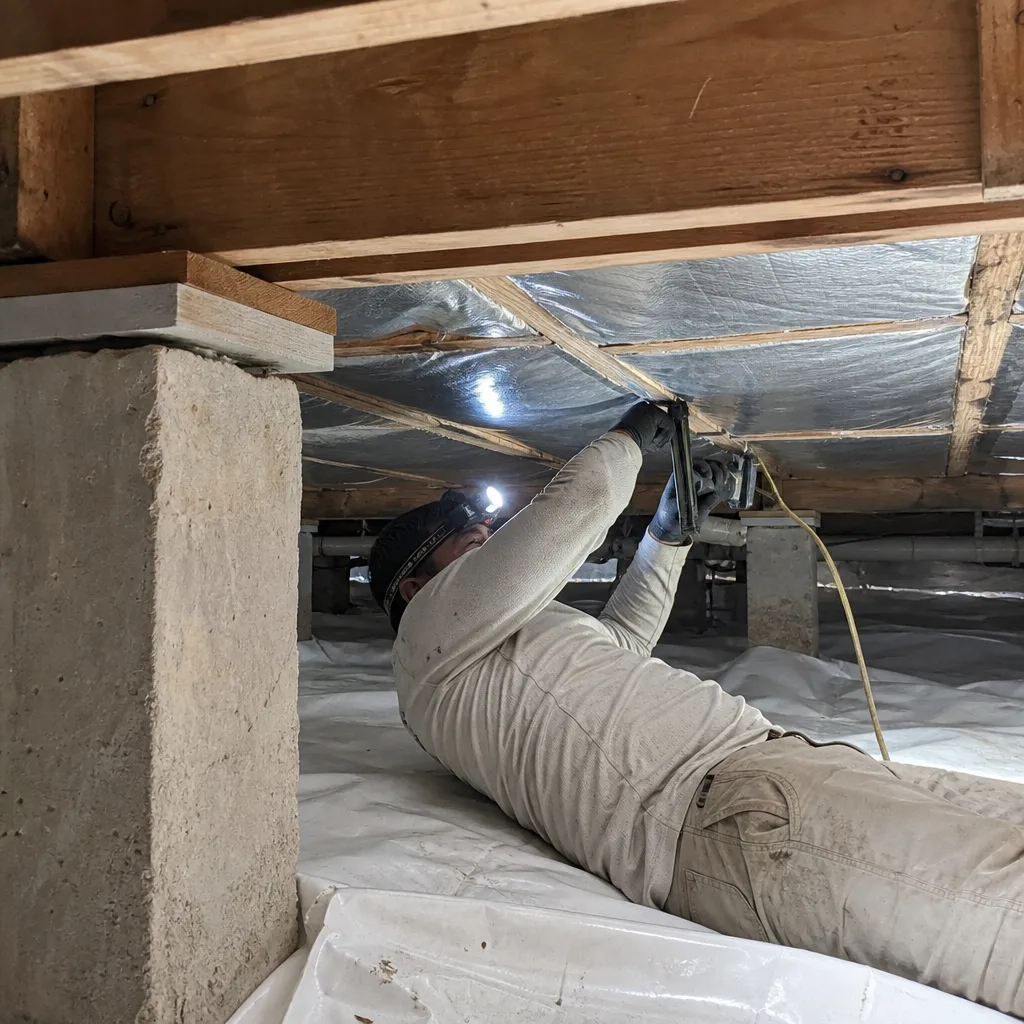
Call a professional when you find moisture damage you can’t source, pest contamination that requires removal, ductwork in need of repair, or any air sealing around electrical or combustion equipment. The attic contains genuine hazards: energized wiring, combustion venting, and structural elements not designed for foot traffic.
Specifically in Round Rock, call when your blower-door test - a pressurization reading that shows, in one number, how much air your building envelope is losing - reads above 3,000 CFM50 for a home under 3,000 square feet. That’s a threshold we use to identify attics with significant leakage that DIY sealing won’t address.
Topside Attic Insulation Round Rock offers free estimates in Round Rock. We’ll read your existing estimate with you under our Free Second Opinion on Any Written Estimate, provide a written price before any work starts under Haven Standard Clause 1, and leave you with a Documented Photo Record and before-and-after blower-door numbers on applicable jobs. Call (737) 259-7528.
Frequently Asked Questions
Inspect after the five trigger events: HVAC service, roof work, hail or wind above 60 mph, confirmed rodent activity, and equipment changeouts. Add one annual walkthrough in October. Round Rock’s thunderstorm season and extended cooling load make event-based inspection more useful than calendar-based. Call (737) 259-7528 if a trigger event reveals damage you can’t assess.
Most attic insulation maintenance in Round Rock runs between $150 and $400 for inspection, spot repair, and depth restoration in accessible attics with no contamination. Full removal and replacement of moisture-damaged or pest-contaminated insulation typically ranges from $2 to $4 per square foot, depending on material type and attic accessibility. We provide a written price before any work starts - no exceptions. Call (737) 259-7528 for an exact quote; estimates are free.
Yes, if the old insulation is dry, uncontaminated, and uncompressed. No, if there’s moisture damage, pest evidence, or significant compression. Adding new material over damaged old material traps problems and wastes money. Lift and inspect a representative sample before deciding. In Round Rock, we often find old fiberglass beneath new cellulose or vice versa; mixing types is fine if both layers are in good condition.
Current Texas energy code specifies R-38 minimum for attic insulation in new construction. Many Round Rock homes built 2015-2025 meet this. Older homes may have R-19 or R-30. The Department of Energy recommends R-38 to R-60 for our climate zone. We assess each home individually; sometimes air sealing to reduce leakage has more impact than adding R-value. Our Attic Insulation in Round Rock assessments include blower-door testing to determine the highest-impact improvements.
Calculate your ratio: attic floor area in square feet divided by 150 equals required net free vent area in square feet. Count your soffit and ridge vents, estimate their net free area (typically 50-70 percent of gross opening), and compare. In Round Rock’s climate, inadequate ventilation shows as extreme attic heat (over 140°F in summer), premature shingle aging, or moisture accumulation on the roof deck underside. We measure ventilation during every assessment and specify corrections when needed.
Spot repair is cheaper when damage is localized - less than 10 percent of attic area, no contamination, and the leak source is fixed. Full replacement is more economical when damage is widespread, when pest contamination requires removal for health reasons, or when the existing material is below R-19 and you’re adding significant depth anyway. We don’t recommend partial replacement of contaminated areas; rodent urine and feces create health hazards that justify full removal. Call (737) 259-7528 and we’ll read your situation with you.
The Bottom Line
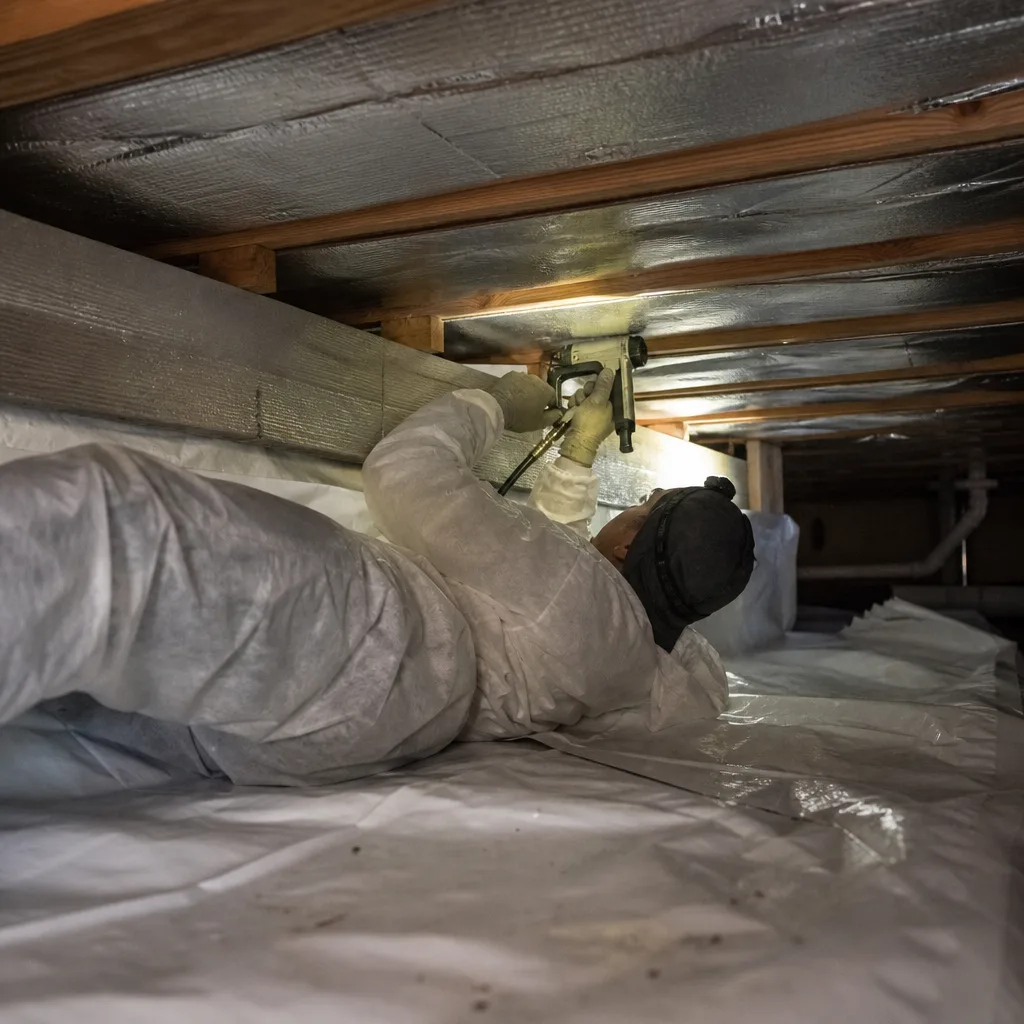
Attic insulation in Round Rock fails at trigger events, not on a calendar. Maintain it by inspecting after HVAC work, roof work, severe weather, rodent activity, and equipment changeouts. Measure depth with a ruler against your installer’s certificate. Distinguish compression from moisture damage by sight. Verify adequate soffit-to-ridge airflow for Central Texas heat. Keep documentation - the certificate, the photos, the measurements - so you know what you have and can prove what changed. And when the problem exceeds your tools or your comfort, call a professional who provides written scope, written price, and documented results before anyone lifts a tool.
Written by Wes Okafor, Owner at Topside Attic Insulation Round Rock, serving Round Rock since 2016.